

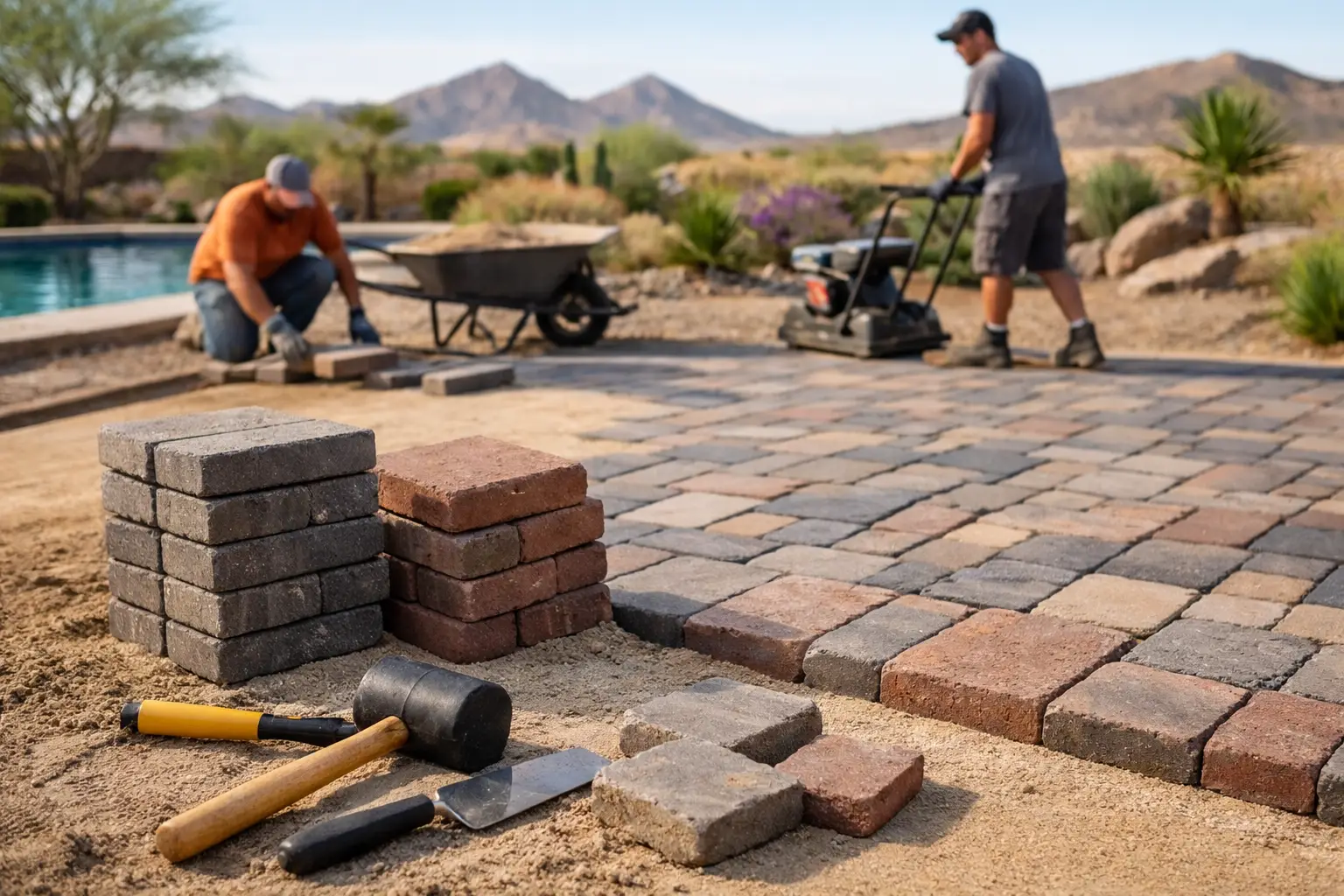
A paver patio, walkway, or driveway can make a big difference fast – but the first question most property owners ask is simple: what is the paver installation cost? In Arizona, the answer depends on more than square footage. Material choice, site conditions, design complexity, drainage needs, and the quality of the base all affect the final number.
If you are comparing quotes, it helps to know what you are actually paying for. A lower bid may leave out excavation, edge restraints, compaction, sealing, or cleanup. A complete installation costs more upfront, but it usually performs better in the long run, especially in Arizona heat.
What affects paver installation cost?
The biggest cost factor is the size of the area, but that is only the starting point. A simple rectangular patio on level ground is more straightforward than a winding walkway, a sloped backyard, or a driveway that needs a stronger base.
Material also matters. Standard concrete pavers are usually more budget-friendly than premium finishes, larger format styles, or natural stone options like travertine. If you want a custom pattern, multiple colors, borders, inlays, or tighter cuts around curves, labor time goes up with it.
Site preparation is another major variable. If an area has old concrete, weeds, poor grading, roots, irrigation conflicts, or unstable soil, more work is needed before the first paver is placed. In Arizona, proper prep is not optional. A clean-looking surface can still fail if the foundation underneath is weak.
Typical paver installation cost by project type
For many Arizona properties, patios and walkways are the most common starting point. These projects usually cost less per square foot than driveways because they do not carry vehicle weight. They still need excavation, base material, bedding sand, compaction, and edge support, but the structural demand is lower.
Driveways are different. They require a stronger base and more careful compaction to handle daily traffic. That added labor and material typically puts driveway pricing above a backyard sitting area or garden path.
Commercial paver work can vary even more. A small entrance walkway may be straightforward, while a large plaza, shared access point, or high-traffic courtyard may need engineering considerations, drainage planning, and a more demanding schedule. Property managers often need pricing that accounts for durability, appearance, and minimal disruption.
In general, homeowners and commercial owners should expect paver installation cost to rise when the project moves from decorative use to load-bearing use.
Material choices and how they change the price
Concrete pavers are a practical choice for many homes and businesses. They offer a wide range of colors, shapes, and finishes, and they tend to balance appearance and affordability well. For many projects, they are the most cost-effective way to get a clean, durable hardscape.
Travertine is often chosen for pool decks and upscale patios because it stays cooler underfoot and has a high-end look. It usually comes at a higher material cost than standard concrete pavers, and installation can require more care depending on the layout and cuts.
Thicker pavers designed for driveways or heavy-use areas may also cost more than thinner units intended for pedestrian spaces. That does not mean the most expensive material is always the best option. The right choice depends on where the pavers are going, how the space will be used, and how much maintenance you want over time.
Why prep work matters more than many people realize
A paver surface is only as strong as the base under it. This is where quality contractors separate themselves from rushed installs. Proper excavation depth, compacted base material, bedding sand, and edge restraints help prevent shifting, low spots, and uneven surfaces later.
In Arizona, soil conditions and drainage can create challenges if the area is not prepared correctly. Even though the region is dry, sudden storms can move water quickly. If runoff is not managed, pavers can settle unevenly or wash out at the edges.
That is why one quote can be much lower than another. Some bids focus only on placing pavers, while others include the full process needed for long-term performance. When you compare pricing, ask exactly what is included below the surface, not just on top of it.
Design choices that increase labor cost
Straight runs and open layouts are usually the most efficient to install. Once a design includes curves, steps, decorative borders, multiple elevation changes, or built-in transitions to turf, gravel, or planter areas, labor becomes more detailed.
Cutting around posts, drains, irrigation components, and tight corners also adds time. So does matching an existing hardscape or blending new pavers into an older section of the yard.
These upgrades can absolutely be worth it. A more customized layout often improves curb appeal and usability. The key is understanding that design detail affects labor just as much as material selection. If your quote includes premium visual features, that is part of the reason the price is higher.
Hidden costs people forget to ask about
Not every estimate is built the same way. Some property owners get surprised when demolition, hauling, or cleanup shows up later as an extra line item. Others assume sealing is included when it is not.
A few common items that can affect total paver installation cost are old surface removal, grading corrections, drainage work, weed barrier needs, joint sand, sealing, and access limitations. If a crew has to move material through a narrow side yard instead of bringing equipment directly into the work area, labor may increase.
Permits can also matter depending on the scope, especially for commercial sites or projects tied to drainage or access changes. The best approach is to ask for a clear scope of work before approving the job.
Is sealing worth adding to the project?
It depends on the material, the location, and the look you want. Sealing can help protect against staining, reduce color fading, and make routine cleaning easier. For some pavers, it also enhances the color and gives the surface a more finished appearance.
On the other hand, sealing adds cost and may need to be reapplied over time. Not every installation requires it right away. A contractor should explain whether it makes sense for your specific paver type and usage, rather than treating it like a default upsell.
Getting real value, not just a low bid
The cheapest quote is not always the lowest cost once repairs start showing up. Sun exposure, heavy use, poor drainage, and weak installation methods can all shorten the life of a paver surface. Re-leveling, replacing shifted sections, or dealing with water issues later can erase any upfront savings.
A solid installation should look good and hold up. That means the crew pays attention to grading, compaction, spacing, edge control, and final cleanup. For Arizona homes and businesses, durability matters just as much as appearance.
This is especially true for busy households, rental properties, retail centers, and office buildings where hardscapes take daily wear. A properly installed paver surface can improve access, reduce mud and dust, and make the property easier to maintain year-round.
How to compare quotes for paver installation cost
When reviewing estimates, focus on scope before price. Ask what material is being used, how deep the excavation will be, what base is included, whether edging and compaction are part of the plan, and if cleanup is included.
It also helps to ask how the contractor will handle drainage and transitions to nearby surfaces. A nice-looking patio that sends water toward the house is not a good value. The same goes for a driveway that looks clean on day one but is installed without the proper support underneath.
If you are in Arizona, local experience matters. Desert conditions, heat, water runoff, and low-maintenance landscape design all affect how an outdoor project should be built. That is where working with a practical, full-service contractor makes a difference. Pro Natural Landscape handles paver work with the bigger picture in mind, so the finished space works with the rest of the property, not against it.
When pavers are worth the investment
Pavers are often worth the cost when you want a surface that improves both function and appearance. They create cleaner outdoor living areas, more durable walkways, stronger curb appeal, and lower-maintenance spaces compared to bare dirt or worn concrete.
They also give you flexibility. Whether you need a front entry upgrade, backyard patio, pool surround, or commercial hardscape improvement, pavers can be tailored to the property without making the space feel generic.
The right project is not always the biggest one. Sometimes a smaller, well-built walkway or seating area adds more everyday value than a large design with features you will rarely use. A good contractor should help you balance budget, appearance, and long-term performance.
If you are pricing a project, the smartest next step is to get a detailed quote based on your actual site, not a generic online number. Paver installation cost is shaped by the work behind the finished surface, and that is exactly where quality starts.