

A patio can look solid one season and worn out the next, especially under Arizona sun, dust, and monsoon moisture. If you’re wondering how to seal patio pavers, the goal is simple: protect the surface, hold color longer, and make routine cleanup easier without creating a slippery or cloudy finish.
For homeowners, property managers, and commercial property owners, sealing is not just about appearance. It helps defend pavers against fading, surface wear, stains from grills or planters, and sand loss in the joints. But the result depends on timing, prep work, and using the right sealer for the material and the weather.
Why sealing patio pavers matters in Arizona
Arizona is hard on outdoor surfaces. Constant UV exposure can dull color faster than many people expect, and windblown dust settles into every joint and texture. Add irrigation overspray, occasional heavy rain, and day-to-night temperature swings, and even well-installed pavers start to show wear.
A good sealer adds a protective layer that helps the patio resist staining and reduces how quickly the surface breaks down visually. It can also help stabilize joint sand when used with the right sanding and prep process. That matters on patios, walkways, poolside areas, and commercial entry spaces where a clean, finished look affects the whole property.
That said, sealing is not always one-size-fits-all. Some pavers do better with a natural-look penetrating sealer, while others can handle an enhancing or film-forming finish. The right choice depends on whether you want a low-sheen natural appearance, richer color, more stain resistance, or easier maintenance.
How to seal patio pavers step by step
If you want lasting results, the process matters as much as the product. Rushing through cleaning or applying sealer in poor weather is where most problems start.
Start with a full inspection
Before anything else, inspect the patio carefully. Look for loose pavers, low spots, weeds in the joints, oil stains, efflorescence, and worn-out joint sand. Sealer should go on a stable, clean, dry surface. If the base is shifting or the joints are failing, sealing too early only locks in problems.
This is also the time to identify the paver material. Concrete pavers, brick pavers, travertine, and other natural stone surfaces can need different sealers and different application methods. Using the wrong product can leave haze, uneven absorption, or a finish that peels.
Clean the patio thoroughly
Sealer does not hide dirt. It traps it.
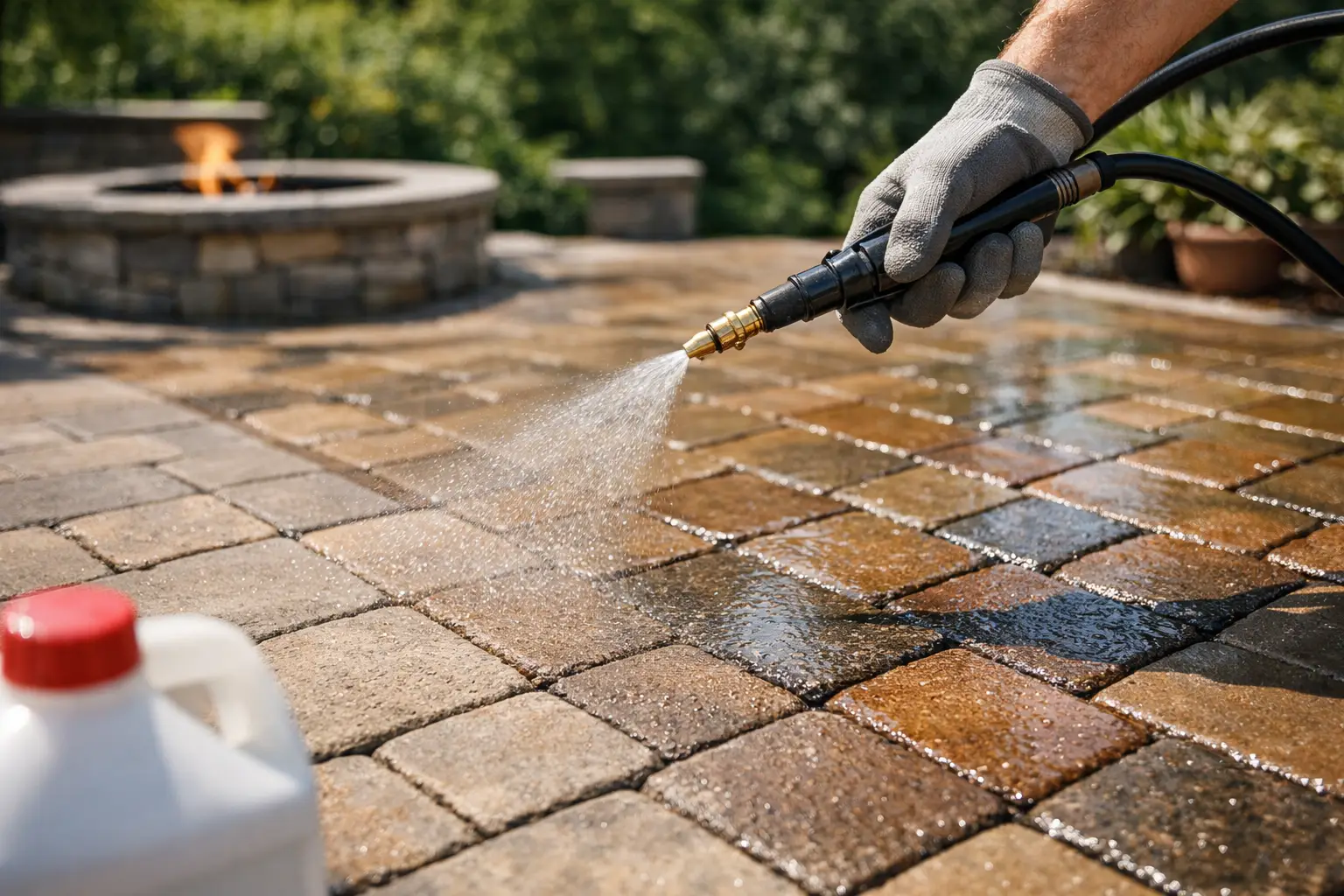
Sweep the patio first, then deep clean the surface to remove dust, stains, algae, and debris packed into joints and texture. In many cases, a pressure washer can help, but too much pressure can damage joint sand or etch softer materials. On travertine or older pavers, a gentler wash is often the better move.
If there are grease spots from grilling or stubborn rust stains, those should be treated before sealing. Otherwise they can remain visible under the finished coat. After washing, let the patio dry completely. In Arizona heat, the surface may look dry quickly, but moisture can still be sitting in the joints. That can cause whitening or poor sealer bonding.
Refill joint sand if needed
If washing removed joint sand, replace it before sealing. This part gets skipped all the time, and it shows later when pavers start shifting or gaps open up. Fresh joint sand helps keep the system locked together and supports a more finished result.
For many patios, polymeric sand is a strong option because it hardens when activated correctly and helps reduce weed growth and washout. But it has to be installed properly. If the joints are not fully dry before sanding, or if extra sand is left on the surface, sealing afterward can get messy fast.
Pick the right sealer for the finish you want
There are two main decisions here: appearance and performance.
A penetrating sealer usually keeps a more natural look and works well when you want protection without shine. It is often a good fit for patios where slip resistance matters and where the goal is subtle protection. An enhancing sealer deepens color and can give the pavers a richer, freshly installed look. Film-forming sealers create more visible surface build, sometimes with satin or glossy results, but they can require more upkeep and can become slippery if the wrong product is used around pools or shaded areas.
In Arizona, UV stability matters. A sealer that looks good at first but breaks down quickly in direct sun is not saving money. For high-traffic residential and commercial spaces, durability and recoat expectations should be part of the decision.
Apply under the right weather conditions
Timing matters more than most people realize. Do not seal when the patio is hot from direct midday sun, when rain is expected, or when there is visible moisture in the surface. High heat can cause the sealer to flash too quickly, leading to roller marks, uneven coverage, or a patchy finish.
Early morning or late afternoon is often the safest application window in Arizona, depending on the season. Always follow product temperature guidelines. The patio surface temperature can be much hotter than the air temperature, especially on darker pavers.
Use thin, even coats
Most patio paver sealers work best in thin, controlled coats instead of one heavy application. Heavy coats can puddle, dry unevenly, or leave a sticky finish. Depending on the product, you may use a sprayer, roller, or a combination of both. The goal is consistent coverage, not over-saturation.
Work in manageable sections and keep a wet edge so the finish blends evenly. Pay extra attention to edges, transitions, and low areas where product can collect. If a second coat is recommended, apply it within the manufacturer-approved window.
Let it cure before full use
Dry to the touch is not the same as fully cured. The patio may need a full day or longer before regular foot traffic, furniture placement, grilling, or washing. If vehicles will cross the area, cure time can be longer.
This part is worth respecting. Walking on the surface too early can leave marks, and dragging furniture back in place can damage the finish before it has settled properly.
Common mistakes that cause sealing problems
Most sealing issues come from rushing or using the wrong product. One major mistake is sealing dirty pavers. Another is trapping moisture in the joints, which can lead to a cloudy or milky appearance. Over-application is also common. More sealer does not mean more protection.
A mismatch between sealer and surface is another issue. Concrete pavers, brick, and natural stone do not all respond the same way. Some surfaces absorb quickly, while others need a product designed specifically for denser material. If the patio has older coatings, those need to be evaluated too. New sealer over failing old sealer can peel or look blotchy.
There is also the question of finish. A glossy look might sound appealing, but it is not always practical for every yard or commercial setting. On a sun-heavy patio, too much shine can look artificial. Around pools or shaded areas, it can create a safety concern if the product reduces traction.
How often should patio pavers be sealed?
It depends on the paver type, the sealer used, and how the space is used. A lightly used backyard patio may go longer between applications than a commercial walkway or a high-traffic entertainment area with frequent grilling and furniture movement.
In Arizona, many sealed paver surfaces need attention every few years, but there is no universal schedule. Instead of sealing on a fixed calendar, watch for signs like fading color, faster stain absorption, joint sand erosion, or water no longer beading on the surface. Those are better indicators than guessing.
DIY or hire a professional?
If the patio is small, the surface is in good shape, and you are comfortable with prep work and application timing, a DIY job can work. But sealing is one of those services that looks simple until the finish goes wrong. Clouding, roller lines, trapped debris, and uneven gloss are expensive to fix.
Professional sealing makes more sense when the patio is large, the material is specialty stone, stains need treatment, joint sand must be replaced, or the space has visible wear and repairs. It also helps when the property needs a consistent result across multiple hardscape areas. For many Arizona properties, that includes walkways, driveways, courtyards, pool decks, and outdoor living spaces that should all match and perform well.
At Pro Natural Landscape, sealing is part of a bigger hardscape approach – not a quick coat over a problem surface. When the prep, repairs, and product selection are handled correctly, the finished patio looks cleaner, lasts longer, and stays easier to maintain.
If your pavers are looking faded, dusty, or uneven, sealing can make a real difference. The key is doing it at the right time, with the right prep, and with a finish that fits how you actually use the space.