×

Pavers vs Travertine Patio: What Fits Best?

A patio in Arizona has to do more than look good. It has to handle long summers, strong sun, dust, foot traffic, and the kind of daily use that turns an outdoor area into a real extension of the property. That is why the pavers vs travertine patio decision matters more here than it might in milder climates.

Both materials can create a clean, durable outdoor space. Both can raise curb appeal and make a backyard or commercial exterior feel more finished. But they do not perform the same way, and the better choice depends on how you use the space, what look you want, and how much maintenance you are willing to take on over time.

Pavers vs travertine patio: the main difference

The simplest way to look at it is this. Concrete pavers are manufactured for consistency, strength, and flexibility in design. Travertine is a natural stone chosen for its upscale appearance, cooler surface, and more organic variation.

If your top priority is a dependable hardscape that gives you a wide range of colors, patterns, and budget options, pavers usually make sense. If you want a higher-end natural finish and a surface that stays more comfortable under direct sun, travertine stands out.

That does not mean one is always better. It means each one solves a different kind of problem.

How pavers perform in Arizona yards

Pavers are a practical choice for many Arizona homeowners because they are built for hard use. They work well for patios, walkways, pool decks, courtyards, and outdoor living areas that need durability without a lot of guesswork.

One of the biggest advantages is consistency. Since pavers are manufactured, the sizes, shapes, and colors are controlled. That makes layout cleaner and often makes repairs easier later. If one section gets stained or damaged, individual units can usually be replaced without tearing out the whole patio.

Pavers also offer strong design flexibility. You can go with a modern pattern, a more traditional layout, or something that ties into existing block walls, gravel areas, artificial grass, or driveways. For properties that need a polished look without stretching the budget too far, pavers often hit the right balance.

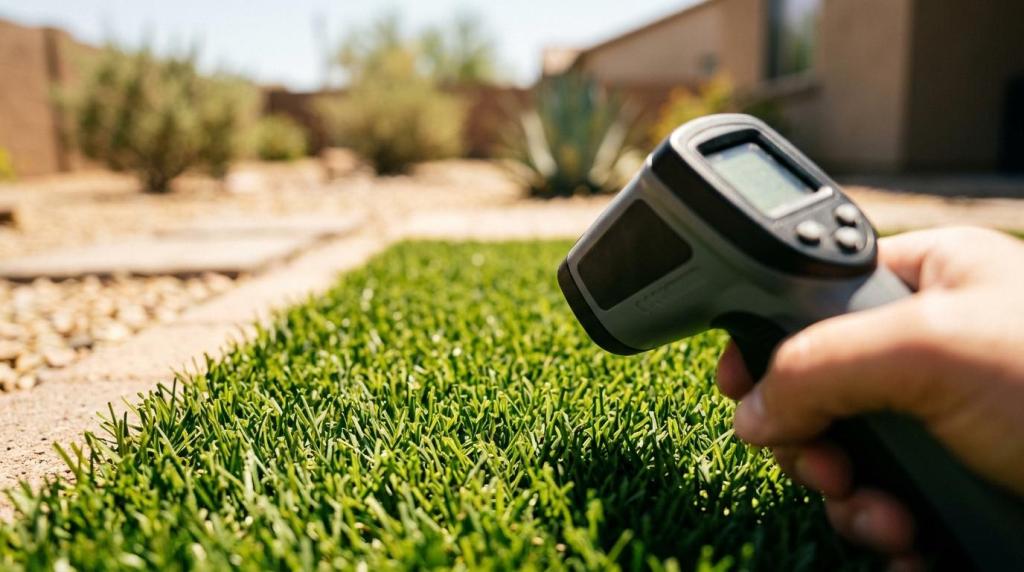
The trade-off is heat. In Arizona sun, some pavers can get hot, especially darker colors. Material selection matters. So does placement. A shaded patio with light-toned pavers is a very different experience from a fully exposed dark surface in July.

How travertine performs in Arizona yards

Travertine is a natural stone, and that changes both the look and the feel of the finished patio. It has a more premium appearance than standard concrete pavers, with natural color variation that gives the surface depth instead of a uniform manufactured finish.

For Arizona properties, one of the strongest selling points is temperature. Travertine generally stays cooler underfoot than many paver options, which is a real benefit around pools, sun-exposed patios, and homes where people actually walk barefoot outside.

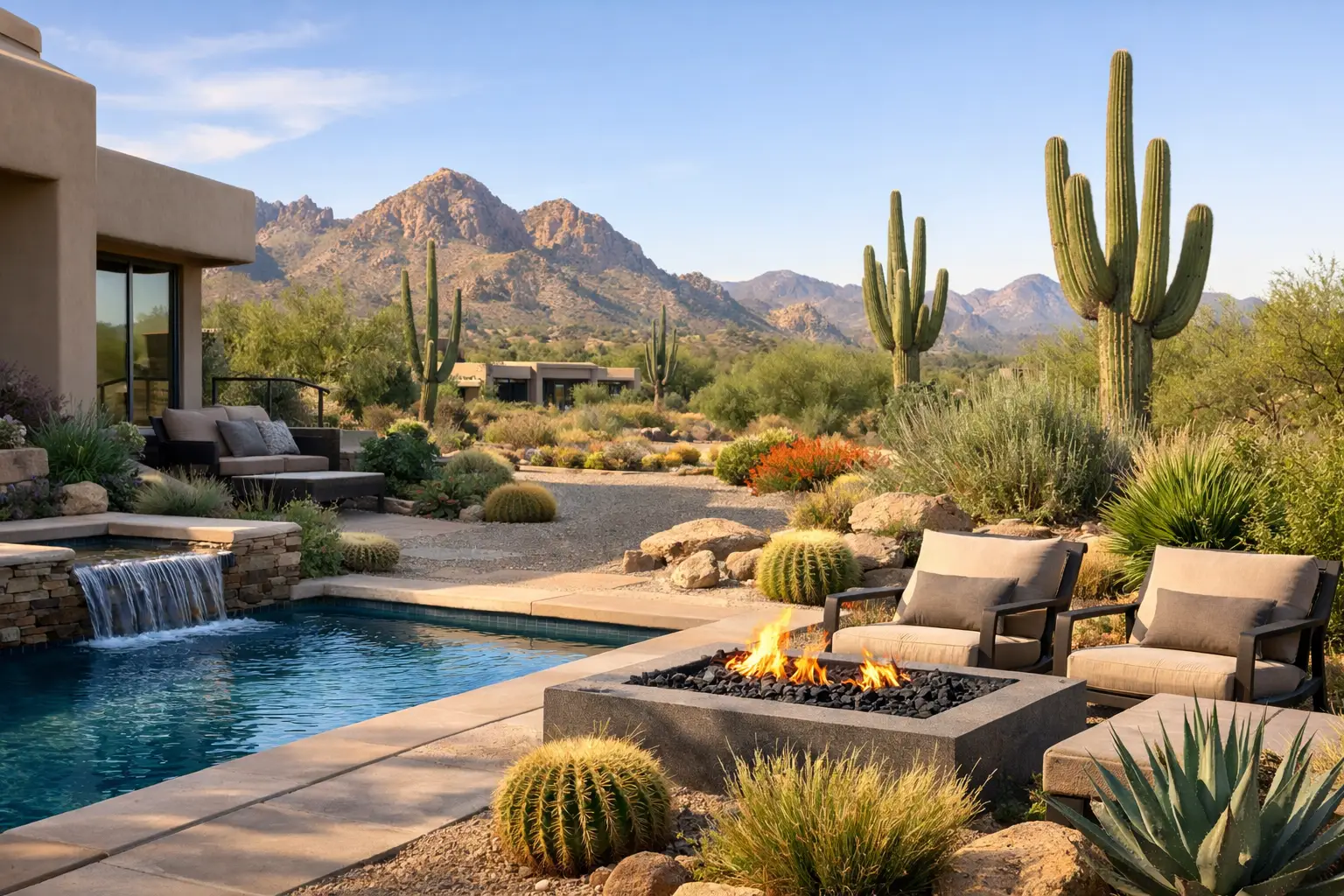
Travertine also fits the desert aesthetic well. Its natural tones work with stucco exteriors, gravel landscaping, palms, low-water plants, and warm regional color palettes. It can make a backyard feel more refined without looking out of place.

The trade-off is that natural stone requires a little more attention. Travertine should be installed correctly, sealed when needed, and maintained with the right products. It can also cost more upfront depending on the grade, layout, and project size.

Cost: which gives you better value?

If you are comparing initial installation cost alone, pavers are often the more budget-friendly option. Material pricing is usually more predictable, and there are enough style options to keep the project attractive without pushing into premium stone pricing.

Travertine tends to cost more because it is a natural material and often comes with a more upscale finish. On some jobs, the added cost is worth it right away because the appearance and comfort level are exactly what the property needs. On others, it may not make sense if the goal is simply to create a clean, durable patio at the best possible price.

Long-term value depends on how you define value. If you want lower upfront cost, easier replacement, and strong durability, pavers usually deliver. If you care more about natural beauty, cooler surface temperature, and a more custom look, travertine can justify the extra investment.

Heat and comfort underfoot

This is one of the biggest factors in the pavers vs travertine patio conversation for Arizona owners.

A patio can look perfect on paper and still be frustrating to use if it gets too hot by midday. That is why surface temperature should not be treated like a minor detail. It affects whether kids play on it, whether guests stand around comfortably, and whether the space feels usable during the hottest months.

Travertine has the edge here. It is widely chosen for pool decks and open patios because it stays cooler than many manufactured alternatives. If comfort in direct sun is high on your list, travertine deserves serious consideration.

Pavers can still work well, especially in lighter shades or covered spaces. But if the patio will get full afternoon sun and regular bare-foot traffic, this is the point where many property owners lean toward travertine.

Maintenance and repairs

Neither option is maintenance-free, but both are manageable when installed correctly.

Pavers are known for straightforward repair. If a section settles or a few units crack, those pieces can often be lifted and replaced without redoing the entire surface. That is a practical benefit for high-traffic spaces and properties that want long-term serviceability.

Travertine can also last very well, but it benefits from proper sealing and routine care. Because it is natural stone, you want to avoid harsh cleaners and stay ahead of staining, especially in entertainment areas with food, drinks, or grill use.

Arizona dust, monsoon runoff, and regular outdoor wear will affect any patio surface. The difference is not that one needs care and the other does not. The difference is the type of care. Pavers are typically more forgiving. Travertine asks for a little more attention in exchange for a higher-end finish.

Style and property match

The right patio should fit the property, not fight it.

Pavers are a strong match for homes and commercial spaces that need clean lines, structured patterns, and dependable visual consistency. They work well in modern front yards, backyard entertainment spaces, apartment common areas, and commercial walkways where function has to lead.

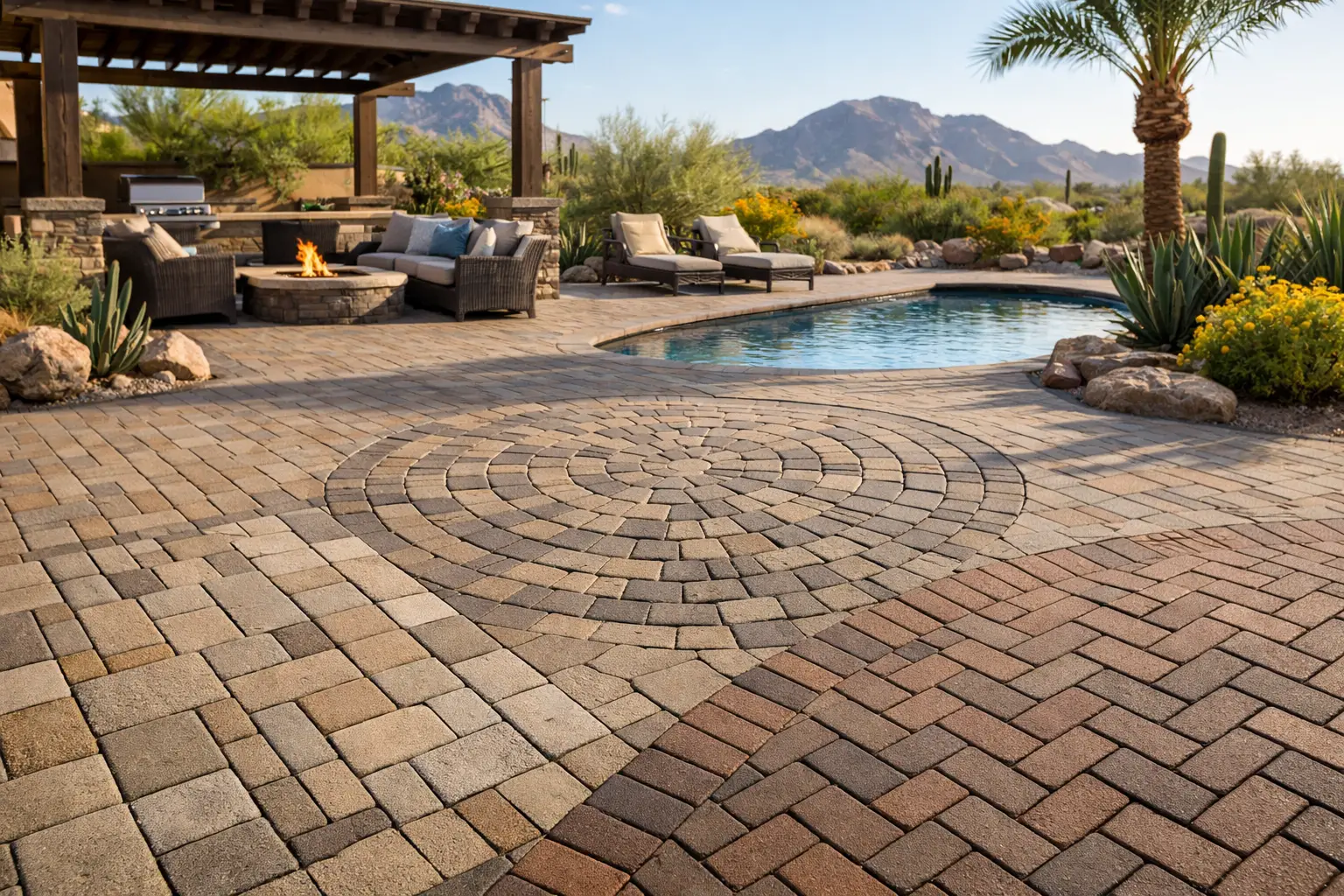
Travertine is often the better fit when the goal is a more elevated look. It pairs especially well with pool areas, outdoor kitchens, resort-style backyards, and homes where the owner wants the patio to feel like a feature, not just a surface.

If the rest of your exterior includes natural textures, tile accents, or premium finishes, travertine may tie everything together better. If you need flexibility, affordability, and a broad range of design combinations, pavers are hard to beat.

Which material lasts longer?

Both can last for years when the base prep, drainage, and installation are done right. That part matters just as much as the material itself.

Pavers perform well because they are designed for strength and load distribution. They are a reliable option for patios that may also connect to driveways, walkways, or mixed-use outdoor spaces.

Travertine is durable too, but it is still stone, which means quality selection and installation standards matter. Not all stone is equal, and not every installation crew handles natural stone with the same level of care. A well-installed travertine patio can hold up beautifully, but poor prep will show up fast no matter how attractive the stone looks on day one.

When pavers are the better choice

Pavers usually make more sense when the project needs to stay cost-conscious, when you want easier spot repairs, or when the patio design needs more pattern and color flexibility. They are also a smart choice for busy family yards, rental properties, and commercial spaces where durability and maintenance matter as much as appearance.

For many Arizona properties, pavers offer the most balanced mix of value, performance, and design control.

When travertine is the better choice

Travertine is often the better call when surface temperature is a major concern, when the patio is part of a pool area, or when the property needs a more upscale natural finish. It is especially appealing for homeowners who want their outdoor space to feel more custom and are comfortable investing a little more upfront for that result.

If comfort and appearance lead the decision, travertine often wins.

The real answer depends on the installation

Even the best material will disappoint if the grading is off, the base is weak, or drainage is ignored. That is why this choice should not be made by material sample alone. Site conditions, sun exposure, traffic, water flow, and the way the space connects to the rest of the landscape all need to be considered.

At Pro Natural Landscape, we see this firsthand on Arizona properties. A patio is not just a finish. It is part of how the whole outdoor area works, from irrigation planning to adjacent gravel, turf, lighting, and hardscape transitions.

If you are deciding between pavers and travertine, the best move is to think beyond the showroom look. Think about heat, use, maintenance, budget, and how you want the space to perform a year from now, not just the day it is installed. The right patio should keep doing its job long after the project is complete.

Desert-Friendly Landscaping: 15 Plants That Thrive With Less Water

A beautiful Arizona landscape does not need heavy irrigation to feel lush, colorful, or welcoming. In fact, some of the most striking yards in desert communities are built around plants that prefer heat, lean soil, bright sun, and long dry stretches.

That is the real strength of low-water desert landscaping plants. They fit the climate instead of fighting it.

For homeowners, property managers, and businesses in places like El Mirage, this approach can cut water waste, reduce routine upkeep, and create an outdoor space that still feels full of life through the hottest months of the year. The key is choosing plants with the right growth habits, then supporting them with smart irrigation, mulch, and thoughtful placement.

Why low-water desert landscaping plants work so well in Arizona

Desert-adapted plants are built for stress. Many store water in fleshy leaves, push roots deep into the soil, or slow growth during dry periods without losing their beauty. Native Southwest species do this especially well, though a few non-native arid plants also perform beautifully in Arizona landscapes.

A strong plant palette can do more than save water. It can also bring structure, wildlife activity, shade, seasonal bloom, and year-round texture to the yard.

After the design is in place, the biggest gains usually come from matching each plant to the right location and watering pattern.

  • seasonal color
  • sculptural form
  • lower pruning needs
  • pollinator value
  • better long-term resilience

One point matters more than any plant list: even drought-tolerant plants need regular care during establishment. Deep, targeted watering early on helps roots spread into the surrounding soil. Once established, many of these selections can do well with infrequent supplemental irrigation.

15 low-water desert landscaping plants for Arizona yards

The table below highlights fifteen reliable choices for desert-friendly planting plans. Sizes vary with soil, exposure, and irrigation, though these ranges are useful for planning.

Plant Type Mature Size Best Feature Water Need After Establishment
Frogfruit Groundcover 1 to 3 in. tall, spreading Living carpet, pollinator-friendly Low
Silver Carpet Groundcover 1 to 3 in. tall, slow spread Silvery foliage, tidy coverage Low
Blanket Flower Perennial 1 to 2 ft. x 1 to 2 ft. Long bloom season, bright color Low
Blackfoot Daisy Perennial 1 ft. x 1 to 2 ft. White flowers, compact habit Low
Desert Marigold Wildflower 1 to 2 ft. x 1 to 2 ft. Cheerful yellow bloom Low
Creosote Bush Shrub 4 to 8 ft. x 4 to 8 ft. Classic desert character, fragrance after rain Very low
Ocotillo Shrub 6 to 15 ft. tall Red flower spikes, dramatic form Very low
Texas Sage Shrub 4 to 6 ft. x 4 to 6 ft. Silvery leaves, purple bloom flushes Low
Red Yucca Succulent perennial 3 to 5 ft. x 4 to 6 ft. Coral flower stalks, hummingbird draw Very low
American Agave Succulent 3 to 6 ft. tall, 6 to 12 ft. wide Bold architectural shape Very low
Desert Willow Small tree 15 to 30 ft. tall Trumpet flowers, airy canopy Low
Foothill Palo Verde Tree 10 to 25 ft. tall Golden spring bloom, filtered shade Very low
Velvet Mesquite Tree 20 to 40 ft. tall Broad canopy, desert shade Low
Desert Ironwood Tree 20 to 40 ft. tall Dense wood, purple spring flowers Very low
Deer Grass Ornamental grass 3 to 4 ft. x 4 to 6 ft. Soft movement, strong texture Low

Best low-water groundcovers and flowering plants for desert color

Ground-level planting often makes the biggest visual difference. It softens gravel beds, cools the look of hardscape, and fills space between larger shrubs and trees. In low-water landscapes, this layer should be tough enough for heat but still lively enough to keep the yard from feeling bare.

Frogfruit is an excellent option for a looser, natural look. It creeps outward, forms a low mat, and offers tiny flowers that attract pollinators. Silver Carpet is a neater choice, with narrow silvery foliage that looks especially strong next to decomposed granite, pavers, or stone borders.

For bloom color, blanket flower, blackfoot daisy, and desert marigold are hard to beat. These plants bring bright red, yellow, and white tones into the landscape with far less water than traditional bedding flowers. They are also useful in places where you want a softer, more seasonal layer around boulders, paths, or specimen shrubs.

These flowering plants tend to look best when planted in groups rather than as isolated singles.

Best desert shrubs and succulents for structure and year-round interest

The backbone of a desert landscape usually comes from shrubs and succulents. This is where the design gains height, rhythm, privacy, and strong form.

Creosote bush is one of the most authentic choices for Sonoran-style planting. It has a natural shape, evergreen character, tiny yellow flowers, and that unmistakable scent after rainfall. Ocotillo offers a totally different look, upright canes with vivid red flower spikes that create motion and drama even when the plant is not in leaf.

Texas sage brings a softer silver-green mass to the palette, which helps balance the sharper lines of cacti and agaves. Red yucca is another standout. Its arching leaves and tall coral bloom stalks add color for months, and hummingbirds love it. American agave gives a landscape instant definition with broad rosettes that read almost like living sculpture.

When these plants are spaced correctly, the yard feels intentional and open rather than crowded.

A simple low-water shrub mix might include the following:

  • Creosote bush: natural screening and desert character
  • Red yucca: flower color with very little irrigation
  • Texas sage: silver foliage that brightens gravel beds
  • American agave: bold focal points near entries or corners
  • Ocotillo: vertical accent for large beds and open views

Best desert trees for shade with less water

Shade matters in Arizona, and low-water landscapes can still provide it. The difference is that desert-friendly trees usually create filtered shade rather than the dense, thirsty canopy associated with high-water lawns and traditional shade trees.

Foothill palo verde is one of the strongest choices for residential desert design. Its green bark, airy branching, and spring bloom fit Arizona beautifully. Desert willow gives a more floral look, with trumpet-shaped blooms and a graceful canopy that works well near patios. Velvet mesquite is larger and broader, often used where more overhead shade is needed. Desert ironwood grows more slowly, though it rewards patience with excellent durability and a rich desert presence.

These trees do more than cool the yard. They also create better conditions for understory plants, reduce reflected heat around patios and walkways, and help the whole landscape feel more layered.

Smart design practices that help low-water plants thrive

Plant choice is only half the equation. A water-wise landscape performs best when installation and maintenance are built around the same goal.

Soil preparation is a good place to start. In many Arizona properties, native soil drains quickly or becomes compacted after construction. Compost worked into planting areas can improve water holding capacity without turning the site into a high-input garden. Guidance from Klimaplanter notes that encouraging mycorrhiza around new plantings can further boost root efficiency and drought resilience in lean soils. Mulch also matters. Organic mulch works well in many planted beds, while gravel or decomposed granite often suits open desert-style layouts.

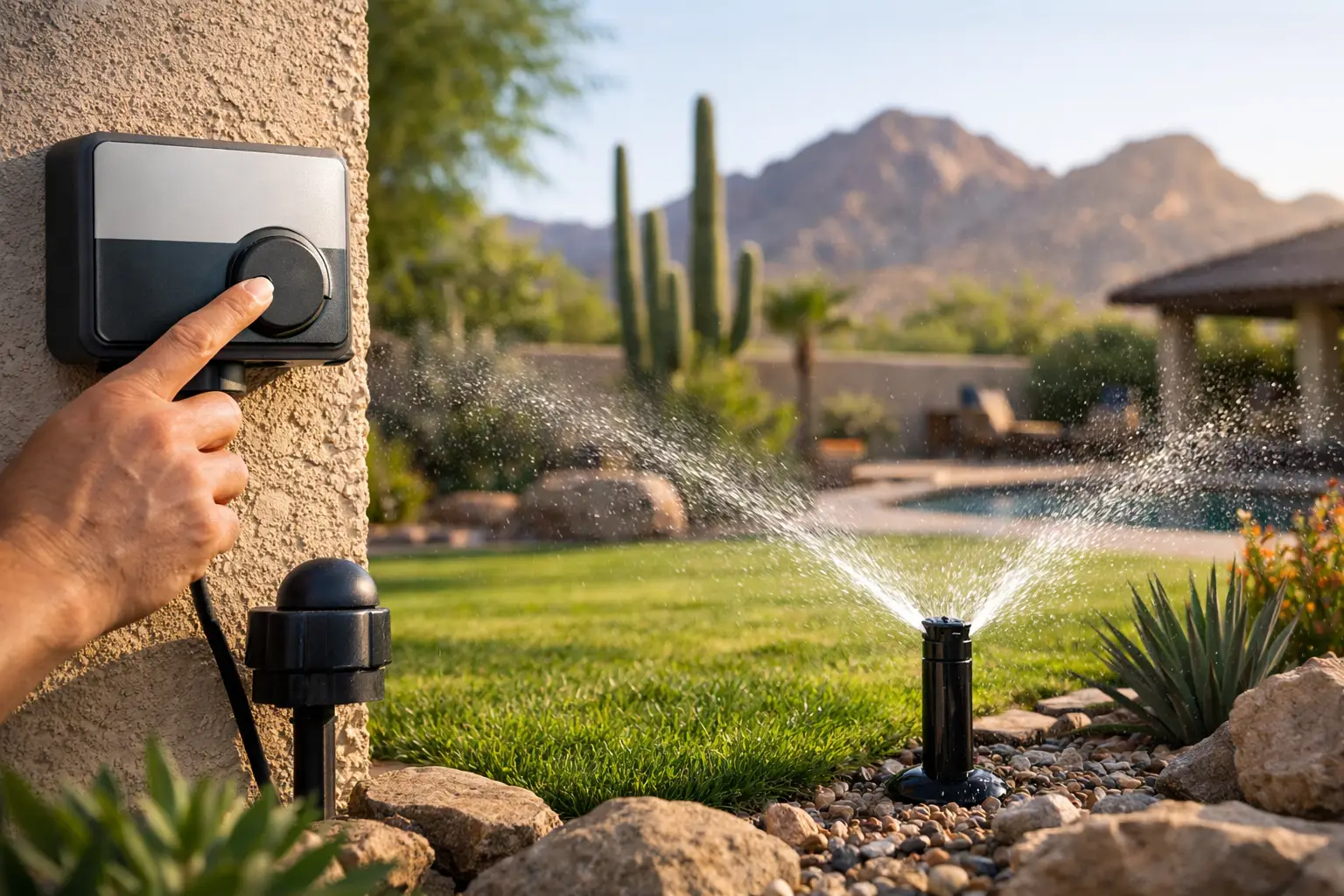
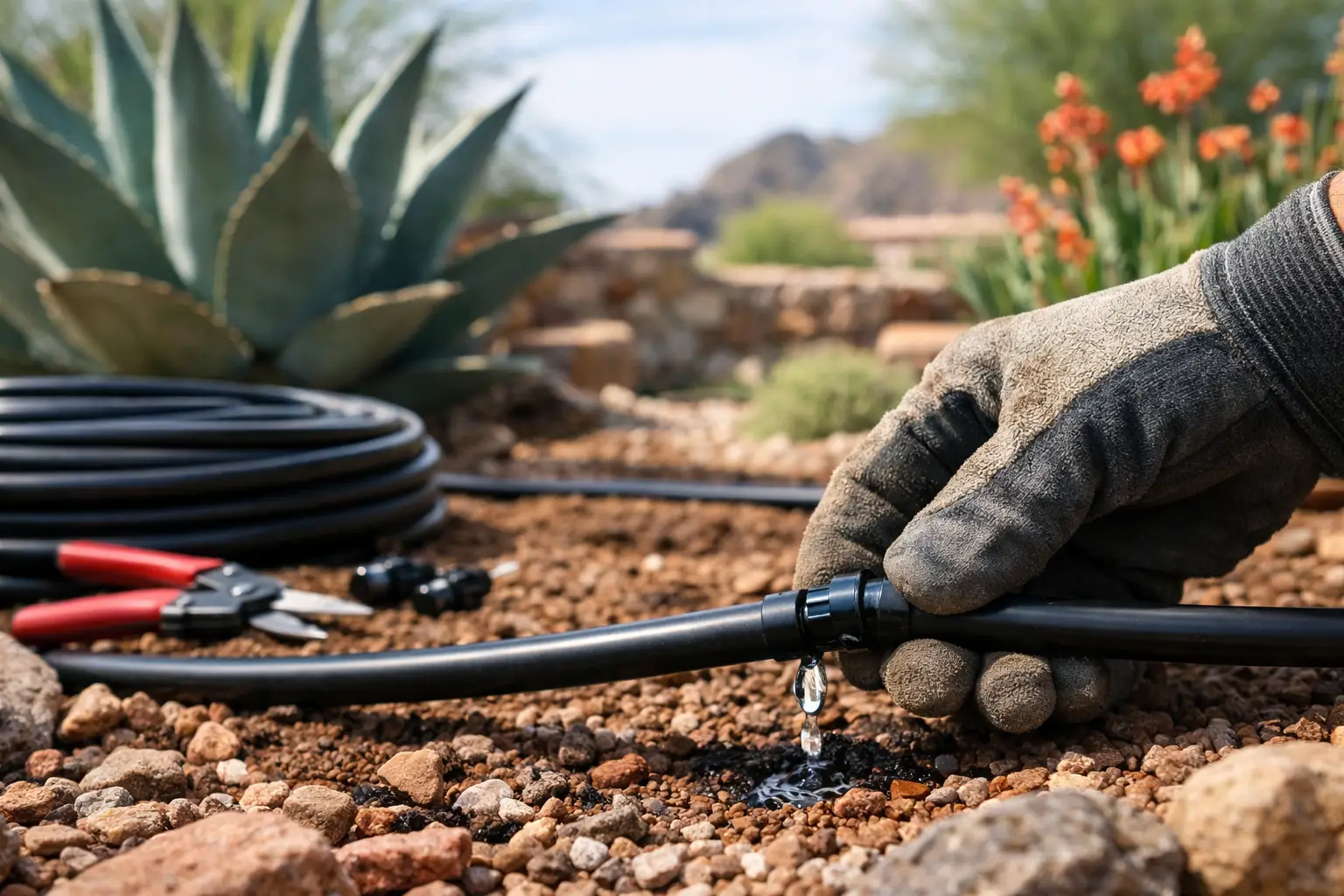
Irrigation should be precise. Drip systems and well-placed emitters deliver water to the root zone with far less waste than overhead spray. Timers and weather-aware scheduling can cut unnecessary watering, especially in monsoon season or during cooler months.

A strong low-water plan usually includes these steps:

  • Hydrozoning: group plants by similar water needs
  • Mulch depth: keep enough cover to slow evaporation and reduce weeds
  • Deep watering: soak the root zone, then allow soil to dry between cycles
  • Mature spacing: give shrubs and succulents room to reach full size
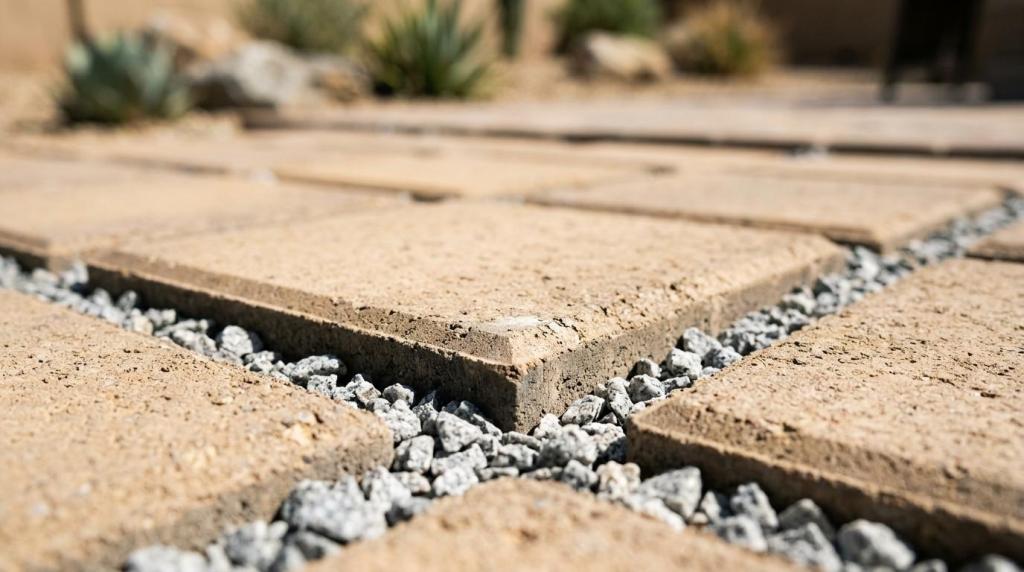
  • Permeable hardscape: use surfaces that let water soak into the ground

One common mistake is treating desert plants like tropical plants. Too much water, frequent shallow watering, or crowded placement can create weak growth and disease issues even in species known for toughness.

How to combine plants for a balanced desert landscaping plan

A successful low-water yard is not just a collection of tough plants. It is a composition. The best ones use contrast, repetition, and scale to keep the space attractive all year.

Start with one or two trees for canopy, then anchor the planting beds with structural shrubs or succulents. Fill open areas with flowering perennials and low groundcovers. Repeat key shapes or colors across the property so the design feels unified. Silver foliage, green bark, coral flowers, yellow bloom, and dark gravel can work together beautifully when each element is given room.

This kind of plant layering helps a yard feel cooler and more settled, even before the trees reach full size.

A few pairings work especially well in Arizona landscapes:

  • Palo verde with red yucca and silver carpet
  • Mesquite with creosote and desert marigold
  • Desert willow with blanket flower and blackfoot daisy
  • Ocotillo with agave and decomposed granite accents

Planning low-water desert landscaping plants for El Mirage properties

In El Mirage and surrounding Arizona communities, heat intensity, reflected sun, alkaline soil, and limited rainfall should shape every planting decision. That is why locally appropriate design matters so much. The same plant can thrive in one part of a yard and struggle in another depending on drainage, wall heat, irrigation pattern, and sun exposure.

A practical plan often includes native plants, efficient drip irrigation, mulch or gravel coverage, and hardscape features that reduce unnecessary turf. For some properties, artificial grass also has a place in the design when a green play area or clean visual contrast is important but water savings remains a priority.

Professional installation can make a big difference here, especially when it includes grading, irrigation zoning, pavers, lighting, and plant placement as part of one coordinated plan. A family-owned landscaping team that works regularly in desert conditions can help match plant choices to the site, set realistic watering schedules, and build a landscape that looks strong from day one and keeps getting better as it settles in.

How to Seal Patio Pavers the Right Way

A patio can look solid one season and worn out the next, especially under Arizona sun, dust, and monsoon moisture. If you’re wondering how to seal patio pavers, the goal is simple: protect the surface, hold color longer, and make routine cleanup easier without creating a slippery or cloudy finish.

For homeowners, property managers, and commercial property owners, sealing is not just about appearance. It helps defend pavers against fading, surface wear, stains from grills or planters, and sand loss in the joints. But the result depends on timing, prep work, and using the right sealer for the material and the weather.

Why sealing patio pavers matters in Arizona

Arizona is hard on outdoor surfaces. Constant UV exposure can dull color faster than many people expect, and windblown dust settles into every joint and texture. Add irrigation overspray, occasional heavy rain, and day-to-night temperature swings, and even well-installed pavers start to show wear.

A good sealer adds a protective layer that helps the patio resist staining and reduces how quickly the surface breaks down visually. It can also help stabilize joint sand when used with the right sanding and prep process. That matters on patios, walkways, poolside areas, and commercial entry spaces where a clean, finished look affects the whole property.

That said, sealing is not always one-size-fits-all. Some pavers do better with a natural-look penetrating sealer, while others can handle an enhancing or film-forming finish. The right choice depends on whether you want a low-sheen natural appearance, richer color, more stain resistance, or easier maintenance.

How to seal patio pavers step by step

If you want lasting results, the process matters as much as the product. Rushing through cleaning or applying sealer in poor weather is where most problems start.

Start with a full inspection

Before anything else, inspect the patio carefully. Look for loose pavers, low spots, weeds in the joints, oil stains, efflorescence, and worn-out joint sand. Sealer should go on a stable, clean, dry surface. If the base is shifting or the joints are failing, sealing too early only locks in problems.

This is also the time to identify the paver material. Concrete pavers, brick pavers, travertine, and other natural stone surfaces can need different sealers and different application methods. Using the wrong product can leave haze, uneven absorption, or a finish that peels.

Clean the patio thoroughly

Sealer does not hide dirt. It traps it.

Sweep the patio first, then deep clean the surface to remove dust, stains, algae, and debris packed into joints and texture. In many cases, a pressure washer can help, but too much pressure can damage joint sand or etch softer materials. On travertine or older pavers, a gentler wash is often the better move.

If there are grease spots from grilling or stubborn rust stains, those should be treated before sealing. Otherwise they can remain visible under the finished coat. After washing, let the patio dry completely. In Arizona heat, the surface may look dry quickly, but moisture can still be sitting in the joints. That can cause whitening or poor sealer bonding.

Refill joint sand if needed

If washing removed joint sand, replace it before sealing. This part gets skipped all the time, and it shows later when pavers start shifting or gaps open up. Fresh joint sand helps keep the system locked together and supports a more finished result.

For many patios, polymeric sand is a strong option because it hardens when activated correctly and helps reduce weed growth and washout. But it has to be installed properly. If the joints are not fully dry before sanding, or if extra sand is left on the surface, sealing afterward can get messy fast.

Pick the right sealer for the finish you want

There are two main decisions here: appearance and performance.

A penetrating sealer usually keeps a more natural look and works well when you want protection without shine. It is often a good fit for patios where slip resistance matters and where the goal is subtle protection. An enhancing sealer deepens color and can give the pavers a richer, freshly installed look. Film-forming sealers create more visible surface build, sometimes with satin or glossy results, but they can require more upkeep and can become slippery if the wrong product is used around pools or shaded areas.

In Arizona, UV stability matters. A sealer that looks good at first but breaks down quickly in direct sun is not saving money. For high-traffic residential and commercial spaces, durability and recoat expectations should be part of the decision.

Apply under the right weather conditions

Timing matters more than most people realize. Do not seal when the patio is hot from direct midday sun, when rain is expected, or when there is visible moisture in the surface. High heat can cause the sealer to flash too quickly, leading to roller marks, uneven coverage, or a patchy finish.

Early morning or late afternoon is often the safest application window in Arizona, depending on the season. Always follow product temperature guidelines. The patio surface temperature can be much hotter than the air temperature, especially on darker pavers.

Use thin, even coats

Most patio paver sealers work best in thin, controlled coats instead of one heavy application. Heavy coats can puddle, dry unevenly, or leave a sticky finish. Depending on the product, you may use a sprayer, roller, or a combination of both. The goal is consistent coverage, not over-saturation.

Work in manageable sections and keep a wet edge so the finish blends evenly. Pay extra attention to edges, transitions, and low areas where product can collect. If a second coat is recommended, apply it within the manufacturer-approved window.

Let it cure before full use

Dry to the touch is not the same as fully cured. The patio may need a full day or longer before regular foot traffic, furniture placement, grilling, or washing. If vehicles will cross the area, cure time can be longer.

This part is worth respecting. Walking on the surface too early can leave marks, and dragging furniture back in place can damage the finish before it has settled properly.

Common mistakes that cause sealing problems

Most sealing issues come from rushing or using the wrong product. One major mistake is sealing dirty pavers. Another is trapping moisture in the joints, which can lead to a cloudy or milky appearance. Over-application is also common. More sealer does not mean more protection.

A mismatch between sealer and surface is another issue. Concrete pavers, brick, and natural stone do not all respond the same way. Some surfaces absorb quickly, while others need a product designed specifically for denser material. If the patio has older coatings, those need to be evaluated too. New sealer over failing old sealer can peel or look blotchy.

There is also the question of finish. A glossy look might sound appealing, but it is not always practical for every yard or commercial setting. On a sun-heavy patio, too much shine can look artificial. Around pools or shaded areas, it can create a safety concern if the product reduces traction.

How often should patio pavers be sealed?

It depends on the paver type, the sealer used, and how the space is used. A lightly used backyard patio may go longer between applications than a commercial walkway or a high-traffic entertainment area with frequent grilling and furniture movement.

In Arizona, many sealed paver surfaces need attention every few years, but there is no universal schedule. Instead of sealing on a fixed calendar, watch for signs like fading color, faster stain absorption, joint sand erosion, or water no longer beading on the surface. Those are better indicators than guessing.

DIY or hire a professional?

If the patio is small, the surface is in good shape, and you are comfortable with prep work and application timing, a DIY job can work. But sealing is one of those services that looks simple until the finish goes wrong. Clouding, roller lines, trapped debris, and uneven gloss are expensive to fix.

Professional sealing makes more sense when the patio is large, the material is specialty stone, stains need treatment, joint sand must be replaced, or the space has visible wear and repairs. It also helps when the property needs a consistent result across multiple hardscape areas. For many Arizona properties, that includes walkways, driveways, courtyards, pool decks, and outdoor living spaces that should all match and perform well.

At Pro Natural Landscape, sealing is part of a bigger hardscape approach – not a quick coat over a problem surface. When the prep, repairs, and product selection are handled correctly, the finished patio looks cleaner, lasts longer, and stays easier to maintain.

If your pavers are looking faded, dusty, or uneven, sealing can make a real difference. The key is doing it at the right time, with the right prep, and with a finish that fits how you actually use the space.

Residential Landscaping Arizona That Lasts

A yard in Arizona has to do more than look good for a weekend. It has to handle extreme heat, intense sun, dust, fast growth in the wrong places, and long stretches where every drop of water matters. That is why residential landscaping Arizona homeowners choose should be built around durability, low maintenance, and practical outdoor use from the start.

A good landscape plan is not just about adding plants and calling it finished. It is about creating an outdoor space that fits how you live, protects your property, and stays attractive without constant repairs or high water bills. For some homes, that means artificial grass and pavers. For others, it means gravel, shade trees, irrigation upgrades, lighting, and ongoing maintenance. The right answer depends on the yard, the home, and the amount of upkeep you actually want.

What makes residential landscaping Arizona different

Landscaping in Arizona is a different job than landscaping in milder climates. Here, a nice-looking yard can fail fast if the materials are wrong or the layout ignores sun exposure, drainage, and water use. A lawn that looks great for one season may become a maintenance problem. Decorative features that are installed without planning can shift, crack, or create runoff issues.

That is why smart design matters early. Desert-friendly landscaping is not limited to one style. You can build a modern yard, a family-friendly backyard, a clean low-maintenance front entry, or a more traditional outdoor layout. The key is choosing surfaces, irrigation, and plant placement that work with Arizona conditions instead of fighting them.

In many cases, homeowners want the same three things: stronger curb appeal, less maintenance, and better use of outdoor space. Those goals can work together, but only if the project is planned as a system instead of a mix of random upgrades.

Start with the surfaces that do the heavy lifting

In Arizona yards, hardscaping often carries more of the visual and functional load than in other regions. Pavers, travertine, gravel, and concrete-adjacent features shape how the yard looks and how it performs. They also reduce maintenance when installed correctly.

Pavers are one of the most practical upgrades for driveways, walkways, patios, and backyard living areas. They add structure, improve usability, and hold up well under heat. They also give homeowners more design flexibility than plain concrete. If a yard feels unfinished or difficult to use, pavers often solve that problem quickly.

Travertine is another strong option, especially around patios and pool areas where comfort underfoot matters. It brings a cleaner, more finished look, but material choice should always match the use of the space and the budget. Some homeowners want the premium appearance of travertine. Others want the durability and value of pavers. Both can work well if installed with proper grading and base preparation.

Gravel remains one of the best choices for low-water residential landscaping Arizona properties need. It is cost-effective, clean-looking, and easy to maintain when borders and weed control are done right. The trade-off is that gravel-only yards can look flat or overly basic without contrast. That is where layering in plants, lighting, pathways, or accent areas makes a difference.

Artificial grass is popular for a reason

A lot of Arizona homeowners are done with patchy natural grass. Between water costs, dead spots, mud, and constant upkeep, traditional lawns often turn into more work than they are worth. Artificial grass gives you the green look without the same demand for mowing, watering, and seasonal repair.

That said, not every artificial grass installation is equal. The base work matters. Drainage matters. Edge details matter. If turf is installed poorly, it can shift, wrinkle, or look obviously fake. When it is installed correctly and paired with the right surrounding materials, it creates a clean, usable space for kids, pets, and general backyard use.

Artificial grass works especially well when it is not forced into every part of the yard. In many Arizona homes, the best result comes from using turf in targeted areas while relying on pavers, gravel, and desert-adapted planting elsewhere. That keeps the design balanced and helps the yard feel intentional instead of overbuilt.

Irrigation can make or break the whole landscape

A yard can have great materials and still struggle if the irrigation is outdated or poorly set up. Broken sprinkler heads, uneven coverage, leaks, and bad timing waste water and damage plants. In Arizona, that gets expensive fast.

A reliable irrigation system supports the entire property. It protects plant health, controls waste, and reduces the need for constant manual watering. For homeowners who already have landscaping in place, irrigation upgrades are often one of the smartest improvements they can make. For new installations, irrigation should be planned alongside the layout, not treated as an afterthought.

There is also a balance to strike. Some yards need more coverage in planted zones and less in hardscape-heavy areas. Some properties benefit from drip systems rather than traditional spray setups. It depends on the plant material, the yard size, and how much maintenance the owner wants to handle over time.

Trees, grading, and cleanup are part of the real job

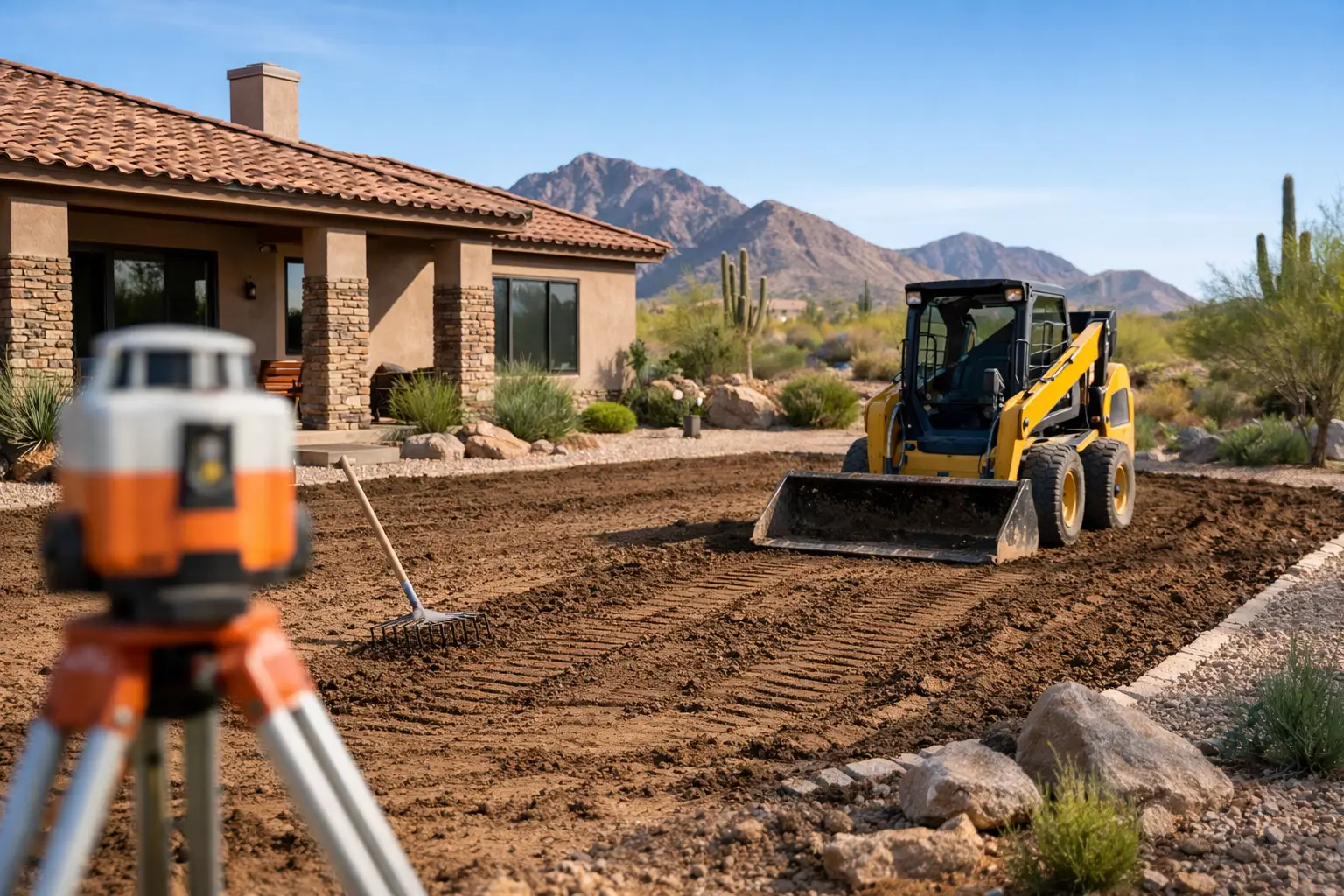
A lot of landscaping problems start before the decorative work even begins. Overgrown trees, stumps, uneven ground, and built-up debris can hold back the entire project. If those issues are ignored, new installations often look incomplete or develop problems later.

Tree removal and stump grinding are sometimes necessary for safety, space planning, or visual cleanup. Land grading is just as important when drainage, leveling, or erosion is a concern. These are not flashy services, but they are often the difference between a yard that lasts and one that starts failing after the first heavy rain or irrigation problem.

Cleanup matters too. Homeowners want a finished result, not a project site left behind. A dependable contractor handles the prep work, the transformation, and the final cleanup so the property is ready to use.

Landscape lighting adds function, not just looks

In Arizona, outdoor spaces are often used most in the evening. That makes lighting more than a decorative add-on. Good landscape lighting improves visibility, supports safety, highlights key features, and helps the yard stay useful after sunset.

The best lighting plans are simple and purposeful. Entry areas, pathways, patio zones, and focal points usually matter more than over-lighting every corner of the yard. A clean lighting layout can make a property feel more finished and more secure without creating glare or unnecessary cost.

Why one contractor matters for residential landscaping Arizona projects

One of the biggest frustrations homeowners face is juggling multiple companies for one outdoor project. One crew handles pavers, another handles irrigation, another handles turf, and someone else is needed for wall repairs or maintenance. That process slows down the work and creates too many opportunities for miscommunication.

A full-service contractor simplifies the job. When one team can handle design, installation, repair, cleanup, and maintenance, the project stays more organized. It also becomes easier to match materials, keep the look consistent, and solve problems without delays between vendors.

That matters even more when the work goes beyond planting and decorative updates. Many Arizona properties also need block wall work, fence wall repair, paver renovation, sealing, tile or brick installation, and other exterior improvements that affect the overall look and function of the yard. A contractor with a wider service range can address the whole property instead of treating landscaping like an isolated task.

Choosing the right plan for your home

Not every home needs a full yard overhaul. Some properties need a clean front-yard refresh with gravel, trimming, and lighting. Others need a complete backyard transformation with pavers, artificial grass, irrigation, and shade planning. The smart move is to start with the problems that affect daily use and long-term upkeep.

If the yard is costing too much to maintain, focus on water-conscious materials and irrigation efficiency. If it looks outdated, prioritize the surfaces and layout people notice first. If the space is hard to use, invest in walkways, patios, and practical outdoor zones. A good contractor will help you sort out what needs to happen now and what can wait.

For Arizona homeowners who want dependable results, the best residential landscaping Arizona approach is one built around local conditions, real use, and solid workmanship. Pro Natural Landscape focuses on practical outdoor solutions that improve curb appeal, reduce maintenance, and help homeowners get more from their property year-round.

If your yard is worn out, inefficient, or simply not working for your home anymore, the next step is simple. Build a landscape that fits Arizona, fits your property, and keeps doing its job long after the installation is done.

How Much Does Artificial Grass Cost? A Homeowner’s Pricing Guide

Artificial grass can be one of the smartest outdoor upgrades for Arizona properties, but the price is not one-size-fits-all. A small pet run, a clean front yard refresh, and a full backyard transformation can all have very different costs, even when the square footage looks similar on paper.

For most homeowners, the real question is not just “What is the price per square foot?” It is “What am I actually getting for that price?” The answer depends on turf quality, site preparation, drainage, access, edging, and the skill of the installation crew.

Average artificial grass installation cost per square foot

Across the U.S., professionally installed artificial grass often falls between $5 and $20 per square foot. Many residential projects land somewhere in the middle of that range, while premium installations, difficult sites, or custom layouts can push pricing higher.

In Arizona, artificial turf projects often make financial sense because water savings and reduced maintenance can be substantial over time. At the same time, desert conditions can affect the type of turf selected, the base preparation required, and the overall installation method. That means local pricing may sit closer to the mid-range or upper-range depending on the yard.

Material-only pricing is lower than full installation pricing. Turf itself may cost roughly $2 to $6 per square foot for many products, while the rest of the project budget goes toward excavation, base materials, compaction, seaming, infill, edging, labor, hauling, and cleanup.

Artificial grass cost by yard size and turf grade

A quick table helps show how project totals can shift depending on the size of the area and the level of turf selected.

Project Size Budget Range at $6 to $9/sq ft Mid-Range at $10 to $14/sq ft Premium Range at $15 to $20/sq ft
200 sq ft $1,200 to $1,800 $2,000 to $2,800 $3,000 to $4,000
500 sq ft $3,000 to $4,500 $5,000 to $7,000 $7,500 to $10,000
800 sq ft $4,800 to $7,200 $8,000 to $11,200 $12,000 to $16,000
1,000 sq ft $6,000 to $9,000 $10,000 to $14,000 $15,000 to $20,000
1,500 sq ft $9,000 to $13,500 $15,000 to $21,000 $22,500 to $30,000

These numbers are planning ranges, not fixed prices. A simple flat yard with easy access can come in lower than expected. A property with demolition, grading, drainage issues, or lots of curved edges can rise quickly.

Main factors that change artificial grass pricing

Square footage matters, but it is only part of the story. Two 600 square foot projects can have very different totals if one needs major prep work and the other is ready for installation.

The biggest pricing factors usually include the turf product itself, how much base work the site needs, and how much labor is required to make the finished lawn look clean and natural.

  • Turf quality: Higher-end turf with better color variation, denser stitching, stronger backing, and better heat and UV performance costs more.
  • Pile height: Taller, fuller grass usually raises the material price.
  • Site preparation: Sod removal, grading, compaction, weed barrier, and base installation can add a meaningful amount to the total.
  • Drainage needs: Poor drainage, clay-heavy soil, or low spots may require extra rock, grading, or drainage corrections.
  • Access to the yard: Narrow side yards, gates, or limited equipment access increase labor time.
  • Edges and layout: Curves, tree rings, stepping stones, and tight corners create more cuts, seams, and labor.

That is why the lowest quote is not always the best value. If important prep steps are skipped, the turf may shift, wrinkle, drain poorly, or wear unevenly much sooner than expected.

Turf material quality and pile height pricing

Not all artificial grass products are built the same. Some are designed for basic visual appeal. Others are designed for heavy foot traffic, pets, play areas, or a softer, more realistic look.

Budget turf often has a shorter pile and simpler color blend. Mid-range turf usually looks more natural and offers better durability for everyday residential use. Premium turf can include multi-tone fibers, added thatch, higher face weight, and stronger backing systems that help the lawn hold up under Arizona sun and regular use.

A few product details tend to influence price more than homeowners expect.

  • Short pile turf
  • Multi-tone blade color
  • Higher face weight
  • UV-resistant fibers
  • Pet-friendly drainage backing
  • Softer texture underfoot

If appearance matters most, many homeowners choose a turf that balances realism and budget instead of buying the most expensive option available. If pets or active kids will use the area daily, performance may matter more than looks alone.

Site preparation, drainage, and extras that add to cost

Base preparation is where a large share of the budget often goes, and for good reason. Strong prep work helps artificial grass stay level, drain well, and keep its shape over the years.

A professional installation commonly includes removing existing grass or debris, excavating to the proper depth, adding and compacting a crushed stone base, and setting the finished grade. On a site with uneven ground or drainage problems, prep can add several dollars per square foot to the final price.

Extras can also shift the total. These add-ons are not always optional, especially if you want a polished result that lasts.

  • Edging: Bender board, metal edging, or concrete borders help define the perimeter and hold the install together.
  • Infill: Silica sand or other infill materials help support the blades and improve performance.
  • Seam work: Large areas or custom shapes may require extra seam tape and adhesive.
  • Pet features: Deodorizing infill or improved drainage layers can raise the cost.
  • Removal and hauling: Old sod, gravel, roots, junk, or hardscape debris can increase disposal fees.

One detail homeowners often miss is waste factor. Turf comes in rolls, and complicated layouts create offcuts. A simple rectangle usually uses material more efficiently than a yard with many islands, curves, and small connecting spaces.

Artificial grass cost versus natural grass over time

Natural grass is much cheaper to install at the start. That is the main reason many homeowners hesitate when they first see a turf quote.

But the long-term math tells a different story, especially in dry climates where irrigation is expensive and lawn care never really stops. Water, mowing, fertilizer, weed control, reseeding, patch repair, sprinkler maintenance, and seasonal stress can add up year after year.

Here is a simple side-by-side look at common costs for roughly 1,000 square feet:

Cost Category Natural Grass Artificial Grass
Upfront installation Lower Higher
Water use High Minimal
Mowing Ongoing None
Fertilizer and weed control Ongoing Minimal
Irrigation repairs Common over time Rare or none for lawn watering
Appearance in hot weather Can decline Consistent
10-year maintenance spending Often significant Usually much lower

For many Arizona properties, artificial grass is less about getting the cheapest installation and more about buying predictability. The lawn looks finished year-round, maintenance drops sharply, and water demand can fall dramatically.

That shift is valuable.

Artificial grass cost for Arizona homeowners and property managers

Arizona projects come with a few local realities. Heat, intense sun, dust, hard soil, and water-conscious landscaping all shape how turf is selected and installed.

A high-quality artificial grass system often works best when it is part of a broader landscape plan. Gravel, pavers, irrigation adjustments, lighting, and clean transitions around patios or walkways can help the yard look intentional rather than patched together. When those elements are added to the same project, the per-square-foot turf price may no longer tell the whole budget story.

For homeowners and property managers in El Mirage and nearby communities, custom quoting is especially important. A local, family-owned landscaping company with experience in both landscaping and hardscaping can evaluate the property as a whole, not just the turf section. That helps create a more accurate budget and a better final result.

How to get an accurate artificial grass estimate

The fastest way to narrow your price range is to get a site-specific quote instead of relying on a national average. A good estimate should account for the actual condition of the yard, access points, drainage, and the turf product being proposed.

Before choosing an installer, it helps to know what separates a solid quote from a vague one.

  • Scope of prep work: Ask whether excavation, base compaction, weed barrier, and cleanup are included.
  • Turf specifications: Ask for pile height, face weight, backing type, and warranty details.
  • Drainage plan: Ask how the installation will handle runoff, pet use, or low spots.
  • Edge treatment: Ask what will secure the perimeter.
  • Labor and materials: Ask whether the proposal includes infill, seaming materials, hauling, and disposal.
  • Project timeline: Ask when work starts and how long the install should take.

If a quote looks unusually low, compare the prep details first. That is often where corners get cut.

Ways to keep artificial grass installation on budget

A beautiful turf installation does not always require a premium package. Smart decisions during planning can control costs without giving up quality where it matters.

Many homeowners save money by reducing unnecessary shapes, combining turf with gravel or pavers, or focusing on the highest-visibility areas first. A smaller, well-designed turf area often looks better than trying to cover every inch of the yard.

A few budget-friendly ideas can make a real difference.

  • Choose a mid-range turf for most residential yards
  • Keep the layout simple
  • Limit tight curves and isolated cutouts
  • Address drainage early
  • Combine turf with hardscape or decorative rock
  • Install in phases if needed

In some cases, financing can also help turn a large outdoor project into a more manageable monthly investment. For homeowners who want a complete yard upgrade, that can open the door to tackling turf, pavers, lighting, and cleanup in one coordinated plan instead of stretching the project over several seasons.

For property owners in El Mirage and surrounding Arizona communities, Pro Natural Landscape LLC offers free estimates and financing options through Hearth, which can make it easier to map out a realistic budget before work begins.

Landscape Lighting Ideas That Improve Safety and Curb Appeal

A well-lit yard changes how a property feels after sunset. It looks more polished, more inviting, and much easier to use. The best outdoor landscape lighting ideas do not treat safety and style as separate goals. They build both at the same time.

That matters for homeowners, property managers, and businesses alike. A dark front walk can lead to trips. A dim side yard can feel uneasy. A flat, overly bright lighting setup can wash out the architecture you want people to notice. Thoughtful lighting fixes all three problems by guiding movement, showing off textures, and reducing the dark pockets that make a property feel unfinished.

In Arizona neighborhoods, where outdoor living is part of daily life for much of the year, lighting also extends the usefulness of patios, courtyards, entryways, and garden spaces. A yard that disappears at dusk is leaving value on the table.

Outdoor landscape lighting ideas for safer walkways, steps, and entryways

Safety should start with the routes people use most often. That means the front walk, driveway, porch, gate, side yard access, steps, and any change in elevation. Even a modest lighting plan can make these areas much easier to use by showing edges clearly and removing dark gaps between fixtures.

Path lights are one of the most effective tools here. Set low to the ground, they cast a soft spread of light that defines the walking surface without creating glare. Step lights take that a step further by highlighting risers and tread edges, which helps guests see depth more clearly. This is especially useful around raised patios, retaining walls, and sloped walkways.

Good safety lighting is not about flooding every inch of the yard with brightness. It is about placing light where people need visual cues most.

After identifying the main walking routes, focus on the areas that tend to create nighttime risk:

  • Front walkway
  • Porch and entry threshold
  • Steps and grade changes
  • Driveway edges
  • Side-yard gates
  • Pool, patio, and deck transitions

Security benefits come from the same disciplined approach. Research on public lighting has shown meaningful reductions in nighttime crime after lighting upgrades, and the principle carries over to residential design. When entry points, side yards, and rear access areas are visible, an intruder has fewer places to stay hidden. Motion-activated fixtures near gates, garages, and back corners add another layer without keeping a harsh light on all night.

A couple of porch lights rarely cover everything that matters. A better plan creates clear sightlines from the street to the front door, from the driveway to the garage, and from the patio to the yard perimeter.

Outdoor landscape lighting ideas that boost curb appeal after dark

Once the essential safety zones are covered, curb appeal becomes the fun part. This is where lighting brings dimension to the property and gives the landscape a finished look long after the sun goes down. Trees look taller. Stone textures stand out. Garden beds gain depth. The home itself feels more welcoming from the curb.

Uplighting is one of the most reliable ways to create that effect. A fixture placed at ground level and aimed upward can draw attention to a specimen tree, a textured wall, a column, or a large cactus grouping. The goal is not to light everything equally. It is to guide the eye toward the strongest elements in the landscape.

Shadowing and silhouetting can add even more interest. A finely branched tree placed near a wall can cast soft patterns that move with the breeze. A sculptural plant or garden feature lit from behind can produce a crisp outline that feels dramatic without looking flashy. These techniques work especially well when the architecture has clean surfaces that can catch light and shadow.

Layering is what gives a property a high-end nighttime look.

The table below shows how common lighting ideas work in practice.

Lighting technique Best use Visual effect Safety value
Path lighting Walkways, drive borders, garden paths Clean definition and soft glow Helps prevent trips and missteps
Step lighting Stairs, retaining wall steps, raised patios Crisp edge visibility Improves footing and depth perception
Uplighting Trees, columns, facades, tall plants Height, texture, and drama Keeps key areas visible
Downlighting Patios, seating areas, lawn zones Natural moonlight effect Adds broad ambient coverage
Accent lighting Fountains, sculptures, specimen plants Focus and contrast Keeps focal areas readable at night
Motion lighting Side yards, garage areas, gates Sudden illumination on activity Deters unwanted movement

The strongest curb appeal usually comes from combining three layers: functional light for movement, accent light for focal points, and ambient light for atmosphere. A property that uses only one of those layers often feels either too dim or too flat.

Landscape lighting color temperature and brightness tips

Fixture placement gets most of the attention, yet color temperature has a major impact on the final look. Warm white light, usually in the 2700K to 3000K range, is popular for residential landscapes because it feels natural and welcoming. It flatters stone, wood, desert plantings, and most home exteriors.

Neutral white light, closer to 3000K to 4000K, can work well on busy walkways or mixed-use commercial spaces where clarity matters a bit more. Cooler light, often 4000K to 5000K, is best used selectively for security zones, service areas, or motion-triggered fixtures where visibility is the top priority.

Here is a simple guide:

Color temperature Best fit Typical result
2700K to 3000K Front yards, planting beds, patios, facade accents Warm, inviting, residential feel
3000K to 4000K Walkways, common areas, commercial entries Balanced visibility with less harshness
4000K to 5000K Security zones, side yards, service access Bright, crisp visibility

Brightness matters just as much. A path light that is too weak leaves dark gaps. One that is too strong creates glare and harsh contrast. The right level gives enough illumination to read the surface underfoot while keeping the yard comfortable to look at. In many projects, low-voltage LED fixtures spaced with care will do the job better than a smaller number of very bright fixtures.

This is one place where restraint usually wins. More light does not always mean better lighting.

LED and smart outdoor landscape lighting ideas for Arizona properties

LED systems have become the standard for good reason. They use less energy, last longer, and offer better control over beam spread and color temperature than older lamp types. For a property owner, that means lower maintenance, steadier performance, and a cleaner nighttime appearance.

Low-voltage LED lighting is especially useful in residential landscapes because it is efficient and flexible. Fixtures can be placed along paver walks, around planting beds, near water features, and under walls or seating elements without making the system overly complex. For commercial properties, the same approach supports cleaner layouts and more predictable coverage.

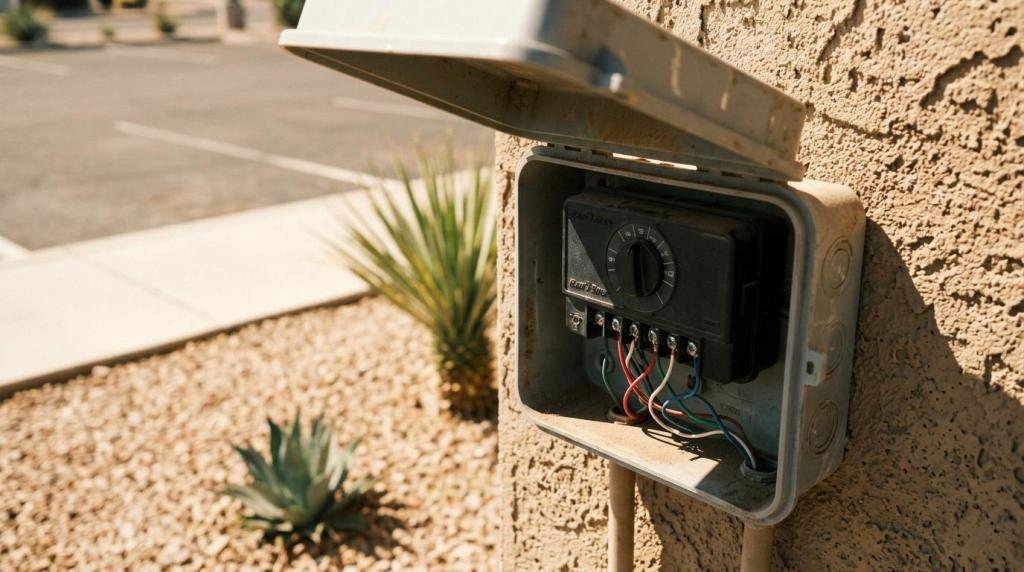
Smart controls make the system work harder without adding effort to the owner’s routine. Timers, photocells, and motion sensors let lights turn on at the right time and shut off when they are no longer needed. This is good for energy use, yet it also keeps the property consistently lit when people are arriving home, leaving for work early, or using the patio in the evening.

A practical smart-lighting setup often includes:

  • Photocells: Turn lights on automatically at dusk
  • Timers: Set shutoff times for decorative zones
  • Motion sensors: Add extra security near gates and garages
  • Zoned lighting
  • Seasonal programming
  • App-based control where needed

For Arizona landscapes, durability matters too. Heat, dust, irrigation overspray, and sun exposure all put pressure on outdoor materials. Quality fixtures with solid seals, strong finishes, and well-planned wiring hold up better and keep the lighting scheme looking consistent over time.

Outdoor landscape lighting ideas for patios, walls, and focal features

The front yard usually gets the most attention, but backyard and side-yard lighting often has the biggest effect on how often the space is used. A patio with the right lighting becomes a place people want to stay in, not just pass through. The same is true for courtyards, ramadas, outdoor kitchens, and poolside seating areas.

Downlighting mounted on structures or in tree canopies can create a soft wash over dining and lounge areas. Wall lights can bring texture out of masonry and block walls while giving the yard a calmer background glow. Recessed lights tucked into low walls or benches keep the light source hidden and the effect refined.

If the property has a fountain, specimen tree, sculpture, or architectural column, give it a dedicated accent light. One well-lit focal point can organize the entire nighttime view. That is often more effective than scattering fixtures evenly across every bed and border.

Patio lighting works best when the fixtures match the purpose of the space:

  • Dining areas: Soft overhead or downlighting with good color quality
  • Conversation areas: Lower ambient light with subtle wall or planter accents
  • Water features: Focused beam control to avoid glare and highlight movement
  • Outdoor kitchens: Brighter task lighting on prep and cooking surfaces

Custom landscape lighting planning for homes and commercial properties

A strong lighting plan starts with how people use the property. Where do guests enter? Which route do residents take from the driveway to the front door? Where are the level changes? What deserves attention from the street? Those answers shape the layout far better than buying a boxed kit and placing fixtures at random.

That is one reason many property owners choose a professional design and installation team. Pro Natural Landscape LLC, a family-owned company serving El Mirage and nearby Arizona communities, provides outdoor lighting as part of broader landscape and hardscape work. Their service mix includes Low-voltage LED lighting, timer installation, design support, and exterior improvements that let the lighting feel integrated with the rest of the property rather than added on as an afterthought.

Their practical approach fits what most owners actually need:

  • Path and step lighting: Safer movement from curb to entry and through outdoor living areas
  • Uplights and accent fixtures: Better curb appeal for trees, facades, and focal features
  • Timers and controls: Reliable scheduling with less wasted energy
  • Free estimates
  • Financing options through Hearth

For commercial properties, the same design principles apply with a slightly different priority order. Safety and clarity often come first, especially near entries, parking edges, and pedestrian routes. Curb appeal still matters, though. A well-lit storefront, office frontage, or common area signals care, quality, and attention to detail before anyone steps inside.

The best outdoor landscape lighting ideas are rarely the loudest ones. They are the ones that make a property easier to use, easier to appreciate, and more memorable at night.

Hardscape Construction Arizona Done Right

A cracked patio, shifting pavers, or a yard that turns dusty and unusable by summer is not just an eyesore in Arizona. It is wasted space. Hardscape construction Arizona property owners invest in should solve that problem by creating outdoor areas that hold up to heat, stay practical year-round, and reduce the maintenance that comes with desert living.

For homeowners, that might mean a paver patio that actually gets used. For commercial properties, it often means cleaner walkways, stronger curb appeal, and surfaces that make the site look cared for without constant upkeep. The key is not simply adding stone or brick. The key is building the right hardscape for Arizona conditions from the ground up.

What hardscape construction Arizona projects should include

Hardscape is the built side of your landscape. It covers the non-living features that shape how the property works and how it looks. In Arizona, that usually means paver patios, walkways, driveways, travertine surfaces, gravel areas, retaining features, block walls, brickwork, and transitions that connect different parts of the yard or site.

A good hardscape plan does more than improve appearance. It helps control dust, define outdoor living space, improve drainage, reduce bare spots, and make a property easier to maintain. On commercial sites, it can also create a cleaner, more professional first impression for tenants, customers, and visitors.

That is why the design matters just as much as the installation. If the layout does not fit the traffic flow, sun exposure, irrigation, and grade of the property, even expensive materials can underperform.

Arizona is hard on outdoor surfaces

Not every hardscape method works well in the desert. Arizona heat, intense UV exposure, monsoon runoff, and dry soil movement all affect how outdoor construction performs over time. Materials expand, surfaces can fade, and poor base preparation shows up fast when the weather shifts.

This is where many projects go wrong. A patio may look finished on day one, but if the base was rushed or the wrong material was used in a high-heat area, the problems start later. Pavers separate. Edges loosen. Water pools where it should drain away. The surface becomes harder to maintain instead of easier.

The better approach is practical and straightforward. Choose materials that make sense for the site. Prepare the base correctly. Account for drainage and grading before the surface goes in. Match the hardscape to how the property is actually used, not just how it looks in a photo.

The best materials depend on the job

Pavers are one of the most common choices for hardscape construction Arizona customers request because they are durable, versatile, and easier to repair than poured concrete. They work well for patios, walkways, driveways, and entertainment areas. They also come in styles that fit both modern and traditional properties.

Travertine is another strong option, especially around patios and pool areas where surface temperature matters. It has a clean, upscale appearance and can stay more comfortable underfoot than some darker or denser materials. Still, it is not the right answer for every project. Budget, traffic level, and maintenance expectations all matter.

Gravel remains one of the most practical materials in Arizona landscapes, especially when used to cover broad areas, control dust, and support low-water designs. It is cost-effective and low maintenance, but it does not replace the function of a true patio or walkway where stability and comfort are more important.

Block and brick features also play an important role. They can define borders, create seating edges, improve privacy, support elevation changes, or tie together different outdoor zones. On many properties, the strongest result comes from combining materials instead of relying on one surface for everything.

Hardscape construction Arizona homeowners actually use

A good residential hardscape should make daily life easier. That sounds simple, but it matters. The best patio is not always the biggest one. The best walkway is not always the most decorative. What works is a layout that fits how the household moves, gathers, parks, entertains, and maintains the yard.

If a backyard gets strong afternoon sun, shade planning should influence where the patio goes. If kids and pets use the yard, transitions between pavers, artificial grass, and gravel should be clean and durable. If the front yard needs stronger curb appeal without adding water demand, hardscape can carry much of that visual improvement with less ongoing work.

There is also a value question. Homeowners want an outdoor upgrade that looks sharp but also lasts. That usually means avoiding trendy layouts that do not age well and focusing on surfaces that stay functional season after season. A well-built paver area, clean gravel layout, or properly installed walkway often delivers more long-term value than features that need frequent touch-ups.

Commercial hardscape needs a different level of durability

For property managers and business owners, hardscape is not only about looks. It affects access, safety, and the overall appearance of the site. Cracked walking paths, worn entry areas, and neglected exterior surfaces send the wrong message fast.

Commercial hardscape construction Arizona businesses need should be built for traffic and easy upkeep. That means clear pathways, solid edges, practical material selection, and layouts that support maintenance crews instead of working against them. It also means choosing finishes that continue to look clean in full sun and dry conditions.

Many commercial properties benefit from a combined approach. Hardscape can define entrances and pedestrian routes, while gravel, artificial grass, lighting, and irrigation improvements support the rest of the exterior. When one contractor can handle those connected services, the job tends to move faster and the finished property feels more consistent.

Why the base work matters more than most people think

The visible surface gets the attention, but the base is what determines how long the project lasts. Proper excavation, grading, compaction, and edge restraint are what keep a hardscape stable through heat, rain, and regular use.

This is one of the biggest differences between a quick install and a professional one. When contractors cut corners below the surface, the issues eventually show on top. You may see sinking sections, uneven lines, weed growth, or drainage trouble that could have been prevented at the start.

Good hardscape work should also account for surrounding systems. Irrigation lines, nearby trees, slopes, drainage paths, and adjoining landscape areas all need to be considered before installation begins. If those details are ignored, the project may create new problems even if the hardscape itself looks finished.

Low-maintenance does not mean no-maintenance

One reason hardscape is so popular in Arizona is that it reduces outdoor upkeep. That is true, but only if the project is designed and finished correctly. Pavers may need occasional sealing or joint sand maintenance. Gravel areas may need periodic refreshing. Surfaces should be kept clear of debris so they continue to drain and present well.

The good news is that hardscape maintenance is usually predictable and manageable, especially compared with struggling lawns, muddy spots, or worn dirt areas. The goal is not zero upkeep. The goal is a cleaner, more durable outdoor space that does not demand constant attention.

That is especially valuable for busy homeowners, rental property owners, HOAs, and commercial sites where exterior appearance affects value and perception every day.

Choosing the right contractor for hardscape construction Arizona projects

The best contractor is not just someone who can install pavers. You want a team that understands Arizona conditions and can look at the full property, including grading, drainage, surrounding landscape, and long-term maintenance. That broader view matters because hardscape rarely stands alone.

It helps to work with a company that can handle related services such as gravel installation, artificial grass, irrigation adjustments, wall work, paver renovation, and cleanup. When one team can manage the complete exterior project, there is less back-and-forth, fewer scheduling problems, and a clearer result.

That practical, full-service approach is what many Arizona customers are really looking for. They do not want to coordinate separate crews for demolition, installation, repairs, and finishing touches. They want the job handled correctly and efficiently. That is where a local company like Pro Natural Landscape brings real value.

If your patio is worn out, your walkways are uneven, or your property needs a stronger, more usable layout, now is the time to fix it with materials and construction methods that fit Arizona. The right hardscape does not just fill space. It gives your property a cleaner look, better function, and an outdoor area you can actually count on.

Residential Garden Services That Work

A yard in Arizona can go downhill fast. One irrigation issue, one stretch of extreme heat, or one season of skipped maintenance can turn a usable outdoor space into a dry, patchy, hard-to-manage problem. That is why residential garden services are not just about appearance. They are about keeping your property functional, efficient, and easier to live with year-round.

For homeowners, the real goal is simple. You want an outdoor space that looks clean, holds up in the desert climate, and does not create more work every weekend. Some properties need a full redesign. Others need cleanup, repairs, better drainage, or low-maintenance materials that make the yard easier to manage. The right service depends on what your property is doing now and what you need it to do next.

What residential garden services should actually solve

A lot of people hear the word garden and think flowers, trimming, and basic lawn care. In Arizona, that definition is too narrow. A residential yard often includes gravel areas, paver walkways, artificial grass, irrigation lines, lighting, trees, drainage needs, and hardscape features that all have to work together.

That means good residential garden services should solve practical property issues, not just surface-level appearance. If your yard is wasting water, collecting debris, showing bare spots, cracking around walkways, or looking uneven and neglected, those are service needs. If your layout is fine but the upkeep is too much, that is also a service need.

The best results usually come from looking at the whole outdoor space instead of treating each issue separately. A homeowner might call about dead plants, but the real problem could be poor irrigation coverage. Another yard may look outdated, but the bigger issue is that the materials used were never a good fit for Arizona heat in the first place.

The services that matter most for Arizona homes

In this market, homeowners usually need more than one kind of help. Yard maintenance is important, but it is only one piece of a complete outdoor service plan.

Landscape installation and redesign

If the layout no longer works, maintenance alone will not fix it. New landscape installation can improve how the yard looks, how water is used, and how much time it takes to maintain. This may include replacing thirsty grass, updating planting areas, adding gravel, reshaping beds, or creating cleaner transitions between softscape and hardscape.

Redesign makes sense when the yard feels dated, uneven, or impractical. It also makes sense for homeowners who want better curb appeal before selling or renting out a property.

Artificial grass and low-maintenance surfaces

Natural grass can be hard to justify in many Arizona neighborhoods, especially when water use and upkeep become ongoing frustrations. Artificial grass gives homeowners a cleaner look with less maintenance, and it works well in backyards, pet areas, side yards, and play spaces.

That said, it is not the right fit for every part of every property. Installation quality matters. Base prep, drainage, and placement all affect how well it performs over time. In some yards, gravel and pavers may be the smarter choice for heavy traffic or full-sun areas.

Irrigation systems and water control

A yard can look healthy one month and fail the next if irrigation is not working correctly. Leaks, broken sprinkler heads, bad coverage, and poor timing waste water and damage plant material. In Arizona, irrigation is not a background system. It is one of the main reasons a landscape either survives or struggles.

Residential garden services should include irrigation installation, repairs, and adjustments that match the property. Different zones need different water schedules, and desert-friendly landscapes still need a plan. Water-conscious design saves money, but only if the system is built and maintained the right way.

Tree care, removal, and cleanup

Overgrown trees create more than a visual problem. They can block light, crowd structures, drop debris, and become a safety issue during storms or high winds. Tree removal and stump grinding are often part of restoring a yard that has become difficult to manage.

Cleanup services matter too. A property can lose curb appeal quickly when branches, dead growth, and yard debris build up. Regular cleanup keeps the space usable and prevents small issues from turning into larger repairs.

Pavers, gravel, and functional hardscaping

A residential garden is not just plants. Walkways, patios, borders, and surface materials all shape how the yard is used. Paver installation, gravel placement, land grading, and hardscape repairs often make the biggest visual difference because they define the space and reduce maintenance at the same time.

For many homeowners, hardscaping is the upgrade that finally makes the yard practical. It creates cleaner edges, better access, and stronger visual structure. It also tends to hold up better in desert conditions than high-maintenance planting-heavy designs.

Why one contractor matters

One of the biggest frustrations for homeowners is having to coordinate multiple companies for one yard. A landscaper handles plants, another crew handles irrigation, another installs pavers, and someone else has to come in for cleanup or repairs. That process slows everything down and usually creates gaps between services.

Residential garden services work better when one contractor can handle the full picture. If the same team can install landscaping, repair irrigation, remove a stump, add gravel, and update hardscape features, the project tends to move faster and the final result feels more consistent.

This is especially important when outdoor work overlaps. If grading is off, pavers may shift. If irrigation is poorly placed, fresh landscape installation may fail. If cleanup is skipped at the end, even quality work can look unfinished. Full-service execution reduces those problems.

How to tell what your yard needs first

Not every yard needs a complete overhaul. Sometimes the smartest move is to fix the systems and surfaces that are causing the most trouble now.

If your water bill is climbing or plants keep failing, start with irrigation. If the property looks tired but the layout still works, cleanup and material refreshes may be enough. If the space is difficult to use, has worn-out surfaces, or needs a stronger visual upgrade, a redesign with hardscape improvements may make more sense.

There is also a budget question. Full transformations deliver big results, but phased work can be the better choice for some homeowners. A practical plan might start with cleanup, grading, and repairs, then move into artificial grass, pavers, or lighting later. What matters is choosing work that solves a real issue instead of spending money on pieces that do not improve the yard’s performance.

What homeowners should expect from residential garden services

A dependable service provider should make the process straightforward. That starts with a clear look at the property, honest recommendations, and a scope of work that matches the condition of the yard. You should know whether the job is cosmetic, corrective, or a full upgrade.

You should also expect solutions that fit Arizona conditions. That means durable materials, water-conscious planning, and realistic maintenance expectations. A good-looking yard is not enough if it becomes expensive, fragile, or hard to maintain after installation.

Reliable execution matters just as much as design. Homeowners want crews that show up, finish the work properly, and leave the property cleaner and more usable than they found it. That is true whether the service is routine maintenance or a full exterior transformation.

Residential garden services and property value

Most homeowners think about yard work in terms of appearance, but there is also a value piece. A clean, functional outdoor space helps a home present better, photograph better, and feel more cared for overall. That matters if you plan to sell, rent, or simply protect the investment you already have.

The value is not only in major upgrades. Consistent maintenance, timely repairs, and practical improvements like gravel refreshes, paver repairs, and tree cleanup keep a property from slipping into visible neglect. Buyers and tenants notice that right away.

For homeowners staying long term, the value is daily use. A yard that is easier to maintain, more comfortable to walk through, and better suited to the climate saves time and reduces stress. That benefit adds up quickly.

Choosing the right team for the job

When you are comparing providers, look beyond whether they mow, trim, or install plants. Ask whether they can handle the broader needs of the property. Can they repair irrigation, install hardscapes, remove trees, refresh gravel, improve drainage, and manage cleanup? If not, you may still end up coordinating multiple contractors.

It also helps to choose a company that understands local conditions, not just general landscaping. Arizona yards need a different approach than properties in wetter climates. Materials, layout, water use, and maintenance plans all need to reflect that reality.

Pro Natural Landscape serves Arizona property owners who need that broader, practical approach. Instead of treating the yard as a single-service job, the focus is on building outdoor spaces that look better, work better, and hold up over time.

If your yard is becoming harder to maintain, harder to enjoy, or harder to ignore, the next step is not guessing your way through small fixes. It is getting the right residential garden services lined up so your outdoor space starts working for you again.

Affordable Commercial Landscaping That Lasts

A commercial property does not get a second chance at a first impression. When tenants, customers, and visitors pull up, the landscape tells them whether the property is cared for, professional, and worth doing business with. That is why affordable commercial landscaping is not about doing the cheapest work possible. It is about making smart decisions that improve appearance, control maintenance costs, and hold up in Arizona conditions.

For property managers and business owners, that usually means looking beyond short-term price tags. A low bid can turn into higher water bills, frequent repairs, dead plant replacement, and constant cleanup. A better plan focuses on durable materials, efficient irrigation, clean layout, and low-maintenance plant choices that keep the property looking sharp without creating a constant expense.

What affordable commercial landscaping really means

Affordable does not mean bare minimum. It means getting the right work done at the right price, with results that support the property over time. On a commercial site, that can include gravel installation, artificial grass, pavers, irrigation upgrades, tree trimming or removal, land grading, lighting, and routine maintenance.

The key is matching the scope to the property’s real needs. An office building with worn planter beds and broken irrigation may need a practical refresh more than a full redesign. A retail center with heavy foot traffic may benefit more from durable hardscaping and low-water ground cover than from a lawn that struggles through the summer. A warehouse or industrial property may need cleanup, grading, and simple landscape improvements that make the site safer and easier to maintain.

That is where experience matters. A contractor who understands Arizona landscapes can help you avoid spending money in the wrong places.

Why Arizona properties need a different approach

Commercial landscaping in Arizona has to perform under heat, sun exposure, dust, and water pressure. What works in another state may become expensive fast here. Traditional grass can drive up irrigation costs and require constant upkeep. Plants that are not suited for desert conditions often fail early. Poor drainage and bad grading can create erosion, puddling, and hardscape damage after storms.

Affordable commercial landscaping in Arizona usually starts with practical choices. Artificial grass can reduce mowing, edging, and water use in selected areas. Gravel can create a clean, finished look while cutting maintenance. Pavers and travertine can improve walkways and gathering spaces with more durability than basic poured surfaces in some settings. Irrigation systems need to be efficient, well-zoned, and easy to maintain.

There is no one-size-fits-all answer. A medical office, apartment complex, church, storefront, and HOA entrance all have different traffic patterns and visual goals. The right solution depends on how the property is used and what level of upkeep the owner wants to commit to.

Where commercial landscape budgets usually get wasted

Most overspending happens before the work even starts. It begins with poor planning, vague scopes, or selecting features that look good on paper but do not make sense for the site.

One common issue is overplanting. Too many shrubs, flowers, or decorative features can raise installation costs and create a maintenance burden that never goes away. Another problem is ignoring irrigation. A property may get a visual upgrade, but if the watering system is outdated or leaking, the site will continue wasting water and damaging plant health.

Material choice also matters. Cheap rock, thin turf products, or poorly installed pavers may save money up front, but they often shift, fade, or break down early. The same goes for skipping grading and prep work. If the base is wrong, the finish work will not last.

Commercial clients also lose money when they have to hire multiple vendors for one property. If one company handles landscaping, another handles pavers, another handles irrigation, and another handles repairs, costs can stack up and scheduling gets harder. A full-service contractor can often simplify that process and reduce delays.

Smart upgrades that keep costs under control

The most cost-effective commercial landscaping improvements are usually the ones that reduce recurring labor, water use, and repair needs.

Gravel installation is one of the most practical examples. On many Arizona properties, decorative gravel creates a clean, professional finish while limiting weed growth and cutting irrigation needs. It works especially well in medians, perimeter beds, and large open areas where grass would be expensive to maintain.

Artificial grass can be another strong option in entry zones, common areas, or places where year-round green color matters. It is not the right fit for every site, but in the right areas it can reduce mowing, watering, and patchy appearance.

Pavers and hardscape improvements are often worth considering around walkways, courtyards, and seating areas. They improve usability and presentation while standing up to regular traffic. If a surface is already damaged, paver renovation or sealing may be more affordable than full replacement.

Tree work is another area where timing matters. Overgrown trees can create safety issues, block visibility, and increase cleanup needs. Targeted trimming, stump grinding, or removal can immediately improve both appearance and function.

Lighting, fencing, and exterior repair work can also support the landscape budget by addressing the whole property instead of treating landscaping as a separate issue. When the outside of the property works together, it looks better and usually costs less to maintain.

How to choose an affordable commercial landscaping plan

Start with priorities, not wish lists. Ask what the property needs to solve right now. Is the biggest issue poor curb appeal, high water bills, trip hazards, dead plant material, drainage problems, or constant cleanup? Once the main problems are clear, it becomes easier to build a plan that delivers results without overbuilding the project.

Phasing can help. Not every commercial property needs a full overhaul at once. A property manager may choose to handle grading and irrigation first, then improve planting areas, then add hardscape or lighting later. That approach can protect cash flow while still moving the property in the right direction.

It also helps to look at annual costs, not just installation. A lower-maintenance design may cost more on day one but less over the next three to five years. That difference matters on commercial properties where labor and water expenses add up quickly.

What to ask before hiring a contractor

Price matters, but so does scope clarity. A commercial landscaping proposal should explain what is included, what materials are being used, and how the finished space will be maintained. If a bid is much lower than others, there is usually a reason.

Ask how the contractor approaches Arizona-specific issues like irrigation efficiency, heat-tolerant materials, and low-maintenance design. Ask whether they can handle related exterior work if the property needs more than planting and cleanup. It is far more efficient when one team can manage landscaping, hardscaping, repairs, and ongoing maintenance.

You should also ask about practicality. A good contractor will not push features just to raise the ticket. They should be able to explain which upgrades will truly help the property and which ones may not be worth the cost.

For many Arizona property owners, that is the value of working with a company like Pro Natural Landscape. The goal is not just to install something new. It is to improve the outside of the property in a way that looks professional, works in the climate, and stays manageable over time.

Affordable commercial landscaping works best when it is built to last

Commercial landscaping should support the business, not create another problem to manage. When the design is simple, durable, and suited to Arizona conditions, the property is easier to maintain and easier to present with confidence. That matters whether you manage a small storefront, a large commercial lot, or a multi-tenant site.

The best results usually come from balancing appearance with function. Clean gravel beds, well-placed turf, reliable irrigation, trimmed trees, solid hardscaping, and regular upkeep can do more for a property than an expensive design that is hard to maintain. There are trade-offs in every project, but the right contractor helps you spend where it counts and skip what does not.

If your commercial property looks tired, costs too much to maintain, or no longer reflects the standards of your business, start with a practical plan. The right outdoor improvements do not have to be oversized to make a visible difference. They just have to be done right.

Affordable Garden Maintenance That Lasts

A yard in Arizona can look fine one month and worn out the next. Gravel shifts, irrigation lines leak, trees drop debris, weeds push through, and the heat makes every problem show faster. That is why affordable garden maintenance matters – not as a luxury service, but as a practical way to protect your property, control costs, and keep your outdoor space usable year-round.

For homeowners, property managers, and commercial property owners, the real goal is not chasing a perfect yard every week. It is keeping the space clean, functional, and attractive without overspending. In Arizona, that means making smart decisions about watering, plant care, cleanup, and low-maintenance materials so small issues do not turn into expensive repairs.

What affordable garden maintenance really means

Affordable garden maintenance is not the cheapest service you can find. It is maintenance that gives you the most value for the money you spend. A low price does not help if missed irrigation problems lead to dead plants, stained hardscapes, or water waste. On the other hand, a well-planned maintenance schedule can reduce emergency calls, extend the life of your landscape, and improve curb appeal at the same time.

That is especially true in Arizona. Desert properties need a different approach than yards in cooler, wetter climates. Grass, shrubs, decorative rock, pavers, artificial turf, and trees all respond differently to heat and water stress. Maintenance has to be adjusted for the materials on the property, the season, and how the space is actually used.

A home with gravel and drought-tolerant plants may need regular weed control, cleanup, and irrigation checks more than frequent mowing. A commercial property may need cleaner edges, better debris control, and a more polished appearance because first impressions matter. The right plan depends on the property, not a one-size-fits-all checklist.

The biggest cost drivers in garden upkeep

Many property owners assume maintenance gets expensive because outdoor work is simply labor-intensive. That is part of it, but the larger costs usually come from avoidable problems.

Irrigation is one of the biggest examples. A small leak, broken sprinkler head, or poor watering schedule can quietly raise your water bill and damage plant health. In Arizona, overwatering can be just as costly as underwatering. Too much water weakens some plants, creates drainage issues, and wastes money fast.

Tree and shrub neglect is another cost driver. When trimming gets delayed too long, cleanup becomes heavier, branches can interfere with walkways or structures, and corrective pruning becomes more involved. The same goes for weeds. Light, routine control is affordable. Letting weeds spread through gravel, planter beds, or fence lines usually means more labor and a rougher-looking property.

Hardscape neglect also adds up. Dirt buildup, shifting gravel, stained pavers, and unmaintained surfaces make a yard feel older than it is. Small touch-ups cost less than full renovation work later.

How to keep garden maintenance affordable in Arizona

The best way to lower costs is to simplify what your yard needs. That does not mean giving up on appearance. It means choosing maintenance that fits the climate and your schedule.

Start with water-conscious planning. Desert-adapted plants, properly set irrigation, and low-maintenance ground cover reduce both labor and water waste. If a yard still relies on high-maintenance areas that struggle every summer, it may be more cost-effective to upgrade parts of the landscape than keep paying to fight the same problems.

Artificial grass can be a smart option in high-visibility spaces where you want a clean green look without weekly mowing, watering, or patch repair. Gravel is another strong choice for many Arizona properties, but it still needs routine cleanup, weed control, and occasional leveling to stay sharp. Pavers and travertine can also lower long-term maintenance compared to larger planted areas, though they benefit from cleaning, sealing, and occasional repair.

The key is balance. A completely bare yard may cut some maintenance, but it can also look unfinished and reduce curb appeal. A heavily planted yard may look great at first but cost more to manage over time. The most affordable setup is usually a mix of durable hardscape, efficient irrigation, and plants that actually belong in the desert climate.

Affordable garden maintenance for homes and commercial properties

Residential and commercial properties need different levels of attention, even when the work looks similar on paper.

For homeowners, the focus is often on comfort, appearance, and manageable upkeep. You want the yard to look clean when you pull into the driveway, and you want outdoor areas to be ready for family use, guests, or resale value. That usually means staying ahead of overgrowth, checking irrigation, keeping decorative surfaces neat, and making sure the property never looks neglected.

For commercial properties, consistency matters even more. Tenants, customers, and visitors notice exterior condition right away. Debris, dead plants, uneven gravel, and poorly maintained entries can make the whole property feel less professional. In those cases, affordable garden maintenance is about protecting appearance and avoiding the larger cost of a property that looks run-down.

Property managers also need reliability. Missed service, slow response times, or partial work can create repeat issues and more calls later. A dependable crew that handles maintenance, cleanup, and related outdoor repairs can save time and reduce the need to coordinate multiple vendors.

What to look for in an affordable garden maintenance provider

Price matters, but it should not be the only filter. The best value usually comes from a company that can spot issues early, recommend practical fixes, and handle more than just basic yard cleanup.

Look for a provider that understands Arizona landscapes, including irrigation performance, heat-tolerant plant care, gravel maintenance, tree trimming needs, and hardscape upkeep. If your property includes pavers, artificial grass, wall features, lighting, or drainage concerns, it helps to work with a team that can maintain the space and address related outdoor problems without sending you elsewhere.

You should also expect clear communication. A good contractor will tell you what the property needs now, what can wait, and where it makes sense to invest. That kind of honesty is part of affordability. Not every issue needs a major overhaul, but small warning signs should not be ignored either.

This is where full-service companies often stand out. A provider like Pro Natural Landscape can approach maintenance as part of the larger outdoor system, not as isolated tasks. If a yard needs cleanup today, irrigation repair next week, and gravel refresh or paver work after that, you are not starting over with a new contractor every time.

When cheap maintenance becomes expensive

There is a difference between affordable service and cut-rate work. If maintenance crews rush through jobs, skip detail work, or fail to notice irrigation and drainage problems, the property may look acceptable for a few days but decline quickly after that.

You see it in uneven trimming, leftover debris, missed weeds, poor water coverage, and surfaces that never really get restored. Over time, cheap service can lead to dead landscaping, higher utility costs, and larger repair bills. That is why dependable execution matters so much. A fair price only works when the work itself holds up.

It also depends on timing. Waiting too long between visits can seem like a way to save money, but it often increases labor per visit and makes the yard harder to recover. Routine service is usually more cost-effective than letting the property slide and paying for a reset later.

A smarter way to plan maintenance

If you want affordable garden maintenance, think in terms of priorities. First, protect what costs the most to replace – irrigation systems, mature trees, installed hardscape, and visible landscape features. Next, keep the property clean and controlled so it always looks cared for. Then make selective upgrades where maintenance costs stay high year after year.

That might mean replacing problem areas with artificial turf, refreshing gravel beds, adjusting irrigation zones, improving drainage, or repairing worn paver sections instead of constantly patching around them. Small improvements can reduce long-term maintenance and make the whole yard easier to manage.

The goal is not to do everything at once. It is to make practical moves that improve appearance, reduce waste, and keep the property functioning in Arizona conditions.

A well-kept yard does not have to be complicated or expensive. It just needs the right attention at the right time from a team that understands how Arizona landscapes hold up in the real world. When maintenance is done with that mindset, your outdoor space stays cleaner, stronger, and easier to live with season after season.