

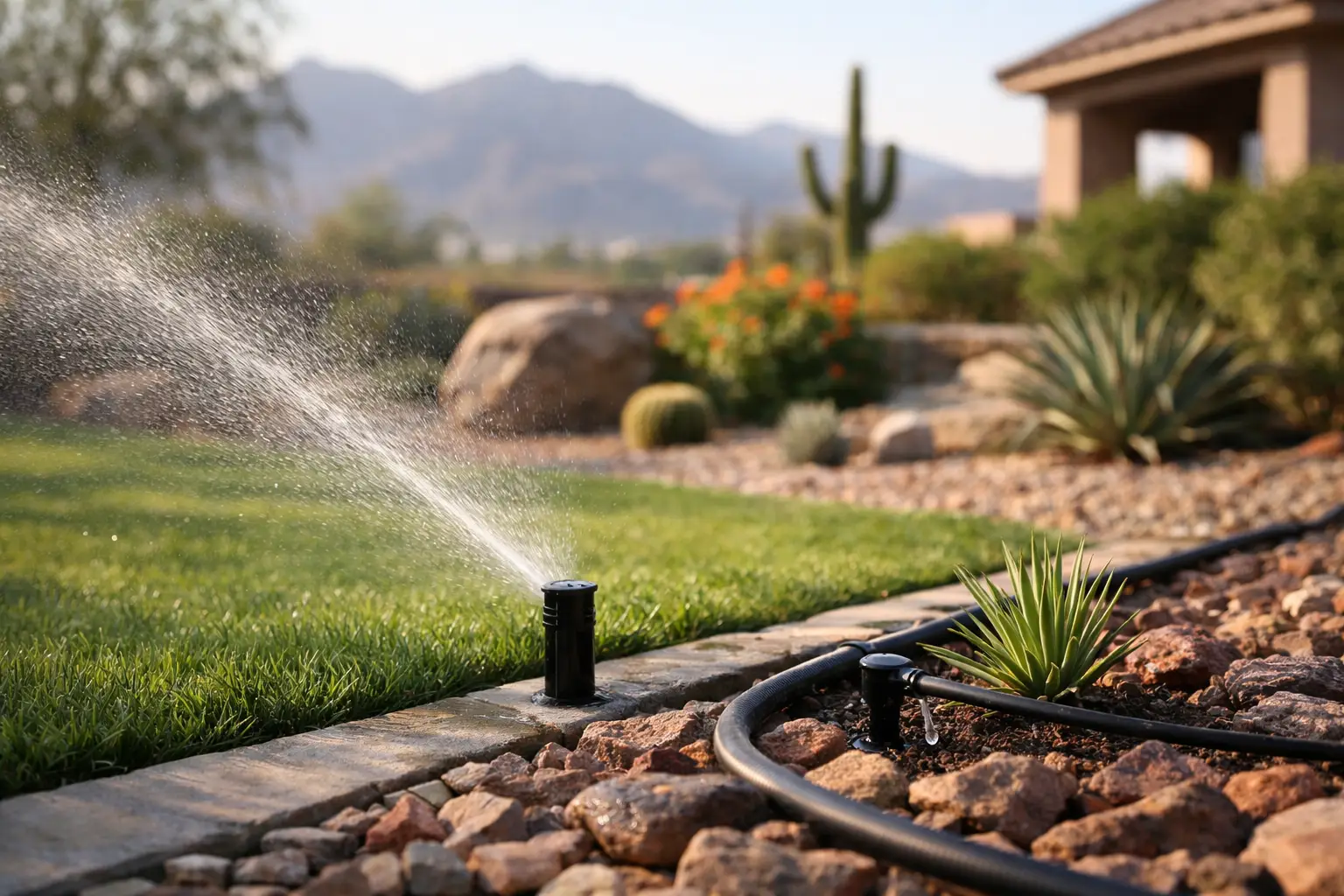
A lawn that looks stressed by Tuesday, puddles near the valves, and a water bill that keeps climbing – those are usually signs your property is not getting the right kind of watering. Efficient irrigation systems are not just about using less water. In Arizona, they are about putting water exactly where it helps, avoiding waste, and keeping your landscape healthy through extreme heat.
For homeowners, property managers, and commercial owners, irrigation is one of those systems that only gets attention when something goes wrong. But a poor setup can quietly cost you every month. It can damage plant material, create muddy areas, stain hardscapes, and make the whole property look harder to maintain than it should. A better system fixes more than one problem at a time.
What efficient irrigation systems actually do
The biggest mistake people make is thinking efficiency means watering less across the board. That is only part of it. A good system matches the watering method to the landscape. Gravel beds, shrubs, trees, seasonal plants, turf areas, and artificial grass borders all need different planning.
Efficient irrigation systems reduce overspray, runoff, and uneven coverage. They also make maintenance easier because the layout is more intentional. Instead of flooding one area and starving another, the system is designed by zone, flow rate, sun exposure, and plant type.
That matters even more in Arizona, where heat, soil conditions, and long dry periods expose every weakness in an irrigation layout. If your system is outdated or poorly adjusted, the landscape shows it fast.
Why Arizona properties need a different approach
In a desert climate, watering habits that work in milder regions can waste a lot of water here. Midday irrigation often leads to excessive evaporation. Spray heads placed too close to hardscape can hit sidewalks, pavers, or walls instead of root zones. Sloped areas can create runoff before the soil absorbs anything.
Arizona properties also tend to mix several landscape elements in one space. A front yard might have decorative gravel, a few trees, low-water shrubs, and accent lighting around paver walkways. A commercial site may have narrow planting strips, open common areas, and high-visibility entrance beds. That kind of layout needs more than a one-size-fits-all sprinkler plan.
The right irrigation design takes the whole property into account. It should work with the grading, the hardscape, the plant selection, and how the space is used year-round. When all of those pieces line up, the yard looks cleaner, healthier, and easier to manage.
The best components for efficient irrigation systems
Drip irrigation is usually one of the smartest options for Arizona landscapes. It delivers water close to the root zone instead of throwing it into the air. For shrubs, trees, flower beds, and many desert-adapted plantings, drip lines and emitters are often far more efficient than traditional spray irrigation.
That does not mean spray heads are always wrong. Turf areas may still need them, but they need to be selected and spaced correctly. The key is using the right head type, pressure, and arc pattern for the area. When spray systems mist too much or overlap poorly, water is wasted fast.
Smart controllers also make a real difference. A timer that adjusts watering schedules based on season and conditions is better than a basic setup that runs the same pattern all year. In Arizona, summer and winter needs are not even close. A controller that can be updated properly helps prevent overwatering during cooler months and under-watering when temperatures climb.
Pressure regulation, check valves, and properly zoned lines matter too. These are not flashy upgrades, but they affect performance every day. If the pressure is too high, emitters and heads do not work the way they should. If zones mix plants with very different water needs, efficiency drops right away.
Signs your current system is wasting water
Some problems are obvious, and some are easy to miss. Dry patches and soggy spots in the same yard usually point to distribution issues. Water running into the street, mist floating off spray heads, or plants declining even though the timer runs regularly are also red flags.
You may also notice cracked soil near some plants and fungus or yellowing near others. That often means your system is not watering evenly. Another common issue is coverage that hits block walls, driveways, or decorative rock more than the actual root zones.
If you manage a commercial property, irrigation problems often show up first as appearance issues. Dead spots, weed growth from overspray, stained pavement, and inconsistent plant health can make the whole site look neglected. That affects curb appeal and creates more maintenance work than necessary.
Design matters more than adding extra water
When a landscape struggles, many people respond by increasing run times. Sometimes that helps temporarily, but it often makes the underlying problem worse. If the wrong area is being watered, more time just means more waste.
A better approach is to look at layout and function. Are the zones grouped correctly? Are the emitters placed where the roots can benefit? Are spray heads blocked by plants, hardscape edges, or elevation changes? Is runoff happening because water is applied too fast for the soil to absorb it?
Efficient irrigation systems solve those issues through planning, not guesswork. That is why system upgrades often produce better landscape results without increasing water use. In many cases, they lower it.
Irrigation and low-maintenance landscaping work together
A lot of Arizona property owners want a yard that looks finished without constant upkeep. Irrigation plays a big part in that. Even drought-tolerant landscapes need proper watering during establishment and through seasonal heat. Low-water design does not mean no-water design.
This is where a full outdoor plan helps. If you combine smart irrigation with gravel installation, well-placed plants, durable hardscape, and clean grading, the property becomes easier to maintain as a whole. You are not just fixing a watering issue. You are improving how the yard functions.
For example, a property with pavers, artificial grass, and desert plantings should not be watered like a traditional lawn. Each area needs its own strategy. A more efficient setup protects the look of the space while keeping maintenance and utility costs more predictable.
Maintenance keeps efficient irrigation systems efficient
Even a well-built system needs regular attention. Emitters clog. Heads shift. Lines can leak. Controllers may be programmed correctly in spring and forgotten by fall. Small issues add up, especially during peak summer heat.
Routine inspection helps catch problems before they turn into landscape damage. That includes checking for broken heads, clogged drip emitters, valve problems, pressure issues, and zones that are running too long or too often. Seasonal adjustments are just as important. Arizona watering schedules should change with weather patterns, daylight hours, and plant growth.
This is one area where professional service saves time. A system may appear to be working because water comes on when scheduled, but that does not mean it is working efficiently. A trained eye can spot waste, imbalance, and coverage problems that are easy to overlook.
When to repair and when to replace
Not every system needs a full replacement. Sometimes a repair, a controller upgrade, or better zoning is enough to improve performance. If the core layout is solid, targeted changes can make a noticeable difference.
But if the property has aging components, repeated leaks, poor coverage, or a layout that does not match the current landscape, replacement may be the better investment. That is especially true when the yard has changed over time. New trees, added hardscape, gravel conversion, or artificial turf installation can all make an old irrigation plan less effective.
A practical recommendation should be based on the property, not a blanket answer. Some yards need a few corrections. Others need a redesign that matches the way the space is actually being used now.
Choosing the right help for irrigation work
In Arizona, irrigation should not be treated as a standalone issue when it affects the entire landscape. It helps to work with a contractor that understands planting, drainage, grading, hardscape, and maintenance together. That kind of experience leads to better results because the system is being planned in context.
Pro Natural Landscape works with Arizona property owners who need real solutions, not temporary fixes. When irrigation is designed or repaired with the full yard in mind, the outcome is cleaner, more dependable, and easier to maintain long term.
If your landscape is getting too much water in one spot and not enough in another, the answer is usually not more watering. It is a smarter system that fits the property, respects the climate, and does the job right every time it runs.