

A well-built travertine pavers surface can change the way an outdoor space looks, feels, and functions. In El Mirage, where heat, sun, and sudden monsoon runoff all shape exterior materials, travertine pavers offer a strong mix of natural beauty, comfort, and durability when they are installed the right way.
For homeowners, property managers, and business owners, the key is not only choosing attractive stone. It is choosing an installation method that fits Arizona soil conditions, daily temperature swings, and long-term drainage needs.
El Mirage travertine paver installation for patios, walkways, and pool areas
Travertine is a natural stone that fits desert properties especially well. Its lighter tones complement Southwestern architecture, modern backyard layouts, and clean commercial entries. It also stays more comfortable underfoot than many darker hardscape materials, which matters during long El Mirage summers.
When used in patios, pool decks, walkways, courtyards, and outdoor living areas, travertine creates a finished look that feels refined without looking overly formal. It works equally well with gravel landscapes, artificial turf, low-water planting plans, and custom hardscape features like benches, fire pits, and seat walls.
Many properties benefit from travertine in areas like these:
- Backyard patios
- Pool decks
- Garden paths
- Front entry walkways
- Outdoor dining areas
- Courtyard gathering spaces
Why travertine performs well in the El Mirage climate
El Mirage brings a demanding set of conditions. Summer temperatures are intense, UV exposure is constant, and the ground can shift if drainage and base preparation are ignored. Travertine is a smart material for this setting, but performance depends heavily on product selection and proper installation.
Dense, outdoor-rated travertine pavers are a strong fit because they provide a naturally elegant surface while handling heat better than many manufactured alternatives. Lighter finishes help reduce surface temperature, and textured finishes improve traction around pools or after rain.
A good installation also accounts for movement. Desert hardscapes expand and contract with daily temperature changes, so joint spacing, edge restraint, and joint sand selection all matter.
The travertine paver installation process in El Mirage, AZ
A lasting result starts below the stone. In this region, many failures happen because the visible pavers look great on day one, but the hidden base was rushed. Caliche, clay, and variable alluvial soils require serious preparation.
The process usually begins with excavation, removal of loose top material, and grading for positive drainage away from the home or structure. The subgrade should be shaped carefully, often with a gentle slope, so water does not collect under the finished surface or run back toward the building.
Next comes the compacted aggregate base. In desert conditions, this layer is critical. The base should be installed in controlled lifts and compacted thoroughly to create a stable platform. In areas where soil movement or fines migration is a concern, separation fabric may be used between native soil and base materials.
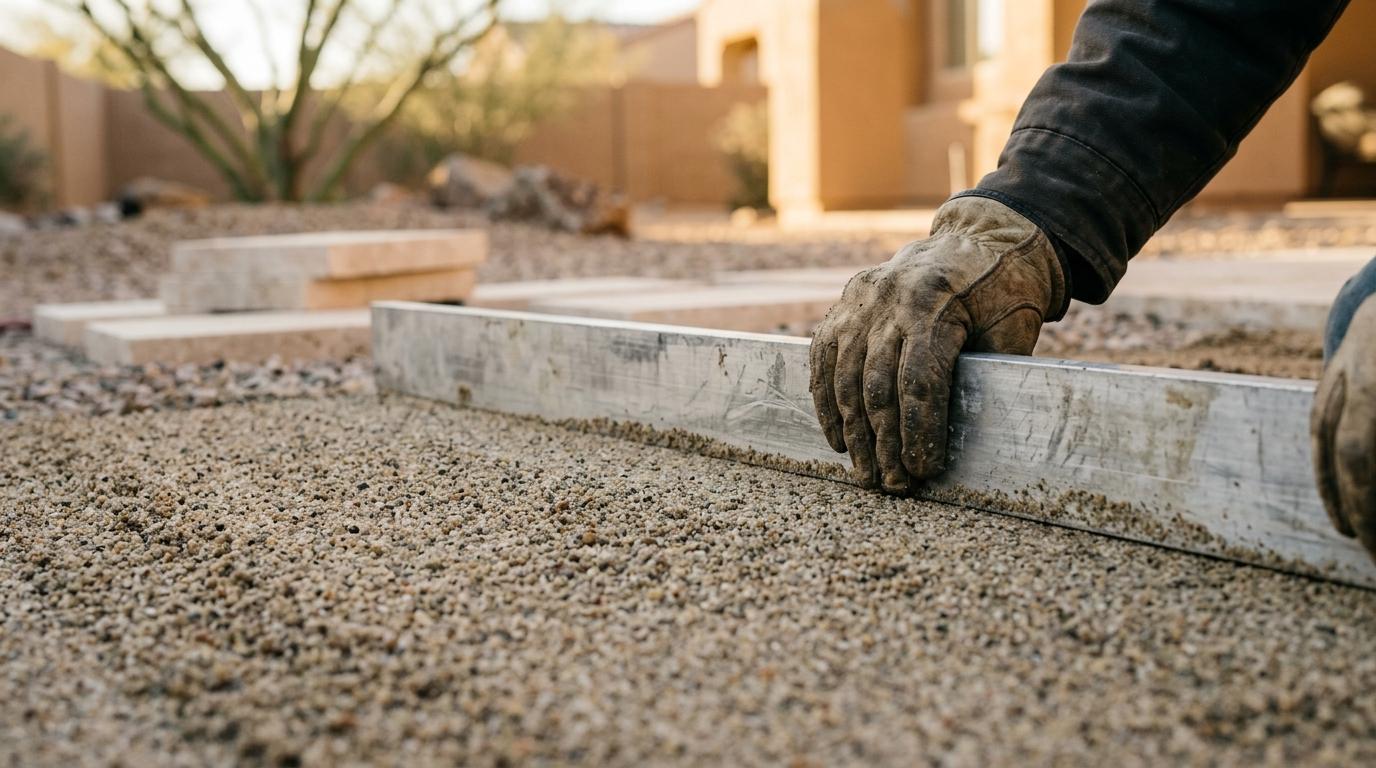
Over that prepared base, a bedding layer of coarse washed sand is screeded smooth. The travertine pavers are then laid in the chosen pattern, checked for spacing and alignment, and secured with durable edge restraints. Once the field is set, joint sand is worked into the gaps and the surface is compacted and finished according to the product requirements.
| Installation Stage | Why It Matters in El Mirage |
|---|---|
| Excavation and grading | Helps prevent drainage issues and standing water |
| Base compaction | Reduces settling, shifting, and uneven surfaces |
| Bedding sand placement | Creates a level setting bed for the stone |
| Travertine layout | Keeps joints consistent and the pattern clean |
| Edge restraint installation | Helps hold the paver field in place during heat cycles |
| Joint sand finishing | Supports flexibility and surface stability |
What sets quality travertine paver installation apart
Not all travertine projects are built to the same standard. The stone itself matters, but the real difference is often in the preparation, layout discipline, and finishing details.
A quality-focused crew will pay close attention to grades, cuts, joint spacing, transitions, and edge stability. They will also consider how the finished surface connects to surrounding landscaping, irrigation, walls, turf, gravel, or concrete features.
Strong installation practices usually include the following:
- Subgrade preparation: Removal of unstable material and correction of low spots before base work starts
- Drainage planning: Surface slope that directs water away from structures and use areas
- Base construction: Compacted aggregate installed in lifts for strength and long-term support
- Material selection: Outdoor-rated travertine with the right thickness for the application
- Edge restraint: Secure borders that limit movement over time
- Joint finishing: Sand selected for desert conditions and seasonal movement
These details may not be obvious from a distance, yet they are what protect the finished surface year after year.
Travertine design options for Arizona outdoor spaces
Travertine can support a wide range of design styles. Some properties need a clean, understated layout with rectangular pavers and straight borders. Others call for a more decorative arrangement with mixed sizes, pattern shifts, accent bands, or integration with planters and seating features.
In El Mirage, lighter shades are often preferred because they pair well with the desert palette and help reduce heat absorption. Tumbled or honed finishes are also popular because they offer a softer appearance and practical traction.
Design choices often include pattern, color, border treatment, and how the pavers connect with the rest of the property. A thoughtful plan can make a compact yard feel larger or help a commercial frontage feel more polished and inviting.
Residential and commercial travertine paver services in El Mirage
Travertine is not limited to backyards. It can also be an excellent option for commercial courtyards, office entries, hospitality spaces, and multi-family properties where appearance and durability both matter.
For residential clients, common priorities include comfort, curb appeal, entertainment space, and poolside safety. For commercial and managed properties, the focus often shifts toward traffic flow, easier upkeep, and a polished first impression.
Projects may be built around features like these:
- Patio expansions: More usable space for outdoor seating and gatherings
- Pool deck upgrades: Cooler, attractive surfaces with better traction
- Entry walkways: Natural stone paths that strengthen curb appeal
- Shared outdoor areas: Hardscape surfaces for apartments, offices, or community spaces
Maintenance for travertine pavers in El Mirage weather
Travertine is durable, though it does best with routine care. Dust, windblown debris, intense sun, and seasonal rain all affect the surface over time. Regular sweeping and occasional rinsing help keep the pavers clean and reduce buildup.
Sealing is another important part of maintenance in Arizona. A breathable penetrating sealer can help protect the stone from staining, moisture intrusion, and weathering while still allowing the material to breathe. Resealing intervals depend on sun exposure and use, though exterior travertine in this climate often needs more frequent attention than stone in milder regions.
After monsoon season, it is smart to inspect the area for joint sand loss, minor settling, or isolated movement along edges. Addressing small issues early helps preserve the appearance and structural integrity of the whole surface.
Working with a local El Mirage travertine paver contractor
Local experience matters with stone installation in Arizona. Soil conditions, drainage behavior, and heat exposure all influence how a paver system should be built. A contractor familiar with El Mirage projects can better plan for grading, edge restraint, material choice, and long-term performance.
Pro Natural Landscape LLC provides travertine paver installation as part of its full-service outdoor work for residential and commercial properties. As a family-owned company with more than a decade of experience in the area, the focus is on quality craftsmanship, clear communication, and practical solutions suited to local conditions.
Clients often look for more than installation alone. They may want help tying travertine into landscape design, lighting, irrigation updates, gravel, turf, walls, or paver renovation work nearby. A full-service approach can make the finished project feel more cohesive and save time during planning.
Free estimates are available, and financing options through Hearth can help make larger outdoor upgrades more manageable for property owners who want to move forward with a strong plan and realistic budget.
Planning your travertine paver project in El Mirage
Before installation begins, it is wise to consider how the space will be used across the year. A patio for quiet evenings may call for a different layout than a pool deck built for weekend gatherings. The same goes for commercial spaces, where traffic patterns and maintenance expectations shape the design.
Permits or approvals may also apply in some cases, especially when drainage patterns, walls, or larger site changes are involved. A careful review of layout, grading, and local requirements helps keep the project moving in the right direction from the start.
A well-executed travertine surface does more than improve appearance. It gives outdoor space structure, comfort, and lasting value in a climate that demands real durability.
One thought on “Travertine Paver Installation in El Mirage, AZ”