×

8 Desert Yard Design Trends for Arizona

A bare gravel yard no longer passes for a finished Arizona landscape. The latest desert yard design trends are moving toward outdoor spaces that look cleaner, work harder, and hold up better through heat, dust, and heavy sun. For homeowners, that means less maintenance and better curb appeal. For commercial properties, it means a sharper exterior that stays presentable without constant upkeep.

What stands out right now is not flashy design for its own sake. In Arizona, trends only last if they solve real problems. People want yards that cut water waste, reduce patchy or worn-out areas, improve usability, and make the property feel complete from the street to the backyard.

Desert yard design trends are getting more functional

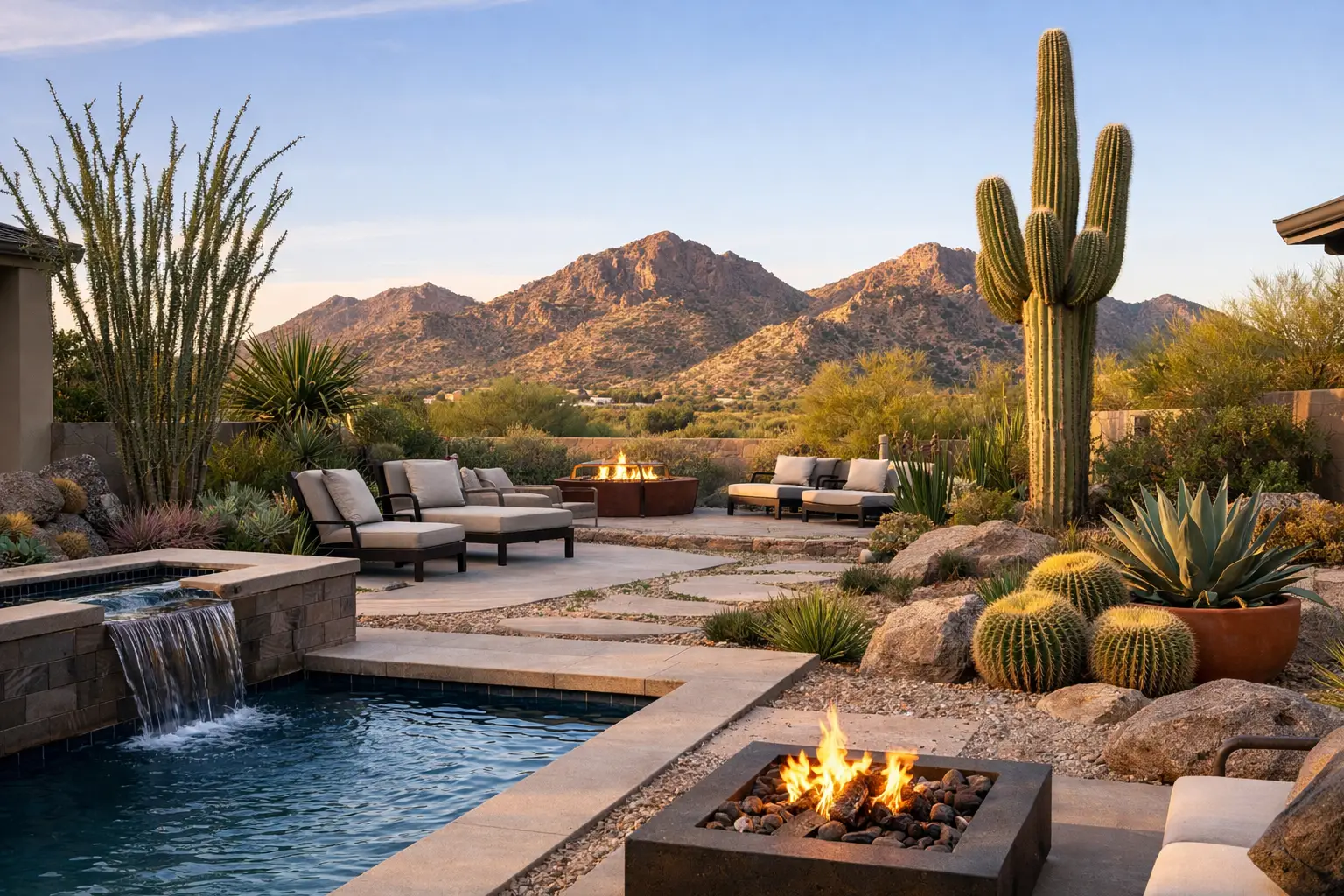
The biggest shift is simple: desert landscaping is becoming more intentional. Instead of choosing one material and covering the whole yard with it, property owners are mixing surfaces and features to create zones. Gravel still has a place, but now it often works alongside pavers, artificial grass, decorative borders, lighting, and well-placed plants.

That layered approach gives the yard more structure. It can also help with drainage, traffic flow, and maintenance. A front yard might use gravel for low-water coverage, pavers for a walkway, and accent plantings near the entry. A backyard might combine turf, shade, and hardscape to support both appearance and daily use.

This matters because Arizona yards take a beating. Designs that looked good on paper sometimes fail fast if they do not account for sun exposure, irrigation efficiency, or how people actually move through the space. The strongest trends are the ones that balance appearance with long-term performance.

1. Low-water planting with cleaner spacing

Overplanted desert yards are giving way to simpler layouts. Homeowners and property managers are leaning toward fewer plants, better spacing, and stronger visual definition. That usually means drought-tolerant trees, hardy shrubs, and accent cacti placed where they make an impact instead of being crowded together.

This style looks more modern, but it is also easier to maintain. Plants have room to grow, irrigation can be more targeted, and cleanup is more manageable. It also avoids the messy, overgrown look that can make a yard feel older than it is.

The trade-off is that sparse planting has to be done well. If spacing is too wide or plant sizes are mismatched, the yard can feel unfinished. The right grading, gravel color, and hardscape lines make a big difference here.

2. Pavers are replacing plain concrete in key areas

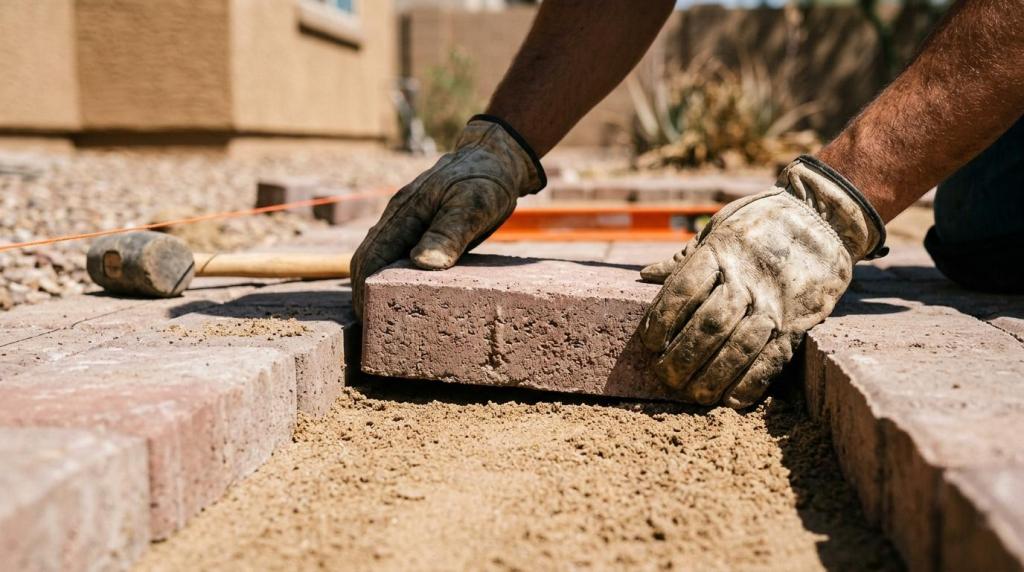
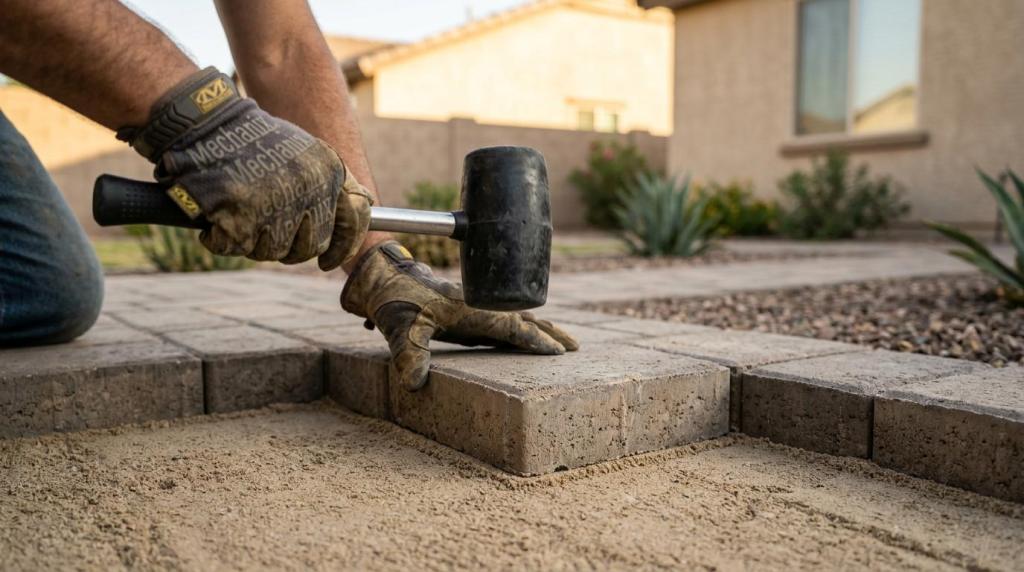
One of the most noticeable desert yard design trends is the move toward paver patios, walkways, entry paths, and gathering areas. Pavers add a more finished look than standard poured concrete, and they fit well with both modern and traditional Arizona homes.

They also make practical sense. In high-traffic areas, pavers create durable surfaces that are easier to integrate into the rest of the landscape. For backyards, they help define outdoor living space without adding grass that needs water and upkeep. For front yards, they improve curb appeal quickly.

Pattern and color matter. In a desert setting, earth tones and cooler neutrals usually age better than overly bold choices. The goal is a surface that complements the home and surrounding materials instead of competing with them.

3. Artificial grass is being used more strategically

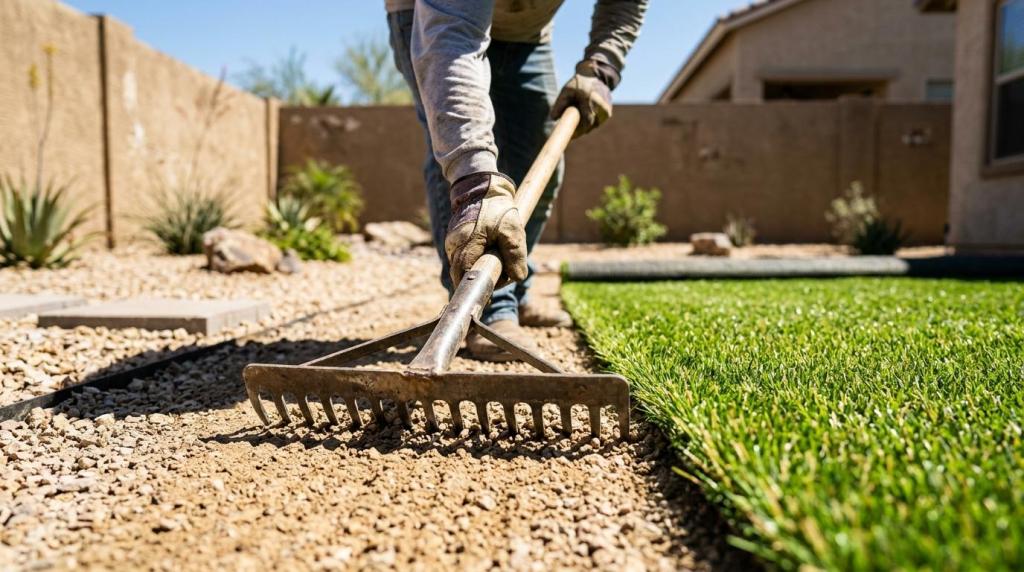
Artificial grass is still popular, but the trend has shifted away from covering every open area with turf. Instead, it is being used in focused sections where softness, color, and usability matter most. That could mean a small play space, a clean strip between pavers, or a backyard section for pets and seating.

This targeted use tends to look more natural and stay more practical. It reduces water use and ongoing maintenance while keeping some of the comfort people want underfoot. In commercial settings, it can also keep entry zones and visible outdoor areas looking polished year-round.

The key is placement. Turf works best when it is framed properly with borders, hardscape, or gravel. If installed without enough planning, it can look disconnected from the rest of the yard. It also depends on sun exposure and how hot the area gets during peak summer months.

4. Decorative gravel is becoming more design-driven

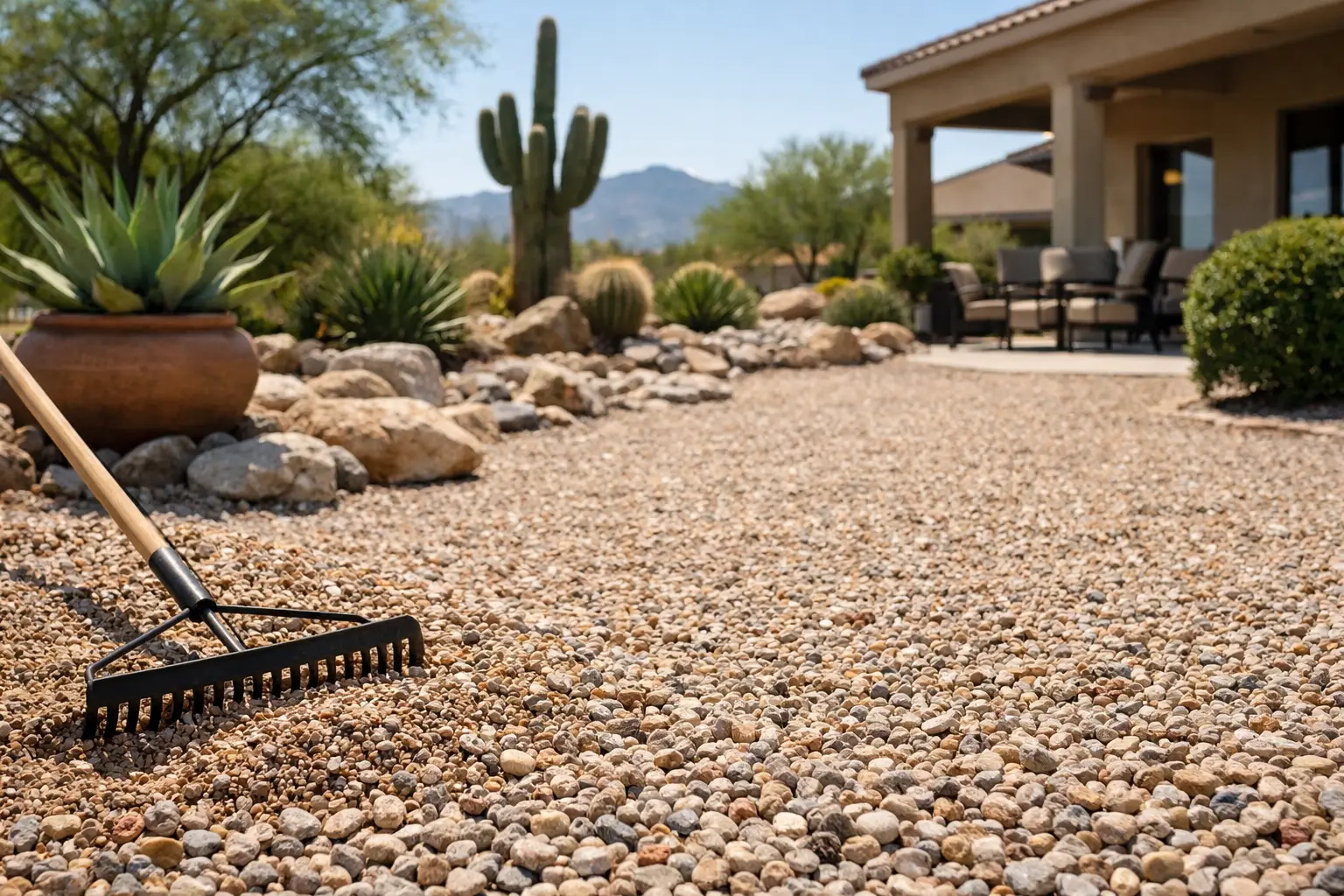
Gravel has always been part of Arizona landscaping, but now it is being chosen with more attention to contrast, texture, and scale. Instead of treating gravel as background only, designers are using it to define spaces and support the overall look of the yard.

That might mean mixing rock sizes, using a cleaner color palette, or pairing gravel with steel, block, or paver edging to create stronger lines. In the right design, gravel helps the whole property look more organized and less like a quick fix.

Not every gravel choice performs the same way, though. Some lighter colors reflect heat better but can show debris more easily. Darker tones can create a sharp look but may absorb more heat. The best option depends on the property, surrounding materials, and how much maintenance the owner wants to handle.

5. Shade features are becoming part of the layout

A good-looking yard in Arizona still has to be usable. That is why more property owners are designing around shade from the start instead of treating it as an afterthought. Trees, covered patios, pergolas, and smart seating placement are all becoming part of the overall plan.

This trend matters because a backyard that cannot be used for much of the year is not delivering full value. Even a small shaded section can make a major difference for outdoor comfort. In commercial properties, shade can also improve the appearance and function of entrances, courtyards, and tenant-facing spaces.

It depends on lot size and budget, of course. Mature trees offer natural cooling but take time and need proper irrigation. Built shade structures provide faster results but need to match the style and scale of the property.

6. Landscape lighting is doing more than decoration

Lighting is no longer just an extra feature for high-end homes. It is becoming a standard part of practical desert yard design. Entry lighting, pathway lights, uplighting for trees, and accent lighting near pavers or walls all help a property feel safer, more complete, and more usable after dark.

For residential properties, lighting improves curb appeal and extends use of patios and walkways. For commercial sites, it supports visibility and creates a more professional appearance. In both cases, it helps key design elements stand out at night instead of disappearing once the sun goes down.

The best lighting plans stay balanced. Too little lighting leaves the yard flat. Too much can look harsh and raise energy use. Placement matters more than quantity.

7. Bordering and edging are defining the whole yard

One reason some desert landscapes look sharp while others look unfinished comes down to edging. Clean borders between gravel, turf, pavers, and planting zones create order. They also help with maintenance by keeping materials where they belong.

This is a growing priority in both front and back yards. Steel edging, block borders, and concrete curbing are often used to create cleaner transitions. These details may seem small, but they have a big visual impact, especially in Arizona landscapes where open surfaces are common.

Edging also supports long-term durability. It helps prevent spread, keeps design lines intact, and makes the entire space easier to service over time.

8. Outdoor spaces are being designed for year-round value

Another strong trend is the move away from yards that serve only one purpose. Arizona property owners want outdoor spaces that support daily life, entertaining, and property value throughout the year. That means combining attractive surfaces with practical features such as walkways, seating areas, lighting, irrigation, and durable plant choices.

This is especially true for people who are tired of managing multiple contractors. A yard project often involves more than landscaping alone. It may also require grading, paver work, irrigation updates, wall repair, tree removal, gravel installation, or surface renovation. When those pieces are planned together, the result is cleaner and more efficient.

That is why the most successful projects start with the full picture. Pro Natural Landscape sees this often across Arizona properties. A strong design is not just about what gets installed first. It is about how every surface and feature works together six months and three summers later.

How to choose the right trend for your property

Not every trend belongs in every yard. A smaller front yard may benefit more from updated gravel, edging, and a paver walkway than from adding multiple planting zones. A family backyard may need turf and shade first. A commercial property may get the best return from durable hardscape, lighting, and simplified maintenance.

The smart approach is to start with the property’s biggest problem. If the issue is water waste, focus on irrigation and low-water materials. If the yard looks dated, update the hardscape and layout. If maintenance is the constant headache, reduce clutter and choose surfaces that stay cleaner with less effort.

Good desert design should make life easier, not create more chores. The best upgrades are the ones that fit Arizona conditions, improve the way the space works, and still look good long after installation. If your yard is ready for that kind of change, now is a good time to plan with purpose and build something that actually lasts.
Paver Installation in Peoria, AZ

If you need paver installation in Peoria, AZ, Pro Natural Landscape LLC builds outdoor surfaces that look finished, stay functional, and fit the way you use your property. We install pavers for patios, walkways, driveways, pool decks, and outdoor living areas for homeowners, property managers, and businesses across Peoria and the West Valley.

Pro Natural Landscape LLC is a family-owned landscaping company established 11 years ago in El Mirage, and we bring that local experience to every Peoria project. You get a detailed, no-obligation estimate, clear communication, and installation that accounts for Arizona heat, sun exposure, and stormwater movement.

Peoria, AZ paver installation for patios, driveways, walkways, and pool decks

Pro Natural Landscape LLC installs paver surfaces that improve both curb appeal and daily use. Whether you want a backyard patio for entertaining, a more durable driveway, a safer walkway, or a cleaner-looking pool deck, we help you turn unused or worn space into a finished hardscape with a clear purpose.

Peoria’s climate makes installation details important. With more than 300 days of sunshine a year, average summer temperatures above 100°F, and July through August monsoon storms, your paver project needs more than a nice pattern on top. It needs proper grading, a stable foundation, and drainage-aware planning underneath.

“Pro Natural Landscape LLC brings 11+ years of West Valley landscaping experience to Peoria paver installation.”

For homeowners, that can mean a patio that feels more connected to the house and easier to maintain than plain concrete or bare dirt. For businesses and managed properties, it can mean cleaner entrances, more defined walk paths, and outdoor spaces that present better to tenants, customers, and visitors.

“Peoria gets more than 300 days of sunshine each year, and Pro Natural Landscape LLC plans paver installations around desert heat and monsoon runoff.”

Pro Natural Landscape LLC also approaches paver work as part of the full landscape, not as an isolated surface. That matters when your project needs to coordinate with artificial grass, gravel, lighting, irrigation, fences, walls, or other exterior improvements around the same space.

Custom paver patios and outdoor living spaces in Peoria for homes and businesses

We install pavers for the spaces Peoria property owners use most:

  • Patios: Backyard entertaining areas, dining spaces, fire pit zones, and covered patio extensions
  • Walkways: Front entry paths, side-yard access, garden paths, and connecting routes between outdoor features
  • Driveways: Paver driveways and parking surfaces that upgrade curb appeal and create a more finished entrance
  • Pool decks: Paver areas around pools that help define the space and improve the overall look of the yard
  • Commercial hardscapes: Entry walks, common areas, outdoor seating zones, and other customer-facing surfaces

Pro Natural Landscape LLC can build a new paver area from scratch or help improve an older installation through paver renovation and color sealing services when the project calls for restoration instead of full replacement. That gives you options if your current surface is faded, uneven, or no longer fits the rest of the property.

If your goal is a complete outdoor upgrade, our team can tie your paver installation into a bigger landscape plan. That can include gravel installation, land grading, lighting, irrigation, and other exterior work so the finished project feels coordinated instead of pieced together over time.

“Every Pro Natural Landscape LLC paver project starts with a detailed, no-obligation estimate.”

That full-service capability is one reason Peoria customers call us early in the planning stage. You can make layout, material, and budget decisions with one local company that already works across residential and commercial landscapes.

Pro Natural Landscape LLC installs pavers with base prep and drainage planning for Peoria weather

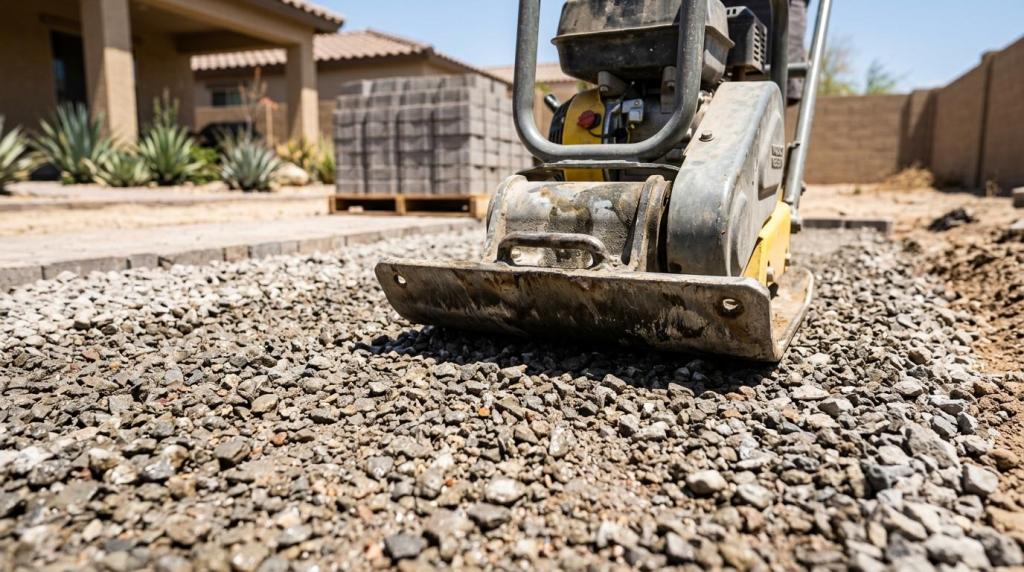
A paver surface is only as good as the work below it. Standard interlocking concrete pavement guidance emphasizes compacting the soil subgrade, compacting the aggregate base, and placing bedding sand correctly, and that is especially relevant in Peoria where dry heat and seasonal stormwater can expose weak installation practices over time.

Pro Natural Landscape LLC builds paver projects with that foundation-first mindset. We pay close attention to excavation, surface slope, base preparation, and drainage paths so your patio, driveway, or walkway has a stronger starting point and a better chance of lasting well under local conditions.

Here is what you can expect when we handle your Peoria paver installation:

  1. Site consultation and estimate: We review the area, talk through how you want to use it, and provide a detailed, no-obligation estimate.
  2. Layout and material planning: We help define the project scope for your patio, walkway, driveway, pool deck, or outdoor living area.
  3. Prep and installation: We address grading, compacted subgrade, aggregate base preparation, bedding layer placement, and paver installation with drainage in mind.
  4. Final walkthrough: We review the finished work with you so you know what was completed and how the space is intended to function.

For sites with water-flow concerns, drainage planning matters just as much as appearance. Reviewing topography and drainage patterns before installation can help reduce the risk of water weakening the base under the pavers, which is why Pro Natural Landscape LLC takes a drainage-aware approach on Peoria projects instead of treating every yard or commercial site the same.

Pro Natural Landscape LLC is also a practical choice when timing and budget need to work together. We offer free estimates, financing options through Hearth, and licensed and insured service, so you can move forward with better clarity on scope, cost, and next steps.

Request a free paver estimate in Peoria, AZ

If you are comparing paver contractors in Peoria, you want more than someone who can lay stone in a pattern. You want a local team that understands West Valley conditions, communicates clearly, and treats base prep, grading, and drainage as part of the value you are paying for.

Pro Natural Landscape LLC helps Peoria homeowners and businesses build paver patios, walkways, driveways, pool decks, and outdoor living spaces that are designed for real use and Arizona weather. Contact us today to schedule your free estimate and start planning a paver installation that fits your property, your timeline, and your budget.

How to Choose Pavers for Arizona Heat

Arizona hardscapes live under a level of sun that exposes every weak choice. A paver that looks great in a catalog can feel scorching by midafternoon, fade faster than expected, or hold heat long after sunset if the material, color, and layout were not chosen for desert conditions.

That is why the best pavers for Arizona heat are not defined by appearance alone. The strongest results usually come from a mix of lighter, more reflective surfaces, low water absorption, durable installation methods, and thoughtful shade planning around the space.

Why Arizona heat changes paver performance

When people compare pavers, they often focus on style, shape, or price first. In Arizona, surface temperature deserves equal attention. A patio, pool deck, walkway, or driveway can collect solar energy all day, and that stored heat affects comfort, maintenance, and even the nearby air.

According to the Cool Roof Rating Council, the two basic characteristics that determine how cool a pavement stays are solar reflectance and thermal emittance. Solar reflectance is the amount of sunlight a surface reflects away. Thermal emittance is how well that surface releases the heat it does absorb. Both matter.

Dark paved materials can absorb 80% to 95% of sunlight, which helps explain why two patios made from different colors or finishes can feel dramatically different under bare feet. The same source notes that cool pavements can reduce surface temperatures by 10 to 12°F.

A simple way to think about it is this: the best pavers for Arizona heat are usually the ones that reflect more sun, release heat more effectively, and avoid trapping moisture that can wear down the surface over time.

After those basics, the decision becomes much clearer.

  • Solar reflectance: Higher reflectance usually means a cooler surface in direct sun
  • Thermal emittance: Better heat release helps the paver cool down faster
  • Color and finish: Light tones and matte textures often outperform dark, glossy surfaces in desert settings
  • Exposure: Full-sun patios need a different strategy than a shaded side yard

Best paver materials for Arizona heat

Material type still matters, just not in isolation. A light-colored product with strong thermal behavior often beats a darker version of a supposedly cooler material. That said, some paver categories give Arizona property owners a better starting point.

The table below gives a practical comparison.

Paver material Heat-related strengths Water behavior Good fit in Arizona Watch-outs
Concrete pavers Often available in lighter colors; new cement concrete can reflect a meaningful share of sunlight Moderate absorption varies by product Patios, walkways, driveways Reflectance can drop as concrete ages; dark colors get hotter
Porcelain pavers Can perform well when chosen in light tones with the right finish Very low absorption in many products Patios, courtyards, outdoor living areas Product quality and installation details matter
Natural stone pavers Performance varies widely by stone type, finish, and color Varies by material Premium patios, garden paths, feature areas Do not assume all stone stays cooler
Dark dense pavers of any type Often store and radiate more heat Varies Limited use where shade is strong Can become uncomfortable in full sun

Concrete pavers for Arizona patios and driveways

Concrete pavers remain a solid option for Arizona landscapes because they are durable, widely available, and offer a broad range of lighter desert-friendly colors. There is also useful research behind concrete’s reflective behavior. Lawrence Berkeley National Laboratory reports that new cement concrete has a solar reflectance of 30% to 50%, though that figure tends to drop with age to about 20% to 35%.

That aging effect matters. A fresh, light concrete surface may start with strong thermal performance, but dirt, weathering, and sealers can change how it handles sunlight over time. Regular cleaning and smart product selection help preserve that advantage.

For many homeowners and property managers, lighter concrete pavers strike the best balance between budget, appearance, and heat control. On driveways, they also provide the structural strength needed for vehicle traffic when installed over a proper base.

Porcelain pavers for Arizona outdoor living

Porcelain pavers have gained traction in hot-climate design because they combine a refined appearance with very low water absorption. Some manufacturers report that their outdoor porcelain pavers have practically no water absorption, along with strong stain resistance and high breakage loads. Belgard is one example.

In Arizona, low absorption is valuable because it helps reduce issues tied to moisture movement, staining, and some forms of weather wear. Even in a dry region, monsoon storms, irrigation systems can create repeated moisture exposure around walkways, patios, and planting beds.

Porcelain is often a strong choice for patios, courtyards, and entertaining spaces where homeowners want a cleaner architectural look. The key is not to assume every porcelain paver will feel cool. Color, texture, installation method, and direct exposure still shape the result.

Natural stone and travertine pavers in Arizona sun

Natural stone deserves a careful, product-by-product review. Stone categories vary so much in density, finish, and reflectivity that broad claims can be misleading. A light textured stone may behave very differently from a darker polished one.

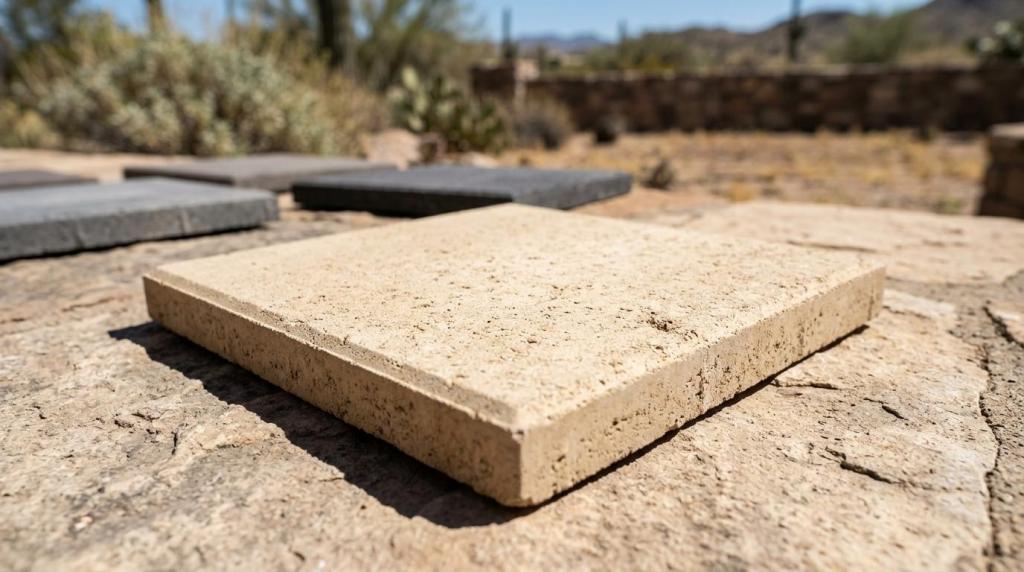
For Arizona projects, that means samples matter. Instead of choosing stone based only on indoor displays, it is smarter to review full-size samples outdoors in direct afternoon sun. That simple step often prevents expensive disappointment later.

Best paver colors and finishes for cooler surfaces

If one design choice consistently improves comfort in the Arizona sun, it is color. Lighter pavers usually outperform darker ones because they reflect more solar radiation instead of absorbing it.

Finish also changes the experience. A paver with a matte, textured face may feel less harsh visually and physically than a slick, dark surface that intensifies glare and heat. This is especially important around pools, seating areas, and play spaces where people spend time standing or walking.

When selecting color and finish, these options are often the safest starting point:

  • light grays
  • warm beiges
  • sand and cream tones
  • muted desert blends
  • matte or textured finishes
  • larger samples tested outdoors

It is easy to get pulled toward dramatic charcoal, deep brown, or black pavers because they look sharp in photos. In Arizona, those darker tones often make more sense as accents rather than the main field surface.

Shade design and landscaping that keep Arizona pavers cooler

Even the best paver material has limits in full desert sun. Shade can change the performance of the entire space, sometimes more than a material upgrade alone.

The U.S. Department of Energy reports that trees and evapotranspiration can reduce surrounding air temperatures by as much as 6°F. Air temperatures directly under trees can be as much as 25°F cooler than air temperatures above nearby blacktop. Trees, shrubs, and groundcover can also shade patios, driveways, and sidewalks.

That means a smart Arizona hardscape plan should treat shade as part of the paver decision, not as a separate add-on later.

A cooler outdoor area often comes from combining several elements:

  • Tree placement: Target west and southwest sun where afternoon heat is most intense
  • Patio covers: Reduce direct solar load over seating and dining zones
  • Pergolas with plants: Add filtered shade without closing in the space
  • Landscape layering: Shrubs and groundcover can soften reflected heat around paving edges

Shade also protects the visual life of the hardscape. Less direct exposure can help colors hold more consistently and reduce wear tied to extreme thermal cycling.

Water absorption and durability for Arizona monsoon weather

Arizona is dry, but pavers still need to handle water well. Monsoon rains can hit fast, and irrigation systems can create repeated moisture exposure around walkways, patios, and planting beds.

Low-absorption materials tend to offer advantages in these conditions. They are generally less likely to take in water that later contributes to surface staining, mineral deposits, or moisture-related wear. This is one reason porcelain attracts attention in warm climates. A product with very low absorption can stay more stable through repeated wet-dry cycles.

Concrete pavers can also perform well, though product quality, joint design, drainage, and sealing choices all matter. A good installation should move water away from structures, limit pooling, and support the pavers evenly so heat and moisture do not work together to weaken the surface.

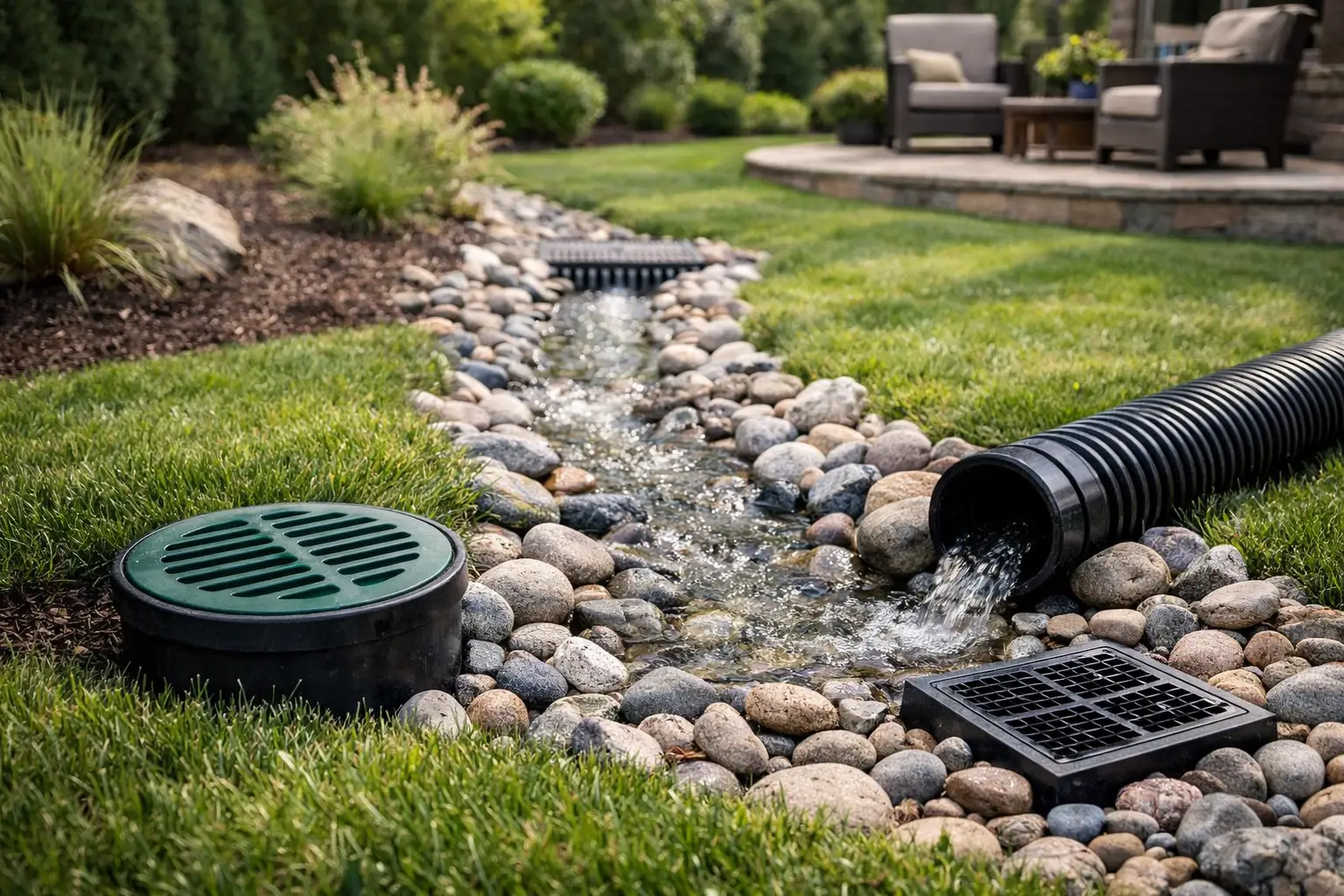
Drainage matters almost as much as the paver itself.

Land grading, base preparation, and proper edge restraint are not glamorous topics, but they often decide whether a beautiful hardscape keeps its appearance over time.

Pool decks, patios, and driveways need different Arizona paver choices

One paver does not automatically fit every outdoor surface. The best pavers for Arizona heat depend in part on how the area will be used.

Pool decks call for comfort underfoot, slip resistance, and low water absorption. Patios need a balance of appearance, furniture stability, and lower heat gain. Driveways need structural strength first, while still benefiting from lighter colors and reflective performance.

That is why a whole-property approach tends to work best. A home may use one paver style on the driveway, another around the pool, and a third in a shaded garden walk, all while keeping the color palette coordinated.

Questions to ask before choosing Arizona pavers

A good paver decision usually comes down to asking better questions before installation begins. Samples, specifications, and site conditions should all be part of the review.

These questions help narrow the field:

  • How much full afternoon sun does the area get?: Exposure often matters as much as material type
  • What is the paver’s color family and finish?: Light matte finishes are usually a safer choice for heat
  • How does the product handle water absorption?: This affects durability, staining, and monsoon performance
  • Will the space include shade trees or a patio cover?: Shade can materially reduce heat load
  • Is the base and drainage plan built for Arizona conditions?: Installation quality protects long-term performance

For homeowners and property managers in El Mirage and nearby Arizona communities, the best results usually come from seeing materials in real light, touching the surface in afternoon conditions, and pairing the pavers with shade and drainage planning from the start.

A showroom sample can help with style. A sun test on-site is what usually answers the comfort question.

7 Tree Trimming Mistakes to Avoid

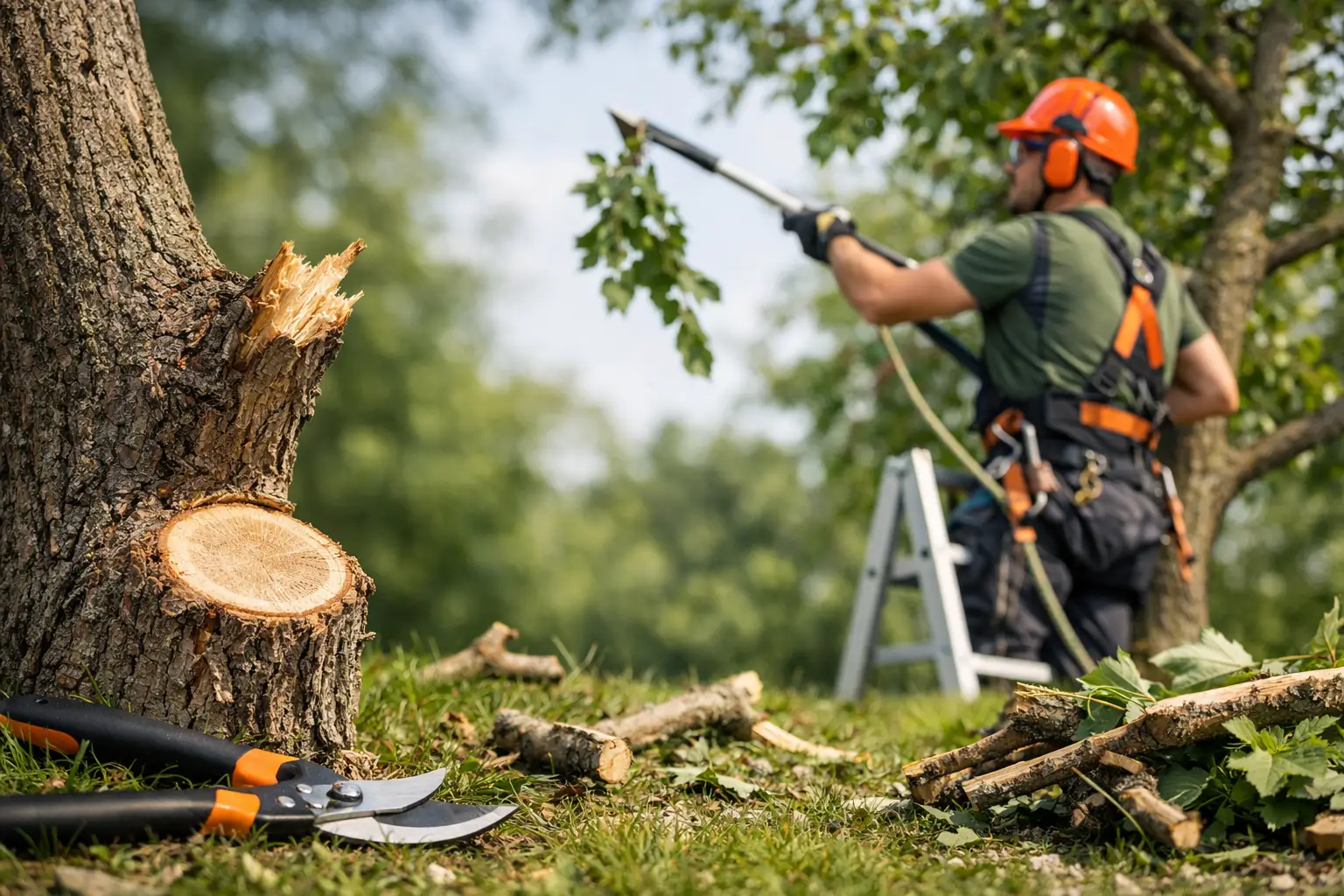
A tree can go from asset to liability in one bad trimming session. We see it often across Arizona – branches cut too high, too much growth removed at once, or the wrong tree pruned at the worst possible time. These tree trimming mistakes do more than make a yard look rough. They can stress the tree, invite disease, create safety risks, and lead to expensive removal later.

For homeowners, property managers, and commercial property owners, the goal is simple: keep trees healthy, controlled, and attractive without creating new problems. That takes more than cutting back what looks overgrown. In Arizona, heat, drought stress, storm exposure, and fast seasonal growth all change how trimming should be handled.

Why tree trimming mistakes matter more in Arizona

Desert landscapes are less forgiving than people think. Trees here already work harder to survive. Between intense sun, dry soil, irrigation issues, and seasonal monsoon winds, a poorly timed or overly aggressive trim can push a tree past the point of recovery.

That matters for more than appearance. Weak limbs can fall near roofs, walkways, parked vehicles, and common areas. Trees trimmed incorrectly can also throw off shade patterns, which affects comfort, plant health below, and even cooling costs near buildings. On commercial properties, bad trimming can quickly make the exterior look neglected.

1. Removing too much at once

One of the most common tree trimming mistakes is over-pruning. When too much canopy is removed in a single visit, the tree loses a major part of its ability to produce energy and protect itself from sun exposure. In Arizona, that can lead to sunscald on branches that were previously shaded.

People often assume a heavier trim means less maintenance later. Usually, the opposite happens. The tree may respond with fast, weak regrowth that needs even more correction down the line. A better approach is controlled pruning that improves structure without stripping the tree bare.

2. Topping the tree

Topping is when major upper branches are cut back bluntly to reduce height. It may seem like a quick fix for a tree that feels too large, but it creates long-term structural problems. The cuts are severe, the natural shape is ruined, and the tree often responds by sending out multiple weak shoots from the cut points.

Those new shoots grow fast but attach poorly. That makes them more likely to break in wind or storms. Topping also leaves large wounds that are slower to close, which increases vulnerability. If a tree is too large for its space, selective reduction or removal may be the smarter choice than forcing it into a shape it cannot support.

3. Cutting branches flush to the trunk

A clean-looking cut is not always the right cut. When branches are removed flush against the trunk, the tree loses the branch collar, which is the slightly swollen area where the branch meets the main stem. That collar helps the tree close the wound properly.

Without it, the cut becomes harder for the tree to seal. That can lead to decay and long-term weakness. On the other hand, leaving a long stub is not right either because stubs die back and can attract pests. Proper trimming is precise. The branch should be removed just outside the collar, not into it and not far beyond it.

4. Trimming at the wrong time

Timing matters, and it depends on the species, the tree’s condition, and the purpose of the trimming. Some trees handle seasonal pruning well, while others are more sensitive to heavy cuts during active growth or extreme heat. In Arizona, trimming during intense summer stress can be hard on already strained trees.

There are exceptions. Dead, broken, or hazardous branches should be addressed promptly for safety. But for shaping, thinning, or corrective pruning, the best timing often depends on what kind of tree you have and how it is growing on the property. A mesquite is not managed the same way as a palm or an ornamental shade tree. That is where local experience matters.

5. Ignoring weight balance and branch structure

Tree trimming is not just about reducing volume. It is about managing structure. If too much weight is removed from one side or if interior support branches are cut without a plan, the tree can become uneven and unstable.

This problem often shows up after a wind event. A tree may look fine right after trimming, then fail later because the branch distribution was thrown off. The risk is higher when large limbs extend over driveways, patios, roofs, or parking areas. Trimming should improve balance, not just create a shorter outline.

6. Using dull tools or poor cutting methods

Dull blades tear bark and crush tissue instead of making clean cuts. That damage takes longer to heal and puts unnecessary stress on the tree. Poor methods can also lead to bark stripping when large limbs are removed without proper technique.

For larger branches, the cut usually needs to happen in stages so the limb does not rip downward under its own weight. That is a detail many people miss during do-it-yourself work. What starts as a simple trim can turn into a split limb, trunk injury, or emergency cleanup.

7. Treating every tree the same

This is one of the biggest tree trimming mistakes because it causes all the others. Not every tree should be thinned heavily. Not every species should be lifted high off the ground. Not every tree responds well to aggressive shaping.

Arizona properties often include a mix of desert-adapted trees, ornamental trees, palms, and older shade trees planted before current water-use priorities were common. Each type has its own trimming needs. A strategy that helps one tree can damage another. Good results come from identifying the tree, understanding its growth pattern, and trimming with a specific goal.

Signs your tree was trimmed incorrectly

Sometimes the damage is obvious right away. Other times it shows up months later. If you notice heavy sprouting from cut ends, large patches of exposed inner branches, sunburned bark, dead branch tips, or an unnatural lopsided shape, the tree may have been trimmed too aggressively or incorrectly.

You might also see more debris than expected after wind, or limbs that start sagging because the remaining growth is poorly distributed. On commercial sites, this can quickly become a liability issue. On residential properties, it often turns into a bigger cost because a tree that could have been maintained now needs major corrective work.

When DIY trimming makes sense and when it does not

Light cleanup is one thing. Removing small dead twigs, picking up fallen limbs, or cutting back minor growth that is clearly away from the main structure can be manageable for some property owners. But once ladders, power tools, tall canopy work, or limbs near buildings are involved, the risk changes.

There is also the question of what you cannot see from the ground. Weak attachments, hidden cracks, and poor previous cuts are easy to miss until a branch shifts unexpectedly. Saving money upfront can cost more if the tree is damaged or someone gets hurt. For larger trees or high-traffic properties, professional trimming is usually the safer and more cost-effective decision.

What proper trimming should accomplish

A good trim should solve a clear problem. That might mean removing deadwood, improving clearance, reducing storm risk, shaping growth away from structures, or cleaning up the appearance of the property. It should not leave the tree looking stripped, hacked back, or uneven.

The best results are practical and visible. The tree looks cleaner, the structure is stronger, and the surrounding area feels safer and more maintained. For Arizona properties, that also means keeping enough canopy where it belongs to protect the tree and preserve usable shade.

At Pro Natural Landscape, we take the same approach with tree care that we bring to every outdoor service – do the work right, solve the real issue, and leave the property looking better than when we arrived.

If your trees are overgrown, storm-damaged, or simply not being maintained the right way, the best next step is to address the problem before a small trimming issue turns into a removal job. A healthy tree adds value, shade, and curb appeal, but only when it is trimmed with purpose.

Best Low-Water Lawn Alternatives in Arizona

Arizona homeowners usually get the biggest water savings by changing the yard, not the bathroom. The Arizona Department of Water Resources says landscaping is the largest use of potable water in the state, and as much as 70 percent of residential water use can be outdoors.

TL;DR: Summary

  • The best low-water lawn alternatives in Arizona are usually turf conversion to a desert-adapted landscape, alternative ground covers like Kurapia, and hardscape-led designs using gravel, decomposed granite, pavers, and drip irrigation.
  • In Arizona’s arid climate, outdoor water use can reach 70 percent of residential use, so replacing high-water turf often delivers the fastest water and maintenance reduction.
  • University of Arizona guidance supports converting turf by designing first, removing old grass and irrigation, installing an alternative ground cover, and adding the right irrigation only where needed.
  • Kurapia is one named low-water turf alternative for warm desert regions of Arizona, but it is not a grass. It is a creeping broadleaf groundcover in the Verbena family.
  • Artificial grass can reduce irrigation but may run hotter and still needs cleaning and edging. Planted xeriscape supports shade, habitat, and more natural drainage.
  • The best Arizona results come from regionally appropriate design: small activity zones, hydrozoned drip irrigation, rainwater harvesting, and desert-adapted plants around the main ground plane.

That does not mean every Arizona yard should become bare rock. The smart move is matching the surface to how the space is used, then building the yard around efficient irrigation, shade, and plants that belong in a warm desert setting.

Why are low-water lawn alternatives important in Arizona?

Yes. In Arizona, the biggest water savings often come from the yard because ADWR says as much as 70 percent of residential water use can be outdoors.

Traditional turf can make sense in limited play areas, but wall-to-wall lawn usually fights the climate. You spend more on irrigation, mowing, edging, fertilizing, and repair while still dealing with heat stress and patchy sections. If a space is rarely used, keeping grass there often means paying for appearance instead of function.

A better question is not “What can replace my lawn?” but “What does each part of my yard need to do?” A front yard may need curb appeal and easy upkeep. A backyard may need pet durability, a dining zone, or safer play space. Once you define use, the right low-water alternative becomes much clearer.

“Pro Natural Landscape LLC brings 11+ years of experience to residential and commercial landscaping projects in El Mirage, Arizona.”

What counts as a low-water lawn alternative in Arizona?

A low-water lawn alternative replaces thirsty turf with options like Kurapia, gravel, pavers, or desert-adapted planting paired with drip irrigation.

In practice, most Arizona conversions use a mix of surfaces. That may include decomposed granite in open areas, pavers for circulation, planted beds with drip irrigation, and a small patch of artificial turf or living groundcover where a lawn look still matters. This hybrid approach is often more successful than trying to force one material across the whole property.

A common misconception is that “low water” means “no plants.” In Arizona, a well-designed planted landscape can still be water efficient if the layout is regionally appropriate, the plants are desert adapted, and irrigation is controlled zone by zone. The Arizona Department of Water Resources makes the same point: design, plant selection, and irrigation practices work together.

What are the best low-water lawn alternatives in Arizona?

The best Arizona options are usually hybrid landscapes, not one material everywhere. Gravel and decomposed granite, Kurapia, decomposed granite, artificial grass, and planted xeriscape each fit different use patterns.

After mapping sun, foot traffic, pets, drainage, and budget, these are the strongest options for most Arizona properties:

  1. Desert-adapted xeriscape: Drip-irrigated shrubs, trees, mulch, and hardscape replace most turf while preserving shade, texture, and curb appeal.
  2. Kurapia groundcover: A low-water creeping groundcover named by the University of Arizona as a turf alternative for warm desert regions.
  3. Decomposed granite or gravel: Very low irrigation demand, clean lines, and strong performance in large, low-use zones.
  4. Artificial grass: Best for small activity areas where a green lawn look matters more than cooling or habitat value.
  5. Pavers with planted borders: Ideal for patios, side yards, and circulation zones that do not need any lawn function.
  6. Partial turf conversion: Keep a smaller lawn only where it earns its place, then convert the rest to lower-water surfaces.

Pro tip: the best-performing Arizona yard is often a “right-sized lawn,” not a zero-lawn yard. If children or dogs truly use a small patch daily, keep that zone purposeful and reduce everything around it.

How do gravel and decomposed granite compare with living groundcovers?

Gravel and decomposed granite use almost no irrigation, while Kurapia and other living groundcovers cool the site and soften the look.

Gravel and decomposed granite win on simplicity. They are durable, low irrigation, and visually clean when paired with boulders, trees, and strong edging. They also work well in side yards, rental properties, and larger areas with little foot activity. The trade-off is heat. Without canopy shade, broad expanses of rock can feel bright and harsh in summer. Structural Canopies’ comparison of metal vs fabric awnings underscores how shade structure materials affect heat retention, glare, and maintenance in hot, sun‑exposed settings.

Living groundcovers bring a different value. They reduce exposed soil, add a softer finish, and can cool the visual tone of the yard. They also need establishment care and ongoing management. If you want almost no irrigation, rock-based solutions are easier. If you want a greener, more planted appearance, a living groundcover may be worth the added care.

A useful rule is simple: if the zone is mostly for looks and access, gravel or DG often wins. If the zone needs a soft green plane and you are willing to manage it, a living groundcover can be the better fit.

How does artificial grass compare with a planted xeriscape?

Artificial grass and planted xeriscape solve different problems. Replacing Bermuda grass with synthetic turf preserves a lawn look; replacing it with drip-irrigated planting adds shade, habitat, and a more natural water cycle.

Artificial grass is strongest in small, high-visibility spaces where people want year-round green color and minimal irrigation. It can work well for pet runs, compact backyards, and homes where mowing is the main frustration. Still, it is not maintenance free. Debris removal, occasional rinsing, infill management, and edge control still matter. A common misconception is that synthetic turf is a zero-work surface.

A planted xeriscape usually feels more natural and can support cooler microclimates when shade trees are included. It also handles rain better than an all-synthetic surface and changes more gracefully over time. The trade-off is that plants need pruning, seasonal cleanup, and correct irrigation tuning. If you want ecology, shade, and long-term landscape depth, planted xeriscape is usually the stronger option. If you want a lawn appearance in a limited zone, artificial grass is often the practical choice.

How do you convert existing turf to a low-water landscape?

Start with a plan. University of Arizona guidance puts design, turf removal, alternative ground cover, and irrigation review in that order.

Step 1 is defining the new yard before any demolition starts. Identify which areas need use, shade, drainage, access, or screening. Step 2 is removing the existing turf and dealing with irrigation that served it. Old spray heads and turf valves often become the hidden reason conversions waste water later.

Step 3 is building the new framework: grading, hardscape, planting beds, and the chosen ground plane. Step 4 is installing only the irrigation the new design actually needs, usually with smaller hydrozones and lower-volume delivery. If a zone is now pavers or gravel, then it should not keep receiving lawn-style spray.

“Pro Natural Landscape LLC offers free estimates and project financing through Hearth for qualifying outdoor improvements.”

The biggest mistake in turf conversion is treating it like a surface swap. It is really a system redesign. Soil, grade, irrigation, and shade all change the final result more than the decorative rock color.

How do you choose the right irrigation for a low-water yard?

Drip irrigation and smart timers are usually the right base system in Arizona. Spray heads that were built for Bermuda grass often waste water after a conversion.

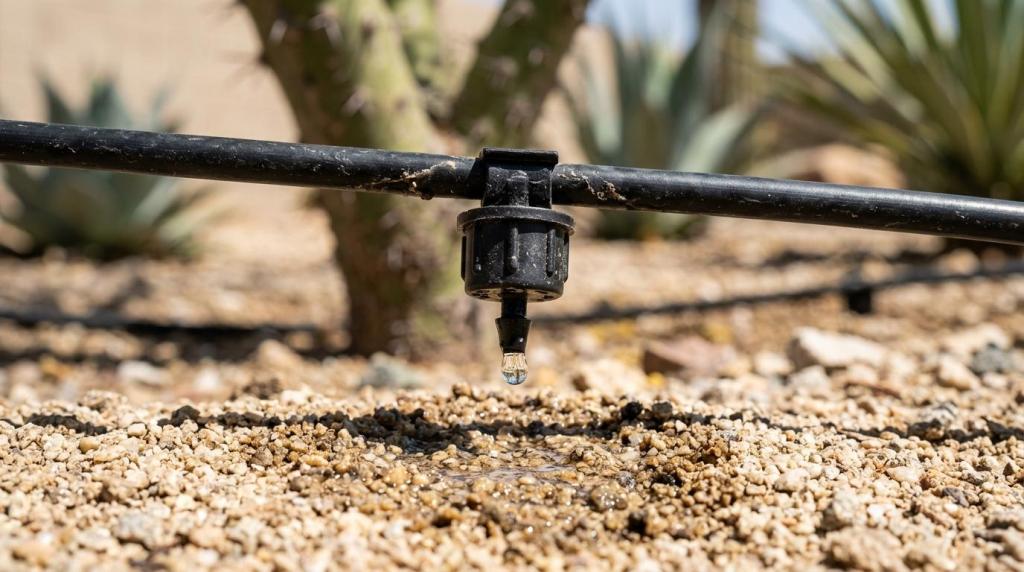
Start by hydrozoning the yard. Trees, shrubs, accent plants, and any small remaining turf zone should be grouped by water need. Then match the hardware to the plant type. Drip is usually the right answer for shrubs and desert-adapted planting. Bubblers may fit trees. Turf, if any remains, should stay on its own zone.

Next, review the controller logic. If a timer still runs on the old lawn schedule, the conversion is incomplete. Short, frequent spray cycles that made sense for turf can overwater shrubs and groundcovers. Pro tip: after installation, watch one full irrigation cycle in person. Broken emitters, bad coverage, and runoff are easiest to catch immediately.

How do you use rainwater harvesting in an Arizona landscape?

Rainwater harvesting works best when gutters, basins, and desert-adapted plants are designed together. ADWR treats it as a way to reduce drinking-water demand for irrigation.

Step 1 is capturing roof runoff where it naturally exits. Step 2 is directing that water into basins or planted areas rather than hard runoff paths. Step 3 is pairing those basins with plants that can benefit from irregular deep soaking. This is where native or desert-adapted trees and shrubs make the strategy more effective.

The key trade-off is timing. Arizona rain is seasonal and uneven, so rainwater harvesting is a supplement, not a full irrigation substitute for most landscapes. Still, it improves site efficiency and can make planted areas more resilient when designed with grading in mind.

Is Kurapia a good lawn alternative for warm desert Arizona?

Yes, Kurapia can be a good fit in warm desert Arizona. University of Arizona identifies it as a low-water-use creeping groundcover in the Verbena family, not a grass.

That distinction matters. Kurapia does not behave exactly like Bermuda or rye. It offers a different texture, a different growth habit, and different expectations. If someone wants a traditional turf species for sports-style wear, Kurapia may not be the right match. If the goal is a lower-water green ground plane with a softer planted character, it deserves serious consideration.

A common misconception is that Kurapia is a type of clover. The University of Arizona specifically notes that it is not a grass and not a clover. Before using it, confirm installer familiarity, local performance, sun exposure, and how much traffic the area truly gets.

Which Arizona plants work around lawn alternatives without wasting water?

Desert willow, red yucca, and palo verde pair well with low-water ground planes. The right plant palette matters as much as the surface material.

A strong Arizona palette usually mixes shade, structure, and seasonal color. Good pairings include:

  • Shade trees: Palo verde, desert willow, mesquite
  • Architectural plants: Agave, yucca, hesperaloe
  • Flowering accents: Lantana, penstemon, globe mallow
  • Shrubs for form: Texas sage, chuparosa, brittlebush
  • Ground-level texture: Mulch, decomposed granite, low-water groundcovers

Pro tip: use plants to break up large areas of rock and lower visual heat. Even a low-water yard feels more livable when tree canopy, shadows, and layered planting are part of the design.

What mistakes raise water use even after turf removal?

Most post-conversion water waste comes from irrigation mistakes, not plant choice. Old spray zones, bad grading, and overpacked plantings can erase expected savings.

One frequent problem is leaving the turf irrigation logic in place. If the controller still waters as if Bermuda grass exists, the landscape will never perform efficiently. Another issue is too much rock with too little shade. That may lower irrigation, but it can make the yard less comfortable and push owners to add water later in an attempt to keep isolated plants from scorching.

There is also the maintenance trap. Artificial grass is often assumed to be maintenance free, while gravel is assumed to be weed free. Neither is true. If you want lower long-term effort, the design has to account for edging, access, debris flow, and realistic plant spacing from the start.

When should homeowners in El Mirage hire a landscape contractor?

Hire a contractor when the project includes grading, irrigation rerouting, pavers, or HOA-sensitive design. In El Mirage, local experience matters because heat, caliche soil, and drainage shape the final result.

A straightforward decorative rock refresh may be manageable for a confident DIY homeowner. A full turf conversion usually is not, especially when it involves irrigation changes, tree work, wall or fence adjustments, lighting, hardscape, or drainage corrections. That is where a full-service contractor becomes more valuable than a simple install crew.

In the El Mirage market, homeowners often need one partner that can design the conversion, remove turf, adjust irrigation, install pavers or gravel, and finish the site cleanly. Pro Natural Landscape LLC is one local example of that full-service model, with residential and commercial scope and ongoing maintenance capability.

“As a family-owned company in El Mirage, Pro Natural Landscape LLC handles both residential and commercial outdoor projects with landscaping, hardscaping, and maintenance under one roof.”

Paver Installation in Goodyear, AZ

If you are ready to hire for paver installation in Goodyear, AZ, Pro Natural Landscape LLC delivers residential and commercial hardscape work built around how your property needs to function. We install pavers for patios, sidewalks, driveways, and other outdoor areas so you get a surface that looks finished, feels practical, and adds value to the space you use every day.

Pro Natural Landscape LLC is a family-owned company established 11 years ago in El Mirage, Arizona. We serve Goodyear and nearby West Valley communities within a 30-mile radius, provide free estimates, and offer financing through Hearth so you can move forward with clearer pricing and payment options.

Goodyear, AZ paver installation for patios, driveways, sidewalks, and commercial spaces

Goodyear gets over 300 days of sunshine, so your outdoor surfaces stay visible and in use for most of the year. Pro Natural Landscape LLC installs pavers that help you turn plain, unfinished, or worn outdoor areas into clean, durable spaces for walking, parking, gathering, or welcoming visitors.

We work with homeowners, property managers, and businesses in Goodyear that want more than a quick cosmetic change. Pro Natural Landscape LLC provides paver installation for residential and commercial properties with a focus on quality workmanship, strong communication, and a finished result that fits the property instead of looking added on as an afterthought.

“Pro Natural Landscape LLC serves Goodyear and nearby West Valley communities within a 30-mile radius.”

That local coverage matters when you want a contractor that can show up, stay responsive, and keep the project moving without treating your job like it is outside the normal service area.

Paver patios and driveways that make Goodyear properties easier to use

The benefit of paver installation is not just appearance. It is the way your property becomes easier to use, easier to maintain, and better organized for daily life, tenant turnover, guest access, or customer traffic.

Pro Natural Landscape LLC helps Goodyear clients create outdoor areas that feel intentional. A paver patio can define a gathering space, a paver sidewalk can improve how people move through the yard, and a paver driveway can sharpen the first impression of the property while giving the surface a more finished look.

“A Pro Natural Landscape LLC customer review highlights daily communication during a paver driveway and separate paver pad project.”

Because paver work often connects to the rest of the landscape, we also look at how the new surface fits with surrounding features and the broader layout of the property.

Common paver installation projects in Goodyear include:

  • Patios: Create a more usable outdoor living area for dining, seating, and entertaining.
  • Sidewalks and walkways: Improve access between entry points, yards, and common-use areas.
  • Driveways: Upgrade curb appeal and give the front of the property a stronger, more polished appearance.
  • Commercial outdoor surfaces: Improve appearance and function around managed properties and business locations.

Free Goodyear paver installation estimates with Hearth financing options

Cost clarity matters, especially when you are comparing a small walkway with a larger driveway or multi-area hardscape project. Pro Natural Landscape LLC offers free estimates, giving you a direct way to review the scope, ask questions, and understand the project before you commit.

If budget timing is part of the decision, Pro Natural Landscape LLC also offers financing through Hearth. Hearth says contractors can show customers project costs as monthly payments and help them pre-qualify in minutes, which can make a larger paver installation easier to plan.

“Pro Natural Landscape LLC offers free estimates and financing through Hearth, including monthly payment options and fast pre-qualification.”

That can be especially useful if you want to improve the property now instead of delaying a driveway, patio, or walkway upgrade while you sort out payment timing.

Residential and commercial paver installation from a family-owned Arizona company

Pro Natural Landscape LLC is a family-owned company established 11 years ago in El Mirage, and we provide residential and commercial landscaping and hardscaping services across the West Valley. For Goodyear clients, that means working with a local Arizona company that already understands the area, offers licensed and insured work, and is set up to handle both home and commercial exterior projects.

“Established 11 years ago in El Mirage, Pro Natural Landscape LLC brings local Arizona experience to residential and commercial paver projects.”

That experience becomes more useful when your paver project is part of a bigger exterior plan. Pro Natural Landscape LLC can also help with artificial grass, irrigation systems, gravel installation, landscape lighting, fence and block wall construction, tree removal, junk removal, land grading, exterior repairs, and paver restoration services, including paver renovation and color sealing when older hardscape needs attention.

Why Goodyear homeowners and property managers choose Pro Natural Landscape LLC for pavers

When you are ready to hire, the right contractor should make the project clearer, not more confusing. Pro Natural Landscape LLC gives Goodyear customers a direct path from estimate to installation with local communication, clear service coverage, and one company that can handle the hardscape work and related outdoor improvements.

We are often the right fit when you want:

  • Goodyear service from a nearby Arizona company: We serve Goodyear and surrounding communities within a 30-mile radius.
  • Residential or commercial paver installation: We work with homeowners, property managers, and businesses.
  • A contractor that can handle related outdoor work: Pavers can be coordinated with landscaping, gravel, irrigation, lighting, walls, and repairs.
  • Financing options for a larger project: Hearth financing can help you review monthly payment options and pre-qualify quickly.
  • Strong communication from start to finish: Pro Natural Landscape LLC is known for clear communication and reliable service, which matters when access, scheduling, and property use all need to be managed carefully.

Request your free paver installation estimate in Goodyear, AZ

If you are planning a paver patio, driveway, or walkway in Goodyear, Pro Natural Landscape LLC is ready to help you take the next step. Contact us for a free estimate, talk through your goals for the space, and ask about Hearth financing if monthly payments would help you start your paver installation sooner.

Gravel Yard Installation Arizona Homeowners Need

A patchy lawn in Arizona does not usually get better with time. It gets hotter, more expensive to maintain, and harder to keep looking clean week after week. That is why gravel yard installation Arizona homeowners and property managers choose is less about trend and more about practicality. When it is installed correctly, a gravel yard cuts water use, reduces upkeep, improves curb appeal, and holds up in tough desert conditions.

Gravel works because it matches the climate. Arizona properties deal with intense sun, wind, monsoon runoff, dust, and long dry stretches. Traditional grass often struggles unless you commit to constant irrigation and maintenance. Gravel gives you a cleaner, more dependable surface that still looks finished and professional.

Why gravel makes sense in Arizona

In a desert landscape, the best yard materials are the ones that can handle heat without demanding constant attention. Gravel does that well. It does not need mowing, it does not develop bare spots the way natural grass does, and it can be shaped to fit front yards, side yards, backyards, rental properties, and commercial spaces.

The biggest advantage is water savings. Many Arizona property owners are looking for ways to lower monthly utility costs while keeping the exterior looking sharp. Replacing thirsty lawn areas with gravel can make a noticeable difference. For landlords and commercial owners, it also helps reduce ongoing maintenance calls and seasonal cleanup.

There is also the appearance factor. A gravel yard does not have to look plain. With the right color, rock size, edging, and layout, it can look clean, modern, and intentional. It can also be combined with pavers, artificial grass, trees, lighting, and drainage solutions to create a complete outdoor upgrade instead of a basic surface replacement.

What a professional gravel yard installation in Arizona includes

A lot of gravel problems start before the rock is ever delivered. If the yard is not graded correctly, if weeds are not handled at the base, or if the wrong gravel is used for the space, the finished result will not hold up. A proper installation starts with prep work.

First, the area needs to be cleared. That may mean removing old grass, debris, overgrowth, roots, or damaged materials already in the yard. Then the ground needs to be shaped for proper drainage. This part matters more than many people realize. In Arizona, monsoon rains can move water fast. If the slope is wrong, you can end up with washouts, low spots, or water pooling near the house or wall lines.

After grading, a weed barrier is typically installed to help control growth under the gravel. This is not a magic fix for every weed forever, but it does create a much cleaner base and reduces future maintenance. From there, the right type and depth of gravel are selected based on how the space will be used.

For example, a decorative front yard may call for a different size and finish than a side yard walkway or a commercial traffic area. The goal is not just to spread rock. The goal is to create a surface that looks even, drains well, stays in place, and fits the property.

Choosing the right gravel for your yard

Not all gravel performs the same way. In Arizona, the most common options include decomposed granite, crushed rock, and decorative landscape gravel in different sizes and earth-tone colors. The best choice depends on the look you want and how much foot traffic the area gets.

Smaller gravel can create a smoother, more refined appearance, but it may shift more underfoot. Larger rock tends to stay put better and can create stronger visual contrast, especially in wider open areas. Some homeowners want a clean, uniform look across the whole yard. Others want to break up the space with gravel zones, paver paths, and accent areas around plants or trees.

Color matters too. Lighter gravel can brighten a property and complement modern exteriors, while darker or warmer tones often blend naturally with Arizona block walls, stucco homes, and desert plant palettes. The right choice should work with the home, not compete with it.

Gravel yard installation Arizona properties need for drainage and durability

A good-looking yard is only part of the job. The yard also needs to function in real weather. That is where professional gravel yard installation Arizona properties benefit from the most. Drainage, grading, and material depth all affect how the yard performs over time.

If gravel is too shallow, the base can show through and the surface may wear unevenly. If the grading is off, heavy rain can push material into sidewalks, patios, or driveways. If borders are weak or missing, gravel can migrate into unwanted areas and make the whole yard look messy.

That is why installation should be planned around the property itself. A flat front yard has different needs than a sloped side yard. A home with existing irrigation lines, tree roots, or drainage issues needs a more careful layout than an empty open lot. There is no one-size-fits-all answer. The best result comes from matching the installation to the site conditions.

Residential and commercial gravel projects

Gravel is a strong option for both homes and business properties because it solves practical problems quickly. For homeowners, it can replace dead lawn, simplify side yards, improve curb appeal, and create a low-maintenance backyard layout. For busy families, that usually means less watering, less cleanup, and a yard that still looks put together.

For commercial properties and rentals, gravel helps control maintenance costs and presents a cleaner exterior to tenants, customers, or visitors. It works well around signage, parking lot edges, entry landscaping, and common areas where a polished but durable finish matters.

It is also useful when paired with other exterior improvements. A gravel installation often works best as part of a bigger property cleanup or upgrade that may include tree trimming, irrigation adjustment, paver additions, artificial grass, or wall and border improvements. That kind of combined planning usually saves time and avoids redoing work later.

Common mistakes to avoid

The most common mistake is treating gravel like a quick surface cover instead of a real landscape installation. When rock is dumped over old weeds, uneven dirt, or poor drainage, the problems stay underneath and show up later. The yard may look good for a short time, then start shifting, thinning, or collecting debris.

Another issue is using the wrong amount of material. Too little gravel leaves the surface looking unfinished and makes maintenance harder. Too much in the wrong area can affect drainage or create an uneven look around walkways and drive edges.

Edging is another detail that gets overlooked. Without clear borders, gravel tends to spread into sidewalks, planting areas, and hardscape features. Clean edges help the whole project look more professional and keep maintenance simple.

When to replace or refresh an existing gravel yard

Not every gravel yard needs a full replacement. Sometimes a yard just needs regrading, top-off gravel, weed cleanup, or border repair. Other times, the existing installation has too many underlying issues to patch effectively.

Signs that it may be time for a larger fix include visible low spots, exposed fabric, recurring weed growth, drainage problems, or gravel that has thinned out so much the yard looks bare. If the property has changed over time with new hardscape, irrigation, or traffic patterns, the old layout may no longer work well.

This is where having a contractor who can handle more than one service matters. If the gravel project also needs cleanup, grading, tree removal, irrigation work, or added hardscape, it is easier to move forward when one team can handle the full scope instead of splitting the job between multiple companies.

Getting a gravel yard that stays clean and finished

A gravel yard should make your property easier to manage, not add a new set of problems. The difference usually comes down to installation quality. Proper prep, correct grading, the right rock selection, and clean finishing work all matter if you want the yard to stay attractive through Arizona heat and storm season.

At Pro Natural Landscape, gravel installations are approached as working landscape solutions, not just material delivery. That means building a yard that fits the property, supports drainage, and gives you a clean result you can maintain without constant effort.

If your lawn is worn out, your maintenance costs are climbing, or your exterior just needs a more durable finish, gravel is one of the smartest upgrades you can make in Arizona. A well-installed gravel yard gives you a cleaner property, fewer upkeep issues, and an outdoor space that looks ready year-round.

Paver Installation in Avondale, AZ

If you are ready to install pavers at your Avondale property, Pro Natural Landscape LLC provides paver installation for patios, sidewalks, and driveways with a strong focus on quality workmanship, clear communication, and lead times you can actually plan around. We are a family-owned company based in El Mirage, and we bring more than 11 years of Arizona experience to residential and commercial outdoor projects.

Pro Natural Landscape LLC serves Avondale and nearby West Valley communities within a 30-mile radius with free estimates, licensed and insured service, and financing options through Hearth for homeowners. Whether you want a backyard patio, a cleaner sidewalk connection, or a more finished driveway, we help you move from idea to installation with a straightforward process and reliable follow-through.

Paver installation in Avondale, AZ for patios, sidewalks, and driveways

Avondale is a fast-growing city of approximately 90,000 people, and that growth raises the bar for curb appeal, access, and outdoor usability. Pro Natural Landscape LLC installs paver patios, sidewalks, and driveways in Avondale so you can turn plain, worn, or underused areas into finished surfaces that support daily use.

“Pro Natural Landscape LLC serves Avondale and nearby West Valley communities within a 30-mile radius.”

A new paver surface can do more than improve appearance. Pro Natural Landscape LLC helps you create an outdoor area that is easier to use, easier to maintain as part of the landscape, and better aligned with the look of your home, rental property, or commercial site.

We regularly install pavers for:

  • Patios: Create a defined outdoor living or seating area.
  • Sidewalks: Add cleaner foot traffic paths to entries, gates, or common areas.
  • Driveways: Improve first impressions and give the front of the property a more finished look.

Paver installation for Avondale homeowners, property managers, and businesses

Pro Natural Landscape LLC works with homeowners who want a backyard or front-yard upgrade, property managers who need dependable scheduling and clean results, and businesses that want a more polished exterior. Because we handle both residential and commercial projects, you do not have to search for a separate contractor based on property type.

Communication matters when work is happening at an occupied home or active property. A review on Pro Natural Landscape LLC’s site describes daily communication during a paver driveway and paver pad project, along with fast and professional service, which speaks directly to one of the biggest concerns customers have before hiring.

“A Pro Natural Landscape LLC customer reported daily communication during a paver driveway and paver pad project.”

Pro Natural Landscape LLC is also licensed and insured, which gives you a clearer level of protection when selecting a contractor for site work in Avondale.

What Pro Natural Landscape LLC improves with a new paver patio, walkway, or driveway in Avondale

Pro Natural Landscape LLC uses high-quality materials for paver installation, but the real value is what the finished surface changes for you every day. In Avondale, outdoor areas need to handle regular use and long-term exposure, so layout, material choice, and installation quality all affect how well the space performs over time.

A paver project can improve your property in several practical ways:

  • More usable outdoor space: A paver patio creates a defined area for seating, dining, or gathering instead of leaving the yard unfinished or underused.
  • Cleaner movement through the property: Sidewalks and walkways create a dedicated path to entries, gates, and common areas.
  • Stronger curb appeal: A paver driveway gives the front of the property a more intentional, finished appearance.
  • Better landscape integration: Pavers can be planned alongside gravel installation, irrigation systems, landscape lighting, artificial grass, or borders so the whole exterior works together.

If your paver installation is part of a broader outdoor update, Pro Natural Landscape LLC can also coordinate related work such as irrigation systems, landscape lighting, gravel installation, land grading, fencing, block walls, exterior repairs, and even paver renovation and color sealing. That can save you time and reduce the hassle of coordinating multiple contractors.

Free estimates and Hearth financing for Avondale paver installation

Price clarity is one of the first questions on a paver project, so Pro Natural Landscape LLC starts with a free estimate. For homeowners who want payment flexibility, we also offer financing through Hearth, where applicants apply directly for home improvement personal loans through Hearth’s financing network.

“Through Hearth, Pro Natural Landscape LLC offers homeowner financing with 3–12 year repayment periods and no prepayment penalties.”

Hearth says its financing network includes 18 lender partners, and its offers include repayment periods from 3 to 12 years with no prepayment penalties. For many Avondale homeowners, that creates a more manageable path to installing a patio, sidewalk, or driveway without delaying the project longer than necessary.

If you are managing a rental or commercial property, the free estimate also helps you compare scope, timing, and priorities before work begins.

How Pro Natural Landscape LLC delivers paver installation projects in Avondale

A good paver surface depends on more than the pavers themselves. Pro Natural Landscape LLC combines site review, planning, material selection, and communication so you know what is being built, how it fits your property, and what to expect during installation.

Here is how we typically move your Avondale paver project forward:

  1. Free site estimate: We visit the property, discuss whether the project is a patio, sidewalk, or driveway, and define the scope.
  2. Project planning: We review layout, access, and how the paver area fits with the rest of the landscape or hardscape.
  3. Installation and updates: We schedule the work, keep communication active, and focus on fast, reliable service during the build.
  4. Final review: We walk the completed area with you and discuss any related next steps if the project connects to other outdoor improvements.

That process matters because it reduces surprises. Pro Natural Landscape LLC keeps the project grounded in your actual property needs instead of pushing a one-size-fits-all solution.

Why Avondale customers choose a local family-owned paver contractor

Pro Natural Landscape LLC is based in El Mirage and serves Avondale as part of its West Valley coverage area. That local reach matters when you want a contractor that understands Arizona outdoor projects and can respond with the kind of communication and scheduling support that is harder to get from a less focused provider.

Our company was established 11 years ago and is built around full-service landscaping and hardscaping for residential and commercial clients. Pro Natural Landscape LLC is a strong fit when your paver installation is part of a bigger exterior plan and you want one company that can also handle gravel, artificial grass, irrigation, lighting, tree work, cleanup, fencing, block walls, or exterior repairs.

You are likely a good fit for Pro Natural Landscape LLC if you want a licensed and insured team, a free estimate before committing, homeowner financing through Hearth, and a company that treats communication as part of the job.

Book a free estimate for paver installation in Avondale, AZ

If you are ready to install a paver patio, sidewalk, or driveway in Avondale, Pro Natural Landscape LLC can help you plan the project, price it clearly, and get it moving. Contact us today to schedule your free estimate and take the next step toward a cleaner, more usable, more finished outdoor space.

Artificial Grass Installation in Glendale, AZ

If you want artificial grass installation in Glendale, AZ, Pro Natural Landscape LLC gives you a practical alternative to high-water, high-maintenance lawn areas. We are a family-owned landscaping company based in nearby El Mirage, and we bring more than a decade of experience to residential and commercial outdoor projects across the West Valley.

Homeowners, property managers, and businesses choose Pro Natural Landscape LLC when they want a yard or landscape area that looks cleaner, needs less weekly upkeep, and holds up better in Arizona conditions. We provide free estimates, financing options through Hearth, and full-service landscaping support when your turf project is part of a larger front yard, backyard, or low-water landscape upgrade.

Glendale artificial grass installation for front yards, backyards, pet areas, and play spaces

Glendale properties deal with intense sun, dry conditions, dust, and heavy use in the areas that matter most. Pro Natural Landscape LLC installs artificial grass for front yards, backyards, pet zones, play spaces, and other lawn replacements where you want a finished look without constant mowing, muddy patches, or struggling natural grass.

Your project is planned around how the space will actually be used. A front yard needs curb appeal, a backyard needs comfort and durability, a pet area needs easier cleanup, and a play area needs a surface that stays more usable through the year.

“Pro Natural Landscape LLC is a family-owned landscaping company established 11 years ago in nearby El Mirage.”

Artificial grass also works well for Glendale properties that are moving toward low-water landscapes. Instead of fighting bare spots and irrigation-heavy turf, you get a consistent green surface that supports a cleaner outdoor layout and less routine yard work.

We commonly install artificial grass for spaces like these:

  • Front yards: cleaner curb appeal with less watering and mowing
  • Backyards: usable green space for relaxing, entertaining, and family time
  • Pet areas: less dirt tracked indoors and easier day-to-day maintenance
  • Play spaces: a more dependable surface for kids’ activity areas
  • Commercial areas: lower-maintenance green sections for offices, rentals, and business frontage

Pro Natural Landscape LLC installs turf for Arizona drainage, grading, and long-term performance

A good artificial grass installation in Glendale starts below the visible surface. Pro Natural Landscape LLC focuses on site preparation, grading, and drainage so your turf has the support it needs to drain properly and look finished instead of uneven, loose, or prone to water issues after storms or irrigation runoff.

That matters in Arizona landscapes, where compacted soil, existing rock, worn natural grass, and mixed hardscape edges can all affect the final result. We build the project around the actual site conditions so your turf installation fits the yard instead of looking like an afterthought.

“Pro Natural Landscape LLC offers free estimates and financing options through Hearth for Glendale artificial grass projects.”

We also help you choose an artificial grass solution that matches the look and function of your property. Whether you want a natural-looking front lawn replacement, a backyard refresh, or a dedicated pet section, Pro Natural Landscape LLC keeps the focus on usable space, realistic appearance, and lower maintenance for Arizona properties.

Artificial grass in Glendale for HOA homeowners, property managers, and businesses

For homeowners in Glendale planned communities, artificial grass can also be the right answer when natural turf is difficult or expensive to maintain. Arizona law protects homeowners in planned communities that allow grass on a member’s property from HOA bans on artificial grass, which can be an important point if you are comparing landscape options for your home.

That said, HOA design standards, appearance expectations, and submittal requirements still matter. Pro Natural Landscape LLC helps you plan an installation that fits the property and supports a smoother decision process before work begins.

“Pro Natural Landscape LLC serves both residential and commercial landscaping customers in the Glendale area.”

For businesses and property managers, the decision is often about appearance, upkeep, and operating costs. Pro Natural Landscape LLC handles both residential and commercial landscaping work, and we can help you decide whether a full artificial grass installation, a low-water redesign, or a combination of turf, gravel, and hardscape makes the most sense for the property.

Commercial projects deserve one extra review step. University of Arizona Extension materials note that some non-residential rebate programs do not allow artificial turf as a replacement ground cover, so the right plan can depend on the property type and whether the project is part of a broader turf-conversion strategy.

Low-water landscape and pool-removal turf projects in Glendale, AZ

Many Glendale artificial grass projects are tied to water-saving goals. If you are replacing a natural lawn, redesigning a backyard, or moving toward a low-water-use landscape, Pro Natural Landscape LLC can combine turf with gravel, pavers, irrigation updates, landscape lighting, and other exterior improvements to create a more complete outdoor space.

If your Glendale project includes pool removal, there is an important rebate detail to know. According to the City of Glendale’s water conservation rebates, when xeriscape or artificial grass is installed as part of pool removal, the rebate is applied to the pool removal rather than directly to the xeriscape or artificial grass installation. That distinction can affect how you budget the project.

Pro Natural Landscape LLC helps you think through the real use of the space, not just the material choice. If your goal is lower maintenance, better water efficiency, easier cleanup, and a stronger-looking yard, we can build the turf installation around those priorities and integrate the rest of the landscape as needed.

Artificial grass installation cost, free estimates, and Hearth financing in Glendale

Artificial grass pricing in Glendale depends on the size of the area, the current surface condition, access to the yard, grading needs, drainage requirements, edge details, and whether the turf is part of a larger landscape or hardscape project. Pro Natural Landscape LLC provides free estimates so you can understand the scope before committing.

That estimate is especially helpful when you are comparing a simple lawn replacement with a more complete outdoor renovation. A front yard conversion, pet area, backyard play zone, or commercial installation can each require a different level of prep and finish work.

If project budget is a concern, Pro Natural Landscape LLC also offers financing options through Hearth. That gives you a way to move forward on the yard improvements you want without having to delay the entire project while you wait to fund it all at once.

When Pro Natural Landscape LLC is the right fit for your Glendale turf project

Pro Natural Landscape LLC is a strong fit when you want more than a basic turf swap. Because we offer artificial grass installation alongside pavers, travertine, irrigation systems, gravel installation, land grading, fence and block wall construction, tree removal, and exterior repairs, we can help when your Glendale property needs a complete outdoor update instead of one isolated service.

You are likely a good fit for Pro Natural Landscape LLC if:

  • You want a family-owned local company with 11+ years of experience near Glendale
  • You need artificial grass for a specific use such as a front yard, backyard, pet area, play space, or commercial landscape section
  • You want low-maintenance landscaping that supports Arizona water-conscious goals
  • You need site prep and drainage to be taken seriously before the turf goes in
  • You want clear next steps with a free estimate and financing options through Hearth

Our team is especially helpful when you want direct communication, a quality installation, and a project that stays on schedule. Pro Natural Landscape LLC was built to serve both homeowners and commercial clients, so whether you are improving your own yard or managing a property for others, we keep the work practical and outcome-focused.

Get a free Glendale artificial grass estimate from Pro Natural Landscape LLC

If you are ready to replace a worn lawn, build a cleaner pet area, upgrade a backyard, or create a low-water landscape in Glendale, Pro Natural Landscape LLC is ready to help. Contact us for a free estimate and we will review your property, your goals, and the best artificial grass installation approach for your Arizona space.

Landscape Drainage Planning Guide

Water problems in Arizona do not always look dramatic. Sometimes it is a stain on a block wall, gravel that keeps washing into the sidewalk, a low spot that stays muddy after a storm, or pavers that start shifting because runoff keeps moving the base. A solid landscape drainage planning guide helps you catch those issues before they turn into repairs.

In desert climates, drainage gets overlooked because most of the year feels dry. Then a heavy monsoon hits, and every weak point in the yard shows up at once. For homeowners, property managers, and commercial owners, good drainage is not an extra feature. It is part of protecting the property, keeping the yard usable, and making sure your landscape investment lasts.

Why drainage planning matters in Arizona

Arizona landscaping has a different set of pressures than wetter regions. You may be working with compacted soil, hard surfaces that move water fast, and yards built for low maintenance with gravel, pavers, artificial grass, and decorative features. Those materials look clean and practical, but they still need a plan for where stormwater goes.

If runoff has nowhere to move, it usually causes one of a few problems. Water can collect near the foundation, flood planting beds, cut channels through gravel, stain walls, damage irrigation zones, or leave standing water around patios and walkways. On commercial properties, it can also create safety issues near entrances and drive lanes.

The main goal is simple. Move water away from structures and direct it toward a safe discharge area without damaging the landscape along the way. That sounds straightforward, but every yard has trade-offs. A small residential lot has different limits than a large commercial site. A yard with pavers and turf behaves differently than one with mostly decomposed granite and planting areas.

Start your landscape drainage planning guide with the site

Before choosing drains, trenches, or grading changes, look at how the property already handles water. The biggest mistake is buying a drainage solution before identifying the real source of the problem.

Walk the property after rain if possible. If that is not practical, use a hose test in areas where water tends to collect. Watch where runoff starts, how fast it moves, and where it stops. Pay attention to roof downspouts, patio edges, side yards, planter borders, driveway slopes, and low spots near walls or foundations.

You also want to notice elevation changes. Even minor grade differences matter in a flat-looking yard. Water follows slope, and in many cases the fix is not a larger drain. It is correcting the grade so the yard sheds water the way it should have from the start.

Hardscape plays a major role here. Pavers, concrete, travertine, and compacted pathways do not absorb much water during heavy storms. They speed up runoff. That is not a problem by itself, but it means the surrounding landscape has to be designed to receive and redirect that water.

Grading comes first, drains come second

Most drainage problems are really grading problems. If the surface does not slope correctly, adding drains only treats the symptom.

A well-graded yard directs water away from the home and toward approved drainage paths or collection points. In Arizona landscapes, that may mean shaping the soil beneath gravel, adjusting the base under pavers, or reworking transitions between turf, hardscape, and planting beds. The exact approach depends on the property, but the principle stays the same. Surface water needs a clear path.

This is where many DIY fixes fall short. A catch basin installed in the wrong low spot may fill with debris and still not solve the issue if the surrounding grade keeps pushing water back toward the structure. On the other hand, a modest grading correction can often eliminate pooling without major drain installation.

That said, drains still matter when grading alone is not enough. Tight side yards, enclosed courtyards, and areas bordered by walls often need both proper slope and a drainage system to move water efficiently.

Common drainage solutions and when they make sense

The right drainage system depends on the source of the water and the layout of the yard. There is no one-size-fits-all answer.

French drains are useful when water is moving through soil or collecting below the surface. They can help in planting zones or low areas where water lingers. They are less effective if the real problem is fast surface runoff from patios or roofs.

Channel drains are often a better fit near hardscapes. If water sheets across a driveway, patio, or pool deck, a linear drain can intercept it before it reaches the house or a pedestrian area. For homes with pavers or travertine, these drains often work best when they are planned during installation rather than added later.

Catch basins can collect water at strategic low points, especially where several runoff paths meet. But they need proper placement, enough capacity, and regular cleaning. A clogged basin solves nothing.

Downspout extensions matter more than people think. Roof runoff can dump a large volume of water into one concentrated area. If that water lands next to the foundation or in a narrow side yard, it can quickly create erosion, staining, and settlement issues.

Swales and dry creek beds can work well for larger yards or properties that want a more natural drainage path. In Arizona, these can blend well with desert-style landscaping when they are built with the right depth, rock sizing, and slope. If done poorly, they can look decorative but fail during a serious storm.

Drainage planning around gravel, turf, and pavers

A lot of Arizona properties use low-water materials, which is smart for maintenance and appearance. But these materials still need coordination.

Gravel can hide small drainage issues until runoff starts carving visible paths through it. If gravel keeps shifting, washing out, or piling against borders, the base grade may be off or the water volume may be too concentrated. Adding more gravel will not fix that.

Artificial grass needs drainage under the surface. If the base is compacted incorrectly or installed over a poorly draining area, water can sit underneath and create odor, instability, or soggy edges. Turf may look clean from the top while the drainage problem stays hidden underneath.

Pavers need special attention because water affects both the surface and the base. Poor drainage can lead to settling, movement, joint washout, and edge failure. A paver patio or walkway should never be planned separately from site drainage. The two need to work together from the beginning.

What property owners should watch for

Some drainage problems are obvious, and some build slowly over time. If you see water stains on walls, recurring puddles, soil erosion, exposed roots, sinking hardscape, or standing water around the yard after a storm, the site is telling you something.

It is also worth watching your irrigation. Not every wet area is a stormwater issue. A leak, overspray, or poor sprinkler coverage can mimic drainage failure. That is why practical site review matters. You want to solve the right problem, not just the visible result.

For commercial properties, drainage problems often show up first as maintenance headaches. Gravel migration, muddy entries, slippery walkways, and repeated cleanup after storms all point to poor water control. Those issues affect appearance, safety, and long-term repair costs.

When to plan drainage during a bigger landscape project

The best time to handle drainage is before installing new landscape features, not after damage starts. If you are already planning pavers, artificial grass, gravel installation, grading, irrigation work, or a yard redesign, drainage should be part of the same conversation.

This saves money and usually leads to a better result. A contractor can shape the grade, protect the hardscape base, place drains correctly, and coordinate everything at once. That is far more efficient than reworking finished surfaces later.

For many Arizona properties, this integrated approach makes the most sense. A yard is not just plants, or just pavers, or just irrigation. Everything affects how water moves. Pro Natural Landscape sees this often on both residential and commercial projects where surface materials, grading, and drainage have to be handled together to avoid repeat problems.

A practical landscape drainage planning guide for better results

If you want a drainage plan that actually holds up, think in order. First identify where water comes from. Then map where it needs to go. After that, correct the slope, choose the right drainage method for the space, and make sure the surrounding landscape materials support that plan instead of fighting it.

The details matter. Soil type matters. Wall placement matters. Roof runoff matters. The finish materials matter. Even a well-built yard can struggle if one section traps water or redirects it into another weak spot.

A good drainage plan is not about overbuilding. It is about building with purpose. When water leaves the property the right way, your landscape stays cleaner, your hardscape lasts longer, and your outdoor space is easier to maintain through every storm season.

If your yard has standing water, erosion, washouts, or hardscape movement, do not wait for the next heavy rain to confirm the problem. The best drainage fixes start before the damage gets worse.