

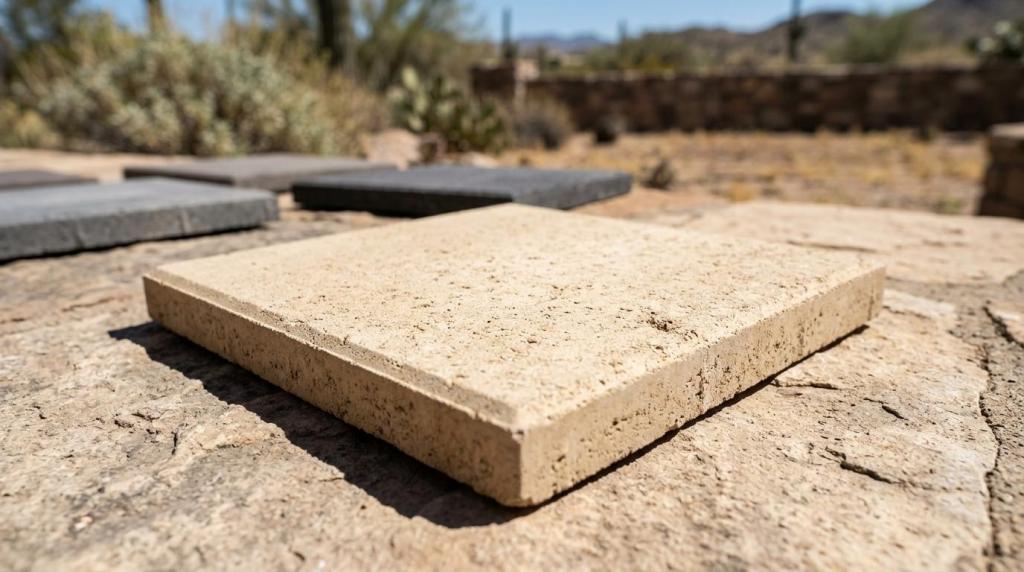
Arizona hardscapes live under a level of sun that exposes every weak choice. A paver that looks great in a catalog can feel scorching by midafternoon, fade faster than expected, or hold heat long after sunset if the material, color, and layout were not chosen for desert conditions.
That is why the best pavers for Arizona heat are not defined by appearance alone. The strongest results usually come from a mix of lighter, more reflective surfaces, low water absorption, durable installation methods, and thoughtful shade planning around the space.
Why Arizona heat changes paver performance
When people compare pavers, they often focus on style, shape, or price first. In Arizona, surface temperature deserves equal attention. A patio, pool deck, walkway, or driveway can collect solar energy all day, and that stored heat affects comfort, maintenance, and even the nearby air.
According to the Cool Roof Rating Council, the two basic characteristics that determine how cool a pavement stays are solar reflectance and thermal emittance. Solar reflectance is the amount of sunlight a surface reflects away. Thermal emittance is how well that surface releases the heat it does absorb. Both matter.
Dark paved materials can absorb 80% to 95% of sunlight, which helps explain why two patios made from different colors or finishes can feel dramatically different under bare feet. The same source notes that cool pavements can reduce surface temperatures by 10 to 12°F.
A simple way to think about it is this: the best pavers for Arizona heat are usually the ones that reflect more sun, release heat more effectively, and avoid trapping moisture that can wear down the surface over time.
After those basics, the decision becomes much clearer.
- Solar reflectance: Higher reflectance usually means a cooler surface in direct sun
- Thermal emittance: Better heat release helps the paver cool down faster
- Color and finish: Light tones and matte textures often outperform dark, glossy surfaces in desert settings
- Exposure: Full-sun patios need a different strategy than a shaded side yard
Best paver materials for Arizona heat
Material type still matters, just not in isolation. A light-colored product with strong thermal behavior often beats a darker version of a supposedly cooler material. That said, some paver categories give Arizona property owners a better starting point.
The table below gives a practical comparison.
| Paver material | Heat-related strengths | Water behavior | Good fit in Arizona | Watch-outs |
|---|---|---|---|---|
| Concrete pavers | Often available in lighter colors; new cement concrete can reflect a meaningful share of sunlight | Moderate absorption varies by product | Patios, walkways, driveways | Reflectance can drop as concrete ages; dark colors get hotter |
| Porcelain pavers | Can perform well when chosen in light tones with the right finish | Very low absorption in many products | Patios, courtyards, outdoor living areas | Product quality and installation details matter |
| Natural stone pavers | Performance varies widely by stone type, finish, and color | Varies by material | Premium patios, garden paths, feature areas | Do not assume all stone stays cooler |
| Dark dense pavers of any type | Often store and radiate more heat | Varies | Limited use where shade is strong | Can become uncomfortable in full sun |
Concrete pavers for Arizona patios and driveways
Concrete pavers remain a solid option for Arizona landscapes because they are durable, widely available, and offer a broad range of lighter desert-friendly colors. There is also useful research behind concrete’s reflective behavior. Lawrence Berkeley National Laboratory reports that new cement concrete has a solar reflectance of 30% to 50%, though that figure tends to drop with age to about 20% to 35%.
That aging effect matters. A fresh, light concrete surface may start with strong thermal performance, but dirt, weathering, and sealers can change how it handles sunlight over time. Regular cleaning and smart product selection help preserve that advantage.
For many homeowners and property managers, lighter concrete pavers strike the best balance between budget, appearance, and heat control. On driveways, they also provide the structural strength needed for vehicle traffic when installed over a proper base.
Porcelain pavers for Arizona outdoor living
Porcelain pavers have gained traction in hot-climate design because they combine a refined appearance with very low water absorption. Some manufacturers report that their outdoor porcelain pavers have practically no water absorption, along with strong stain resistance and high breakage loads. Belgard is one example.
In Arizona, low absorption is valuable because it helps reduce issues tied to moisture movement, staining, and some forms of weather wear. Even in a dry region, monsoon storms, irrigation systems can create repeated moisture exposure around walkways, patios, and planting beds.
Porcelain is often a strong choice for patios, courtyards, and entertaining spaces where homeowners want a cleaner architectural look. The key is not to assume every porcelain paver will feel cool. Color, texture, installation method, and direct exposure still shape the result.
Natural stone and travertine pavers in Arizona sun
Natural stone deserves a careful, product-by-product review. Stone categories vary so much in density, finish, and reflectivity that broad claims can be misleading. A light textured stone may behave very differently from a darker polished one.
For Arizona projects, that means samples matter. Instead of choosing stone based only on indoor displays, it is smarter to review full-size samples outdoors in direct afternoon sun. That simple step often prevents expensive disappointment later.
Best paver colors and finishes for cooler surfaces
If one design choice consistently improves comfort in the Arizona sun, it is color. Lighter pavers usually outperform darker ones because they reflect more solar radiation instead of absorbing it.
Finish also changes the experience. A paver with a matte, textured face may feel less harsh visually and physically than a slick, dark surface that intensifies glare and heat. This is especially important around pools, seating areas, and play spaces where people spend time standing or walking.
When selecting color and finish, these options are often the safest starting point:
- light grays
- warm beiges
- sand and cream tones
- muted desert blends
- matte or textured finishes
- larger samples tested outdoors
It is easy to get pulled toward dramatic charcoal, deep brown, or black pavers because they look sharp in photos. In Arizona, those darker tones often make more sense as accents rather than the main field surface.
Shade design and landscaping that keep Arizona pavers cooler
Even the best paver material has limits in full desert sun. Shade can change the performance of the entire space, sometimes more than a material upgrade alone.
The U.S. Department of Energy reports that trees and evapotranspiration can reduce surrounding air temperatures by as much as 6°F. Air temperatures directly under trees can be as much as 25°F cooler than air temperatures above nearby blacktop. Trees, shrubs, and groundcover can also shade patios, driveways, and sidewalks.
That means a smart Arizona hardscape plan should treat shade as part of the paver decision, not as a separate add-on later.
A cooler outdoor area often comes from combining several elements:
- Tree placement: Target west and southwest sun where afternoon heat is most intense
- Patio covers: Reduce direct solar load over seating and dining zones
- Pergolas with plants: Add filtered shade without closing in the space
- Landscape layering: Shrubs and groundcover can soften reflected heat around paving edges
Shade also protects the visual life of the hardscape. Less direct exposure can help colors hold more consistently and reduce wear tied to extreme thermal cycling.
Water absorption and durability for Arizona monsoon weather
Arizona is dry, but pavers still need to handle water well. Monsoon rains can hit fast, and irrigation systems can create repeated moisture exposure around walkways, patios, and planting beds.
Low-absorption materials tend to offer advantages in these conditions. They are generally less likely to take in water that later contributes to surface staining, mineral deposits, or moisture-related wear. This is one reason porcelain attracts attention in warm climates. A product with very low absorption can stay more stable through repeated wet-dry cycles.
Concrete pavers can also perform well, though product quality, joint design, drainage, and sealing choices all matter. A good installation should move water away from structures, limit pooling, and support the pavers evenly so heat and moisture do not work together to weaken the surface.
Drainage matters almost as much as the paver itself.
Land grading, base preparation, and proper edge restraint are not glamorous topics, but they often decide whether a beautiful hardscape keeps its appearance over time.
Pool decks, patios, and driveways need different Arizona paver choices
One paver does not automatically fit every outdoor surface. The best pavers for Arizona heat depend in part on how the area will be used.
Pool decks call for comfort underfoot, slip resistance, and low water absorption. Patios need a balance of appearance, furniture stability, and lower heat gain. Driveways need structural strength first, while still benefiting from lighter colors and reflective performance.
That is why a whole-property approach tends to work best. A home may use one paver style on the driveway, another around the pool, and a third in a shaded garden walk, all while keeping the color palette coordinated.
Questions to ask before choosing Arizona pavers
A good paver decision usually comes down to asking better questions before installation begins. Samples, specifications, and site conditions should all be part of the review.
These questions help narrow the field:
- How much full afternoon sun does the area get?: Exposure often matters as much as material type
- What is the paver’s color family and finish?: Light matte finishes are usually a safer choice for heat
- How does the product handle water absorption?: This affects durability, staining, and monsoon performance
- Will the space include shade trees or a patio cover?: Shade can materially reduce heat load
- Is the base and drainage plan built for Arizona conditions?: Installation quality protects long-term performance
For homeowners and property managers in El Mirage and nearby Arizona communities, the best results usually come from seeing materials in real light, touching the surface in afternoon conditions, and pairing the pavers with shade and drainage planning from the start.
A showroom sample can help with style. A sun test on-site is what usually answers the comfort question.