

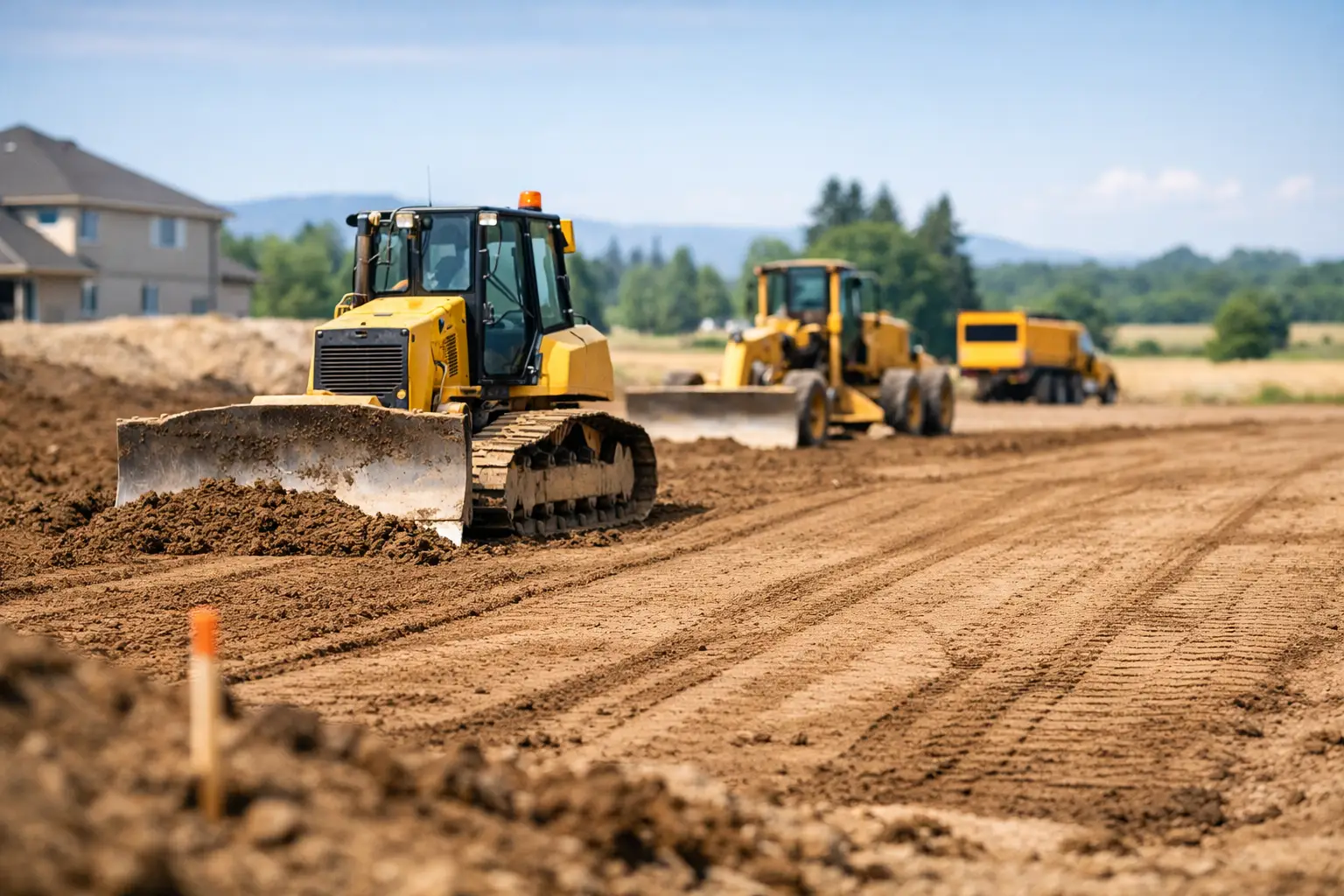
A yard that looks mostly flat can still send water straight toward your foundation, leave puddles near walkways, or create low spots that ruin new landscaping. That is why homeowners and property managers often ask, what is land grading, and do they actually need it? In simple terms, land grading is the process of shaping the ground so water drains correctly and the surface is ready for whatever comes next, whether that is gravel, artificial grass, pavers, planting, or a full exterior upgrade.
In Arizona, grading is not just about appearance. It is about function. A properly graded property helps manage rainwater, protects structures, reduces erosion, and creates a cleaner base for durable outdoor improvements.
What Is Land Grading?
Land grading means cutting, filling, and smoothing soil to create the right slope and elevation across a property. The goal is not to make everything perfectly level. In most cases, the goal is the opposite. The ground needs a controlled slope so water moves away from buildings, patios, driveways, and other finished surfaces.
That slope has to be intentional. Too flat, and water can sit in place. Too steep, and you can end up with washout, instability, or a yard that feels awkward to use. Good grading creates a surface that works with the property, not against it.
On a residential lot, grading may involve correcting drainage around the house, preparing for new sod or artificial turf, reshaping a backyard after demolition, or leveling areas for pavers and gravel. On a commercial property, it may be part of larger site prep for access, appearance, drainage control, and long-term maintenance.
Why Land Grading Matters in Arizona
Arizona properties deal with a specific mix of challenges. The ground is often dry and compacted, storms can hit hard during monsoon season, and many owners want low-maintenance landscapes built with gravel, pavers, irrigation, and desert-adapted design. If the grading is off, those investments do not perform the way they should.
One of the biggest reasons grading matters is drainage. Even in a dry climate, sudden rainfall can move fast. Without the right slope, water may collect near the home, flow into outdoor living areas, or carve channels through bare soil and decorative gravel. Over time, that can lead to surface damage, staining, settlement, and foundation concerns.
Grading also affects usability. A yard may look acceptable from a distance but feel uneven underfoot, create trip hazards, or make it difficult to install hardscaping cleanly. When the ground is shaped correctly first, the finished project looks better and lasts longer.
What Land Grading Is Designed to Fix
Most grading projects start with a problem the owner can already see. Water may be pooling after a storm, the soil may be sloping the wrong way, or one area of the property may have settled lower than the rest. In other cases, grading is preventive. The property is being improved, and the surface needs to be corrected before new materials go in.
Common issues grading can address include poor drainage near the structure, uneven terrain, low spots that hold water, erosion around the edges of the yard, and rough surfaces left behind after tree removal, demolition, or old landscape removal. It can also help create a clean transition between landscape areas, hardscape features, and access paths.
This is where trade-offs come in. Some yards need only minor reshaping, while others need a more involved solution with fill material, compaction, and drainage planning. A quick surface smoothing job may help appearance, but it will not solve a deeper water-flow problem if the slope is wrong from the start.
What Happens During a Land Grading Project
The exact process depends on the size of the property and the condition of the site, but most grading work follows a clear sequence. First, the existing elevation and drainage pattern are evaluated. That includes identifying high points, low areas, runoff paths, and any structures or surfaces that need protection.
Next, the site is cleared if needed. Debris, unwanted vegetation, old materials, or obstacles may need to be removed so the ground can be worked properly. Then soil is moved. Some areas are cut down, some are built up, and the surface is shaped to create the desired slope.
After shaping, the soil usually needs to be compacted. This matters because loose soil can settle later, which changes the grade and causes problems after installation. Once the area is stable, it can be finished for its next use, such as landscape rock, irrigation, artificial grass, planting beds, or hardscape base preparation.
What Is Land Grading for New Landscaping?
When people ask what is land grading in a landscaping context, they are usually talking about site preparation. Before any outdoor improvement looks clean and performs well, the ground underneath has to be right.
For artificial grass, grading helps create a stable, even base and supports drainage beneath the turf. For gravel installation, it prevents washouts and uneven buildup. For pavers and patios, it helps direct water away from the house and supports proper base construction. For planting areas, it shapes runoff so roots are not sitting in water where they should not be.
This is one reason full-service outdoor contractors can save property owners time and frustration. Grading, drainage planning, hardscape prep, and landscape installation all affect one another. If those pieces are handled separately without a clear plan, the final result can look good for a short time and then start showing problems.
Signs Your Property May Need Grading
You do not need a major drainage failure to justify grading work. Smaller warning signs often show up first. If you notice standing water after rain, soil erosion along the edges of the yard, water marks near the home, or areas where gravel keeps shifting out of place, the grade may be part of the issue.
Other signs include an uneven yard after tree removal or construction, landscape features that never seem to sit right, exposed roots from washout, or bare patches where runoff keeps stripping material away. Some owners also notice that irrigation seems inconsistent because the ground shape causes water to collect in one zone and run off too quickly in another.
In Arizona, monsoon season tends to reveal problems fast. A yard that seemed fine during dry months may show clear drainage issues after one heavy storm.
DIY Grading vs. Professional Grading
Small touch-up work may be manageable for a handy property owner, especially if the issue is minor and far from structures. But grading near foundations, walls, driveways, and finished landscape features is usually best handled professionally.
The reason is simple. Grading is not just moving dirt around until the yard looks flatter. It involves slope control, drainage logic, equipment use, and soil compaction. If the final pitch is off by even a small amount in the wrong place, water can be redirected toward expensive areas.
There is also the question of scope. A homeowner may be able to rake out a rough patch, but larger grading jobs often require skid steers, compactors, haul-off, imported fill, and a clear plan for how the finished elevation connects with surrounding surfaces. On commercial sites or larger residential projects, guessing is costly.
The Long-Term Value of Proper Grading
Good grading protects more than the yard. It supports the life of the entire outdoor space. When drainage works the way it should, hardscapes stay cleaner, surface materials stay in place, and maintenance becomes easier.
It also helps protect curb appeal. A property with pooling water, eroded edges, and uneven surfaces starts to look neglected even if the owner has invested in upgrades. By contrast, a well-graded landscape looks cleaner, performs better, and gives every other exterior improvement a stronger foundation.
For Arizona owners who want low-maintenance outdoor spaces, that matters. Durable materials like gravel, pavers, and artificial grass perform best when the ground underneath has been prepared correctly. That is one reason land grading is often one of the smartest first steps in an exterior project.
If your yard has drainage issues, uneven ground, or a surface that is not ready for new installation, it is worth addressing the grade before the problem spreads. A properly shaped property is easier to maintain, safer to use, and better prepared for the upgrades you actually want.
2 thoughts on “What Is Land Grading and Why It Matters”