

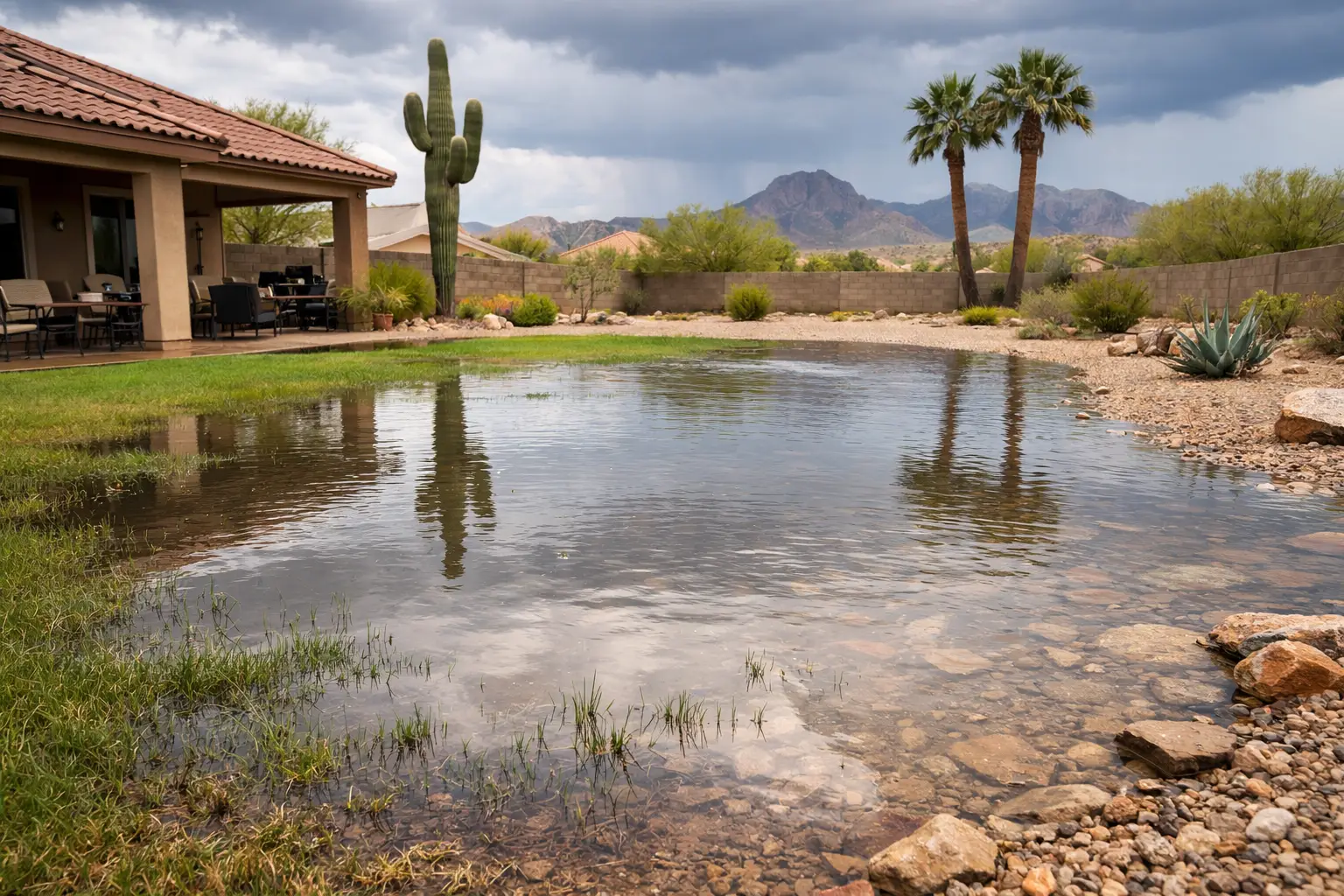
A yard can look fine for months, then one monsoon storm hits and suddenly water is pooling against the house, soaking gravel beds, and turning walkways into a mess. If you are asking, “why is my yard flooding,” the answer is usually not just rain. In Arizona, flooding often points to a drainage problem, a grading issue, a hardscape layout mistake, or an irrigation system that is putting too much water in the wrong place.
Why is my yard flooding after every storm?
In most cases, yard flooding happens because water has nowhere to go. Even in a dry climate, heavy rain can fall fast and hit compacted soil, low spots, patios, turf, gravel, and driveways all at once. When the ground cannot absorb water quickly enough, it starts moving across the surface and collecting in the weakest parts of the yard.
Arizona properties deal with a specific mix of problems. Soil can be hard and slow to absorb water. Older yards may have settled over time. Newer installations sometimes focus on appearance without solving runoff. And if pavers, artificial grass, planter borders, or decorative rock were added without proper grading, they can redirect water toward the home instead of away from it.
That is why flooding is rarely just a weather issue. It is usually a site design issue that shows up during bad weather.
The most common causes of yard flooding
Poor grading
Grading is one of the biggest reasons a yard holds water. The soil should guide runoff away from your house, patio, walkways, and other structures. If the yard slopes toward the home, or if it has dips and bowls that trap water, flooding is almost guaranteed during heavy rain.
This can happen in both old and new landscapes. Soil settles. Construction changes elevations. Tree removal can leave uneven areas. Even a small low spot can collect a surprising amount of water when runoff starts moving from multiple directions.
Compacted soil
Arizona soil often gets hard and dense, especially in high-traffic areas or lots that have not been improved for drainage. When soil is compacted, water does not soak in well. It stays on the surface, then starts flowing to the lowest point.
This is one reason a yard may flood even if it does not seem heavily landscaped. The issue is not always what is installed. Sometimes the ground itself is acting like a barrier.
Irrigation leaks or overspray
Sometimes the flooding is not from rain alone. A broken irrigation line, a valve that is stuck open, or overspray from sprinkler heads can keep part of the yard constantly saturated. Then when a storm arrives, that area floods much faster.
If one section of your yard stays muddy, smells damp, or feels soft even when it has not rained recently, irrigation should be checked right away. Water waste is expensive, and it can damage nearby surfaces, walls, and plant material.
Hardscapes that block natural drainage
Pavers, concrete, travertine, edging, retaining features, and artificial turf all need to be installed with water movement in mind. If they are not, they can trap runoff or send it where it should not go.
For example, a beautiful paver patio may create a new barrier that pushes water into a planter bed. Artificial grass can shed water quickly if the base is not built correctly. Decorative gravel can hide a low area without actually fixing it. Hardscaping adds function and curb appeal, but it has to work with drainage, not against it.
Clogged or undersized drains
Some properties already have drainage systems, but they stop working when debris builds up or when the system was never sized for real storm volume. Leaves, sediment, gravel, and trash can block drain inlets and pipes. Once that happens, water backs up fast.
This is especially common around patios, side yards, and commercial properties where runoff is concentrated into a few collection points.
Signs your flooding problem is more serious than it looks
A little standing water after a major storm does not always mean major repairs are needed. But some warning signs should not be ignored.
If water is pooling near your foundation, seeping toward block walls, washing out gravel, exposing roots, or eroding soil around pavers, the problem has moved beyond inconvenience. Flooding can damage surfaces, create trip hazards, stain hardscapes, and weaken the base under patios and walkways.
You should also pay attention if the same part of the yard floods repeatedly. A repeat problem usually means the water flow pattern is established. It will keep happening until the layout, grading, or drainage path is corrected.
Why is my yard flooding in one spot?
When flooding is limited to one area, that usually points to a localized issue rather than a whole-property drainage failure. The most common causes are a low grade, settled soil, a leaking line, or runoff being trapped by surrounding features.
For example, side yards often flood because they are narrow, shaded, and boxed in by walls or fences. Backyard corners may collect water because the grading funnels runoff there. Areas near downspouts, AC condensate lines, or irrigation valves can also stay wetter than the rest of the yard.
One flooded spot may seem minor, but it can be a clue that the property is not draining as a complete system. Fixing that one area properly may involve more than just filling the hole with soil or gravel.
What to check before calling for help
Start by looking at the yard during or immediately after rain. That is when the water pattern is easiest to identify. Watch where the runoff starts, where it speeds up, and where it stops.
Check whether water is moving toward the house, garage, gate, or patio. Look for blocked drains, soggy patches, washed-out gravel, and areas where the surface has visibly sunk. If you have irrigation, make sure the problem is not being made worse by broken heads or a hidden leak.
This quick inspection matters because the visible puddle is not always the source of the problem. Water may be traveling from a higher area and settling somewhere else.
The right fix depends on the cause
There is no single repair for yard flooding. The best solution depends on where the water is coming from, how often the flooding happens, and what features are already in place.
In some yards, regrading is the main fix. That means reshaping the land so runoff moves away from structures and toward a safe drainage path. In others, drainage installation is needed, such as catch basins, channel drains, or subsurface piping.
If hardscape is part of the issue, sections may need to be adjusted or rebuilt with proper slope. If irrigation is contributing to saturation, the system needs repair and smarter water control. And if the property has a mix of gravel, turf, pavers, and planting areas, the entire layout may need to be evaluated as one connected outdoor system.
That is where experience matters. A patch job may hide the symptom for a while, but it usually does not stop the next flood.
Arizona yards need drainage planning, not just cleanup
One mistake property owners make is treating flooding like a one-time mess instead of a design problem. Cleanup helps in the moment, but it does not solve repeated runoff, soil erosion, or water pressure against structures.
In Arizona, outdoor spaces have to handle both dry conditions and sudden storms. That means a yard should be built for durability year-round. Proper grading, smart irrigation, stable base work under pavers and turf, and drainage that matches the site all work together.
That is also why low-maintenance landscaping needs more than good materials. Gravel, artificial grass, and hardscapes are great choices for Arizona properties, but only when they are installed with drainage in mind.
When to bring in a professional
If flooding is reaching your home, damaging improvements, or returning every time it rains, it is time to have the yard assessed professionally. The same goes for standing water around walls, gates, pavers, or turf installations.
A contractor with experience in grading, drainage, irrigation, and hardscape work can identify the full cause instead of guessing from the surface. That matters because water problems often cross service lines. You may need drainage correction, irrigation repair, surface rework, and cleanup at the same time.
For Arizona homeowners and property managers, that kind of all-in-one approach saves time and usually prevents repeat work. Companies like Pro Natural Landscape handle outdoor spaces as complete systems, which is often what flooding issues require.
If your yard keeps holding water, do not wait for the next storm to confirm there is a problem. The best time to fix drainage is before the next round of rain turns a manageable issue into a costly one.
One thought on “Why Is My Yard Flooding in Arizona?”