

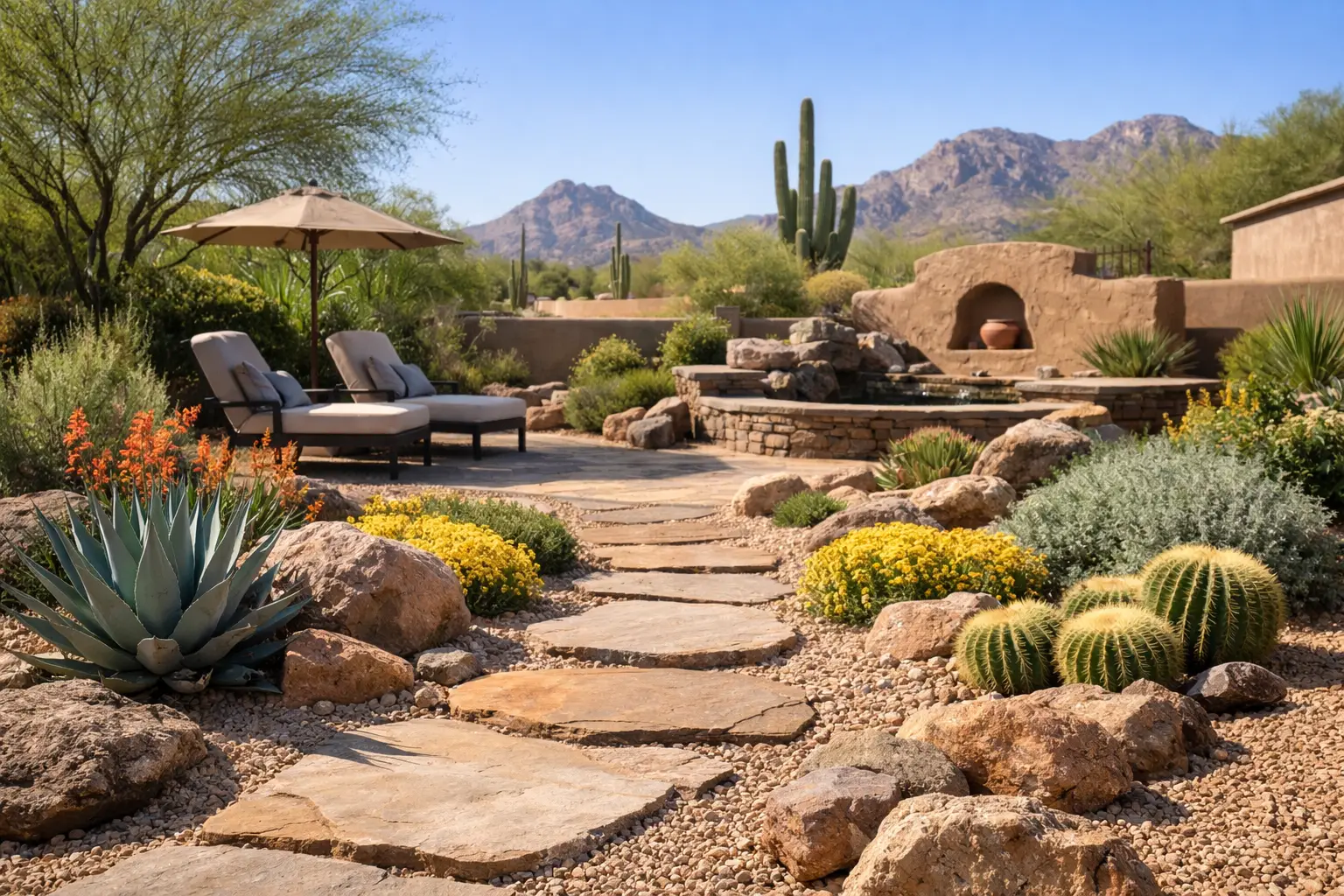
If your backyard is burning through water, struggling through summer, or turning into a patchy mix of dirt and dying grass, xeriscaping is not a trend – it is a practical fix. Knowing how to xeriscape a backyard in Arizona means building a yard that looks clean, stays usable, and does not demand constant watering, mowing, or repairs.
In Arizona, a good backyard has to do more than look nice for a week after installation. It needs to handle heat, hard sun, dry soil, and long stretches without rain. That is why xeriscaping works so well here. Done right, it lowers water use, cuts maintenance, and gives you a more polished outdoor space that holds up over time.
What xeriscaping really means
A lot of homeowners hear xeriscaping and picture an empty yard filled with rocks. That is not the goal. A well-designed xeriscape uses water-wise plants, efficient irrigation, proper grading, and durable materials like gravel, pavers, and decorative stone to create a yard that looks intentional instead of bare.
The focus is on using less water without giving up function. You can still have shade, color, walkways, seating areas, lighting, and clean visual contrast. The difference is that every part of the yard is selected for a desert climate instead of fighting against it.
How to xeriscape a backyard without wasting money
The biggest mistake people make is buying plants and gravel before they have a plan. That usually leads to poor drainage, awkward spacing, and a backyard that feels random. Start with layout first.
Look at how you actually use the space. If you need room for kids, pets, or outdoor seating, keep those areas open and durable. If you want less maintenance, reduce oversized planting beds and avoid high-water turf. If privacy is a concern, plan for desert-friendly trees or screening plants in the right spots.
It also helps to think in zones. The areas closest to your patio or main view should carry most of the visual impact. Spaces farther out can stay simpler with gravel, boulders, or low-water plant groupings. This keeps the yard balanced and controls cost.
Start with grading and drainage
Before adding any finish materials, make sure the yard drains properly. In Arizona, hard rain can hit fast, and poor grading can push water toward the house, pool around pavers, or wash out decorative gravel. Xeriscaping is not only about water conservation. It is also about moving water where it belongs when storms do show up.
If the backyard has low spots, runoff issues, or compacted soil, fix that first. This is one of those steps homeowners often skip because it is less visible, but it affects everything that comes after.
Remove what is not working
If you already have worn-out grass, overgrown shrubs, broken irrigation, or mismatched hardscape, clear that out before redesigning the yard. Trying to build around failing materials usually costs more in the long run.
This is also the time to decide what stays. A healthy shade tree may be worth keeping. A cracked path or inefficient sprinkler system probably is not. Xeriscaping works best when the whole yard follows the same practical plan.
Choose materials that fit the climate
Backyard xeriscaping in Arizona usually comes together through a mix of hardscape and planting areas. The materials matter because they affect heat, maintenance, durability, and appearance.
Gravel is one of the most common choices because it drains well, keeps a clean look, and works in almost any yard size. Decorative rock can be used in different colors and sizes to create contrast, but too much of one texture can make the yard feel flat. Breaking it up with pavers, boulders, or plant islands usually gives better results.
Pavers are useful for patios, walkways, grill areas, and transitions between spaces. They add structure and make the backyard more usable year-round. Travertine can also work well in the right setting, especially when heat underfoot is a concern. The trade-off is cost. Natural stone tends to be more expensive up front than standard pavers or gravel, but it can improve comfort and appearance.
Artificial grass can have a place in xeriscaping too, especially for small activity areas or pet zones. It is not a low-cost material, and it needs proper base prep and drainage, but it can reduce mud, mowing, and water use when used selectively. Covering an entire backyard in artificial grass is usually unnecessary. In many Arizona yards, a smaller turf section paired with gravel and hardscape makes more sense.
Pick plants that can handle Arizona conditions
Plant choice is where xeriscaping either looks clean and established or sparse and unfinished. The best approach is to use plants that can tolerate heat, dry periods, and reflected sun from block walls and hardscape.
Desert-adapted shrubs, accent plants, and trees generally perform better than anything that needs constant moisture. You want plants that can survive with efficient drip irrigation once established, not plants that always look stressed unless they are getting extra water.
Keep mature size in mind. Small nursery plants do not stay small. A backyard that looks neatly planted on day one can become crowded fast if spacing is too tight. That creates trimming work, blocks walkways, and makes the yard feel overgrown. It is better to plant with long-term growth in mind and let the design fill in over time.
Group plants by water needs
One of the smartest xeriscaping moves is to place plants with similar water needs together. That way your irrigation can be more efficient, and you are not overwatering one area just to keep another alive. Trees may need deeper, slower watering than flowering shrubs. Accent plants may need different spacing and drip placement than groundcover.
This step sounds technical, but it really comes down to planning. Better plant grouping means less wasted water and fewer replacement costs later.
Use irrigation that matches the design
A xeriscaped backyard still needs water. The goal is to water efficiently, not to avoid irrigation altogether. In most Arizona backyards, drip irrigation is the better choice for planting areas because it sends water where roots need it instead of spraying large sections of rock and soil.
If your current system is a mix of broken sprinkler heads, uneven coverage, or old timers, updating irrigation should be part of the project. A new backyard design with an outdated watering system usually leads to dry spots, runoff, and plant stress.
It depends on the yard, but many properties benefit from separate irrigation zones for trees, shrubs, and any artificial grass cleaning or wash-down needs nearby. Control matters. When each area gets the right amount of water, the whole yard performs better.
Make the backyard usable, not just low-water
A xeriscaped yard should still feel like part of your home. That means thinking beyond plants and rock. Add walkways that make sense, a patio where you will actually sit, and lighting that keeps the space functional after dark.
This is where many backyard projects improve property value. A dry, low-maintenance yard is helpful, but a low-maintenance yard that also looks finished and works for daily life is what really changes the space. Paver seating areas, gravel paths, clean borders, and landscape lighting can turn a basic backyard into something useful all year.
For commercial properties and rentals, the same logic applies. Xeriscaping helps control water use and maintenance, but it also gives the property a more professional appearance. Clean lines and durable materials tend to hold up better than thirsty lawns and high-maintenance planting beds.
Common mistakes to avoid when xeriscaping
The biggest problems usually come from poor planning, not the concept itself. Using too many random materials can make the yard feel cluttered. Choosing plants based only on how they look at the nursery can lead to failures later. Skipping weed barrier details, edging, or proper base preparation can make even a new yard start looking rough fast.
Another common issue is going too minimal. A backyard covered wall to wall in gravel may use less water, but it can also feel harsh and unfinished. Xeriscaping works best when it blends texture, shade, structure, and open space in the right proportions.
If the yard has existing problems like bad drainage, broken irrigation, worn hardscape, or tree roots affecting layout, address those during the project instead of treating them as separate issues for later. That is usually where full-service contractors bring the most value.
When professional help makes sense
Some homeowners can handle parts of xeriscaping on their own, especially simple gravel refreshes or minor plant replacements. But if the backyard needs grading, irrigation upgrades, paver installation, tree removal, or a full redesign, hiring a professional can save time and prevent expensive rework.
A complete xeriscape is not just a planting job. It often includes demolition, layout planning, drainage correction, hardscape installation, material delivery, and finish work. If you want a backyard that looks clean and performs well in Arizona heat, every one of those pieces matters.
Pro Natural Landscape works with Arizona property owners who want practical outdoor upgrades that last, from gravel and pavers to irrigation and full landscape installation. The goal is simple: build a backyard that uses less water, needs less upkeep, and still looks like a finished outdoor space.
If your current yard is costing too much, taking too much time, or just not holding up, xeriscaping is one of the smartest upgrades you can make. Start with a real plan, build for Arizona conditions, and aim for a backyard that works hard without asking much from you.
One thought on “How to Xeriscape a Backyard in Arizona”