

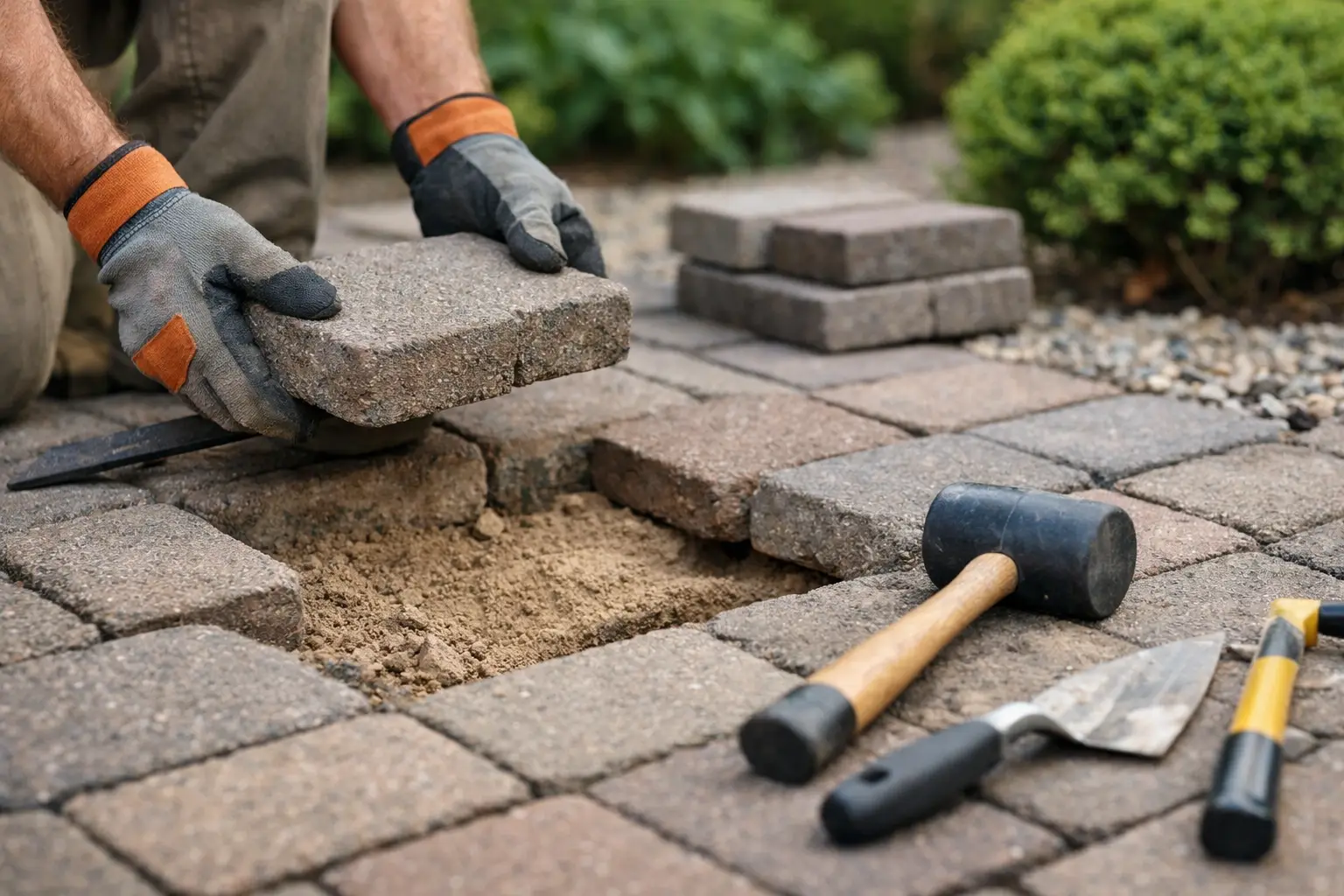
A paver patio or walkway should feel solid underfoot. If one section dips, rocks, or collects water after a sprinkler cycle or monsoon rain, the problem usually goes deeper than the surface. Knowing how to restore sunken pavers starts with understanding why they settled in the first place, because resetting the top layer without fixing the base usually means the same area sinks again.
In Arizona, this happens for a few common reasons. Poor compaction during the original installation is a big one. Water movement from irrigation leaks, runoff, or drainage issues is another. Heavy vehicle traffic on pavers that were not built for that load can also cause low spots, especially on driveways and commercial entries. Tree roots, shifting soil, and edge restraint failure can all play a role too.
How to restore sunken pavers without a repeat problem
The basic repair is straightforward. The affected pavers are removed, the bedding sand is cleaned out, the base is corrected and compacted, then the pavers are reset to the proper height and slope. What makes the difference is how carefully that base work is handled.
A lot of uneven paver repairs fail because the sunken area gets topped off with more sand and put back together. That can make the surface look better for a short time, but sand is not a substitute for a stable base. If the crushed stone or aggregate underneath has washed out, shifted, or never had enough compaction, the problem remains in place.
For homeowners and property managers, this matters for more than appearance. Sunken pavers create trip hazards, hold water against the home or building, and make an otherwise clean outdoor space look neglected. On commercial properties, uneven hardscape can also become a liability issue.
Start with the cause, not just the low spot
Before any pavers come up, inspect the surrounding area. Look at where water flows, where downspouts discharge, whether nearby sprinklers oversaturate the soil, and whether the affected section sits next to a loose edge or a planter. If the pavers are in a driveway, ask whether that section is taking more weight than it was designed for.
This is where an experienced repair crew can save time and money. A low spot in the middle of a patio may point to a drainage problem several feet away. A sunken border along a walkway may be caused by failed edging. If the issue is tied to irrigation, tree roots, or grading, that needs to be corrected along with the paver reset.
Common reasons pavers sink in Arizona
Arizona landscapes put different stresses on hardscapes than wetter climates. Long dry periods harden the soil, then sudden heavy rain can move fines and expose weak spots in the base. Irrigation leaks may go unnoticed because the damage happens below the surface first. In some yards, expansive or poorly prepared soil contributes to settling over time.
Older installations also tend to show movement where the original base was too thin or where the bedding layer was allowed to carry too much of the load. That is especially common on walkways widened into gathering spaces or driveways that now handle heavier vehicles.
The repair process that actually holds up
The first step is removing the pavers in and around the sunken area. It is usually not enough to pull only the lowest pieces. The repair should extend past the visibly affected section so the base can be blended back into stable material and the finished surface sits evenly.
Once the pavers are removed, the bedding sand is scraped out and the base is exposed. If there is soft, washed-out, or contaminated material, it has to go. The area is then rebuilt with the proper base material, added in lifts and compacted thoroughly. That compaction step is what gives the pavers their strength.
After the base is corrected, a fresh layer of bedding sand is screeded to an even thickness. The pavers are reset to match the surrounding pattern, height, and slope. Then polymeric or joint sand is swept into the joints and compacted into place. If the pavers were sealed before, resealing the repaired area may also be recommended once the surface is ready.
Why slope matters as much as level
Many people focus on getting pavers level, but the real goal is proper pitch. Patios, walkways, and poolside surfaces need a controlled slope so water moves away from structures instead of pooling. A section that looks flat to the eye can still trap water if the pitch is off.
That is one reason paver repair should not be treated like a quick cosmetic fix. In Arizona, even occasional standing water can stain surfaces, weaken the bedding layer, and make the same section settle again.
Can you fix sunken pavers yourself?
Sometimes, yes. A small low spot on a simple walkway may be manageable if you have the right tools, matching materials, and enough time to do the prep correctly. The challenge is less about lifting the pavers and more about rebuilding the base so it stays put.
For larger areas, driveways, commercial entries, or anything near drainage features, walls, irrigation lines, or pool decking, professional repair is usually the better move. Those jobs need accurate grading, proper compaction, and a clean reset that blends into the existing hardscape. If the pavers are older, faded, or part of a complex pattern, there is also more room for a patchwork look if the repair is rushed.
When replacement makes more sense than spot repair
Not every sunken paver section needs a full redo, but sometimes the damage is widespread enough that repeated spot repairs stop being cost-effective. If multiple areas are sinking, the edges are failing, weeds are coming through every joint, and drainage is poor across the whole installation, a larger renovation may be the smarter investment.
That does not always mean starting from scratch. In some cases, the existing pavers can be lifted, the base rebuilt, and the same material reinstalled. If the pavers are in good condition, that approach can restore the surface while keeping the look of the space intact.
Signs the problem is bigger than one section
If you notice puddling in several places, widespread movement, separation along borders, or recurring low spots after previous repairs, the issue likely extends beyond one isolated dip. The same is true if nearby artificial grass, gravel, or landscape beds show signs of washout or shifting. Hardscape and drainage problems often connect.
Preventing future settling
The best prevention starts with installation quality. Proper excavation depth, the right base material, correct compaction, strong edge restraints, and good drainage design all matter. On existing properties, routine checks help catch smaller problems before they turn into larger repairs.
Watch for sprinkler overspray on paver joints, leaking irrigation near hardscape edges, water flowing toward the patio or driveway, and loose border pieces. If you manage a commercial property, add paver surfaces to your regular exterior inspection list. Small movement is easier and less expensive to correct early.
For Arizona homes and businesses, it also helps to think about the whole outdoor system. Grading, drainage, irrigation, gravel placement, and surrounding landscape features all affect how well a paver surface performs. When those parts work together, the pavers hold their line better and last longer.
Choosing the right help for paver repair
If you are hiring out the work, look for a contractor who handles both the paver repair and the conditions that may have caused it. That includes grading, drainage correction, irrigation review, and restoration of the surrounding area if needed. A repair company that only resets the surface may leave the root cause untouched.
A dependable crew should be able to explain why the pavers sank, how large the repair area needs to be, what base correction is required, and whether sealing or additional drainage work is recommended. That kind of practical assessment matters more than a quick promise to make it look flat again.
For property owners in Arizona, especially in hard-use outdoor spaces, the right repair should improve safety, appearance, and durability at the same time. Pro Natural Landscape works with paver renovation, repair, and surrounding exterior improvements, which is often what these jobs really need.
Sunken pavers are usually a warning sign, not just an eyesore. Fix the base, fix the water movement, and the surface has a real chance to stay where it belongs.