

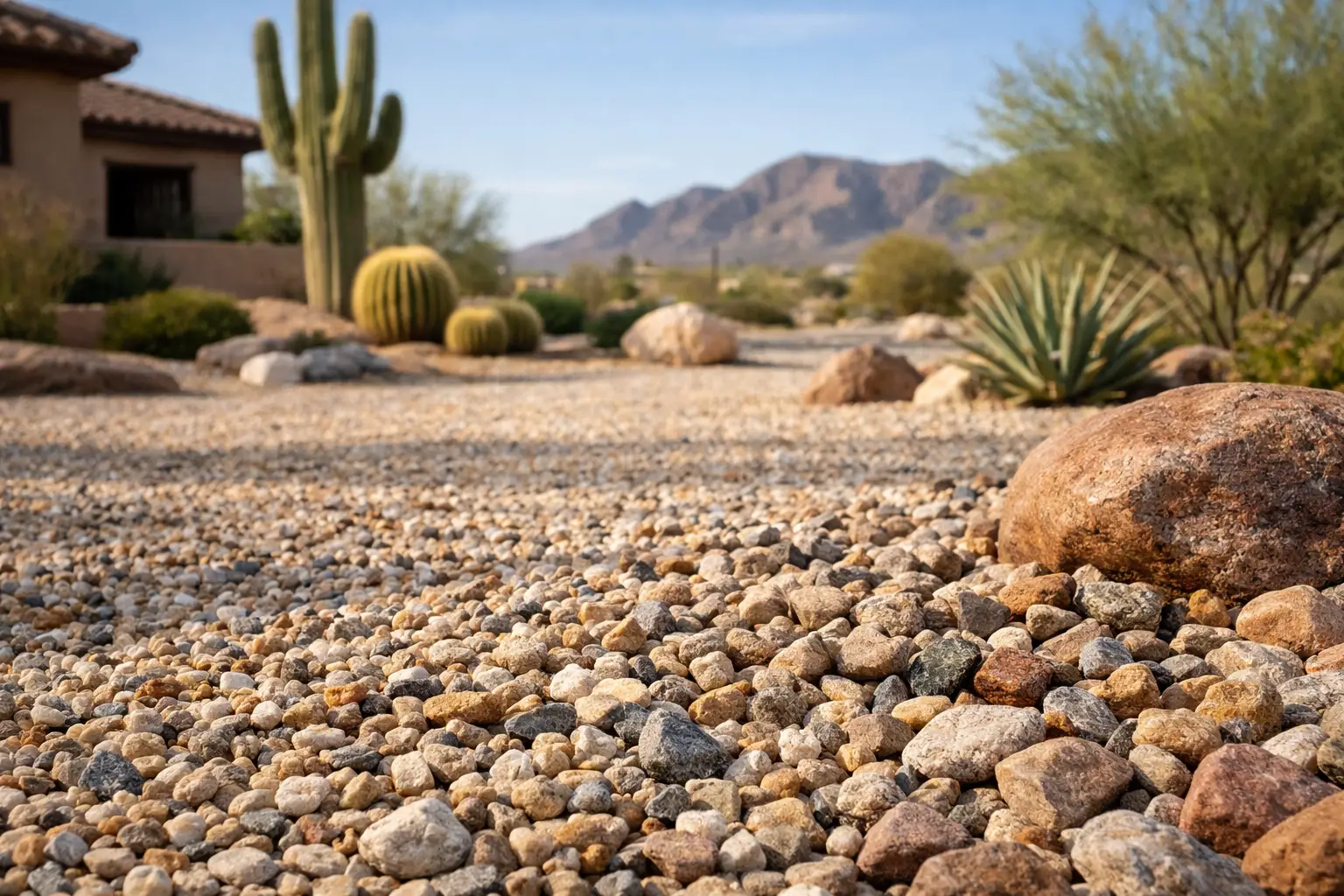
A gravel yard can look sharp for years in Arizona, or it can turn into a dusty, scattered mess after one windy season. The difference usually comes down to one decision made at the start: choosing the best gravel for desert yards based on heat, drainage, maintenance, and how the space is actually used.
In Arizona, gravel is not just decorative ground cover. It helps control erosion, reduces water use, supports desert-friendly design, and gives your property a cleaner finish with less upkeep than natural grass. But not every gravel product performs the same way. Some materials stay in place better, some reflect less heat, and some simply look better next to pavers, artificial turf, cacti, or block walls.
What makes the best gravel for desert yards?
The best gravel for a desert yard is durable, compact enough to stay put, and sized for the purpose of the area. It should also match the style of the property and handle Arizona conditions without constant raking, replacing, or blowout.
That means there is no single gravel that is perfect for every yard. A front yard designed for curb appeal may need a different stone than a backyard dog run or a side yard drainage path. The right choice depends on traffic, sun exposure, slope, and how polished you want the final look.
For most Arizona properties, decomposed granite, crushed rock, and screened gravel are the most practical options. These materials give you a clean desert appearance and hold up well with proper installation.
Best gravel types for desert yards
Decomposed granite
Decomposed granite is one of the most popular choices for Arizona landscapes because it gives a natural, compact look that fits desert design well. It is made from weathered stone that breaks down into fine particles with small gravel mixed in. Once installed and compacted, it creates a firm surface that works well for pathways, seating areas, and open yard spaces.
The biggest advantage is appearance. Decomposed granite has a clean, finished look that blends well with desert plants, boulders, and hardscape features. It also tends to stay in place better than larger loose gravel when installed correctly.
The trade-off is that lower-quality decomposed granite can break down too much over time and create dusty conditions. In heavy runoff areas, it may also shift if the base work is not done properly.
Crushed granite or crushed rock
Crushed granite and similar crushed rock products are strong choices when you want better stability than round gravel. Because the pieces have angular edges, they lock together better and are less likely to roll underfoot. That makes them a solid option for front yards, side yards, and areas that get regular foot traffic.
This material also comes in different sizes and colors, so it is easier to match the stone to the house, wall color, or surrounding hardscape. In many Arizona projects, crushed rock hits the sweet spot between durability and appearance.
If the rock is too large, though, it can feel rough to walk on and may look bulky in smaller yards. The size matters as much as the material itself.
Screened gravel
Screened gravel is processed to remove excess fines or oversized pieces, which gives the yard a more uniform look. That consistency is useful when the goal is a neat, professional finish for a residential front yard or commercial property.
A screened product usually installs more evenly and photographs better because the color and texture are consistent across the space. For property owners focused on curb appeal, that matters.
The downside is cost. Screened gravel can be more expensive than basic fill rock, but it often looks better and requires fewer corrections after installation.
River rock
River rock is used in some desert landscapes, but it is not usually the best all-around choice for large yard coverage. Because the stones are rounded, they tend to shift more easily and do not compact the way crushed materials do. They can work well as accents in dry creek beds, drainage swales, or decorative borders, but they are less practical as the main gravel across the entire yard.
River rock also tends to trap more debris between stones, which can make cleanup harder. In a formal desert yard, it can look great in the right place. As a broad-use surface, it is usually not the first recommendation.
The best gravel size for Arizona yards
Gravel size has a major effect on both appearance and performance. Many property owners focus only on color, but the size of the rock often determines how much maintenance the yard will need.
For general desert yard coverage, gravel in the 3/8-inch to 3/4-inch range is usually the most practical. This size is large enough to resist blowing around in the wind but still small enough to spread evenly and look clean. It also feels more comfortable underfoot than oversized rock.
Smaller gravel or fines can compact nicely, but if used in the wrong area they may track into the house or wash away during heavy rain. Larger rock can hold up well on slopes or in drainage areas, but it may look too rough for a polished front yard.
If the yard has multiple functions, mixing materials often works better than forcing one rock size everywhere. A pathway may benefit from compacted decomposed granite, while open beds may look better with a larger decorative gravel.
Color matters more than most people expect
In Arizona, gravel color affects more than style. It also changes how heat, dust, and glare are handled in the yard.
Lighter gravel can brighten a space and reflect more sunlight, which can help keep the surface from absorbing as much heat. But very light stone may also create glare, especially around patios, pool areas, or windows. Darker gravel can give the yard a richer contrast and help plants stand out, but it may get hotter in direct sun.
Earth tones usually perform best visually in desert landscapes. Browns, tans, golds, and muted grays tend to blend naturally with Arizona homes and surrounding terrain. These colors also hide dust better than bright white stone or highly mixed decorative rock.
For most homes, the best choice is a gravel color that complements the roof, stucco, pavers, and wall tones rather than competing with them.
Installation is just as important as the gravel itself
Even the best gravel for desert yards will fail if it is installed over poor grading, weak weed barrier, or uneven soil. This is where many yards run into trouble. The gravel itself gets blamed, but the real issue is what is underneath it.
A properly installed gravel yard starts with clearing debris, controlling weeds, and grading the area so water drains correctly. In many cases, a weed barrier helps reduce growth and keeps the gravel from sinking into the soil too quickly. After that, the gravel needs to be spread at the right depth for the material and use of the space.
Too shallow, and the ground shows through quickly. Too deep, and the stone shifts more than it should. Around 2 to 3 inches is common for decorative gravel coverage, though some areas need more depending on the base and the size of the rock.
This is also why professional installation matters on sloped yards, drainage problem areas, and larger properties. A gravel yard should do more than look finished on day one. It should keep performing through monsoon season, summer heat, and routine use.
Common mistakes when choosing desert yard gravel
One of the most common mistakes is choosing gravel that is too small because it looks smooth in a sample. In a real yard, small loose material can blow around, wash out, and track into walkways.
Another issue is using rounded stone in high-traffic areas where a more angular product would stay in place better. A third problem is prioritizing color over function. A decorative stone may look great in a pile but create glare, collect debris, or clash with the rest of the property once installed.
The last big mistake is treating gravel like a simple drop-and-spread material. Desert yards need proper grading and planning. If water flow, edging, and material depth are ignored, the finished yard will not hold up the way it should.
So what is the best gravel for desert yards?
For most Arizona homes and commercial properties, crushed granite or a screened crushed rock in a mid-range size is the safest overall choice. It gives a clean appearance, stays in place better than rounded stone, and works well with low-water desert landscaping. Decomposed granite is also an excellent option where a more compact, natural finish is preferred.
The best answer depends on the yard. A low-traffic front yard, a rental property, a commercial frontage, and a backyard built around pavers and artificial grass may all need slightly different gravel solutions. That is normal. The goal is not to pick the fanciest rock. The goal is to choose a material that looks right, drains right, and stays manageable in Arizona conditions.
If you are planning a new gravel yard or replacing old material, it helps to look at the whole landscape at once. Gravel should support the way the property works, not just fill empty space. At Pro Natural Landscape, that is how we approach it – practical choices, clean installation, and a yard that still looks good after the dust settles.
2 thoughts on “Best Gravel for Desert Yards in Arizona”