

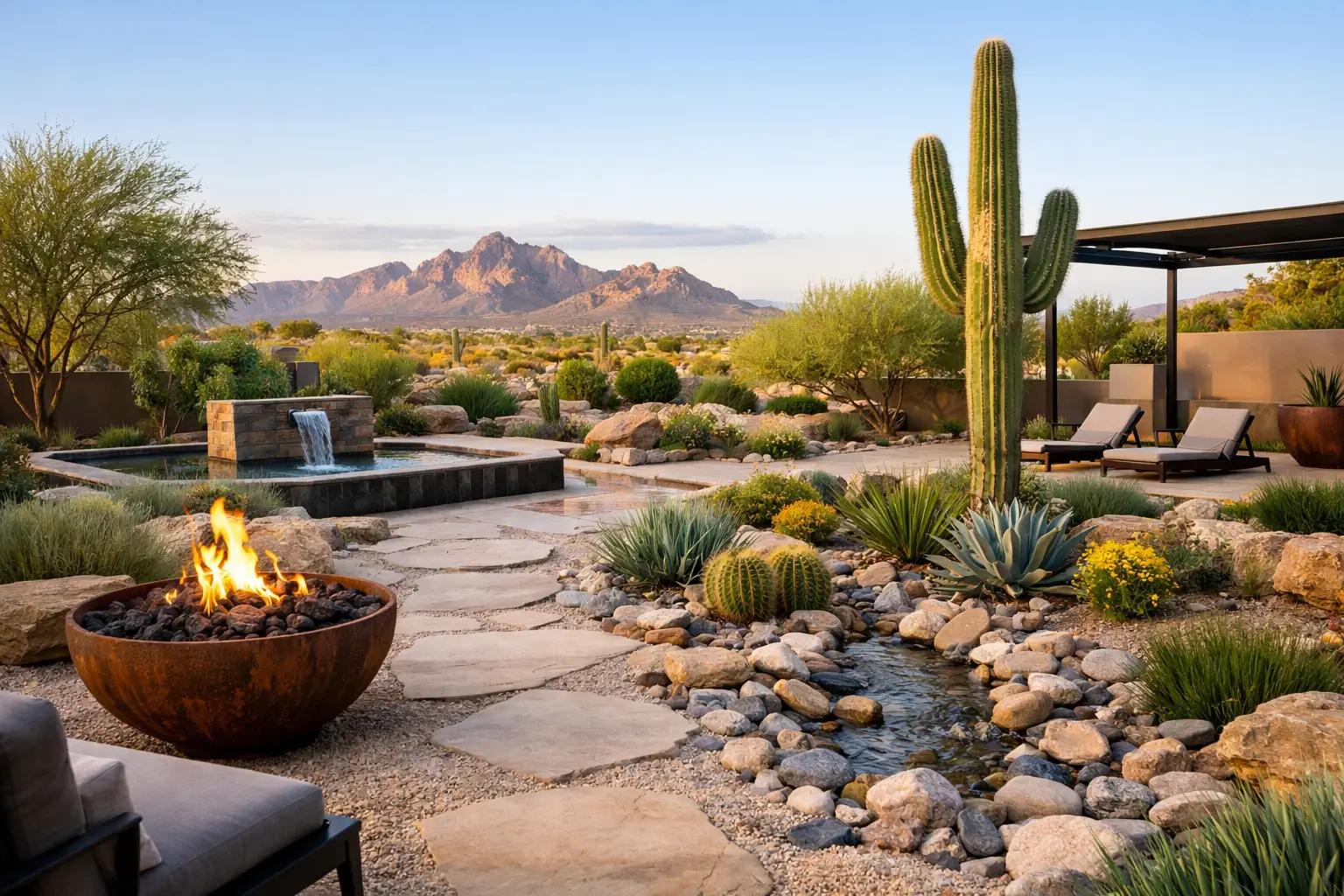
If your yard is driving up your water bill, collecting dead patches, or turning into a constant maintenance project, it may be time for a better plan. The best low water yard ideas are not just about using less water. In Arizona, they are about building an outdoor space that looks clean, holds up in the heat, and stays easier to manage all year.
A good low-water yard should still feel finished. That means balancing hardscape, plant choice, drainage, and practical features so the space works for how you actually use it. For homeowners, that may mean less weekend cleanup and more curb appeal. For property managers and commercial owners, it usually means a neater exterior with lower upkeep and more predictable maintenance.
What makes the best low water yard ideas work
Low-water landscaping is not one single look. Some yards lean modern with pavers and gravel. Others keep a softer style with desert plants, shade trees, and defined planting beds. What matters is choosing materials and layouts that fit Arizona conditions.
The strongest designs usually reduce large thirsty lawn areas, control where water goes, and use durable surfaces that can take sun exposure. They also avoid the common mistake of replacing grass with random rock and calling it done. Too much bare gravel can feel harsh, trap heat, and leave the yard looking unfinished. The better approach is to combine surfaces and textures so the yard has structure.
1. Replace high-water grass with artificial grass where it counts
One of the most effective low-water upgrades is reducing natural lawn. That does not always mean removing every bit of green. In many Arizona yards, artificial grass works best in targeted areas like a play zone, a small backyard gathering space, or a front yard accent.
This gives you the clean look of lawn without constant irrigation, mowing, or patch repair. It also helps if you want a family-friendly or pet-friendly area but do not want the ongoing water demand of natural turf. The key is placement. A wall-to-wall artificial lawn can look flat if there is no contrast, so it often works better when framed with pavers, gravel, or planter borders.
2. Use decorative gravel for coverage and clean definition
Gravel is a practical Arizona staple for a reason. It covers large areas efficiently, helps suppress weeds when installed correctly, and gives the yard a finished base layer that handles heat and dry conditions well.
The trade-off is that gravel alone can look plain if there is no design around it. That is why color, size, and layout matter. Mixing gravel with steel edging, paver borders, and plant clusters creates a cleaner look than spreading rock across the entire yard. For larger properties, gravel also makes ongoing maintenance easier because debris stands out and cleanup is more straightforward.
3. Add pavers to reduce dust and improve usability
Pavers are one of the best low water yard ideas because they solve more than one problem at once. They reduce exposed dirt, create stable walking and seating areas, and make the yard more usable without adding irrigation demand.
In Arizona, pavers work well for patios, walkways, side yards, and entry paths. They also help break up gravel-heavy landscapes so the space feels more intentional. For commercial properties, pavers can add a polished look near entrances and common areas. For homeowners, they create outdoor living space that actually gets used.
4. Build planting zones with drought-tolerant plants
A low-water yard does not have to mean a yard without plants. It just means choosing plants that belong in a desert-friendly design. Agave, red yucca, lantana, desert spoon, and other drought-tolerant choices can add shape, color, and visual interest without demanding constant watering.
The best results come from grouping plants by water needs instead of mixing everything together. That makes irrigation more efficient and helps prevent overwatering. It also creates a more organized appearance. A few well-placed plant groupings usually look stronger than too many scattered plants across the yard.
5. Install drip irrigation instead of overspraying everything
If your yard still relies on inefficient spray heads, you may be wasting water even if you have desert plants. Drip irrigation is one of the most practical upgrades for Arizona properties because it delivers water where it is needed instead of sending it into the air, onto hardscape, or into areas that do not need it.
This matters for both cost and plant health. Too much spray can damage finishes, create runoff, and encourage weed growth. Drip systems are more controlled and easier to tailor to separate planting zones. A smart layout also makes future maintenance simpler because the system is built around how the landscape is actually used.
6. Create shade with the right trees in the right places
Shade can make a low-water yard more comfortable and more efficient. A properly placed desert-adapted tree can cool part of the yard, protect outdoor seating areas, and reduce heat buildup around hardscape.
This is one of those ideas where planning matters more than quantity. Too many trees in the wrong spots can crowd a yard, interfere with foundations, or create maintenance issues later. The better move is to place one or two trees where they improve function, such as near a patio, along a west-facing area, or as part of front yard curb appeal.
Best low water yard ideas for front yards
Front yards usually need to do two jobs at once. They need to look good from the street and stay manageable without constant attention. That is why some of the best low water yard ideas for front yards combine visual structure with easy maintenance.
A strong front yard often starts with gravel as the base, then adds a defined walkway, a few drought-tolerant plant groupings, and a focal point like a boulder accent, decorative pot, or small tree. Artificial grass can work as an accent near the entry, but it usually looks best when it is limited to a shape or section rather than filling the whole space.
For homes going on the market or rental properties that need better curb appeal fast, this kind of layout makes a big difference. It looks intentional, photographs well, and avoids the patchy appearance that comes with struggling lawn areas.
7. Use boulders and edging for visual structure
Low-water yards can fall flat when everything sits at the same level with no boundaries. Boulders, border edging, and raised planter outlines help define the space and make simple materials look more finished.
This is especially useful in gravel-based designs. A few larger accents can give the yard depth without adding maintenance. Edging also keeps materials where they belong, which helps with long-term appearance and reduces cleanup.
8. Improve drainage before finishing the yard
A yard that saves water still needs to handle the water it does get. Monsoon runoff, poor grading, and standing water can damage hardscape, wash out gravel, and create maintenance issues that cost more later.
That is why grading and drainage should be part of the plan, not an afterthought. In some yards, the fix is subtle. In others, the property needs reshaping, drainage channels, or better surface direction before new materials go in. A yard that looks good but drains poorly will not stay looking good for long.
9. Add landscape lighting to extend use without extra upkeep
Lighting is not about water savings, but it does improve the value of a low-maintenance yard. If you are investing in pavers, plants, and clean layout lines, lighting helps those features stand out after dark.
It also makes walkways, entrances, and outdoor seating areas safer and more usable. For commercial properties, that cleaner nighttime appearance can be just as important as daytime curb appeal.
10. Keep lawn only where it serves a purpose
There are cases where a small lawn area still makes sense. If kids use it, pets need it, or it supports a specific backyard activity, it may be worth keeping. The mistake is holding onto large lawn sections that no longer serve a practical purpose.
The best low water yard ideas are not about removing every green surface. They are about being honest about what the yard needs to do. Once that is clear, the layout becomes much easier to plan.
11. Choose materials that match your maintenance tolerance
Some owners want a yard they barely need to think about. Others are fine with occasional trimming and seasonal cleanup if the yard has a softer look. There is no single right answer, but your material choices should match your real schedule.
Artificial grass, pavers, and gravel generally reduce routine work. Desert plants still need pruning, cleanup, and irrigation checks. Trees need monitoring and sometimes removal when they become overgrown or damaged. A good design considers the install day and the years after.
12. Plan the yard as one complete system
The best results come when the yard is planned as a whole instead of piece by piece. A new gravel section may look better, but if the irrigation is outdated or the grading is off, the overall problem is not solved. The same goes for adding pavers without addressing surrounding drainage or worn planting areas.
That is why many Arizona property owners look for one contractor who can handle design, hardscape, irrigation, cleanup, repairs, and ongoing maintenance. Pro Natural Landscape works with that full-picture approach because the goal is not just to install materials. The goal is to create an outdoor space that performs well, looks finished, and stays manageable.
If you are deciding where to start, focus on the areas wasting the most water or causing the most work. Usually, a smart combination of gravel, pavers, targeted greenery, and efficient irrigation will do more for your yard than any single upgrade on its own. The right low-water yard should not feel like a compromise. It should feel like the yard finally makes sense.
2 thoughts on “12 Best Low Water Yard Ideas for Arizona”