

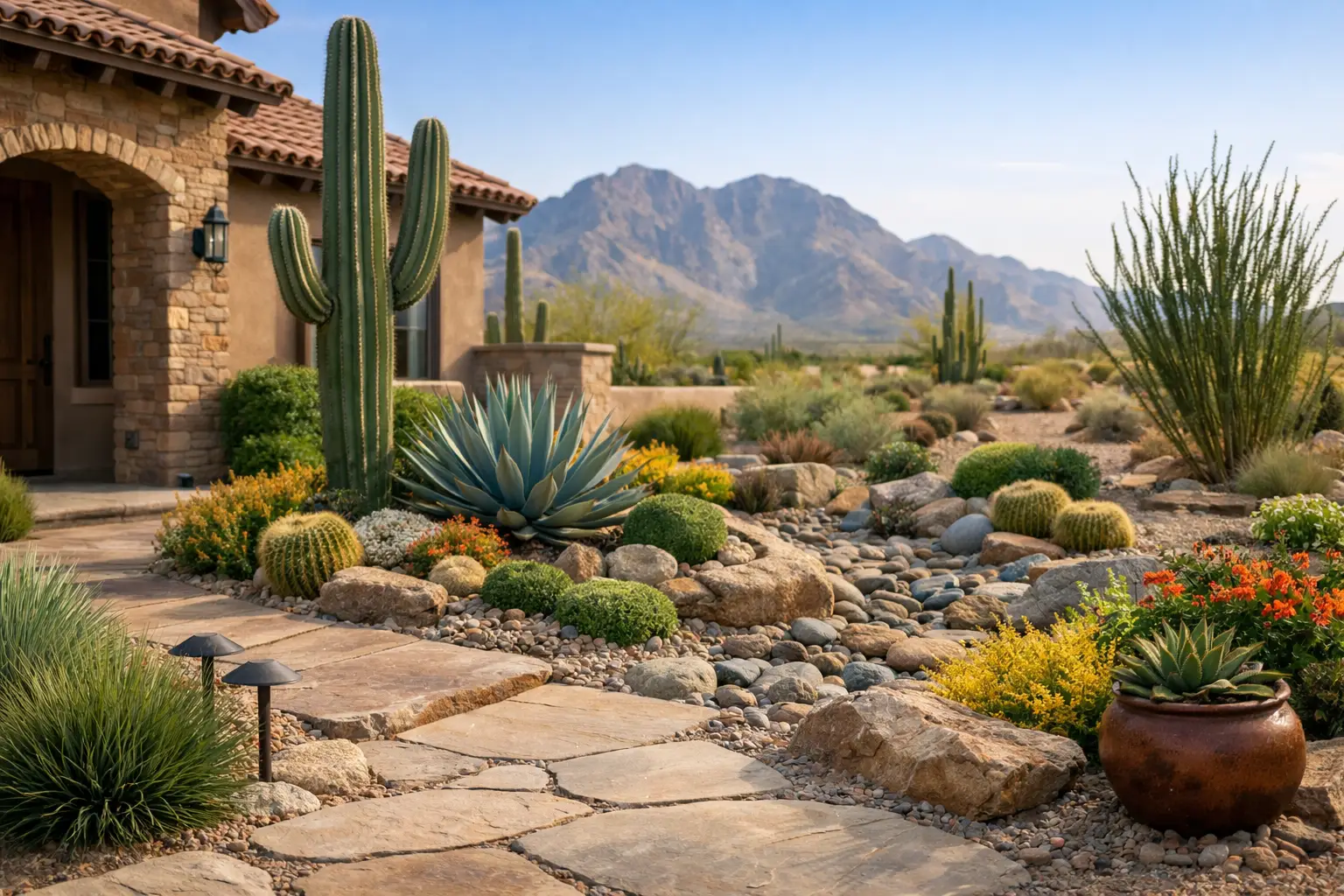
A front yard in Arizona usually tells the story fast. If the gravel is thin, the irrigation is leaking, the plants are scorched, and the walkway looks dated, the whole property feels tired before anyone reaches the front door. This desert front yard makeover guide is built for homeowners and property owners who want a yard that looks clean, holds up in the heat, and stays practical without constant upkeep.
A good makeover is not about stuffing the yard with decorative rock and calling it done. In the desert, every choice has to work harder. Materials need to handle sun exposure. Planting has to match the site. Water use has to stay efficient. And the final result should improve curb appeal while making maintenance easier, not harder.
Start with the problems that are costing you time and money
The best front yard remodels start with a clear look at what is not working. In Arizona, that often means bare patches, weed growth through old gravel, broken drip lines, poor grading, overgrown shrubs, or hardscape surfaces that have shifted over time. Sometimes the issue is visual, but often there is a functional problem underneath.
If water is pooling near the walkway or foundation, that has to be addressed before new materials go in. If tree roots are lifting pavers or the irrigation is spraying where it should drip, a cosmetic update will not last. A dependable makeover starts with cleanup, repair, and layout decisions that fit the way the yard is actually used.
For commercial properties and rental homes, this matters even more. A front yard that looks neglected can affect tenant perception, customer impression, and property value. A cleaner, better-planned exterior sends a more professional message right away.
What a desert front yard makeover guide should prioritize
In Arizona, appearance matters, but performance matters just as much. A strong front yard plan usually balances five things: water efficiency, durability, shade, low maintenance, and curb appeal. Miss one of those, and the yard may still look good on day one, but it becomes a problem later.
Water efficiency starts with proper irrigation design and plant selection. Durability comes from materials like quality pavers, gravel installed at the right depth, and edging that keeps everything in place. Shade can come from tree placement or built features, but it has to be chosen carefully so roots, litter, and long-term maintenance do not create new headaches. Low maintenance usually means reducing unnecessary lawn, controlling weeds, and choosing finishes that can take Arizona sun. Curb appeal ties it all together.
That is why a desert yard makeover is rarely just a planting project. It often includes grading, gravel installation, pavers, artificial grass, irrigation updates, lighting, and cleanup or removal work.
Build the layout before you pick materials
One of the biggest mistakes in front yard renovations is choosing surfaces and plants too early. The layout should come first. Think about where people walk, where vehicles or trash bins pass, how the yard looks from the street, and what needs to stay accessible.
For some homes, the best improvement is a stronger walkway and a cleaner entry sequence. For others, it is replacing oversized planting beds with gravel and accent boulders so the yard feels more open and easier to maintain. If the front yard is large, breaking it into zones can help. A paver path, decorative gravel field, and a small artificial grass section can work well together if the transitions are planned correctly.
This is also the stage to think about scale. A small house can be overwhelmed by oversized palms, giant boulders, or too many material changes. A larger property may look unfinished if everything is flat gravel with no height or focal point. The layout should fit the architecture and the lot, not just current landscaping trends.
Gravel, pavers, and artificial grass each solve different problems
A practical desert front yard makeover guide has to be honest about trade-offs. There is no single best surface for every Arizona property.
Gravel is one of the most common choices because it is affordable, low water, and durable. It works well for broad coverage, helps with drainage, and gives the yard a clean desert look. But gravel needs proper installation. If the base is poor or the weed barrier is wrong, weeds show up fast and the surface can shift.
Pavers are ideal where you want structure and long-term visual impact. They upgrade walkways, drive edges, entry courtyards, and sitting areas. They also make the front yard feel more finished and intentional. The trade-off is cost. Pavers require more labor and prep, but the payoff is durability and property value.
Artificial grass can soften a front yard and create contrast against rock and hardscape. It is useful in smaller accent areas where natural grass would be hard to maintain or expensive to water. Still, it should be used strategically. Too much artificial turf in full desert sun can feel visually flat or overly hot depending on the product and placement. In most cases, it works best as one part of the design rather than the whole design.
Choose plants that can handle Arizona, not just survive it
A lot of front yards fail because the plant palette was chosen for looks alone. Desert-friendly landscaping does not mean using fewer plants. It means using the right plants in the right places.
Low-water shrubs, cacti, agave, desert spoon, red yucca, and other heat-tolerant selections can provide shape and color without demanding constant attention. Trees can add needed shade and visual balance, but they have to be chosen with mature size, root behavior, and cleanup in mind. A tree that drops heavy litter near an entry or interferes with hardscape can become a maintenance problem fast.
Plant spacing matters too. Fresh installations often look sparse at first, and that leads some property owners to overcrowd. In Arizona, that usually backfires. Plants need airflow, room to grow, and enough irrigation separation to avoid overwatering some areas while underwatering others.
A better approach is to design for the mature look, then use gravel, boulders, and hardscape to carry the visual weight while plants fill in over time.
Irrigation can make or break the project
A front yard can look great after installation and still struggle within a few months if the irrigation is wrong. In desert landscapes, smart watering matters as much as smart design.
Drip irrigation is usually the better fit for planting beds because it targets the root zone and reduces waste. Spray systems can still make sense in some turf areas, but they often cause overspray onto sidewalks, walls, and driveways if not adjusted properly. Broken emitters, clogged lines, and uneven zones are common issues that should be corrected during a makeover, not after.
It also helps to separate plant types by water needs. Trees, shrubs, and accent plants should not always share the same schedule. When everything is tied together on one inefficient setup, some plants get stressed while others are overwatered. The result is a yard that costs more and performs worse.
Lighting, walls, and cleanup details matter more than people expect
The difference between a basic yard refresh and a complete front yard transformation often comes down to finishing work. Landscape lighting can improve visibility, highlight architectural features, and make a property look more polished after dark. It is especially useful along walkways, entry paths, and focal plants.
Walls, edging, and border work also shape the final result. A clean block wall repair, updated border, or defined paver edge can make the whole yard look sharper. If the property has damaged fencing, worn tile, or failing hardscape, leaving those issues untouched can make a new landscape installation feel incomplete.
Cleanup is part of the makeover too. Tree removal, stump grinding, debris hauling, and weed clearing create the blank slate the project needs. Skipping that prep usually leads to a yard that still feels cluttered even after money has been spent on improvements.
A desert front yard makeover guide for real budgets
Most property owners are balancing appearance with cost, and that is reasonable. Not every yard needs a full redesign at once. Sometimes the smartest route is phased work.
You might start with grading, irrigation repair, and fresh gravel to solve the biggest functional issues. Then add pavers and lighting in a second phase. Or you may decide the front entry is the priority because that is where curb appeal and daily use meet.
The key is making sure phase one is built to support phase two. Cheap shortcuts often create expensive rework later. If the base prep, drainage, and layout are handled correctly from the start, upgrades can be added without tearing everything back out.
For Arizona property owners who want one contractor to handle landscaping, hardscaping, repairs, and cleanup, that kind of planning saves time and avoids miscommunication. It is one reason many customers look for a full-service outdoor company instead of coordinating multiple crews.
When to bring in a professional
Some front yard updates are simple. A full desert makeover usually is not. If the project includes irrigation changes, paver installation, grading, tree removal, wall work, or multiple material zones, professional planning can prevent costly mistakes.
This is especially true when the yard has drainage concerns, old hardscape damage, or a mix of landscaping and exterior repair needs. In those cases, a service-driven local contractor can assess the property as a whole rather than treating each issue separately. That leads to a cleaner result and a more efficient project timeline.
At Pro Natural Landscape, that practical approach is what Arizona customers often need most – a yard that looks better, works better, and does not create more maintenance next season.
A strong front yard in the desert should not feel like a constant project. It should give you a cleaner look, better performance, and one less part of the property to worry about.