

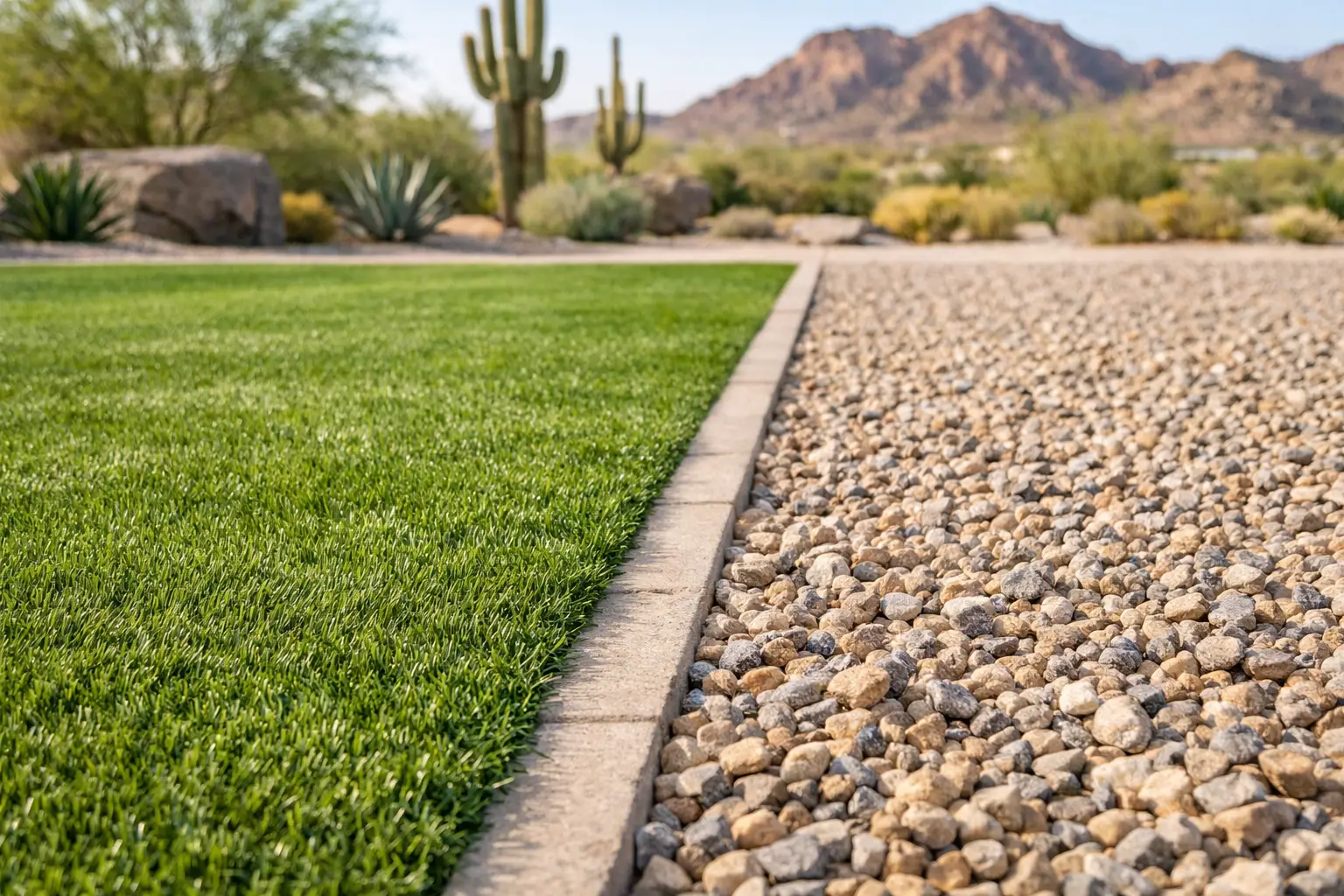
Some Arizona yards look good for a month and then start working against the property. Bare dirt blows around, patchy grass burns out, and high-maintenance landscaping turns into one more thing on the weekend list. When you are weighing artificial grass vs gravel, the real question is not which one looks better in a photo. It is which one holds up better for the way you actually use the space.
For Arizona homeowners, property managers, and commercial owners, both materials can be smart choices. Both reduce water use, both can improve curb appeal, and both fit desert-friendly landscaping. The right answer depends on sun exposure, foot traffic, maintenance expectations, and how you want the yard to function day to day.
Artificial grass vs gravel: what changes the decision
This choice is usually less about style and more about performance. A front yard that needs clean curb appeal has different demands than a backyard used by kids and dogs. A rental property has different priorities than a custom home. A commercial frontage needs a polished look, while a side yard may only need weed control and clean drainage.
Artificial grass creates a greener, softer finish. It gives a more finished look and can make a space feel cooler visually, even when temperatures are high. Gravel creates a clean, practical surface that fits Arizona architecture and handles desert conditions well.
Neither option is automatically better across every part of a property. In many cases, the best landscape plan uses both.
When artificial grass makes more sense
Artificial grass is usually the better fit when comfort and appearance are at the top of the list. If you want a yard that feels more inviting, especially around patios, pool areas, play spaces, or pet runs, turf gives you a surface that is easier to walk and sit on than rock.
For families, it often solves two problems at once. It removes the need for regular watering and mowing, and it keeps the yard looking consistently finished. There are no brown patches, no muddy areas after irrigation issues, and no seasonal die-off to manage.
For commercial properties, artificial grass can also help create a more upscale first impression. Office exteriors, retail fronts, and community spaces often benefit from the softer visual contrast that turf brings against pavers, block walls, and desert hardscape.
That said, turf is not maintenance-free. It still needs occasional cleanup, rinsing, brushing, and debris removal. In Arizona heat, surface temperature can rise significantly in direct sun. Quality installation also matters. If the base is poorly prepared or drainage is overlooked, even expensive turf can underperform.
Best uses for artificial grass
Artificial grass works especially well in backyard gathering areas, pet zones, play areas, courtyard spaces, and accent sections that need a finished green look without irrigation demand. It is also a strong choice where dirt and dust are constant problems and where appearance needs to stay consistent year-round.
When gravel is the better choice
Gravel is often the more practical solution when durability, lower upfront cost, and simple maintenance matter most. It is a strong fit for large front yards, side yards, utility zones, rental properties, and commercial areas where a clean desert landscape is the goal.
In Arizona, gravel makes sense because it belongs here. It handles extreme sun, does not need water, and pairs well with native plants, cacti, boulders, and hardscape features. It also gives good drainage when installed over a properly prepared base.
For owners who want a lower-cost way to cover more square footage, gravel is usually the more budget-friendly option. It can make a worn yard look clean and organized without the higher material and labor cost that turf typically requires.
The trade-off is comfort. Gravel is not as friendly for bare feet, play, or lounging. It can shift over time, scatter outside borders, and require occasional raking or replenishment. Weeds can still appear if the installation is rushed or the base layers are not done correctly.
Best uses for gravel
Gravel works well in front yards, side access paths, around trees and planting beds, beneath desert-friendly plantings, and in broad areas where function matters more than softness. It is also a practical option for commercial properties that want a neat appearance with minimal upkeep.
Cost, maintenance, and long-term value
For many property owners, this is the section that decides it.
Gravel usually costs less upfront. If you need to cover a large area and keep the budget controlled, it is often the faster way to improve the property. Installation can still vary based on grading, weed barriers, edging, and the type of gravel selected, but in most cases gravel starts lower.
Artificial grass generally costs more at installation because the base prep, materials, cutting, securing, and finish work are more involved. But value is not just about day-one price. Turf can pay off over time for owners who want lower water use, reduced routine yard labor, and a more polished look that supports resale or tenant appeal.
Maintenance also differs in a practical way. Gravel needs occasional leveling, weed control, and replacement where it migrates. Artificial grass avoids those issues but still needs cleaning and periodic grooming to keep blades upright and the surface looking fresh.
If the question is pure budget, gravel often wins. If the question is visual impact and usable outdoor living space, artificial grass often pulls ahead.
Artificial grass vs gravel for Arizona heat
Arizona changes the conversation because heat affects both comfort and material performance.
Gravel absorbs and holds heat, and certain rock colors can make that worse. Walking across sun-exposed gravel in the middle of summer is not comfortable. Artificial grass can also get hot in direct sunlight, especially lower-quality products or poorly planned installations with no shade considerations.
This is why design matters as much as material choice. Shade structures, tree placement, patio layout, and the amount of direct exposure all influence how usable the yard feels. A professionally planned landscape can reduce heat buildup and make either surface work better.
In many Arizona projects, a mixed-material layout solves the problem. Turf is installed where people gather, relax, or play. Gravel is used in outer zones, decorative beds, and lower-traffic sections. That balance controls cost while making the yard more functional.
What looks better?
That depends on the property style and how the space is built around it.
Artificial grass creates contrast and softness. It can make a yard feel more finished, especially next to pavers, travertine, modern fencing, and outdoor seating areas. It also adds visual relief in neighborhoods where everything else is block, stone, and sun.
Gravel gives a clean desert look that fits Arizona naturally. On the right home, it looks sharp, low-maintenance, and appropriate to the climate. It can also highlight agaves, cactus, and decorative rock features in a way turf cannot.
The mistake is treating this as an all-or-nothing style choice. Many of the best-looking landscapes use gravel as the foundation and artificial grass as a feature. That approach looks intentional instead of forced.
Which option is better for pets and kids?
If the yard is meant to be used, artificial grass usually has the advantage. It is softer, cleaner, and easier for play. Pets generally do better on turf than on loose rock, especially in designated run areas. Cleanup is also more straightforward when the turf is installed correctly with proper drainage.
Gravel can work in pet areas, but it is usually less comfortable and less versatile. It is fine for utility use and low-traffic spaces, but not the first choice for a family backyard designed around daily use.
The installation matters as much as the material
A bad installation can make either option frustrating. Turf installed over a weak base can wrinkle, smell, drain poorly, or wear unevenly. Gravel installed without proper grading, edging, and weed control can shift, thin out, and turn messy fast.
That is why property owners should look at the whole system, not just the surface. Drainage, grading, borders, transitions, and surrounding features all affect how the final result performs. A contractor who understands Arizona landscapes can help you avoid paying twice for the same yard.
For many local properties, Pro Natural Landscape sees the best results when the yard is designed around use first and material second. That keeps the project practical, not just attractive on installation day.
The better choice depends on how you live
If you want comfort, a greener look, and space people will actually use, artificial grass is usually the stronger option. If you want simple coverage, lower upfront cost, and a desert-style landscape that handles Arizona conditions with less investment, gravel is hard to beat.
If you want the smartest result, do not force the whole yard to be one thing. Use turf where comfort and appearance matter most. Use gravel where durability and budget matter more. A yard that works well is the one that matches the property, the climate, and the way you plan to use it tomorrow – not just the way it looks right now.
One thought on “Artificial Grass vs Gravel in Arizona”