

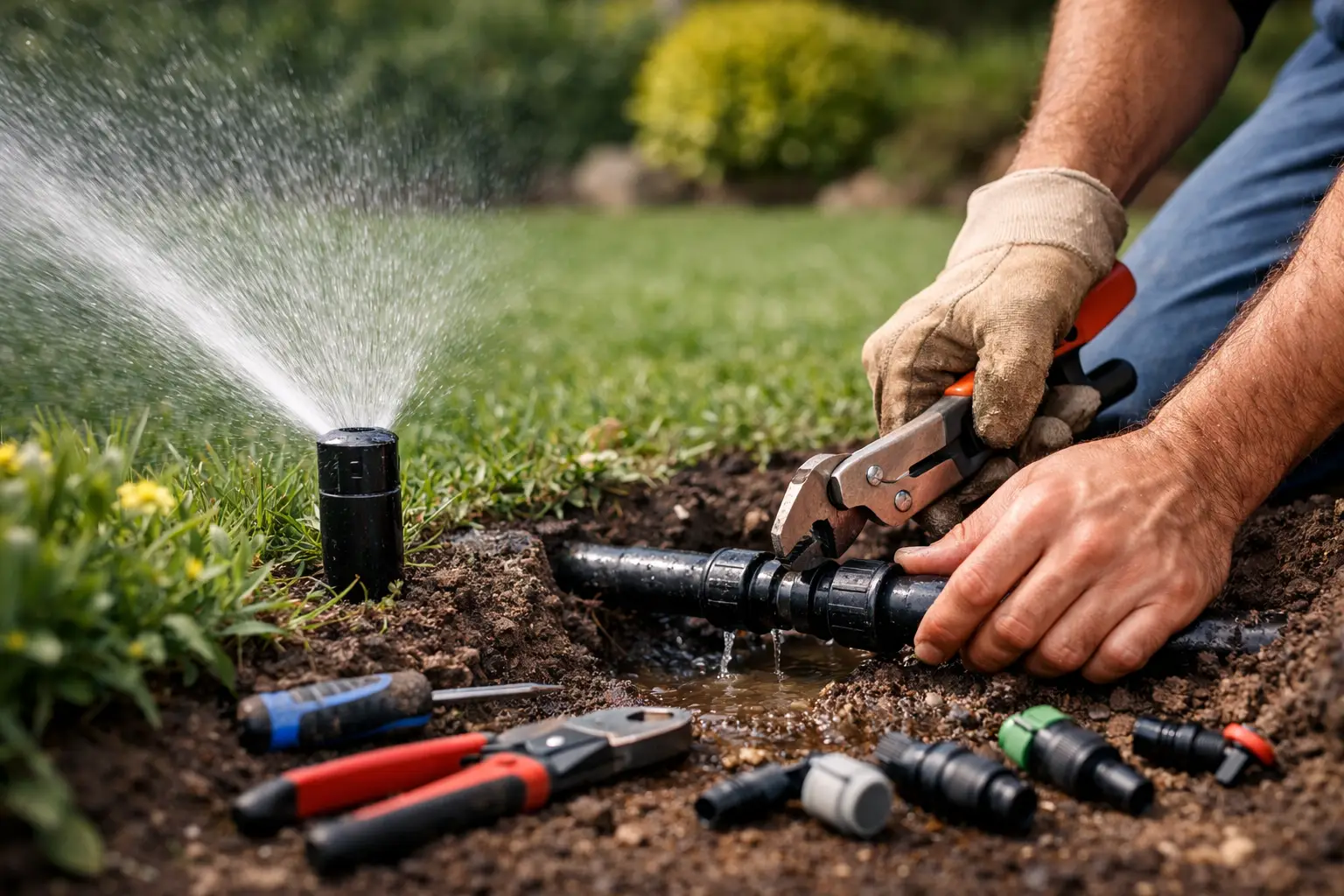
A spike in your water bill, soggy spots near a valve box, or plants drying out in one section of the yard usually point to the same problem – you need irrigation system repair before a small issue turns into wasted water and landscape damage. In Arizona, that matters fast. Heat is unforgiving, and a sprinkler line, drip zone, or controller that is not working right can stress plants, flood gravel areas, or leave turf and beds looking uneven within days.
Why irrigation problems get worse quickly in Arizona
Desert landscapes do not leave much room for guesswork. When water is not landing where it should, the signs show up fast. You might see brown patches, runoff onto hardscape, pooling around emitters, or shrubs that look healthy on one side and weak on the other.
The bigger issue is efficiency. A damaged irrigation system does not just miss spots. It often overwaters one area while underwatering another. That means higher utility costs, unnecessary water loss, and long-term stress on plants, trees, and ground cover. For homeowners, it affects curb appeal. For commercial properties, it affects appearance, maintenance budgets, and how the property is perceived.
Common signs you need irrigation system repair
Some irrigation issues are obvious, and some hide underground until the damage spreads. If your system is cycling normally but the landscape still looks off, there is usually a mechanical problem somewhere in the line, head, valve, or timer setup.
Uneven watering
If one zone is thriving while another looks dry, there may be a clog, pressure issue, broken emitter, damaged sprinkler head, or valve problem. In drip systems, even a small blockage can leave multiple plants without enough water.
Water pooling or constant wet spots
Pooling is often tied to a cracked pipe, leaking fitting, stuck valve, or broken sprinkler body. In Arizona yards with gravel, these leaks can go unnoticed longer because water drains below the surface before the problem becomes visible.
Low pressure or misting heads
When sprinkler heads mist instead of spraying properly, water is being lost to wind and evaporation. That can come from pressure problems, worn nozzles, leaks, or poor head selection for the area.
Zones that will not turn on or shut off
This usually points to electrical issues, valve failure, controller problems, or damaged solenoids. A zone that keeps running is not just annoying – it can waste a large amount of water quickly.
Sudden increase in water bills
If your watering schedule has not changed but your bill has, your irrigation system may be leaking underground or running inefficiently. This is one of the clearest signs that repair is needed even if the yard still looks mostly normal.
What causes irrigation systems to fail
No system lasts forever without service. Arizona conditions put extra stress on irrigation components because of heat, dry soil movement, mineral buildup, and long seasonal use.
Wear and tear on heads, valves, and lines
Sprinkler heads get hit by mowers, foot traffic, and regular use. Drip emitters clog over time. Valves can stick or stop opening correctly. Pipe fittings weaken, especially in older systems or repairs that were done with mismatched parts.
Soil shifting and root intrusion
As soil settles or tree roots expand, underground lines can crack, separate, or become pinched. This is common in both residential and commercial landscapes, especially in areas with mature planting.
Poor system design or outdated components
Some irrigation problems are not caused by one broken part. They come from a layout that was never right for the landscape. Too many heads on one zone, poor spray overlap, mixed plant watering needs, or an outdated timer can all create ongoing performance problems. In that case, repair may need to include adjustment, not just replacement.
What professional irrigation system repair should include
A real repair service should do more than swap a broken sprinkler head and leave. The goal is to find the source of the problem, restore proper performance, and reduce future water waste.
Full system inspection
A thorough inspection checks controllers, wiring, valves, pressure, heads, drip lines, emitters, and zone coverage. This matters because visible symptoms are not always tied to the first part that looks damaged.
Targeted repairs with the right parts
Good repair work means replacing failed components with parts that match the system and the landscape needs. A quick patch might hold for a short time, but it often leads to repeat issues. Reliable service focuses on repairs that last through Arizona heat and regular use.
Coverage and efficiency adjustments
Sometimes the fix is mechanical. Sometimes it is operational. A zone may need its run time adjusted, a nozzle changed, or spray direction corrected to keep water off sidewalks, pavers, and walls. Repair and optimization often go together.
Drip irrigation repair vs. sprinkler repair
Not every irrigation system fails in the same way. Drip systems and sprinkler systems each have their own trouble spots, and knowing the difference helps set the right repair plan.
Drip system repair
Drip irrigation is efficient, but it is sensitive to clogs, broken emitters, split tubing, and pressure problems. If plants are declining one by one, the issue may be isolated to a small section. If an entire bed is underperforming, the filter, pressure regulator, or valve may be the real cause.
Sprinkler system repair
Sprinkler systems are more likely to show visible symptoms like geysers, broken risers, tilted heads, overspray, or dead turf sections. Head spacing, nozzle type, and pressure all affect performance. A broken head is simple to replace, but if the area has repeated issues, the zone setup may need correction.
When repair is enough and when replacement makes more sense
It depends on the age of the system, the condition of the components, and how often problems are showing up. A newer system with one leak or failed valve is usually a straightforward repair. An older system with recurring leaks, poor layout, outdated controls, and uneven coverage may cost more in repeat service than a partial upgrade.
That does not always mean starting over. In many Arizona landscapes, the best approach is selective improvement. Replace damaged sections, upgrade the controller, correct problem zones, and keep the parts of the system that still perform well. That keeps costs practical while improving reliability.
Why fast repair protects more than your water bill
Water waste is the obvious concern, but it is not the only one. Irrigation leaks can stain hardscape, erode soil, weaken plant health, and create muddy or slippery areas around walkways and patios. On commercial properties, those issues affect both appearance and maintenance demands.
Delayed repair also makes landscaping harder to manage. Yard crews cannot solve irrigation problems with trimming or cleanup. If the root issue is poor watering, the landscape keeps declining no matter how often it is maintained.
Choosing a local Arizona contractor for irrigation system repair
You want a contractor who understands desert landscaping, mixed-material yards, and the way irrigation interacts with gravel, artificial grass borders, pavers, trees, and planting beds. Repair work should support the whole property, not just the pipe underground.
That is especially important when irrigation problems are connected to larger outdoor issues. A contractor with broader landscape and exterior experience can spot whether water is washing out gravel, affecting paver areas, damaging wall lines, or stressing trees and shrubs. Pro Natural Landscape approaches repair with that full-property mindset, which helps customers avoid patchwork fixes.
What to do if you suspect a problem now
Do not wait for a section of the yard to fully fail. If you notice runoff, dry spots, wet patches, weak pressure, or a timer that is not responding correctly, get the system checked. Catching the issue early usually means a simpler repair, lower water loss, and less damage to the surrounding landscape.
A dependable irrigation system should do one job well – deliver the right amount of water where it is needed without waste. When it stops doing that, the fix should be practical, prompt, and built to last in Arizona conditions. If your yard or property is showing signs of trouble, the right repair now can save water, protect your investment, and keep the entire outdoor space working the way it should.
3 thoughts on “Irrigation System Repair That Saves Water”