

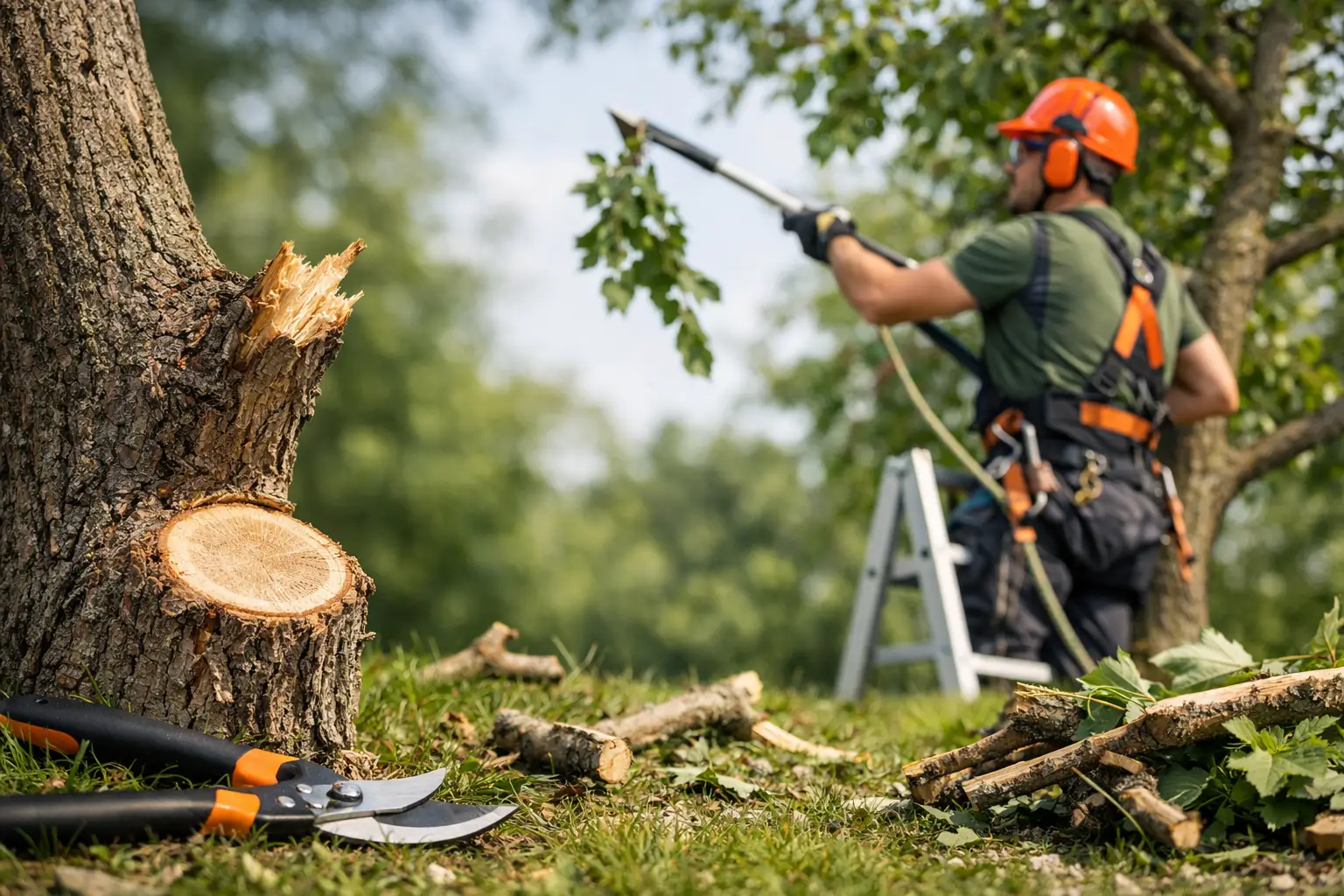
A tree can go from asset to liability in one bad trimming session. We see it often across Arizona – branches cut too high, too much growth removed at once, or the wrong tree pruned at the worst possible time. These tree trimming mistakes do more than make a yard look rough. They can stress the tree, invite disease, create safety risks, and lead to expensive removal later.
For homeowners, property managers, and commercial property owners, the goal is simple: keep trees healthy, controlled, and attractive without creating new problems. That takes more than cutting back what looks overgrown. In Arizona, heat, drought stress, storm exposure, and fast seasonal growth all change how trimming should be handled.
Why tree trimming mistakes matter more in Arizona
Desert landscapes are less forgiving than people think. Trees here already work harder to survive. Between intense sun, dry soil, irrigation issues, and seasonal monsoon winds, a poorly timed or overly aggressive trim can push a tree past the point of recovery.
That matters for more than appearance. Weak limbs can fall near roofs, walkways, parked vehicles, and common areas. Trees trimmed incorrectly can also throw off shade patterns, which affects comfort, plant health below, and even cooling costs near buildings. On commercial properties, bad trimming can quickly make the exterior look neglected.
1. Removing too much at once
One of the most common tree trimming mistakes is over-pruning. When too much canopy is removed in a single visit, the tree loses a major part of its ability to produce energy and protect itself from sun exposure. In Arizona, that can lead to sunscald on branches that were previously shaded.
People often assume a heavier trim means less maintenance later. Usually, the opposite happens. The tree may respond with fast, weak regrowth that needs even more correction down the line. A better approach is controlled pruning that improves structure without stripping the tree bare.
2. Topping the tree
Topping is when major upper branches are cut back bluntly to reduce height. It may seem like a quick fix for a tree that feels too large, but it creates long-term structural problems. The cuts are severe, the natural shape is ruined, and the tree often responds by sending out multiple weak shoots from the cut points.
Those new shoots grow fast but attach poorly. That makes them more likely to break in wind or storms. Topping also leaves large wounds that are slower to close, which increases vulnerability. If a tree is too large for its space, selective reduction or removal may be the smarter choice than forcing it into a shape it cannot support.
3. Cutting branches flush to the trunk
A clean-looking cut is not always the right cut. When branches are removed flush against the trunk, the tree loses the branch collar, which is the slightly swollen area where the branch meets the main stem. That collar helps the tree close the wound properly.
Without it, the cut becomes harder for the tree to seal. That can lead to decay and long-term weakness. On the other hand, leaving a long stub is not right either because stubs die back and can attract pests. Proper trimming is precise. The branch should be removed just outside the collar, not into it and not far beyond it.
4. Trimming at the wrong time
Timing matters, and it depends on the species, the tree’s condition, and the purpose of the trimming. Some trees handle seasonal pruning well, while others are more sensitive to heavy cuts during active growth or extreme heat. In Arizona, trimming during intense summer stress can be hard on already strained trees.
There are exceptions. Dead, broken, or hazardous branches should be addressed promptly for safety. But for shaping, thinning, or corrective pruning, the best timing often depends on what kind of tree you have and how it is growing on the property. A mesquite is not managed the same way as a palm or an ornamental shade tree. That is where local experience matters.
5. Ignoring weight balance and branch structure
Tree trimming is not just about reducing volume. It is about managing structure. If too much weight is removed from one side or if interior support branches are cut without a plan, the tree can become uneven and unstable.
This problem often shows up after a wind event. A tree may look fine right after trimming, then fail later because the branch distribution was thrown off. The risk is higher when large limbs extend over driveways, patios, roofs, or parking areas. Trimming should improve balance, not just create a shorter outline.
6. Using dull tools or poor cutting methods
Dull blades tear bark and crush tissue instead of making clean cuts. That damage takes longer to heal and puts unnecessary stress on the tree. Poor methods can also lead to bark stripping when large limbs are removed without proper technique.
For larger branches, the cut usually needs to happen in stages so the limb does not rip downward under its own weight. That is a detail many people miss during do-it-yourself work. What starts as a simple trim can turn into a split limb, trunk injury, or emergency cleanup.
7. Treating every tree the same
This is one of the biggest tree trimming mistakes because it causes all the others. Not every tree should be thinned heavily. Not every species should be lifted high off the ground. Not every tree responds well to aggressive shaping.
Arizona properties often include a mix of desert-adapted trees, ornamental trees, palms, and older shade trees planted before current water-use priorities were common. Each type has its own trimming needs. A strategy that helps one tree can damage another. Good results come from identifying the tree, understanding its growth pattern, and trimming with a specific goal.
Signs your tree was trimmed incorrectly
Sometimes the damage is obvious right away. Other times it shows up months later. If you notice heavy sprouting from cut ends, large patches of exposed inner branches, sunburned bark, dead branch tips, or an unnatural lopsided shape, the tree may have been trimmed too aggressively or incorrectly.
You might also see more debris than expected after wind, or limbs that start sagging because the remaining growth is poorly distributed. On commercial sites, this can quickly become a liability issue. On residential properties, it often turns into a bigger cost because a tree that could have been maintained now needs major corrective work.
When DIY trimming makes sense and when it does not
Light cleanup is one thing. Removing small dead twigs, picking up fallen limbs, or cutting back minor growth that is clearly away from the main structure can be manageable for some property owners. But once ladders, power tools, tall canopy work, or limbs near buildings are involved, the risk changes.
There is also the question of what you cannot see from the ground. Weak attachments, hidden cracks, and poor previous cuts are easy to miss until a branch shifts unexpectedly. Saving money upfront can cost more if the tree is damaged or someone gets hurt. For larger trees or high-traffic properties, professional trimming is usually the safer and more cost-effective decision.
What proper trimming should accomplish
A good trim should solve a clear problem. That might mean removing deadwood, improving clearance, reducing storm risk, shaping growth away from structures, or cleaning up the appearance of the property. It should not leave the tree looking stripped, hacked back, or uneven.
The best results are practical and visible. The tree looks cleaner, the structure is stronger, and the surrounding area feels safer and more maintained. For Arizona properties, that also means keeping enough canopy where it belongs to protect the tree and preserve usable shade.
At Pro Natural Landscape, we take the same approach with tree care that we bring to every outdoor service – do the work right, solve the real issue, and leave the property looking better than when we arrived.
If your trees are overgrown, storm-damaged, or simply not being maintained the right way, the best next step is to address the problem before a small trimming issue turns into a removal job. A healthy tree adds value, shade, and curb appeal, but only when it is trimmed with purpose.