

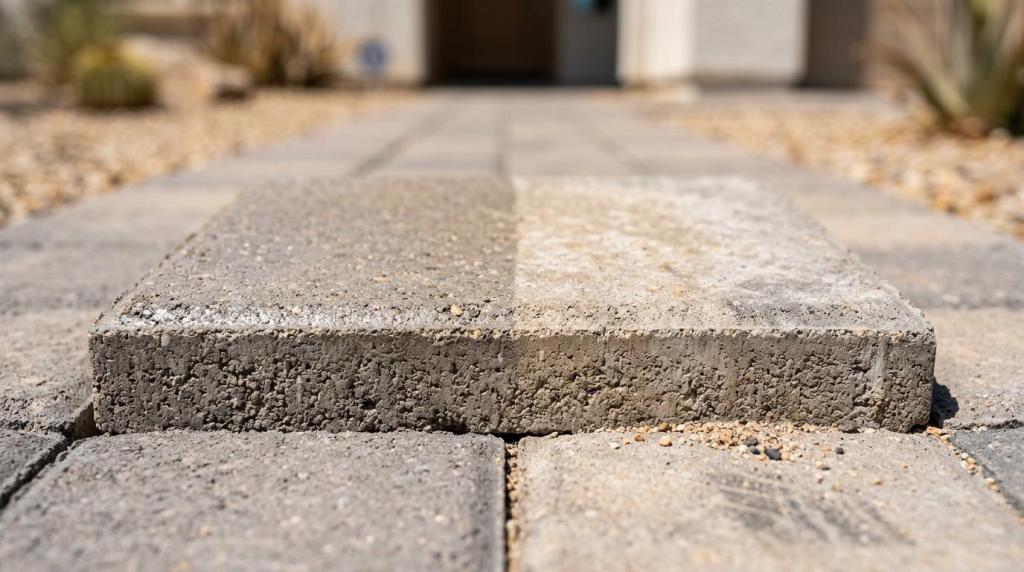
Pavers do a lot of visible work in an outdoor space. They shape driveways, patios, walkways, pool decks, and entry areas, all while handling constant exposure to sun, rain, traffic, spills, and daily wear. Over time, even a well-built surface can start to lose some of its visual sharpness if that exposure is left unchecked.
That is why sealing gets so much attention. On Pro Natural Landscape’s service pages, paver sealing is presented as a way to protect pavers from natural elements while also giving them a more attractive finished look. The same pages point out that sunlight, rain, oil spills, and tire marks can cause quality and appearance to deteriorate drastically. That combination of protection and visual preservation is the core value of sealing.
Why paver sealing matters for outdoor surfaces
A paver installation is not only about layout and material. It is also about how that surface holds up over time. A patio that looked crisp and uniform at installation can begin to look tired when surface staining, weather exposure, and fading start to show.
Pro Natural Landscape specifically notes that pavers are exposed every day to damaging conditions. That simple point matters. Outdoor hardscapes do not live in controlled conditions, and even attractive materials can lose ground when they are left unprotected.
The service descriptions highlight these common stressors:
- Sunlight
- Rain
- Oil spills
- Tire marks
- Daily wear
Sealing is positioned as a practical response to that reality. It is not just a cosmetic extra. It is a way to help preserve the quality and appearance of the hardscape before deterioration becomes more obvious.
Paver sealing benefits for appearance and protection
The available source material gives a clear, focused list of benefits, even though it does not read like a full technical guide. Those benefits center on protection and appearance.
When pavers are sealed, the goal is to create a barrier that helps defend the surface from routine exposure. According to the company’s services page, sealing helps protect pavers from natural elements and everyday damaging contact. It also provides an aesthetically pleasing look.
That means the value of sealing can be viewed from two angles at once: how the surface performs and how the surface presents itself.
| Benefit area | What the source confirms |
|---|---|
| Weather exposure | Sealing helps protect pavers from natural elements, including sun and rain |
| Surface wear | Sealing helps protect against everyday exposure like oil spills and tire marks |
| Appearance | Sealing provides an aesthetically pleasing look |
| Preservation | Sealing helps reduce the visible deterioration of paver quality and appearance |
This is especially relevant for driveways and front-entry hardscapes, where visual condition is always on display. A surface that looks blotchy, stained, or faded can change the feel of the whole property. A sealed surface is often part of keeping the hardscape looking intentional and cared for.
For property managers and homeowners alike, that visual consistency has practical value. Well-maintained paving supports the overall presentation of the property, which is often one of the first things guests, tenants, or customers notice.
When to seal pavers and what the source actually says
This is where clarity matters.
The Pro Natural Landscape website confirms that sealing is valuable, but it does not publish a specific best season, a preferred month, or an exact temperature range for application. It also does not provide a step-by-step timing guide on the accessible paver sealing service pages.
That does not make the topic vague. It simply means the timing decision should be based on the actual project, the paver material, and site conditions rather than a one-size-fits-all calendar rule taken from a brief service description.
A careful way to think about timing is to separate what is confirmed from what needs project-specific review:
- Confirmed by the source: Sealing helps protect pavers from damaging exposure and supports appearance.
- Not published on the source pages: Exact season, temperature window, drying requirements, or weather thresholds.
- Practical implication: Timing should be matched to the hardscape material and the condition of the installed surface.
- Best next step: Get a site-specific recommendation instead of relying on generic assumptions.
That last point becomes more important in Arizona communities, where sun exposure can be intense and hardscape performance matters year-round. Even then, it is better to avoid broad claims about an exact seasonal window when the published company content does not state one.
Why paver material affects sealing recommendations
One of the most useful details on the Pro Natural Landscape services page is the note that recommendations are tailored to paver material. The site specifically names concrete, travertine, slate, and clay.
That is an important distinction. Different materials can have different surface characteristics, porosity, and visual goals. A sealing approach that suits one type of paver may not be the right fit for another.
The source does not break down separate timing or product rules for each material, so there is no basis for claiming that concrete should always be treated one way and travertine another. Still, the company’s own wording supports the idea that material-specific guidance matters and that sealing decisions should not be made in a vacuum.
If a property has mixed hardscape surfaces, this matters even more. A driveway, courtyard, and pool surround may not all call for the same product or treatment schedule, even when they sit on the same property.
What to avoid with paver sealing
The accessible service pages do not offer a published checklist of sealing mistakes. There is no official list on the site warning against sealing wet pavers, applying too much product, or sealing before rain.
Still, one caution is clearly supported by the source: neglecting protection leaves pavers exposed to conditions that can damage their quality and appearance. That is directly consistent with the company’s own explanation of why sealing is offered.
There is also another source-grounded caution hiding in plain sight. Because the site says recommendations are tailored to material type, it suggests that a mismatched approach is not ideal. In simple terms, the wrong product or method for the paver material is not a smart move.
With that in mind, a few sensible avoidances stand out:
- Ignoring material differences: Concrete, travertine, slate, and clay should not be treated as interchangeable.
- Waiting for visible deterioration to worsen: Sun, rain, spills, and tire marks do cumulative damage.
- Treating sealing as appearance only: The service is framed as both protective and aesthetic.
- Assuming every hardscape needs the same plan: Site conditions and surface type matter.
That is a balanced way to discuss mistakes without inventing a technical checklist that the source does not provide.
Surface clues that suggest a paver sealing review may be worthwhile
While the website does not publish a formal inspection guide, its language about deterioration gives property owners a useful framework. If pavers are vulnerable to daily exposure and appearance loss, then visible wear is a reasonable cue to review the surface condition.
In many cases, the question is not just “Are the pavers old?” It is “How are they responding to the environment they live in?”
Look for signs like these:
- Fading color
- Visible staining
- Tire mark buildup
- Uneven appearance
- A general loss of surface freshness
A property owner does not need to diagnose everything alone. The more practical move is to use these clues as a prompt for a professional assessment, especially when the hardscape is a major visual feature of the home or commercial property.
Paver sealing and curb appeal in Arizona properties
There is a strong aesthetic argument for sealing, and the source says that plainly. Sealing provides an aesthetically pleasing look. That may sound simple, yet it has major value for outdoor spaces where pavers are part of the first impression.
A faded driveway can pull attention in the wrong direction. A refreshed, protected surface can make the surrounding landscaping, gravel, artificial turf, lighting, irrigation, and planting areas look more cohesive. When the hardscape reads as clean and intentional, the whole property benefits.
In places like El Mirage and surrounding Arizona communities, outdoor living space is not an afterthought. Patios, walkways, and front entries are used and seen often. That gives paver appearance more weight than it might have in a property where outdoor features stay in the background.
This is one reason sealing often fits into a broader maintenance strategy rather than standing alone. Hardscape surfaces, gravel, artificial turf, lighting, irrigation, and planting areas all contribute to how a yard functions and how it feels. A neglected paver surface can interrupt an otherwise polished landscape plan.
What a professional paver sealing assessment should clarify
Because the company website does not publish exact weather rules or prep steps, the most useful next move is a direct assessment of the hardscape itself. A strong review should answer the questions the brief service descriptions do not spell out.
That means looking at the current surface condition, the paver material, the level of wear, and the desired finish. It also means identifying whether the hardscape is simply ready for sealing or whether it needs renovation work first.
A helpful assessment should sort out a few basics:
- Material type: Concrete, travertine, slate, clay, or another surface
- Current condition: Clean appearance, staining, fading, or visible deterioration
- Use pattern: Patio foot traffic, driveway vehicle traffic, or mixed-use areas
- Finish goals: Primarily protective, primarily visual, or both
That kind of project-specific review is more valuable than broad online advice because it responds to the actual surface in front of you.
Why paver renovation and color sealing often enter the conversation together
The source material references both “Paver Renovation Sealing Application” and “Reconstruction Of Pavers Color Sealing.” Even though the site descriptions are brief, those service labels point to an important idea: sealing is not always a stand-alone decision.
Sometimes the surface needs renewed visual consistency, not just a protective coat. In those cases, renovation and color sealing may be part of the discussion. That is especially relevant when pavers have already absorbed years of wear and no longer present the same character they had earlier in the life of the installation.
For homeowners and commercial property managers, this opens a useful path. A worn hardscape does not always need full replacement to look sharper and more protected. Reviewing renovation and sealing options together may create a more cost-conscious way to improve the space while preserving the existing layout.
A well-maintained paver surface supports the entire outdoor environment. It helps the landscape look finished, cared for, and ready for daily use. When the sealing plan is matched to the material and the condition of the surface, the result is usually more durable visually and more satisfying day to day.
For Arizona property owners who want their hardscape to keep pace with the rest of the landscape, that is a strong place to start.