

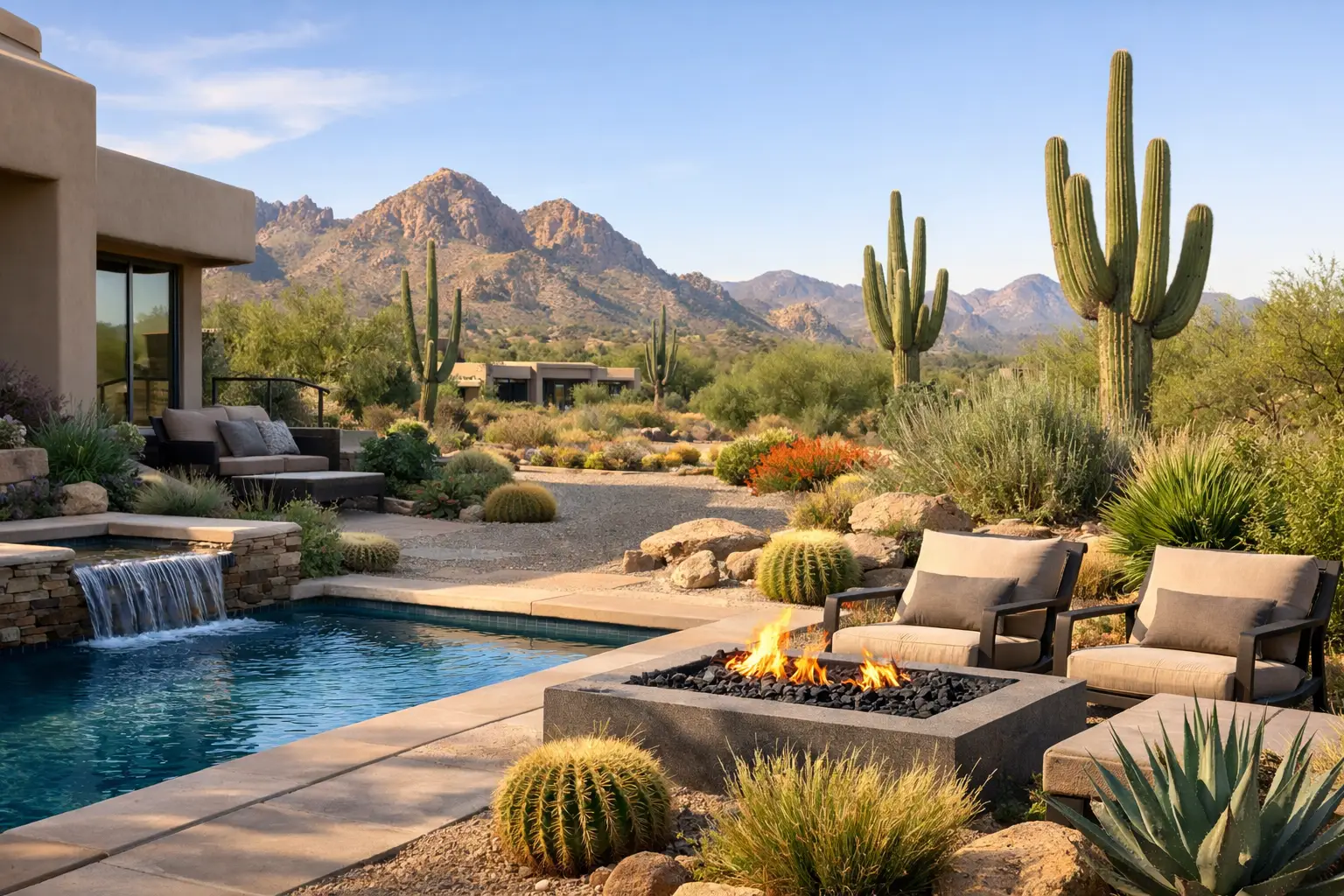
A bare dirt yard may be low cost at first, but it rarely feels finished, controls dust, or adds much value to an Arizona property. The best desert landscape trends are moving away from empty space and thirsty turf toward outdoor areas that look polished, handle extreme heat, and stay manageable through every season.
For homeowners, that can mean a cooler patio, a cleaner front yard, and less time spent dealing with irrigation problems. For commercial properties, it means an exterior that looks professional without creating a high-maintenance burden. The right landscape is not about copying a photo from another climate. It is about choosing surfaces, plants, water systems, and shade features that work in Arizona.
Desert Landscape Trends Built for Real Arizona Use
Layered xeriscaping instead of one-note gravel
Gravel remains a practical part of desert landscaping, but the current approach is more intentional than covering an entire lot with one color of rock. Finished yards are using layers: defined gravel areas, boulders, planting pockets, curbing, and hardscape borders that give the design shape.
Desert-adapted trees, flowering shrubs, agave, cactus, and ornamental grasses can create color and height without the water demand of a traditional lawn. The goal is not to make the yard look crowded. It is to make it look designed. A few well-placed plant groupings can soften block walls, frame a walkway, or add privacy around a patio.
Plant selection still depends on exposure. A plant that performs well on a shaded north-facing side of a home may struggle against a west-facing wall that reflects afternoon heat. Spacing also matters. Young plants can look sparse at installation, but planting too tightly often creates future trimming, crowding, and irrigation issues.
Artificial grass in focused areas
Artificial grass continues to be one of the most requested solutions for Arizona yards, especially where families, pets, or tenants want a clean green surface without mowing and constant watering. The trend is not necessarily installing synthetic turf wall to wall. Instead, property owners are using it strategically in small backyards, side yards, pet runs, play spaces, and courtyard areas.
A turf-and-paver layout can give a property a modern, organized look while preserving usable outdoor space. Artificial grass can also make sense for commercial entrances and common areas where consistent curb appeal matters.
Quality installation is critical. Proper base preparation, drainage, edging, and seams affect how the grass looks and performs over time. Turf also gets hot in direct Arizona sun, so it is worth planning for shade, cooling infill where appropriate, and a nearby hardscape or shaded seating zone rather than expecting one surface to solve every need.
Pavers and travertine that expand living space
Outdoor living is a major driver behind current landscape upgrades. More property owners are replacing cracked concrete, worn dirt areas, and uneven surfaces with pavers or travertine. These materials help define patios, walkways, pool decks, fire pit areas, and outdoor kitchens while adding a more finished look than plain concrete alone.
Pavers are valued for their design flexibility and repairability. If a section needs access for utility work or settles over time, individual units can often be lifted and reset. Travertine remains popular around pools and patios because of its natural appearance and comfortable feel underfoot, though sealing and routine care should be considered based on the material and location.
Color choice is more than a style decision in the desert. Lighter materials can reduce surface heat compared with darker finishes, while earth tones often blend naturally with Arizona architecture and gravel. A good design balances visual contrast with heat performance, foot traffic, drainage, and the amount of direct sun the area receives.
Shade is becoming part of the landscape plan
A beautiful patio that cannot be used from May through September does not provide full value. That is why shade planning has become one of the most practical desert landscape trends. Trees, patio covers, pergolas, shade structures, and strategically placed umbrellas can make outdoor spaces more usable during the hottest part of the day.
Shade trees need room to mature and should be selected with root growth, canopy size, and proximity to walls or plumbing in mind. Hardscape features need thoughtful placement so they do not block circulation or create drainage problems. The best approach is to map out how the sun moves across the property before deciding where to place seating, turf, grilling areas, and walkways.
For commercial sites, shade can improve comfort at entries, waiting areas, and pedestrian paths. It also helps make an exterior feel maintained and welcoming rather than exposed and unfinished.
Smart Irrigation Is a Core Part of Desert Landscape Trends
Water-wise landscaping does not mean ignoring irrigation. It means delivering water where it is needed, in the right amount, with less waste. Drip irrigation remains a strong choice for trees, shrubs, and desert plants because it sends water to the root zone instead of spraying it into the air.
Modern irrigation upgrades often include programmed controllers, separate zones for plants with different water needs, pressure regulation, and regular inspections for leaks or clogged emitters. These details matter. A broken line under gravel can waste water for weeks before it becomes visible, while overwatering can damage plant roots and encourage weak growth.
A reliable system should be adjusted seasonally. Arizona landscapes do not need the same watering schedule in winter that they need during peak summer heat. Property owners who treat irrigation as a set-it-and-forget-it system often end up paying more for water while still dealing with stressed plants.
If a yard has mature trees, new plants, artificial grass, and several hardscape zones, the irrigation layout should be planned around the complete landscape rather than added as an afterthought. This is one reason a full-service contractor can simplify the project. Pro Natural Landscape can coordinate the landscape features, irrigation, gravel, hardscape, and finishing work so the property functions as one complete outdoor space.
Low-maintenance front yards with stronger curb appeal
Front yards are becoming cleaner and more structured. Homeowners are using defined walkways, decorative gravel, boulders, drought-tolerant plants, and accent lighting to make a strong first impression without committing to high-maintenance flower beds or lawns.
This works particularly well for rental homes, HOAs, and commercial buildings where a tidy exterior supports property value and tenant or customer confidence. It also reduces common upkeep problems such as overgrown shrubs blocking walkways, scattered gravel, and dead turf near the curb.
Maintenance is still part of the equation. Gravel needs occasional raking, weeds need control, trees need pruning, and irrigation needs inspections. Low maintenance does not mean no maintenance. It means the property is designed to require practical, predictable care instead of constant correction.
Lighting That Improves Safety After Sunset
Landscape lighting is shifting from a purely decorative upgrade to a functional part of exterior planning. Path lights, uplighting on trees, wall lighting, and step lights can make entrances, patios, and walking routes safer after dark. They also extend the time a backyard or commercial exterior can be comfortably used.
The most effective lighting is controlled, not excessive. Too many bright fixtures can create glare and make a yard feel harsh. A focused plan highlights key features, improves visibility at changes in elevation, and adds security around doors, gates, and side yards.
Lighting should be installed after the main layout is clear. It is easier to place fixtures when walkways, planting areas, trees, and patios have defined locations. This avoids unnecessary trenching and helps produce a cleaner final result.
Durable repairs and refreshes are part of the trend
Not every landscape improvement requires a full demolition and rebuild. Many Arizona properties benefit from repairing cracked or sun-faded pavers, re-leveling a settling walkway, refreshing gravel, sealing hardscape, removing an unsafe tree, or updating a damaged block wall. These projects can improve appearance and safety while protecting the investment already in place.
The decision between repair and replacement depends on the condition of the base, drainage, material availability, and the scope of the desired change. A few loose pavers may only need repair. A patio with widespread settling and poor drainage may need deeper work to prevent the problem from returning.
The strongest desert landscape is one that fits the property, the budget, and the way people actually use the space. Start with the problems that affect daily life most – heat, drainage, worn surfaces, poor curb appeal, or wasted water – then build a plan that delivers useful improvements season after season.