

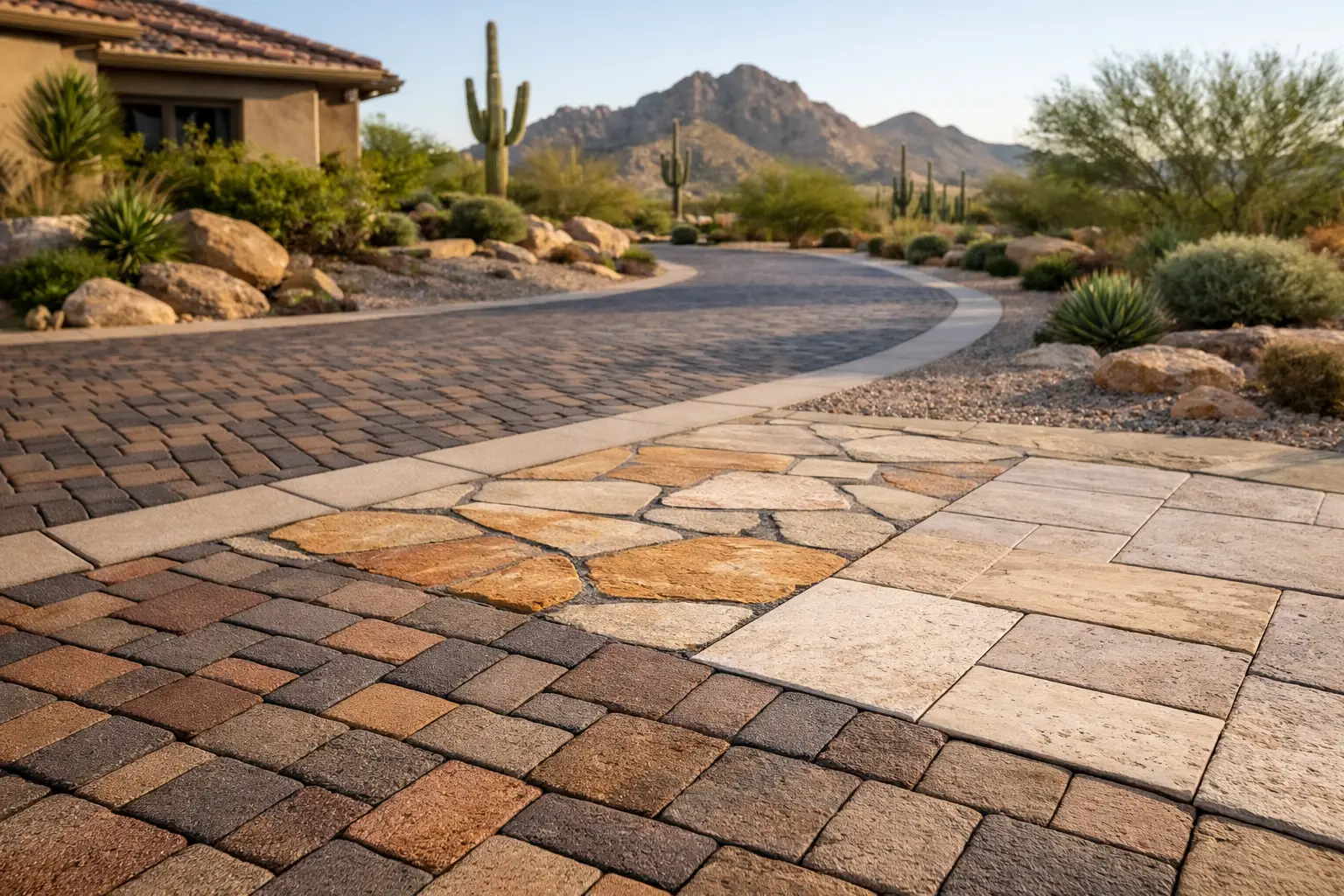
A driveway in Arizona has a harder job than most. It handles vehicle weight, tire marks, summer heat, dust, monsoon runoff, and constant sun exposure – all while setting the first impression of your home or business. Choosing the best driveway paver materials is not only about color or style. It is about installing a surface that stays stable, looks clean, and holds up to daily use without becoming a recurring repair project.
For most Arizona properties, concrete pavers are the practical first choice. But clay brick, natural stone, travertine, and porcelain each have a place when the project goals, traffic level, budget, and surrounding landscape call for something different. The right answer depends on how the driveway will be used and how much maintenance you want over time.
What a Driveway Material Must Handle in Arizona
A driveway needs more than a good-looking finish. The material and the installation base must manage heavy loads without shifting, cracking, or developing low spots. Arizona heat adds another consideration: dark materials can become extremely hot, while surfaces with poor color stability can fade under intense UV exposure.
Drainage matters just as much. A sudden monsoon storm can send water across a driveway quickly. Proper grading, base preparation, edge restraints, and joint material help direct water away from the home while keeping individual pavers in place. Even the strongest paver can fail early if it is installed over an unstable or poorly compacted base.
For commercial properties, apartment communities, and homes with frequent vehicle traffic, material strength and installation quality should take priority over decorative details. For a front-entry driveway or a low-traffic courtyard, appearance and slip resistance may carry more weight.
Best Driveway Paver Materials for Long-Term Performance
Concrete pavers: the most versatile choice
Concrete pavers are one of the best all-around materials for Arizona driveways. They are manufactured in many shapes, colors, textures, and patterns, making it possible to create anything from a clean modern driveway to a traditional cobblestone look. They also work well with block walls, artificial grass, gravel, landscape lighting, and other common Arizona outdoor upgrades.
Their biggest advantage is repairability. If a paver becomes stained, damaged, or settles after utility work, individual units can often be removed and replaced without tearing out the entire driveway. That is a major benefit compared with poured concrete, which usually requires a visible patch or a larger replacement section.
Concrete pavers are not maintenance-free. Joint sand can wash out, weeds can appear in neglected joints, and the surface may need cleaning and sealing depending on the finish and location. Still, with a correctly built base and occasional maintenance, they offer excellent value for residential and commercial driveways.
Choose lighter earth tones, grays, tans, or blended colors when heat is a concern. Very dark pavers can look sharp, but they absorb more heat and may show dust, tire marks, and faded areas more easily.
Clay brick pavers: classic character with proven durability
Clay brick pavers bring a warm, traditional appearance that works especially well with older homes, Mediterranean-style properties, and landscapes that use natural stone or desert planting. The color runs through the material rather than sitting only on the surface, which helps brick retain its character over time.
Quality clay brick is strong, durable, and naturally resistant to fading. It can be a smart choice for a driveway where curb appeal is the main focus and the design calls for a richer, more established look. Brick patterns such as herringbone also provide good interlock for vehicle traffic.
The trade-off is cost and material availability. Brick pavers may cost more than standard concrete options, and color choices are more limited. Their textured surface can also collect dust in Arizona, so periodic rinsing or professional cleaning helps keep the driveway looking its best. For the right property, however, brick delivers a look that concrete cannot fully duplicate.
Natural stone: high-end appearance, more planning required
Natural stone creates a distinctive driveway with color variation, texture, and a finish that does not look manufactured. Granite, flagstone, sandstone, and certain dense stone products can be used in driveway applications, but the exact stone matters. Not every natural stone is suitable for regular vehicle weight.
Dense, properly cut stone installed over a strong driveway base can provide exceptional visual impact. It is often used for driveway borders, aprons, entry sections, and accent bands when a full stone driveway is outside the budget. Combining natural stone with concrete pavers can give a property a custom appearance while keeping the project practical.
Natural stone comes with more variables than manufactured pavers. Material thickness, porosity, surface texture, slip resistance, and sealing requirements all need to be considered before installation. Softer or highly porous stone may stain, chip, or deteriorate faster in driveway conditions. It also tends to be more expensive due to material handling and the additional labor needed for fitting and installation.
Travertine: attractive, but best used selectively
Travertine is popular throughout Arizona because its light color and natural texture fit desert outdoor spaces well. It stays cooler underfoot than many darker hardscape materials, making it a strong choice for pool decks, patios, walkways, and covered outdoor areas.
For a full vehicle driveway, travertine requires careful selection and professional installation. Some travertine products are better suited to pedestrian use than repeated vehicle loading. The stone’s natural pores also mean it can absorb oils and other automotive stains if left unsealed.
Travertine can still play a valuable role in driveway design. It works well for a decorative entry apron, a parking court with limited use, side walkways, or a front approach connected to a paver driveway. This allows homeowners to bring the material into the design without asking it to carry more traffic than it was intended to handle.
Porcelain pavers: modern style for the right application
Outdoor-rated porcelain pavers offer clean lines, consistent color, and finishes that can resemble stone, concrete, or wood. They are low-porosity, easy to clean, and highly resistant to fading. For contemporary homes and commercial entry areas, porcelain can deliver a polished, low-maintenance look.
However, porcelain is not automatically the best choice for a standard driveway. The product must be specifically rated for vehicular use, installed over an engineered base or slab system, and selected with slip resistance in mind. Thin patio porcelain is not designed to support vehicle traffic simply because it is labeled for outdoor use.
When specified correctly, thicker driveway-rated porcelain can be a premium option. It generally costs more than concrete pavers and leaves less room for installation shortcuts. It is best for projects where the modern finish is worth the added material and labor investment.
Material Choice Is Only Half the Job
The best paver material can still perform poorly if the driveway is not prepared correctly. Excavation depth, compacted aggregate base, bedding sand, edge restraints, paver pattern, joint sand, and slope all affect the finished surface. A driveway should be designed to carry the expected traffic, not treated like a simple walkway.
For example, a herringbone pattern is commonly used in driveways because the interlocking layout helps resist movement from turning tires and braking vehicles. Strong edge restraints are also essential. Without them, pavers can spread outward over time, opening joints and creating uneven areas.
Drainage should be planned before the first paver is installed. Water must move away from structures and should not collect at the garage, gate, sidewalk, or low points in the yard. In Arizona, a dry driveway can still have serious drainage issues once monsoon rain arrives.
How to Choose the Right Option for Your Property
Start with the driveway’s daily demands. A household with multiple vehicles, trucks, trailers, or frequent guests needs a durable paver system with a heavy-duty base. A commercial entrance needs materials that present well while handling consistent traffic and easier cleanup.
Then consider the surrounding property. Concrete pavers are a dependable choice when you want flexibility, affordable options, and a clean finished look. Brick is a strong fit for classic architecture. Natural stone and travertine add character when used in the right locations. Porcelain suits modern projects where the product is specifically engineered for vehicle use.
Also think about long-term care. Light-colored textured pavers can hide dust better than smooth dark surfaces. Sealing can help protect against stains and make cleaning easier, but it should be applied appropriately for the material and finish. A good installation team can recommend whether sealing makes sense for your driveway rather than treating it as a one-size-fits-all step.
A driveway should make your property easier to use, not harder to maintain. Selecting durable materials, building the base correctly, and matching the design to Arizona conditions gives you a surface that looks finished on day one and stays dependable through the seasons. When you are ready to transform your outdoor space, choose the material that fits your traffic, style, and maintenance expectations – then make sure it is installed to perform.