

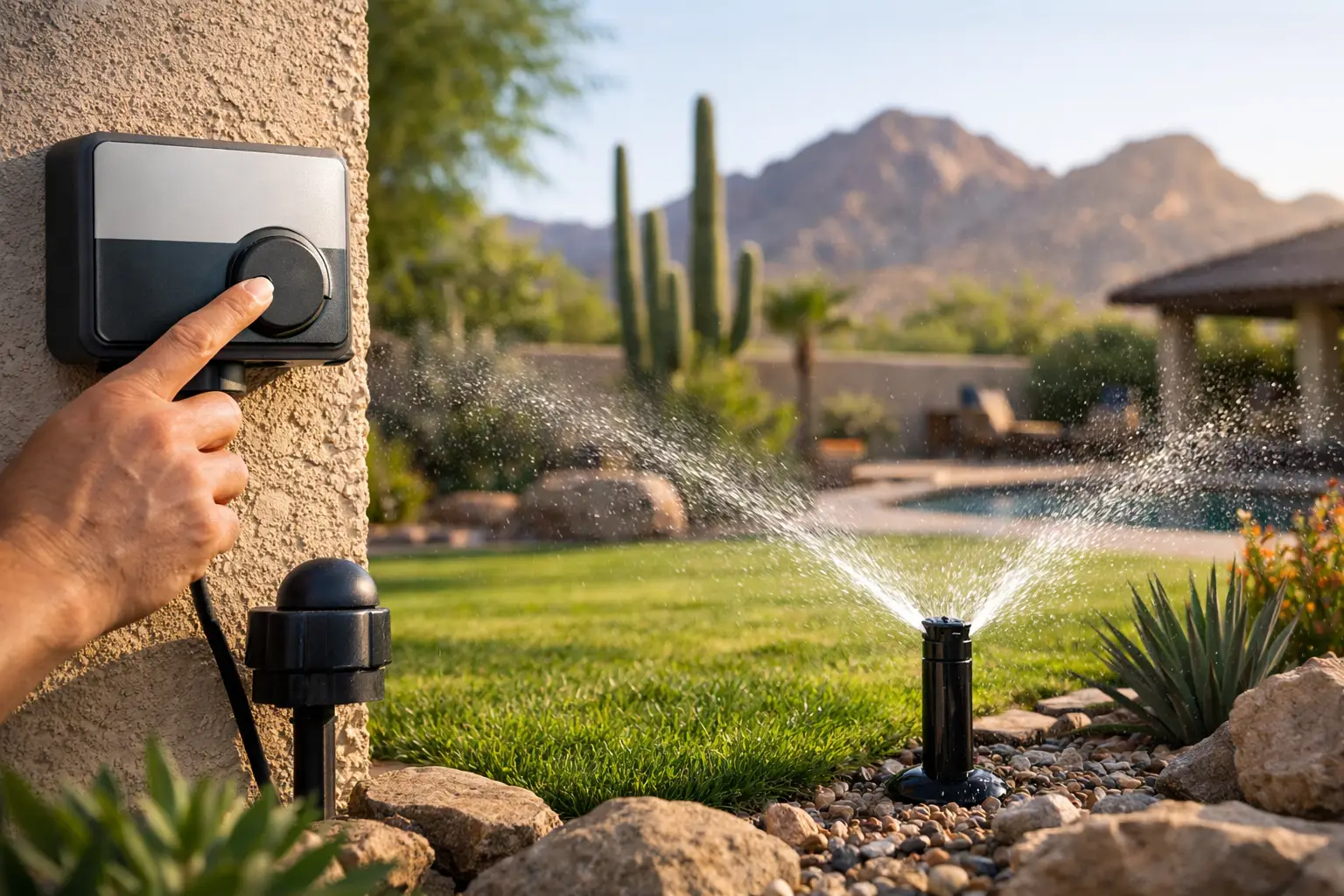
A sprinkler running across a gravel bed, mist blowing onto a sidewalk, or water pooling near a foundation is more than an eyesore in Arizona. It is money and water leaving the property with every cycle. Smart irrigation gives homeowners, property managers, and commercial owners more control over where water goes, when it runs, and how much the landscape actually receives.
For Arizona properties, the goal is not to water everything the same way. Desert trees, shrubs, turf, flower beds, artificial grass edges, and potted plants all have different needs. A properly planned system helps keep the landscape healthy without treating the yard like a lawn in a cooler climate.
What Smart Irrigation Does Differently
A traditional irrigation timer follows a fixed schedule. If it is set to run at 5:00 a.m. on Tuesday, it runs whether the weather is mild, windy, rainy, or extremely hot. That approach can work for simple landscapes, but it often leads to overwatering in some areas and dry spots in others.
Smart irrigation uses controllers, sensors, and zoning to make better watering decisions. Depending on the system, a controller may adjust schedules using local weather data, seasonal temperature changes, rainfall, or soil moisture readings. The result is a more responsive system that can reduce unnecessary watering while still protecting your plants.
This does not mean a smart controller can fix poor installation by itself. If drip lines are clogged, sprinkler heads are broken, valves leak, or the landscape was never divided into useful zones, technology will only manage those problems more efficiently. The strongest results come from pairing the right equipment with a system that is designed, repaired, and maintained correctly.
Smart Irrigation for Arizona Landscapes
Arizona heat changes the way irrigation needs to be planned. Watering too lightly and too often can encourage shallow roots. Watering at the wrong time can increase evaporation. A system that sends the same amount of water to a mature shade tree and a newly planted shrub wastes water in one area while putting stress on another.
Smart irrigation helps organize those needs by zone. A practical setup may separate drip irrigation for desert plants from spray heads for natural turf, then give trees their own deep-watering schedule. Gravel areas and artificial grass do not need routine irrigation, but nearby plants may still need carefully placed drip emitters.
For many residential yards, drip irrigation is the most efficient choice for shrubs, trees, cacti, ground cover, and planting beds. It delivers water closer to the root zone and avoids the wind drift that can affect spray systems. Spray heads may still make sense for grass, but they need proper coverage, correct nozzle selection, and regular adjustment to avoid runoff onto hardscape.
Commercial properties benefit from the same approach, often on a larger scale. Entry landscaping, parking lot islands, common areas, and perimeter planting can have very different water demands. Breaking those spaces into manageable zones makes it easier to maintain a clean appearance without constantly wasting water.
The controller matters, but placement matters too
A weather-based controller is often the starting point for a smart irrigation upgrade. It allows seasonal adjustments without requiring someone to manually change the timer every few weeks. Some models can pause watering after rain or change run times as temperatures rise.
However, the controller should be installed and programmed around the property, not simply switched on with factory settings. A shaded courtyard, an open west-facing yard, and a newly landscaped front entry do not dry out at the same rate. The schedule needs to reflect the actual sun exposure, plant type, soil condition, and irrigation method in each zone.
Signs Your Irrigation System Needs Attention
Many properties do not need a complete replacement. A targeted repair, controller upgrade, or zone adjustment may make a noticeable difference. Common warning signs include water running down the curb, green algae around heads, dry plants beside soaked soil, unusually high water bills, and sprinkler spray hitting walls, windows, or pavers.
Another sign is frequent hand-watering. If you regularly need to drag out a hose to keep a certain tree, planter, or section of yard alive, that area may not be receiving the right amount of water from the existing system. It could need a separate valve, additional drip emitters, a repaired line, or a revised schedule.
Property managers should also watch for irrigation problems that create maintenance issues. Overspray can stain block walls, erode gravel, shift decomposed granite, damage paver joints, and leave muddy areas near walkways. Fixing water distribution early helps protect the landscape and the hardscape around it.
How to Build a Better Irrigation Plan
The best irrigation plan starts with a site review. Before installing new equipment, look at the landscape as a whole: what is planted, what surfaces need to stay dry, where sun hits hardest, and where water is currently being lost. This keeps the project focused on practical improvements instead of adding equipment that does not solve the real problem.
First, identify plants by water needs. Native and drought-tolerant plants generally need a different schedule than turf or seasonal flowers. Mature trees also need deeper, less frequent watering than small shrubs. Grouping plants with similar needs makes each zone easier to manage.
Next, inspect the delivery method. Drip irrigation should be checked for leaks, crushed tubing, missing emitters, and clogged lines. Sprinkler heads should sit at the correct height, clear surrounding plants, and provide even coverage. Heads that are too low can be blocked by turf or gravel, while heads that are too high may create excessive mist and wind loss.
Then, program watering around the season. Arizona landscapes generally need more water during extreme summer heat and less during cooler months. There is no single schedule that fits every yard. Soil type, plant maturity, shade, and the type of irrigation all affect run times and frequency. A smart controller makes those adjustments easier, but periodic checks are still necessary.
Finally, test the system after changes are made. Run every zone and walk the property. Look for runoff, dry areas, clogged emitters, uneven spray, and water landing on concrete or decorative stone. A short inspection can prevent a small issue from becoming a dead plant, a damaged walkway, or a larger water bill.
When a Smart Upgrade Is Worth It
A smart irrigation upgrade is especially worthwhile when a property has multiple planting zones, changing seasonal needs, frequent water waste, or an owner who is rarely available to adjust the timer manually. It can also be a practical addition after a landscape renovation, tree installation, gravel project, paver installation, or new turf area.
For a small, simple yard with only a few drip zones, a basic timer may be enough if it is programmed properly and checked regularly. Smart equipment is not always the first priority. Repairing leaks, replacing damaged valves, and correcting poor water coverage should come before adding advanced controls.
The right answer depends on the property. A dependable irrigation system should make the landscape easier to maintain, not more complicated. It should support healthy plants, protect hardscape, and help the outdoor space look cared for without wasting water.
If your yard has dry spots, runoff, leaking lines, or a timer that has not been updated in years, start with an irrigation inspection. A few practical adjustments can make the difference between constantly chasing landscape problems and having an outdoor space that is built to handle Arizona conditions.