

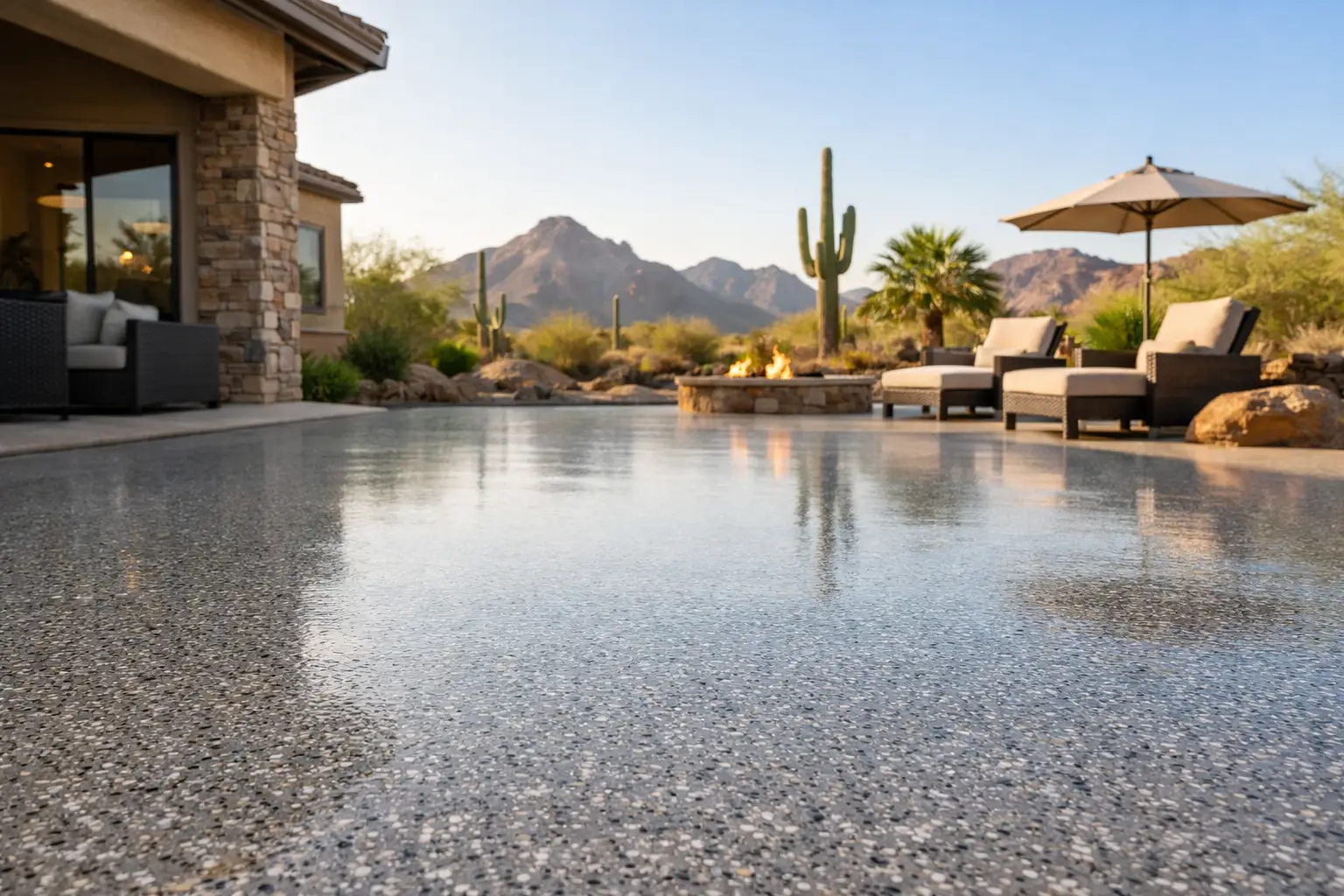
A faded, peeling patio coating can make an otherwise clean yard look unfinished fast. That is why homeowners often ask about epoxy flooring outdoors when they want a smoother, easier-to-clean surface for a patio, pool deck, walkway, or courtyard. Epoxy can be a good solution in the right location, but Arizona sun, extreme slab temperatures, and moisture conditions make product selection and surface preparation critical.
For many outdoor projects, the best answer is not standard epoxy alone. A properly installed system may include an epoxy base coat with a UV-stable protective topcoat, or it may call for a different coating altogether. The right choice depends on how much direct sun the area receives, how the concrete is used, and what condition the slab is in now.
Where Epoxy Flooring Outdoors Works Best
Epoxy is known for creating a hard, attractive, low-maintenance surface. It can cover stained concrete, improve the look of a worn garage apron, and provide a more finished appearance around covered outdoor living areas. In Arizona, it generally performs best where the slab has meaningful protection from direct sunlight.
Covered patios, screened porches, breezeways, shaded entry areas, and outdoor kitchens are often better candidates than an open pool deck exposed to afternoon sun. A roof, pergola, or deep overhang reduces ultraviolet exposure and helps limit the surface temperature swings that can shorten the life of a coating.
Epoxy can also make sense for certain commercial spaces. Covered walkways, service corridors, patio seating areas, and protected building entrances can benefit from a coating that is easier to sweep and clean than bare concrete. For businesses, the finish should be selected with foot traffic, slip resistance, and maintenance needs in mind.
The question is less about whether epoxy can be installed outside and more about whether the location gives it a fair chance to perform. A coating system that looks excellent under a covered patio may not be the best choice for a wide-open driveway in El Mirage.
Arizona Sun Is the Main Challenge
Standard epoxy is not naturally UV stable. When it receives long periods of direct sunlight, it can yellow, chalk, fade, or lose some of its finish over time. High heat can also increase the stress on the concrete and the coating, especially when the surface is exposed all day and cools quickly overnight.
That does not mean every outdoor epoxy project will fail. It means the coating needs to be matched to the environment. A quality UV-resistant urethane or polyaspartic topcoat can help protect the epoxy layer beneath it from sunlight. These systems are often a stronger choice for exposed areas because they are made to hold their color and finish better outdoors.
Color matters, too. Dark coatings absorb more heat, which can make an already hot slab uncomfortable underfoot. Lighter colors are usually more practical for Arizona patios and walkways because they reflect more sunlight and keep the surface visually cooler. They also tend to hide dust and light debris better between cleanings.
If your main goal is a decorative finish in a fully exposed area, pavers, travertine, tile, textured concrete coatings, or sealed concrete may provide better long-term value. Each surface has trade-offs, but they are often better suited to intense sun than basic epoxy.
Start With the Concrete, Not the Color
The condition of the concrete determines whether any coating can bond properly. A new color will not fix loose concrete, active cracks, drainage problems, or moisture pressure coming up through the slab. Covering those issues without repair can lead to bubbling, peeling, or flaking later.
Before applying an outdoor coating, the slab should be checked for cracking, spalling, old paint, sealers, oil stains, and previous coating failures. Hairline cracks can sometimes be filled and blended into the coating system. Larger cracks or uneven areas may need more extensive repair before the project moves forward.
Moisture is especially important. Concrete can look dry on the surface while moisture vapor moves through it from below. If that vapor is trapped beneath a coating, it may create blisters or cause sections of the finish to release. This can happen around planters, irrigation leaks, poorly drained areas, and slabs without an effective moisture barrier.
Surface preparation is where many coating jobs succeed or fail. The concrete needs to be mechanically profiled so the material can grip the slab. Simply rolling epoxy over dusty, smooth, sealed, or dirty concrete is not a durable installation method. Professional prep may include grinding, crack repair, cleaning, moisture testing, and careful edge work before the first coat is applied.
Choose a Finish That Is Safe When Wet
A glossy epoxy floor can become slippery when water, rain, pool splash, or irrigation overspray hits the surface. This is one reason a smooth finish is not always appropriate around pools, front entries, or outdoor steps.
A slip-resistant additive can be mixed into the topcoat to provide more traction. The amount of texture should match the area. A walkway or pool-adjacent surface needs a stronger grip than a covered patio where people mostly sit and entertain. Too much texture can be harder to clean, while too little can create a safety concern.
For pool decks, comfort also matters. Epoxy and other coatings may get hot in direct Arizona sun, even in a lighter color. Travertine, certain pavers, and specialized cool-deck systems may be more comfortable for bare feet. If the area receives frequent pool water and full sun, it is worth comparing these options before committing to epoxy.
When Another Outdoor Surface May Be Better
Epoxy is one tool, not the answer to every concrete problem. A practical outdoor improvement plan considers the full property, including drainage, shade, landscaping, traffic patterns, and the style of the home or business.
Pavers are a strong option for patios, walkways, driveways, and entertaining areas because they handle Arizona weather well and can be repaired in sections if needed. Travertine offers a higher-end look and is popular around pools because it stays more comfortable than many dense surfaces. Decorative concrete coatings can give a finished appearance with texture, while a quality sealer may be enough for concrete that is structurally sound and only needs protection.
Artificial grass, gravel, landscape lighting, and planters can also reduce the amount of exposed concrete that needs treatment. Sometimes the best upgrade is not coating every square foot. Reworking the layout can create a more usable yard while keeping maintenance realistic.
What a Professional Outdoor Coating Installation Includes
A lasting result comes from planning and preparation, not just the final coat. A professional installer should evaluate the slab and explain whether epoxy is suitable for the location before recommending a system.
The process typically starts with cleaning and mechanical surface preparation. Cracks and damaged sections are repaired, and the slab is checked for moisture-related concerns. The coating system is then applied in layers, followed by a protective topcoat when needed. If the surface will be walked on when wet, a traction additive should be included as part of the finish, not treated as an afterthought.
Weather also affects scheduling. Coatings need the right temperature range and curing conditions to bond and harden correctly. Arizona mornings can be much more workable than peak afternoon heat, particularly during the hottest months. Rushing an installation in unsuitable conditions can compromise the finished surface.
Once the coating cures, regular maintenance is straightforward. Sweep away grit, rinse off dirt, clean spills promptly, and avoid dragging sharp metal furniture across the surface. Keep irrigation heads aimed correctly so water does not repeatedly soak the same slab edge or wall connection.
Get the Right Surface for the Way You Use Your Yard
If you have a covered patio or protected exterior space with sound concrete, an epoxy-based coating system can deliver a clean, finished look with manageable upkeep. If the space is fully exposed to Arizona sun, pool water, and heavy foot traffic, a UV-stable topcoat or a different hardscape material may be the smarter investment.
The best outdoor surface should work with your property instead of creating another repair project. Pro Natural Landscape can help evaluate your concrete, surrounding drainage, shade conditions, and design goals so you can choose a finish that looks right and holds up to real Arizona use.