

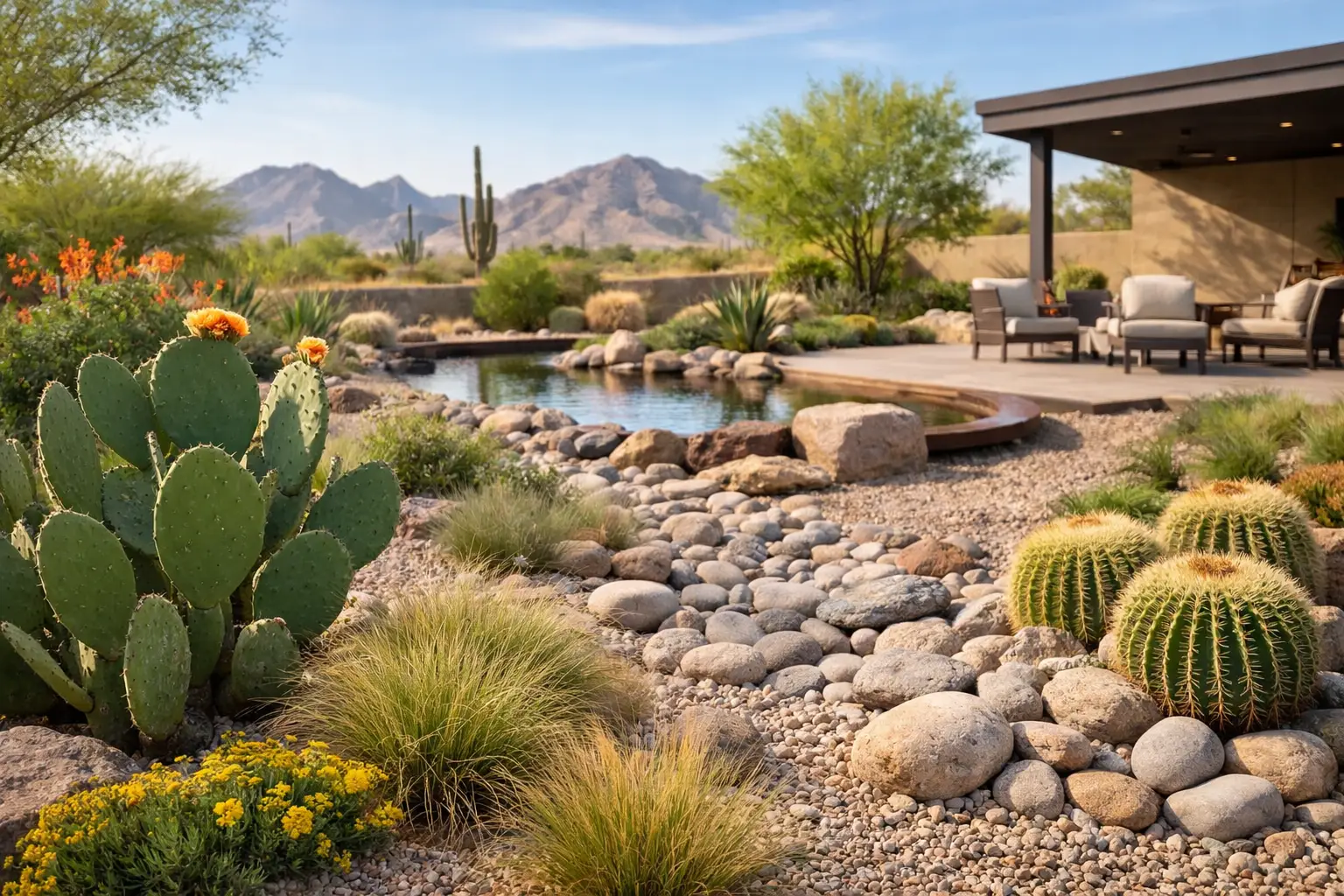
A green lawn may look appealing in a photo, but in Arizona it can come with high water bills, constant maintenance, and bare patches during extreme heat. Sustainable landscaping gives property owners a better option: an outdoor space designed around the desert climate, daily use, and long-term durability.
For homes, rental properties, retail centers, and office buildings, the goal is not to make a yard look sparse. It is to build an attractive exterior that needs less water, produces less waste, and holds up under Arizona sun. The right combination of irrigation, plant selection, gravel, artificial grass, shade, and hardscaping can improve curb appeal without creating a demanding weekly chore list.
What Sustainable Landscaping Means in Arizona
Sustainable landscaping is a practical approach to designing, installing, and maintaining a yard with fewer resources and fewer replacements over time. In Arizona, water conservation is a major part of the plan, but it is not the only part. A sustainable property should also manage runoff, reduce unnecessary lawn areas, protect healthy trees, use durable surfaces, and avoid materials that break down quickly in heat.
This looks different from a traditional landscape plan built for a wetter climate. Large turf areas, thirsty shrubs, and poorly placed trees may require more irrigation than a property can reasonably support. They also create ongoing costs for mowing, fertilizing, reseeding, and repairs.
A better Arizona-focused plan starts with how the space is actually used. A front yard may need a clean, welcoming appearance from the street. A backyard may need room for children, pets, outdoor seating, or a grill area. A commercial property may need clear walkways, professional curb appeal, and landscape features that remain presentable between maintenance visits. The design should solve those needs first, then choose materials and plants that make sense for the environment.
Start With Water-Smart Irrigation
Even low-water plants need proper irrigation while they establish roots. An efficient system delivers water where it is needed instead of spraying sidewalks, block walls, driveways, or gravel. That is why irrigation design matters as much as plant selection.
Drip irrigation is often a strong choice for trees, shrubs, and desert plants because it applies water near the root zone. Compared with broad spray patterns, drip systems can reduce evaporation and keep water from landing on hardscape surfaces. Proper zoning is also important. Plants with similar watering needs should be grouped together, so a cactus is not watered like a flowering shrub and a mature tree is not treated like new groundcover.
A controller should match the property and the season. Arizona summers, winter dormancy, monsoon conditions, and newly planted material all call for different watering schedules. Running the same program all year is one of the most common reasons for wasted water and declining plants.
Irrigation efficiency also depends on maintenance. Broken emitters, leaking valves, clogged filters, and damaged lines can quietly waste a significant amount of water. Periodic inspections help catch problems before they turn into washed-out areas, plant loss, or a surprise utility bill.
Watering Less Does Not Mean Watering Carelessly
A low-water landscape still needs deep, consistent watering at the right frequency. Shallow daily watering can encourage weak roots and leave plants more vulnerable during heat. The correct schedule depends on the plant type, soil, sun exposure, slope, and age of the landscape.
New plants require closer attention than established ones. A homeowner can save water by choosing desert-adapted material, but cutting irrigation too quickly after installation may cost more in replacements. Sustainable work is about using water wisely, not simply using as little as possible.
Choose Plants That Can Handle the Site
Desert-adapted and low-water plants are a foundation of sustainable landscaping, but placement matters. A plant that performs well in filtered shade may struggle against a west-facing block wall. A tree that looks small at installation can outgrow a narrow planting bed, lift hardscape, or interfere with structures if it is not selected carefully.
For Arizona properties, plants should be chosen based on mature size, sun exposure, maintenance needs, and water requirements. Native and desert-adapted varieties can bring color, seasonal interest, and shade without requiring the same level of support as water-hungry landscape material.
Trees deserve special planning. Positioned correctly, they can shade patios, windows, and walkways, making outdoor areas more comfortable during hot months. Positioned poorly, they can create root issues, excessive debris, or ongoing trimming needs. Tree maintenance, selective removal, and stump grinding are sometimes part of making an older landscape more sustainable and easier to manage.
Do not assume every existing plant needs to stay. If a tree is unhealthy, overcrowded, or demanding more water than the space can support, replacing it with better-suited material may improve the entire yard.
Use Hardscape and Ground Cover With a Purpose
Pavers, travertine, gravel, brick, and block walls can reduce the amount of water-dependent planting area while making a property more functional. A paver patio creates usable entertaining space. A defined walkway keeps foot traffic from compacting planting areas. Gravel can provide a clean, low-maintenance finish around desert plants and along side yards.
The trade-off is heat. Large expanses of dark gravel or hardscape can absorb and radiate heat, especially in an unshaded yard. Material color, tree placement, patio orientation, and shade structures all affect comfort. For a backyard that gets heavy afternoon sun, a durable surface should be balanced with shade and space for cooling landscape elements.
Drainage should also be considered before installing hardscape. Land grading can direct water away from structures and keep it from pooling near patios, fences, or foundations. During monsoon storms, a well-planned grade protects the property while allowing water to move through the yard in a controlled way.
Artificial Grass Can Be the Right Fit
Artificial grass is not the answer for every part of a property, but it can be a practical sustainable choice in high-use areas where a green appearance is desired without regular mowing and irrigation. It works well for pet areas, small play spaces, courtyards, and narrow side yards that are difficult to maintain with natural turf.
Quality installation makes the difference. Proper base preparation, drainage, edging, and cleanup help the surface perform correctly. Artificial grass can still become hot in direct sun, so it is worth considering shade, use patterns, and whether a smaller turf zone would serve the property better than covering the entire yard.
Reduce Maintenance Before It Becomes a Problem
A sustainable landscape should be easier to care for, not simply cheaper to install. That means reducing common trouble spots from the beginning. Well-defined gravel areas limit weed growth. Appropriate plant spacing reduces the need for constant trimming. Durable pavers and professionally installed walls reduce repair needs. A clean irrigation layout makes future maintenance more straightforward.
Regular service still matters. Desert winds carry debris into corners and planting beds. Trees drop leaves, seed pods, and branches. Weeds can appear after rain. Without routine cleanup and adjustments, even a well-designed low-maintenance property can start to look neglected.
For commercial properties, this affects more than appearance. Overgrown shrubs, damaged walkways, tree debris, and irrigation overspray can create safety concerns and leave a poor impression on customers or tenants. A consistent maintenance plan protects the investment made during installation.
Plan for a Yard That Lasts
The lowest upfront cost is not always the most affordable long-term choice. Thin pavers, poorly compacted bases, low-grade artificial grass, or rushed irrigation work may need repair sooner than expected. Sustainable landscaping favors materials and installation methods that stand up to heat, traffic, and changing weather.
It also helps to phase a project when necessary. A property owner might begin with grading and irrigation repairs, then install gravel and planting areas, followed by a patio or artificial grass zone. This can make a major transformation more manageable while ensuring that the work is completed in the right order.
A professional landscape plan should account for the whole exterior, including existing trees, drainage paths, walls, outdoor living areas, and maintenance access. Working with one contractor for design, installation, repairs, and upkeep can prevent the mismatched work that often happens when several vendors handle separate pieces of the same yard.
At Pro Natural Landscape, the focus is on building outdoor spaces that look finished, work hard, and make sense for Arizona conditions. Whether your property needs efficient irrigation, gravel installation, pavers, artificial grass, tree service, or regular maintenance, start with the problems your yard needs to solve. A practical plan today can give you a cleaner, more usable outdoor space for years to come.