

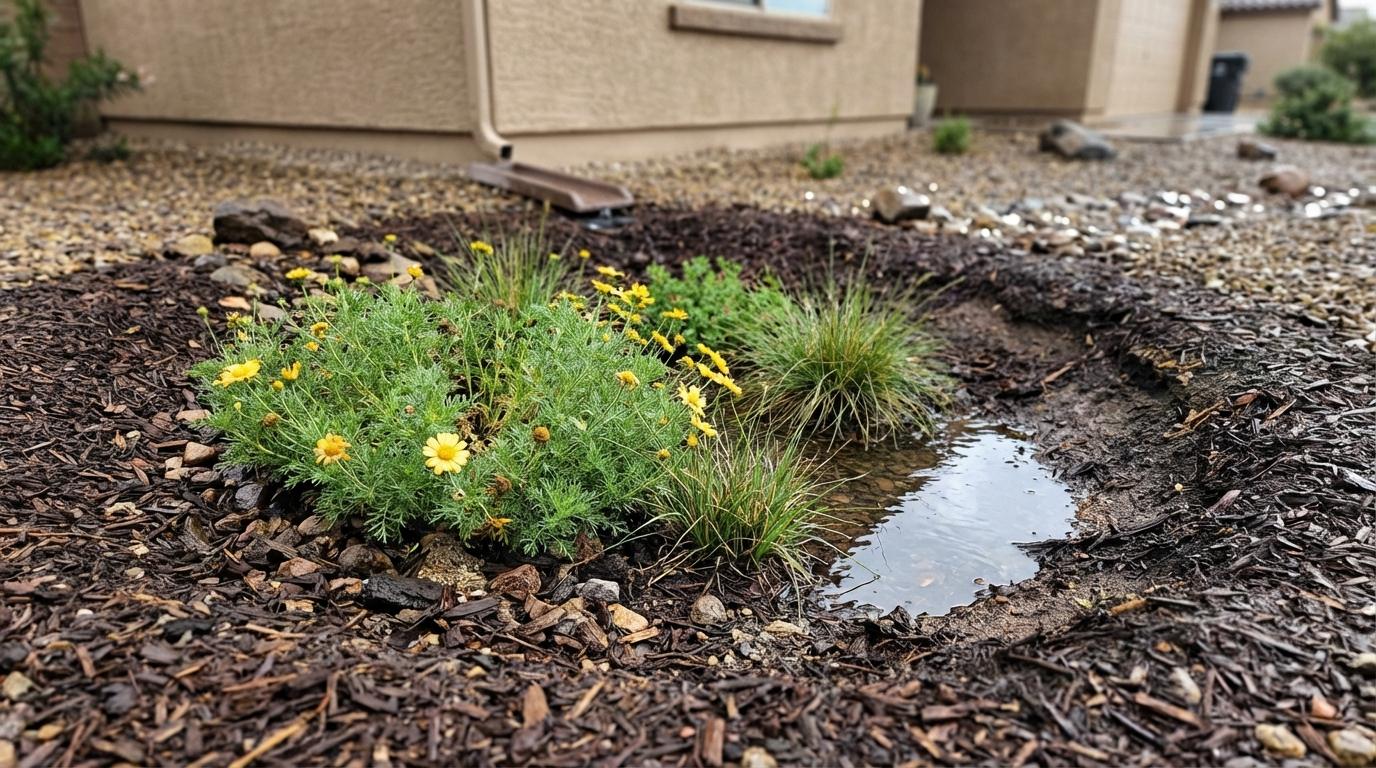
Standing water in a backyard rarely comes from “too much rain” alone. It usually comes from water meeting a surface that cannot absorb it fast enough, plus a layout that gives runoff nowhere safe to go. The good news is that drainage problems are often very fixable, and the best fixes tend to make the yard more usable, more resilient, and easier to maintain.
In places like El Mirage and surrounding Arizona communities, you can see both extremes: long dry stretches that harden soil, followed by intense storms that drop a lot of water in a short time. That pattern rewards yards built with clear flow paths, healthy soil, and a few smart capture points.
Why backyards pool water (even when it “should” drain)
Start by separating symptoms from causes. A soggy patch is the symptom; the cause is usually one of these:
- A low spot where water naturally collects after grading changes, settling, or previous construction.
- Compacted soil from foot traffic, equipment, or years of irrigation, which blocks infiltration.
- Clay or caliche layers that act like a lid, forcing water to move sideways instead of down.
- Runoff concentration where roof water, side yards, or hardscape funnels flow into one area.
- Irrigation problems including overspray, broken heads, or a valve that never quite shuts off.
After a storm, look for “shiny routes” in the soil or gravel where water clearly traveled. Those routes tell you where to intercept and redirect flow with the least disruption.
A one-afternoon diagnosis that saves weeks of trial and error
Before digging trenches or buying materials, take an hour to map what is actually happening.
Walk the yard in light rain if possible, or right after a storm. Note where water enters (downspouts, side gates, driveway edges), where it speeds up, and where it slows down.
Then do a simple infiltration check in the problem area:
- Dig a hole about 10 inches deep.
- Fill it with water once to pre-wet the soil.
- Fill it again and watch how long it takes to drain.
If water still sits in the hole many hours later, the soil is telling you that “soak it in here” is not a reliable plan without amendments or an overflow outlet. That pushes you toward conveyance (grading, swales, piping) rather than relying on infiltration alone.
A few field clues make diagnosis faster:
- Ponding that hugs the house can be a grade issue, and sometimes a foundation risk.
- Water that appears days after rain often points to irrigation, shade, or a slow subsurface layer.
- Muddy water moving across the surface suggests erosion potential, meaning velocity control matters.
Quick fixes that change the very next storm
Some of the most effective drainage moves are modest, as long as they are placed correctly.
Start at the roofline. Gutters and downspouts are powerful plumbing, and when they dump next to a wall or into a tight side yard, you get concentrated flow and rapid ponding. Downspout extensions, splash blocks, or a hard-piped connection to a safe discharge point can transform a yard without touching the lawn.
After that, focus on keeping water moving across the surface in a controlled way. Many yards can be improved by resetting a small grade at the trouble spot, adding a shallow surface channel, or reworking gravel so water does not hit a “speed bump” and stall.
A few dependable early wins:
- Downspout extensions
- Cleaning clogged gutters and yard drains
- Re-aiming irrigation heads away from walls
- Adding mulch to bare soil to soften raindrop impact and slow crusting
These steps do not replace structural drainage when the site needs it, but they often reduce the volume and speed that the bigger system has to handle.
Structural drainage solutions that last
Lasting drainage is usually a combination, not a single feature. The right mix depends on soil behavior, available fall (gravity slope), and what you want the yard to feel like day to day.
After you identify where the water should go, you can choose tools that either (1) move water away or (2) hold water briefly and let it soak in safely.
A practical way to choose is to weigh these site factors:
- Soil behavior: Does water soak in within a day, or does it linger?
- Space: Can you spare a few feet for a swale or rain garden, or is the yard tight?
- Outlet options: Is there a legal, lower discharge point available, or must the yard store water onsite?
- Storm style: Short intense bursts call for capture and overflow planning, not just infiltration.
Grading and swales (surface shaping)
Positive drainage away from structures is foundational. Even a 1 to 2 percent slope away from the home can prevent water from lingering where it causes the most damage. When a yard is larger, a shallow vegetated swale can guide runoff along a deliberate path, slowing it while still moving it.
Swales can be subtle. They do not need to look like ditches. With the right contour and planting, they read as a gentle landscape line that happens to carry stormwater when needed.
If the yard is steep or water arrives fast, add erosion control at high-energy points (downspout outlets, turns, transitions) using rock, gravel, or reinforced turf zones.
French drains (subsurface collection and conveyance)
A French drain is a gravel-filled trench with a perforated pipe that collects water and routes it away. It is especially helpful when you have a consistent wet strip, a low area that cannot be regraded enough, or a transition where surface water keeps reappearing.
In heavier clay soils, a French drain should not be expected to “soak everything into the ground.” It needs a real outlet, either to a safe discharge location or to another structure that can store and release water slowly.
Details that separate a durable French drain from a short-lived one include proper slope, a clean gravel envelope, and fabric use that prevents soil fines from clogging the system.
Dry wells (infiltration chambers)
Dry wells are underground chambers that receive runoff, commonly from roof leaders, and let it infiltrate over time. They can be excellent when soils drain well and there is enough depth and separation from structures.
They can also disappoint when soils are tight or layered. If a test hole shows slow infiltration, a dry well can become a buried bathtub. In many areas, permitting or specific setback rules may apply, so planning matters.
Rain gardens (bioretention)
A rain garden is a shallow planted depression that temporarily holds runoff and filters it through soil and roots. The best rain gardens drain within 24 to 72 hours, so they do not stay soggy or invite pests.
This is where drainage becomes an aesthetic upgrade instead of a hidden fix. With the right plant palette, a rain garden reads as intentional planting, not a utility feature. In arid climates, it can also support healthier plants by catching storm pulses that would otherwise leave the property.
Permeable paving and gravel systems
Permeable interlocking pavers, open-joint systems, stabilized decomposed granite, and well-built gravel paths allow water to pass through instead of sheet-flowing into the lawn.
The base layer is the real engine here. A correctly prepared aggregate base stores water temporarily and releases it into the soil, reducing runoff peaks during heavy storms.
This approach shines in patios, walkways, side yards, and utility corridors where turf struggles anyway.
Comparing popular options at a glance
A clear comparison helps you avoid overbuilding. It also helps you combine methods sensibly, like grading that feeds a rain garden, paired with a French drain only where saturation persists.
| Solution | Best for | Soil fit | Relative cost | Ongoing maintenance |
|---|---|---|---|---|
| Regrading, surface slope correction | Water against the house, broad sheet flow issues | Any (works even in clay) | Low to medium | Low |
| Vegetated swale | Moving runoff across the yard without erosion | Any (plant choice matters) | Low to medium | Low to medium |
| French drain with outlet | Persistent wet strips, low spots, subsurface seepage | Good in most soils (needs outlet in clay) | Medium | Low (inspect, occasional flush) |
| Dry well | Capturing roof runoff where infiltration is strong | Best in sandy or loamy soils | Medium to high | Low to medium (inspect sediment) |
| Rain garden | Treating and soaking runoff while adding planting | Best when it drains within 48 to 72 hours | Low to medium | Medium (weeding, mulch) |
| Permeable pavers or gravel build | Reducing runoff from patios, walkways, side yards | Any, with correct base | Medium to high | Medium (keep joints clear) |
Making drainage feel like part of the landscape
The highest-performing drainage systems rarely look like “drainage systems.” They look like a yard that was shaped and planted with water in mind.
Two design moves do a lot of work:
- Slow, spread, and sink where possible: gentle grades, wider flow paths, planted basins.
- Collect and carry where necessary: subsurface piping, discreet channels, defined discharge points.
In practice, many Arizona properties benefit from mixing both. Intense storms can exceed infiltration rates, even in decent soil, so having a planned overflow route matters. A rain garden with a subtle overflow to a swale, or a French drain that discharges into a rock-lined basin, keeps the yard calm when storms are not.
Maintenance routines that keep drainage working
Drainage systems fail quietly. A little sediment, a few seasons of leaf litter, or a clogged emitter can turn a good design into a recurring mess. A simple calendar keeps performance steady.
After you have a drainage plan in place, keep it reliable with habits like these:
- Seasonal inspection: Walk the system before storm season and after major rain.
- Gutter and downspout cleaning: Clear debris so roof water goes where you planned.
- Surface reset: Rake displaced gravel, refresh mulch, and repair small rills before they grow.
If you have subsurface drains, add cleanouts where practical. They make it possible to flush lines and confirm flow without excavation.
When it makes sense to bring in a professional team
Drainage looks simple until you factor in grades, utilities, soil behavior, and where water is legally allowed to go. A professional assessment can prevent costly missteps, especially when water sits near structures, flows toward neighboring property, or requires significant earthwork.
A local, full-service landscaping contractor can also coordinate the pieces that often overlap: grading, paver work, irrigation adjustments, gravel installation, and planting. For property managers and businesses, that coordination is often the difference between a quick fix and a durable site improvement.
Pro Natural Landscape LLC, a family-owned team serving El Mirage and nearby communities, typically approaches outdoor projects as integrated systems, not isolated tasks. That mindset fits drainage work well because the best results come from shaping the land, managing runoff sources, and building surfaces that handle storms gracefully. If budget timing matters, asking about free estimates and available financing options (including programs offered through providers like Hearth) can make it easier to schedule the right scope instead of settling for repeated temporary patches.
A strong starting plan for most backyards with standing water
If you want a simple path to action, start with the steps that carry the least risk and reveal the most information. Fix roof drainage and irrigation issues first. Confirm how your soil actually drains. Then choose one primary strategy, either surface shaping or subsurface collection, and pair it with a secondary feature that improves how the yard uses water, like a rain garden or permeable path.
The yard does not need to be perfectly dry in every corner to be successful. It needs to move water away from structures, avoid muddy dead zones, and handle storms without drama. Once those goals are met, the rest becomes an opportunity to make the outdoor space feel better every day, rain or shine.
4 thoughts on “Backyard Drainage Solutions: How to Fix Standing Water and Runoff”