

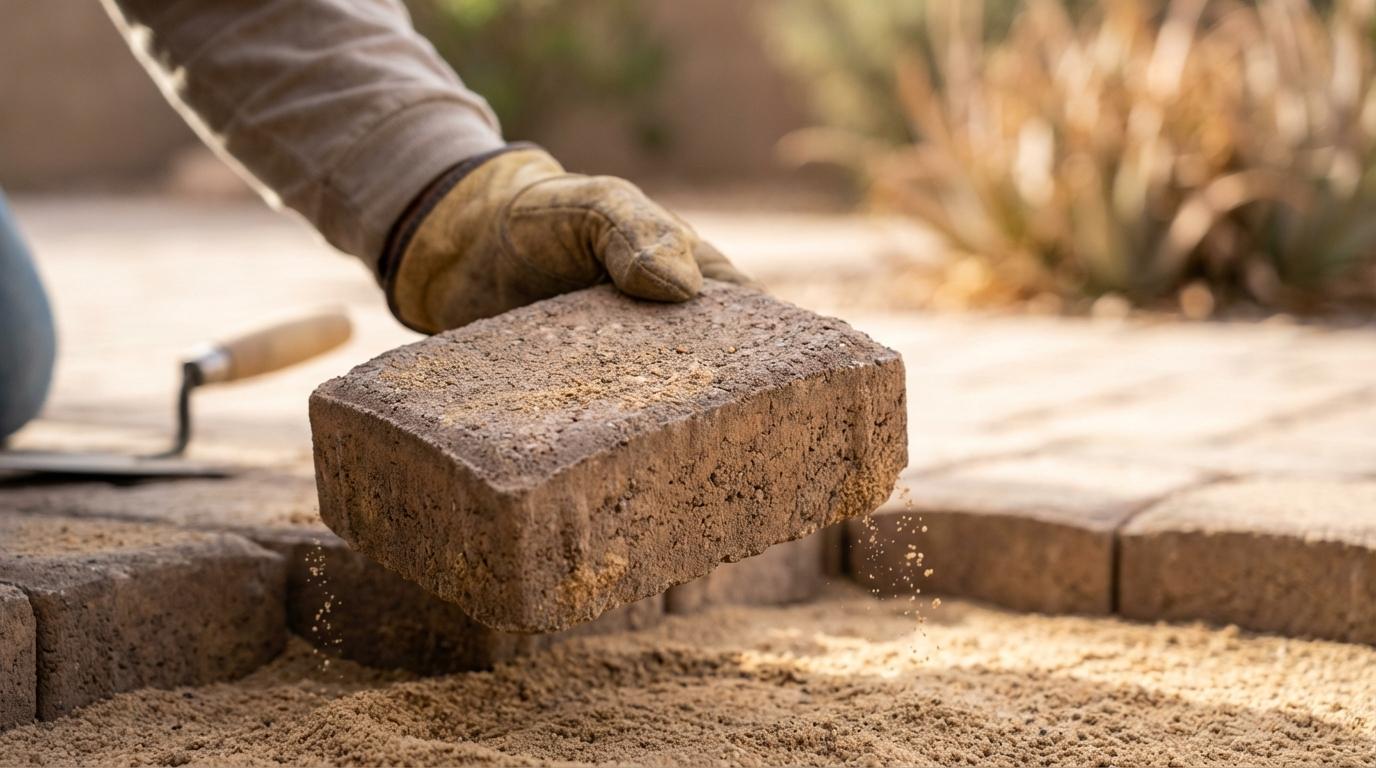
A patio is never just a surface. It is a structural system that has to manage load, drainage, heat, and years of foot traffic while still looking intentional next to your home. When homeowners compare pavers vs. a poured concrete slab, the first number they see is the install price per square foot. The better question is what that price buys you over the next 10, 20, or 40 years.
In Arizona communities like El Mirage, that long view matters. Intense sun, monsoon bursts, shifting soils, and irrigation overspray can punish shortcuts. A patio that is planned well feels effortless to use and stays that way.
The “cost” of a patio is really the cost of a system
Concrete and pavers are installed differently, and those differences show up in both the invoice and the future repair plan.
A typical concrete patio is a monolithic slab: subgrade prep, formwork, reinforcement (sometimes), pour, finish, then curing. You are paying for speed and simplicity. When it is done well, it looks clean and performs well. When something moves underneath it, the slab has only one way to respond.
Interlocking pavers are modular: excavation, a compacted aggregate base, bedding sand, pavers set in a pattern, edge restraints, joint sand (often polymeric), then compaction. You are paying for detailed labor and more materials. The reward is flexibility, because a modular surface can be adjusted and repaired in sections.
The biggest pricing misunderstandings happen when the comparison treats both options as just “surface material” instead of “surface plus engineered base.”
Typical installed price ranges (and why they vary)
National pricing surveys commonly land in these broad ranges:
| Item (Installed) | Typical Concrete Range | Typical Paver Range | What that range usually reflects |
|---|---|---|---|
| Cost per square foot | $4 to $15 | $10 to $30 (high-end can reach $50) | Finish level, site access, excavation depth, base requirements |
| 20×20 patio (400 sq ft) | $2,000 to $6,000 | $3,800 to $6,800 | Basic slab vs. standard paver system |
| Repairs over time (typical pattern) | Fewer small fixes, occasional big one | More small tune-ups, rare major redo | Crack risk vs. joint upkeep |
Those numbers overlap on purpose. A basic paver layout with easy access can compete with decorative concrete with coloring, stamping, saw cuts, or demolition work. The center of gravity is still consistent: concrete tends to win the initial budget line, while pavers tend to win on adaptability.
After you have a baseline range, pricing usually swings based on a handful of variables:
- Access and staging: Tight side yards and limited wheelbarrow paths raise labor time for either material.
- Base depth and compaction: Poor soils, drainage needs, or heavier use can call for a thicker, better-compacted base.
- Design and cutting: Curves, inlays, borders, steps, and multiple elevations add cutting and layout time.
- Drainage strategy: Spot drains, swales, tie-ins, and slope correction change excavation and grading scope.
- Permits and demolition: Some jurisdictions treat slabs differently than dry-laid systems, and removal of existing concrete is its own line item.
A useful way to think about it: concrete pricing is often sensitive to finish and site work, while paver pricing is sensitive to layout complexity and base construction.
Cost breakdown: materials are only half the story
Many homeowners compare a pallet of pavers to a truck of ready-mix and assume that is the whole decision. Labor and preparation usually decide the final number.
Concrete can look deceptively inexpensive because the installation steps are consolidated. Pavers distribute the work into more steps and require precision repeatedly across the whole surface.
A clear estimate should spell out what is included, not just the top-layer choice. When a quote is light on excavation depth, compaction method, edge restraint details, and drainage plan, the low number can become expensive later.
Durability: cracking, settling, and what “failure” looks like
Both patios can last for decades when installed correctly. They fail differently, and that difference shapes the real-life experience of ownership.
Concrete is strong in compression and handles daily patio loads easily. Its common weakness is cracking. Some cracks are cosmetic hairlines. Others telegraph movement, poor subgrade support, or water-related undermining. Control joints and reinforcement help manage cracking, but they do not promise a crack-free slab.
Pavers are individual units, so they do not “crack across the whole patio” in the same way. If the base settles in a spot, you see a low area, a slight lip, or a loose unit. That is a problem, yet it is localized. A good crew can lift and reset that section without touching the rest of the field.
In hot, high-UV environments, appearance durability also matters. Concrete can discolor, show stains, or develop surface wear if it is not sealed and cared for. Many pavers are manufactured with stable pigments, and natural stone tends to keep its character even as it weathers.
A patio that is easy to repair is often the patio that lasts the longest in practice.
Maintenance is not “more” or “less,” it is a different schedule
Neither option should feel like a weekly chore. The difference is what you maintain.
Concrete maintenance tends to be occasional but important: keeping the surface clean, sealing periodically, and addressing cracks early so water intrusion does not widen the problem. If a slab needs resurfacing or replacement, that is a bigger event.
Paver maintenance is lighter-touch but more frequent: sweeping, rinsing, watching joint sand, and managing weeds at the joints if they appear. Sealing is optional for many owners, though it can help with color richness and stain resistance.
Here is a practical side-by-side view:
| Task | Pavers | Concrete |
|---|---|---|
| Routine cleaning | Sweep, rinse, occasional pressure wash | Sweep, rinse, occasional pressure wash |
| Sealing | Optional, often every 2 to 5 years if chosen | Often recommended every 3 to 5 years |
| Weeds | Possible at joints if joint sand breaks down | Rare except at cracks or slab edges |
| Repair style | Replace or reset a small area | Patch cracks, resurface, or replace larger areas |
| “Looks new again” | Swap stained units, refresh joint sand, optional color sealing | Clean, re-seal, overlay or resurface if worn |
If you want the lowest-effort weekly routine, concrete often feels simpler. If you want the lowest-drama repair path, pavers often feel calmer.
After you decide which maintenance profile fits your household, it becomes easier to choose confidently.
- Sweeping and quick rinse-offs
- Joint sand touch-ups
- Periodic sealing
- Crack monitoring
- Spot repairs after drainage events
Design flexibility: where pavers tend to pull ahead
A patio is part architecture, part landscape. That is where pavers routinely justify their higher starting price.
With pavers, patterns and borders can visually “square up” a yard that is not perfectly square. Color changes can define a dining zone, a fire feature zone, or a walkway connection without adding walls. Small shifts in texture can reduce slip risk and make transitions feel deliberate.
Concrete has options too, including broom finishes, exposed aggregate, staining, and stamping. The constraint is that the design is locked into one slab. If tastes change or an addition is built later, revising concrete often means demolition or a top-layer overlay.
In neighborhoods where outdoor living is a selling point, design clarity matters. A patio that looks intentional tends to photograph well, and it signals that the rest of the property was cared for with the same discipline.
Repair scenarios: what happens years after installation?
Picture two common “real life” moments.
One: a heavy rain reveals a low spot where water wants to sit. With pavers, a section can be lifted, base corrected, and reset. With concrete, the fix is more limited: drainage changes around the slab, grinding, overlays, or replacement depending on severity.
Two: a stain from rust, grease, or plant tannins becomes an eyesore. With pavers, you can sometimes clean it, flip the unit if appropriate, or replace a small area. With concrete, stain removal can work, yet it can also leave a shadow that never fully disappears without resurfacing or recoloring.
Long-term ownership is less about avoiding every problem and more about choosing problems that stay manageable.
What drives value in El Mirage and similar Arizona communities
Heat, dust, and water use influence patio choices more than many homeowners expect.
Light-colored surfaces can reduce heat absorption, making a patio more comfortable for bare feet and pets. Drainage control matters because monsoon downpours can move fines under hardscapes and create settlement. Irrigation overspray can lead to efflorescence or algae in shaded corners, especially when water schedules are not tuned.
This is where professional planning earns its keep: grading, compaction, and water management are not glamour items, yet they decide whether your patio still feels flat and solid years later. Many family-owned landscaping teams in the West Valley emphasize exactly this point, because durability is built into the base long before the top surface goes down.
A decision guide that respects both budget and ambition
If you are choosing between pavers and concrete strictly on the install total, concrete will often look better. If you are choosing based on lifespan flexibility, pavers tend to shine. The best fit depends on how you will use the space and how you want to maintain it.
A quick decision framework can help:
- Budget-forward refresh: Choose a straightforward concrete patio with a clean finish and a sealing plan, then invest saved dollars in shade, seating, or lighting.
- Long-horizon outdoor living: Choose pavers when you want design control and a patio that can be adjusted or expanded without redoing everything.
- High-visibility entertaining space: Choose pavers when pattern, borders, and transitions matter as much as the square footage.
- Low-interruption property management: Choose pavers when you prefer small, localized repairs over the risk of a disruptive slab replacement.
Getting accurate numbers from an estimate
Online ranges are helpful, yet your property’s constraints set the true cost. A quote that is truly comparable should specify square footage, excavation depth, base materials, compaction approach, drainage slope, and finishing details.
If you are collecting bids, ask each contractor to explain what is happening below the surface and how water will move away from the home. Ask how repairs are handled if a section settles. Good communication here is not a luxury; it is part of quality control.
Many homeowners also like to keep options open with financing for larger outdoor projects, especially when bundling a patio with lighting, irrigation adjustments, gravel, or a walkway connection. In the El Mirage area, some contractors offer free estimates and financing options through providers like Hearth, which can make it easier to choose the patio you actually want rather than the one that merely fits this month’s cash plan.
2 thoughts on “Pavers vs Concrete Patio: Cost, Durability, and Maintenance Compared”