

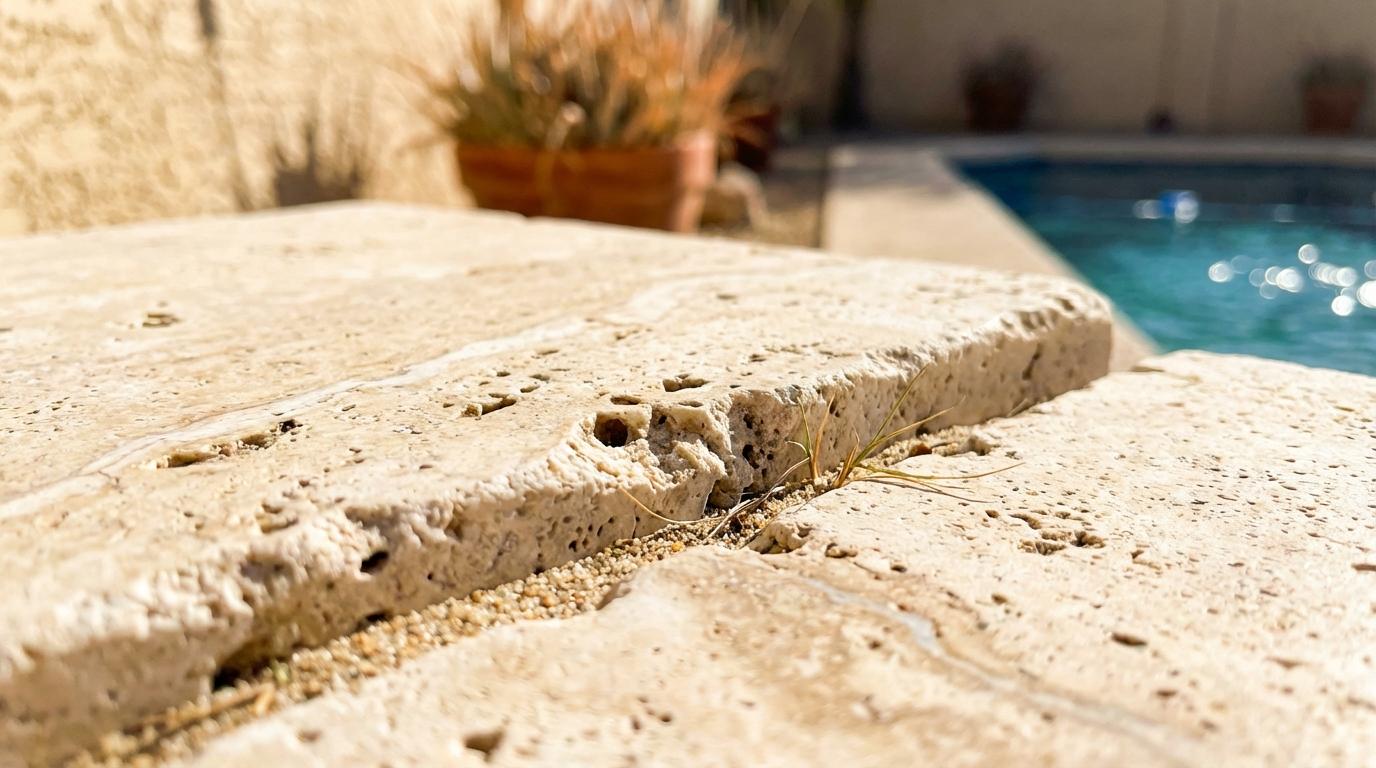
Travertine pavers have a way of making an outdoor space feel settled and intentional, almost like it has always belonged there. The stone reads “natural” at a glance, yet it still feels refined, which is why it shows up everywhere from compact courtyards to resort-style pool decks.
At the same time, travertine is not a set-it-and-forget-it material. The same pores and character that give it warmth also shape how it performs around grease, leaves, sprinklers, and hard water. If you know what you are buying and install it correctly, travertine can be a confident, long-term choice.
What travertine pavers are (and why they look different)
Travertine is a natural limestone formed by mineral-rich water. That origin story matters: it explains the signature holes, the soft veining, and the tone range that sits comfortably in desert palettes and classic Southwestern architecture.
Those small surface voids are not a defect. They are part of the stone’s personality, and they can be left open for a more organic look or filled for a smoother appearance. Finishes also change the vibe and the traction. Outdoors, most projects favor tumbled or honed surfaces over polished ones.
The advantages that make travertine popular outdoors
Travertine earns its reputation by combining comfort and curb appeal in a way many manufactured pavers struggle to match. It can look high-end without feeling flashy, and it tends to age gracefully when it is cared for.
A few benefits stand out in real backyards, not just on sample boards:
- Warm, natural color variation
- Quiet elegance that pairs well with gravel, desert plants, and modern stucco
- Cooler underfoot: lighter tones and natural porosity help reduce heat buildup on sunny patios and pool surrounds
- Slip-friendlier texture: tumbled and honed finishes provide traction in wet zones compared with polished stone
- Long service life: when installed on a proper base and sealed as needed, it can hold up for decades of foot traffic
- Repair flexibility: individual pavers can be replaced more easily than a cracked slab
One more plus that homeowners notice quickly: travertine tends to make outdoor living feel better. When the surface is comfortable on bare feet and visually calm, people actually use the space more.
The trade-offs: where travertine asks more from you
Travertine’s drawbacks are not deal-breakers, but they do change how you plan the project. Most issues trace back to one reality: it is stone with pores, not a sealed, factory-finished product.
If you want travertine to stay crisp, you need a realistic view of staining risk, sealing, and where you place grills and planters.
- Porosity and staining: oils, barbecue drips, fertilizer, and leaf tannins can sink in without a quality sealer
- Edge chipping from sharp impacts
- Maintenance rhythm: periodic sealing and pH-neutral cleaning keep the surface from dulling or blotching
- Higher upfront cost than concrete pavers
- Finish selection matters, since polished surfaces can be slick when wet
- Freeze-thaw sensitivity in cold climates if water gets into the stone and expands
Travertine can also react poorly to harsh chemicals. Acidic cleaners and aggressive pressure washing are common ways people accidentally etch or roughen the surface.
Best uses outdoors (and where you may want a different material)
Travertine is often at its best when the goal is comfort, traction, and a relaxed, upscale look. It is a natural fit for outdoor living zones where people linger.
Pool decks are the classic example, because the stone can stay more comfortable under strong sun and the textured finishes help with grip around water. Patios and courtyards are close behind, especially when the home’s architecture benefits from warm neutrals rather than bold reds or stark grays.
Driveways can work too, but only when thickness, base preparation, and load expectations are treated seriously. For heavy vehicles or tight turning radii, many projects shift toward thicker stone, a reinforced base, or an alternate paver type.
Here is a practical way to match the application to the right travertine “spec”:
| Outdoor area | Recommended finish | Typical thickness target | Why it works well |
|---|---|---|---|
| Pool deck / spa surround | Tumbled or honed | 1.25 in (often thicker for coping) | Comfortable surface temperature and reliable traction |
| Patio / outdoor dining | Tumbled, honed, or brushed | 1.25 in | Premium look with good day-to-day durability |
| Walkways / garden paths | Tumbled or brushed | 1.25 in | Natural texture, good drainage between joints |
| Steps / landings | Textured finish with proper nosing detail | Varies | Safer footing and cohesive style with adjacent patios |
| Driveways | Tumbled or honed, high-density stone | 1.5 in to 2 in (project-specific) | Can perform under vehicles when engineered correctly |
In spaces with lots of grease, like an outdoor kitchen line, travertine can still be used, but it benefits from smart zoning. A small strip of more stain-resistant surface under a grill, paired with travertine around it, can keep the aesthetic while lowering risk.
Climate fit: desert heat, monsoons, and winter extremes
In hot, sunny regions, travertine is widely appreciated because it can stay more pleasant underfoot than many darker materials. In places like El Mirage and the broader Phoenix area, that comfort factor is not a minor perk. It affects how often a patio gets used from late spring through early fall.
Rain is usually less of a structural concern than staining. Wind-driven dust plus monsoon water can push fine sediment into pores and joints, which is another reason sealing and good drainage details matter.
Cold climates introduce a different challenge: freeze-thaw cycles. If water enters the stone and freezes, it expands. Over time, that can lead to cracking or surface breakdown, especially with lower-density travertine. In those regions, dense stone selection, a well-draining base, and a consistent sealing plan are not optional.
Installation details that decide whether travertine thrives
Travertine is unforgiving of shortcuts that might slide by with concrete pavers. The stone will not “hide” poor drainage, a soft base, or sloppy joint work for long.
A strong installation starts with excavation and compaction that match the soil and the expected load. Then comes a base that drains well and holds grade, edge restraints that actually restrain, and joints that resist erosion.
Sealer choice is also a performance choice. Many outdoor projects do best with a penetrating sealer that helps repel stains while still letting the stone breathe. The goal is not a plastic-looking shine. The goal is controlled absorption.
When travertine is installed around pools, details get even more important: slope away from the waterline, joint stability, and compatibility with pool chemicals. A good plan accounts for movement, drainage paths, and where water will repeatedly splash and evaporate.
A maintenance approach that feels easy because it is consistent
Travertine maintenance is straightforward when it is done on a schedule. The stone responds best to gentle cleaning and quick attention to spills, instead of occasional aggressive “rescue” scrubbing.
Most homeowners do well with a simple routine:
- Sweep or blow debris regularly, especially leaves and soil that can stain after watering
- Wash with a pH-neutral cleaner as needed, then rinse thoroughly
- Re-seal on a cadence that matches exposure and use, often every 1 to 3 years in hard-working areas
A few habits make a noticeable difference over time: use furniture pads, avoid dragging metal legs, and keep planter drainage from constantly wetting the same spot. Near grills, a mat designed for high heat and grease control can protect the stone without changing the look of the whole patio.
Cost and value: what you are really paying for
Travertine is usually priced above concrete pavers, both for material cost and for the craftsmanship it demands. Many homeowners still choose it because it can deliver a “finished” look that supports resale appeal and daily enjoyment.
Value is not only about the day-one budget. It is also about how long the surface stays attractive, how comfortable it feels in peak heat, and whether the space becomes a place you actually want to spend time.
If the budget needs flexibility, it is common to phase work: install travertine in the highest-impact area first, then expand later with matching stone, complementary pavers, or gravel and planting.
Choosing travertine with confidence
Travertine is a strong pick when you want a natural surface that looks timeless, stays comfortable in the sun, and supports a premium outdoor design. It is less ideal when the space will be constantly exposed to oil, harsh cleaners, or freeze-thaw stress without a plan for sealing and drainage.
A helpful next step is to review your layout with an installer who works with both hardscape and drainage, since pitch, base preparation, and joint strategy often matter as much as the stone itself. In the El Mirage area and nearby Arizona communities, Pro Natural Landscape LLC installs travertine and other outdoor surfaces as part of full-service landscape and hardscape projects, offering free estimates and financing options through Hearth for qualifying projects.