

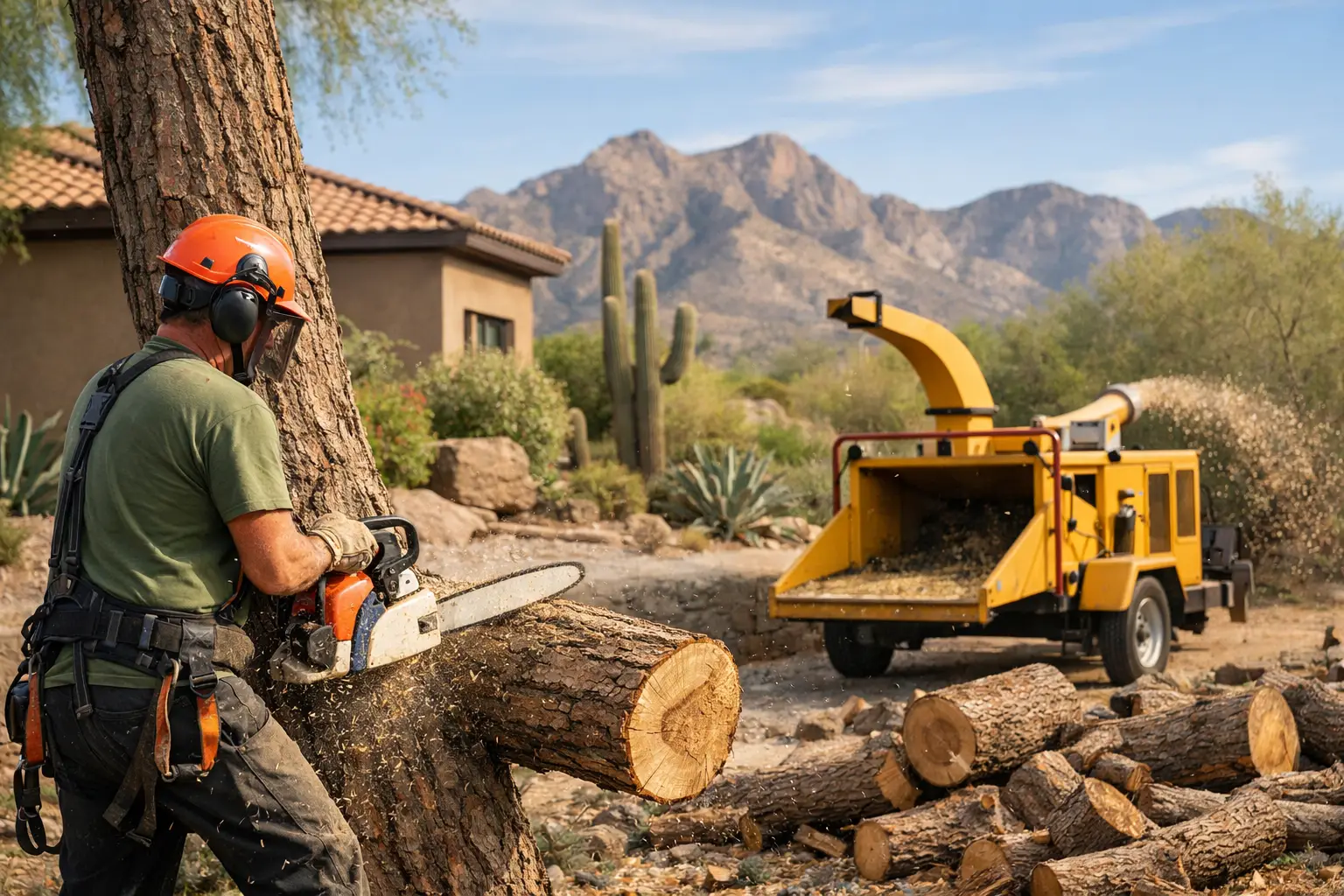
A leaning tree after a monsoon is not a wait-and-see problem. Neither is a dead palo verde dropping limbs over a driveway or a root system pushing into hardscape. When you need a tree removal service in Arizona, the real goal is not just cutting down a tree. It is protecting your property, restoring safety, and making sure the space is ready for whatever comes next.
In Arizona, tree issues tend to move fast. High winds, heat stress, storm damage, and long-term irrigation problems can turn a healthy-looking tree into a liability. For homeowners, that can mean risk to the roof, fence, vehicles, or walkways. For commercial properties, it can affect access, visibility, and the overall appearance of the site. The right crew handles the removal cleanly, safely, and with a plan for the full area, not just the trunk.
When a tree removal service makes sense
Not every tree should be removed. Sometimes pruning, cabling, or a change in irrigation is enough to stabilize the issue. But there are clear situations where removal is the practical choice.
A dead tree is the obvious one. Once a tree has fully declined, it becomes brittle and unpredictable, especially in summer heat or during storm season. Trees with major trunk splits, severe lean, hollow sections, or repeated limb failure also deserve immediate attention. If roots are lifting pavers, damaging a wall, or creating a hazard near walkways, removal may save you from bigger repair costs later.
There are also cases where the tree itself is not failing, but the location no longer works. A tree planted too close to a home, pool, utility line, irrigation system, or commercial entry point can outgrow the space. In those situations, removal is less about appearance and more about long-term function.
Tree removal service for safety and property value
The biggest reason people call for tree removal is safety. A weakened tree can fall without much warning, and even smaller failures can damage roofing, patios, vehicles, fencing, and landscape features. Waiting usually does not make the job easier or cheaper.
There is also the property value side of it. An overgrown, damaged, or half-dead tree can drag down curb appeal fast. On residential lots, it can make the yard feel neglected. On commercial properties, it can affect how tenants, customers, or visitors see the space. Removing the problem tree often opens the door to a cleaner, more usable layout with better visibility and easier maintenance.
That said, removal is not always the cheapest option upfront. If a tree is large, close to structures, or hard to access, the work can be more involved. But compared with emergency cleanup, structural damage, or repeat service calls for falling limbs, planned removal is usually the smarter move.
What to expect during the removal process
A professional tree removal job starts with an on-site assessment. The crew should look at the tree’s condition, size, lean, branch spread, nearby structures, and access points. That helps determine whether the tree can be dropped in sections, lowered by rope, or removed with specialized equipment.
For Arizona properties, access matters more than many people expect. Backyard walls, decorative gravel, pavers, artificial turf, irrigation lines, and tight side yards all change how the work is done. A dependable contractor plans around those features so the removal does not create a second project you did not ask for.
Once the job starts, the tree is typically removed in controlled sections. Larger limbs come down first, followed by upper canopy cuts, then the main trunk. If the stump is included, grinding usually follows so the area can be leveled and reused. Cleanup should be part of the conversation from the start. Hauling away debris, raking the area, and leaving the site in workable condition is part of professional service, not an extra courtesy.
Stump grinding matters more than most people think
A lot of property owners focus on the tree and forget about the stump. That makes sense at first, but leaving a stump behind can create ongoing problems. It becomes a tripping hazard, interferes with future planting or hardscape work, and can attract pests as it breaks down.
Grinding the stump also gives you a clean reset. If you want to install gravel, extend pavers, improve irrigation, or redesign the yard, the space is actually usable again. On commercial properties, that cleaner finish matters even more because it keeps the site looking maintained and professional.
There are times when full stump grinding may depend on access, root spread, or nearby utilities. A good contractor will explain those limits clearly and recommend the most practical option for the site.
Arizona conditions change the job
Tree removal in Arizona is not the same as tree removal in wetter climates. Desert soils, extreme summer temperatures, and seasonal monsoons all affect tree health and structural stability. Some trees grow quickly with shallow support when irrigation is inconsistent. Others survive for years with hidden internal decline and then fail under wind load.
This is one reason local experience matters. A crew working regularly in Arizona understands how mesquite, palo verde, ash, ficus, and other common landscape trees behave under heat stress and storm pressure. They also know how to protect low-water landscape designs, hardscape surfaces, and irrigation systems during removal.
Timing can matter too. If a tree is actively failing, removal should happen as soon as possible. But for non-emergency projects, scheduling before peak storm season can reduce risk and help you plan the next phase of the yard more efficiently.
Choosing the right tree removal service
Price matters, but it should not be the only filter. Tree work done poorly can lead to broken walls, damaged paving, torn-up irrigation, or incomplete cleanup. The better question is whether the company can handle the tree safely and leave the property in better shape than they found it.
Look for a provider that evaluates the whole site, not just the trunk. If you have gravel, pavers, lighting, turf, block walls, or drainage features nearby, those details should be part of the plan. A contractor that also handles broader outdoor work can be especially helpful because removal is often only one piece of the project.
For example, after a tree comes out, the area may need grading, new gravel, irrigation adjustment, hardscape repair, or a complete landscape update. That is where a full-service outdoor company can save time and reduce coordination headaches. Instead of hiring one crew to cut the tree, another to grind the stump, and another to repair the yard, you can move the project forward with one point of contact.
Residential and commercial needs are different
Homeowners usually call for tree removal because of safety, cleanup, or yard upgrades. They want the tree gone, the debris hauled away, and the space made usable again. In many cases, the next step is replacing the area with lower-maintenance landscape materials that make more sense for Arizona, such as gravel, artificial turf, or drought-conscious planting.
Commercial properties often have a different priority. Visibility, liability, and appearance tend to drive the decision. A neglected or unstable tree near storefronts, parking areas, walkways, or tenant entrances creates risk and affects the image of the property. In those situations, fast scheduling and clean execution matter just as much as the removal itself.
That is why service should be responsive and practical. Property owners and managers do not need guesswork. They need clear communication, a realistic scope of work, and a site that looks better when the job is done.
After the tree is gone, plan the space
Removing a tree leaves an opportunity, not just an empty spot. Sometimes the best next step is a cleaner, lower-maintenance layout that fits the property better. That could mean fresh gravel, revised irrigation, paver repair, or redesigning a section of the yard that was previously shaded, root-bound, or difficult to maintain.
For Arizona properties, that kind of follow-through matters. A removed tree can improve safety immediately, but the long-term value comes from what you do with the space next. When the area is properly cleared, leveled, and rebuilt with durable materials, the property becomes easier to maintain and more useful year-round.
If you are dealing with a dead, damaged, or poorly placed tree, it is worth acting before it turns into a larger repair bill. A dependable tree removal service should make the process simple, protect the surrounding landscape, and leave you with a clean path forward for the rest of your outdoor space.