

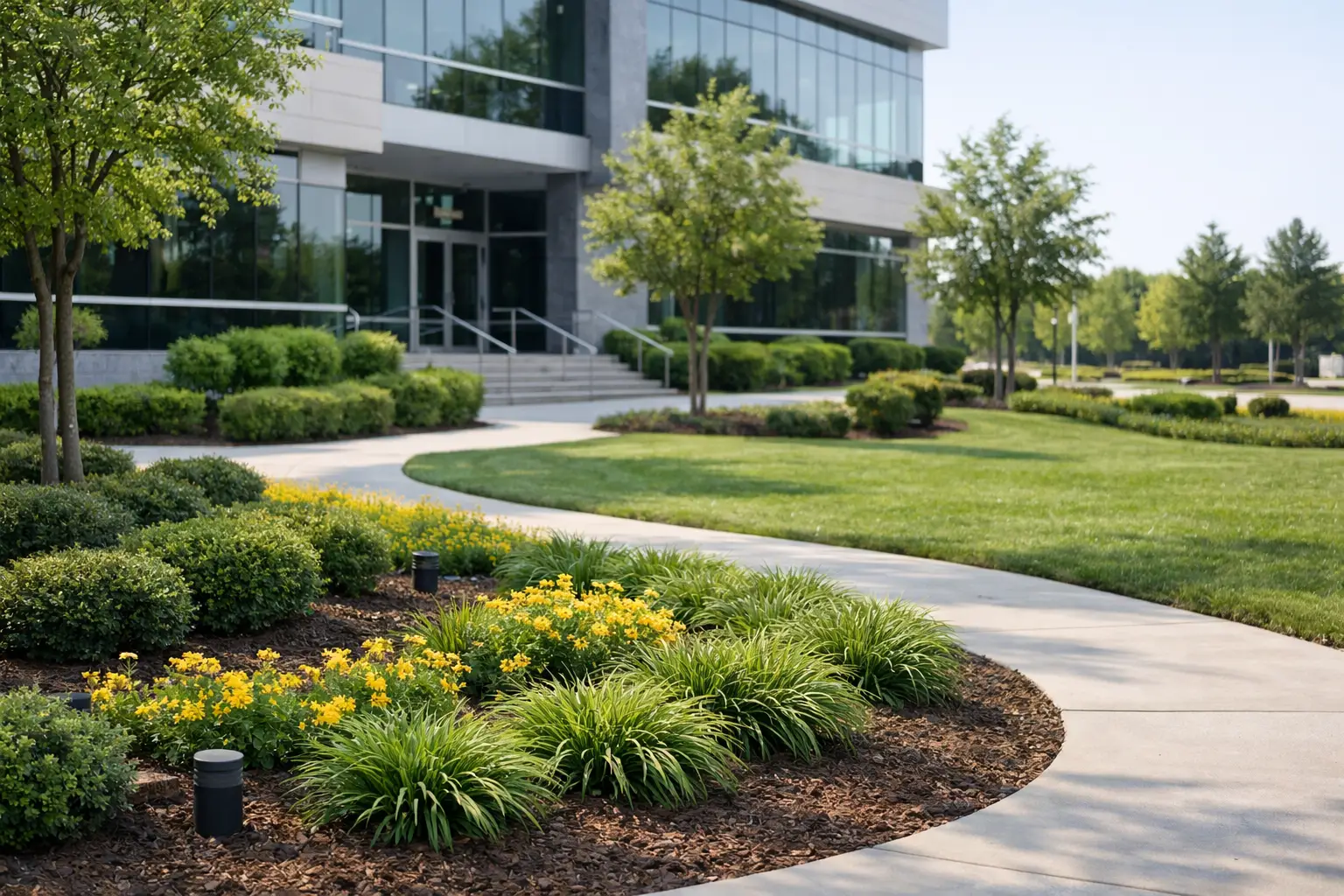
A commercial property does not get a second chance at a first impression. When tenants, customers, and visitors pull up, the landscape tells them whether the property is cared for, professional, and worth doing business with. That is why affordable commercial landscaping is not about doing the cheapest work possible. It is about making smart decisions that improve appearance, control maintenance costs, and hold up in Arizona conditions.
For property managers and business owners, that usually means looking beyond short-term price tags. A low bid can turn into higher water bills, frequent repairs, dead plant replacement, and constant cleanup. A better plan focuses on durable materials, efficient irrigation, clean layout, and low-maintenance plant choices that keep the property looking sharp without creating a constant expense.
What affordable commercial landscaping really means
Affordable does not mean bare minimum. It means getting the right work done at the right price, with results that support the property over time. On a commercial site, that can include gravel installation, artificial grass, pavers, irrigation upgrades, tree trimming or removal, land grading, lighting, and routine maintenance.
The key is matching the scope to the property’s real needs. An office building with worn planter beds and broken irrigation may need a practical refresh more than a full redesign. A retail center with heavy foot traffic may benefit more from durable hardscaping and low-water ground cover than from a lawn that struggles through the summer. A warehouse or industrial property may need cleanup, grading, and simple landscape improvements that make the site safer and easier to maintain.
That is where experience matters. A contractor who understands Arizona landscapes can help you avoid spending money in the wrong places.
Why Arizona properties need a different approach
Commercial landscaping in Arizona has to perform under heat, sun exposure, dust, and water pressure. What works in another state may become expensive fast here. Traditional grass can drive up irrigation costs and require constant upkeep. Plants that are not suited for desert conditions often fail early. Poor drainage and bad grading can create erosion, puddling, and hardscape damage after storms.
Affordable commercial landscaping in Arizona usually starts with practical choices. Artificial grass can reduce mowing, edging, and water use in selected areas. Gravel can create a clean, finished look while cutting maintenance. Pavers and travertine can improve walkways and gathering spaces with more durability than basic poured surfaces in some settings. Irrigation systems need to be efficient, well-zoned, and easy to maintain.
There is no one-size-fits-all answer. A medical office, apartment complex, church, storefront, and HOA entrance all have different traffic patterns and visual goals. The right solution depends on how the property is used and what level of upkeep the owner wants to commit to.
Where commercial landscape budgets usually get wasted
Most overspending happens before the work even starts. It begins with poor planning, vague scopes, or selecting features that look good on paper but do not make sense for the site.
One common issue is overplanting. Too many shrubs, flowers, or decorative features can raise installation costs and create a maintenance burden that never goes away. Another problem is ignoring irrigation. A property may get a visual upgrade, but if the watering system is outdated or leaking, the site will continue wasting water and damaging plant health.
Material choice also matters. Cheap rock, thin turf products, or poorly installed pavers may save money up front, but they often shift, fade, or break down early. The same goes for skipping grading and prep work. If the base is wrong, the finish work will not last.
Commercial clients also lose money when they have to hire multiple vendors for one property. If one company handles landscaping, another handles pavers, another handles irrigation, and another handles repairs, costs can stack up and scheduling gets harder. A full-service contractor can often simplify that process and reduce delays.
Smart upgrades that keep costs under control
The most cost-effective commercial landscaping improvements are usually the ones that reduce recurring labor, water use, and repair needs.
Gravel installation is one of the most practical examples. On many Arizona properties, decorative gravel creates a clean, professional finish while limiting weed growth and cutting irrigation needs. It works especially well in medians, perimeter beds, and large open areas where grass would be expensive to maintain.
Artificial grass can be another strong option in entry zones, common areas, or places where year-round green color matters. It is not the right fit for every site, but in the right areas it can reduce mowing, watering, and patchy appearance.
Pavers and hardscape improvements are often worth considering around walkways, courtyards, and seating areas. They improve usability and presentation while standing up to regular traffic. If a surface is already damaged, paver renovation or sealing may be more affordable than full replacement.
Tree work is another area where timing matters. Overgrown trees can create safety issues, block visibility, and increase cleanup needs. Targeted trimming, stump grinding, or removal can immediately improve both appearance and function.
Lighting, fencing, and exterior repair work can also support the landscape budget by addressing the whole property instead of treating landscaping as a separate issue. When the outside of the property works together, it looks better and usually costs less to maintain.
How to choose an affordable commercial landscaping plan
Start with priorities, not wish lists. Ask what the property needs to solve right now. Is the biggest issue poor curb appeal, high water bills, trip hazards, dead plant material, drainage problems, or constant cleanup? Once the main problems are clear, it becomes easier to build a plan that delivers results without overbuilding the project.
Phasing can help. Not every commercial property needs a full overhaul at once. A property manager may choose to handle grading and irrigation first, then improve planting areas, then add hardscape or lighting later. That approach can protect cash flow while still moving the property in the right direction.
It also helps to look at annual costs, not just installation. A lower-maintenance design may cost more on day one but less over the next three to five years. That difference matters on commercial properties where labor and water expenses add up quickly.
What to ask before hiring a contractor
Price matters, but so does scope clarity. A commercial landscaping proposal should explain what is included, what materials are being used, and how the finished space will be maintained. If a bid is much lower than others, there is usually a reason.
Ask how the contractor approaches Arizona-specific issues like irrigation efficiency, heat-tolerant materials, and low-maintenance design. Ask whether they can handle related exterior work if the property needs more than planting and cleanup. It is far more efficient when one team can manage landscaping, hardscaping, repairs, and ongoing maintenance.
You should also ask about practicality. A good contractor will not push features just to raise the ticket. They should be able to explain which upgrades will truly help the property and which ones may not be worth the cost.
For many Arizona property owners, that is the value of working with a company like Pro Natural Landscape. The goal is not just to install something new. It is to improve the outside of the property in a way that looks professional, works in the climate, and stays manageable over time.
Affordable commercial landscaping works best when it is built to last
Commercial landscaping should support the business, not create another problem to manage. When the design is simple, durable, and suited to Arizona conditions, the property is easier to maintain and easier to present with confidence. That matters whether you manage a small storefront, a large commercial lot, or a multi-tenant site.
The best results usually come from balancing appearance with function. Clean gravel beds, well-placed turf, reliable irrigation, trimmed trees, solid hardscaping, and regular upkeep can do more for a property than an expensive design that is hard to maintain. There are trade-offs in every project, but the right contractor helps you spend where it counts and skip what does not.
If your commercial property looks tired, costs too much to maintain, or no longer reflects the standards of your business, start with a practical plan. The right outdoor improvements do not have to be oversized to make a visible difference. They just have to be done right.