

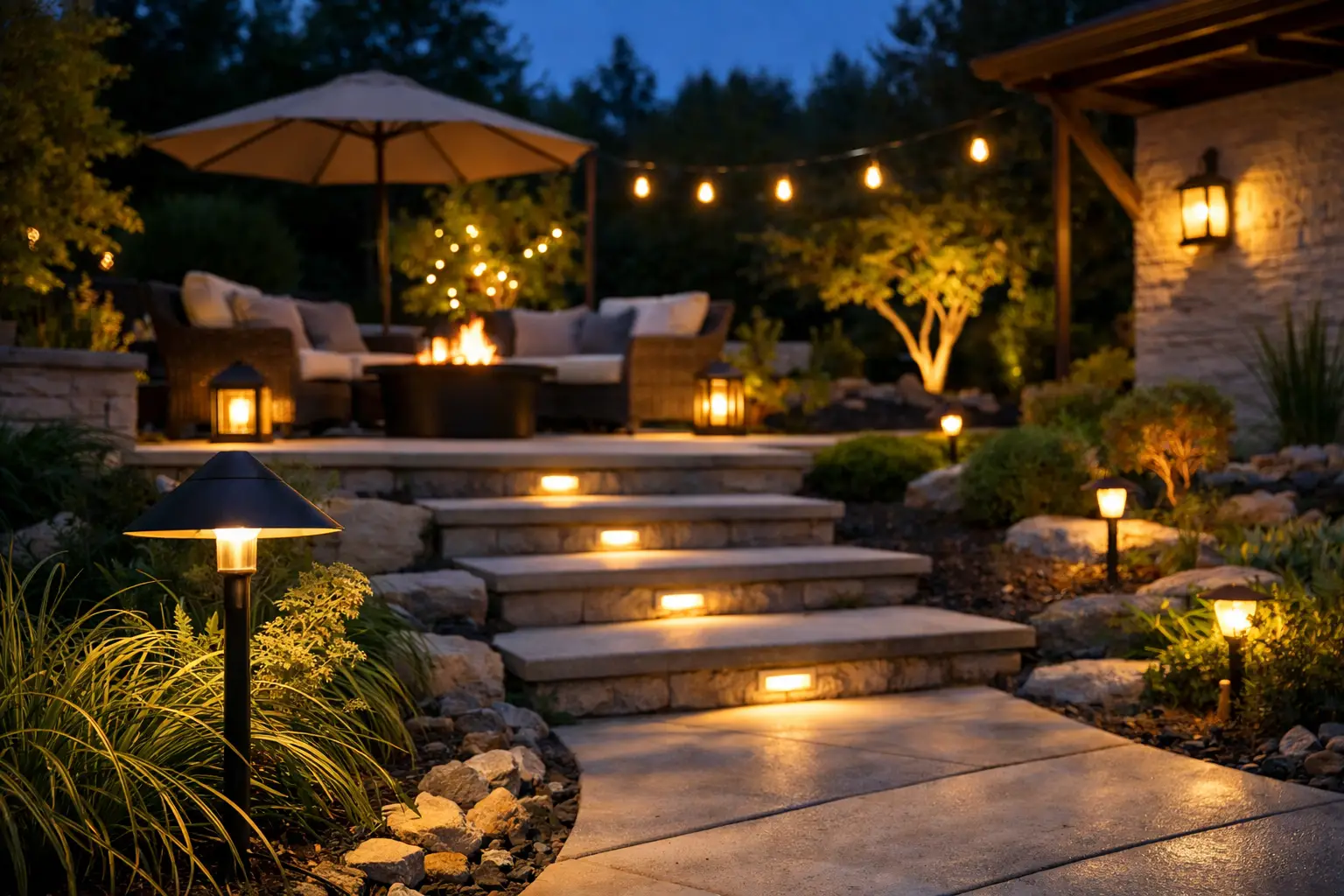
A dark front walk, a shadowed patio, and one harsh porch bulb can make a well-kept property feel unfinished fast. The best outdoor lighting ideas do more than brighten a yard – they improve safety, highlight hardscape and landscape features, and make Arizona outdoor spaces more usable after sunset. For homeowners, property managers, and business owners, the right setup should look clean, hold up in desert conditions, and stay easy to maintain.
What makes outdoor lighting work in Arizona
Outdoor lighting in Arizona has to handle heat, dust, dry conditions, and long stretches of strong sun. That changes what works best. A fixture that looks great in a catalog may fade, overheat, or require more upkeep than most property owners want.
That is why practical lighting plans usually perform better than overdesigned ones. Low-voltage systems, durable finishes, LED lamps, and fixtures placed with a clear purpose tend to give better long-term results. Good lighting should support how the space is actually used, whether that means guiding guests to a front entry, making a backyard patio more inviting, or improving visibility around a commercial walkway.
1. Path lighting for safe, clean walkways
Path lights are one of the most reliable outdoor upgrades because they solve a real problem right away. They help define where people should walk and reduce trip hazards around pavers, gravel paths, and transitions between landscape areas.
The best results come from spacing them evenly without making the walkway look like a runway. In many yards, staggered placement creates a softer effect than lining both sides too tightly. For Arizona properties with gravel, decomposed granite, or paver paths, path lighting also adds structure at night when edges can be harder to see.
2. Uplighting for trees, columns, and focal points
If you want a stronger visual impact, uplighting is one of the best outdoor lighting ideas for both residential and commercial properties. It draws attention to mature trees, architectural columns, textured walls, and other features that already add value during the day.
This works especially well with palm trunks, desert specimen plants, and block or stucco walls that have depth and texture. The key is restraint. Too many uplights can make a yard feel busy, while a few well-aimed fixtures can create a polished look without wasting light.
3. Downlighting for patios and seating areas
Some spaces need functional light more than dramatic light. Patios, outdoor dining areas, and conversation spaces benefit from downlighting because it makes the area easier to use without shining directly into people’s eyes.
Mounted on pergolas, patio covers, or nearby structures, downlights can create a more natural evening setting than a single overhead floodlight. This is a smart choice for backyards where families gather often or where property owners want a cleaner, more finished look around outdoor kitchens, seating walls, or paver entertainment areas.
4. Step and stair lighting for safety
Any elevation change should be addressed with lighting if the area is used at night. This includes entry steps, raised patios, retaining wall steps, poolside grade changes, and transitions in commercial walkways.
Step lights are practical first and decorative second, which is exactly why they are worth doing. When integrated into masonry, pavers, or wall features, they can look built-in rather than added later. For businesses and multi-family properties, this type of lighting also supports safer access and a more professional appearance after dark.
Best outdoor lighting ideas for walls and hardscape
Hardscape lighting often gives a property its most finished nighttime look because it works with permanent features already built into the layout. Instead of trying to light every planting bed, it highlights the structure of the yard.
Retaining walls, seating walls, fence lines, courtyard edges, and decorative block features all respond well to subtle lighting. A warm, low-profile fixture tucked into the right place can bring out stone, travertine, brick, or textured concrete without making the surface look harsh. This is especially effective in Arizona, where hardscape plays such a large role in the overall design.
5. Wall wash lighting for texture and depth
Wall washing spreads light across a vertical surface to create depth and soften dark zones. It is useful on exterior walls that feel flat at night or on long surfaces that need visual balance.
For homes, that might mean highlighting a front facade or courtyard wall. For commercial properties, it can improve visibility around entries and make the building look better maintained. The trade-off is that poor aiming can expose imperfections, so fixture placement matters.
6. Lighting under seat walls and caps
Integrated lighting under wall caps or benches creates a clean custom effect. It works well in outdoor living areas where people want ambient light rather than bright task lighting.
This approach is often worth considering during hardscape installation or renovation because the wiring and fixture placement can be planned early. Retrofitting is still possible, but it may take more labor depending on the material and layout.
7. Accent lighting for entry points
Front entries need more than one porch fixture if the goal is security and curb appeal. Accent lighting around entry columns, planters, address markers, and short approach paths helps the front of the property feel intentional and easier to navigate.
This matters for homeowners, but it is just as valuable for businesses that receive clients, tenants, or deliveries after sunset. A clear, well-lit entry sends a better message than a dim doorway with deep shadows around it.
8. String lighting for patios and courtyards
String lights can work well if they are used in the right setting. They are a good fit for covered patios, pergolas, courtyard spaces, and backyard seating areas where a softer, more casual mood makes sense.
They are not always the best primary light source, though. In windy or exposed areas, they may need more maintenance than built-in fixtures. When paired with downlighting or wall lighting, they can add warmth without carrying the full job of lighting the space.
9. Spotlighting for signage and commercial visibility
For commercial properties, outdoor lighting should do more than look attractive. It should help customers, tenants, and visitors find the property and move around it safely.
Spotlighting signs, monument features, entry landscaping, and main access points can improve visibility without flooding the entire site with harsh light. This is one area where brightness has to be balanced carefully. Too little light hurts visibility, but too much can create glare and make signage harder to read.
Best outdoor lighting ideas for low-maintenance results
A lighting plan only helps if it keeps working. Many property owners want the best outdoor lighting ideas, but they also want fewer service calls, lower energy use, and fixtures that hold up over time.
LED systems usually make the most sense because they use less power and last longer than older lamp types. Low-voltage lighting is also popular because it offers flexibility and efficiency for landscape and hardscape applications. In Arizona, fixture quality matters. Materials and finishes should be chosen with heat exposure and dust in mind, especially on open properties with little shade.
10. Smart lighting controls and timers
Lighting controls are one of the simplest ways to improve convenience. Timers, photocells, and smart controls help ensure lights turn on when needed and do not stay on longer than necessary.
For busy homeowners, that means less manual adjustment. For commercial sites, it supports more consistent operation and can reduce wasted energy. The best option depends on the size of the property and how much control the owner wants.
11. Security lighting without the harsh glare
Security lighting should improve visibility, not make the property feel overlit. A common mistake is relying on a few very bright fixtures that create glare and leave deep shadows around the edges.
A better approach often combines motion lighting at key access points with steady low-level lighting along walkways and entries. This creates a more usable environment and avoids the stark look that can make a residential yard or storefront feel uninviting.
12. Layered lighting for a complete look
The strongest lighting plans usually combine several fixture types instead of depending on one. Path lights handle movement, uplights add emphasis, step lights improve safety, and patio lighting supports everyday use.
That layered approach works because outdoor spaces serve more than one purpose. A front yard needs curb appeal and safe access. A backyard needs comfort, visibility, and flexibility. A commercial property needs a professional appearance, safe circulation, and durable performance.
How to choose the right setup for your property
The right lighting plan depends on what the space needs most. If safety is the main issue, focus first on paths, steps, and entries. If the property already has strong hardscape or mature landscaping, accent lighting and wall lighting may give the best visual return.
Budget matters too. Some projects benefit from a phased approach, starting with high-use areas and adding feature lighting later. That is often the smartest move for larger yards and commercial properties. At Pro Natural Landscape, practical outdoor improvements work best when design, installation, and long-term upkeep are considered together, not treated like separate jobs.
Good lighting should make your property easier to use, easier to navigate, and better to look at every night of the year. If a space disappears after sunset, that is usually a sign it is ready for an upgrade.