

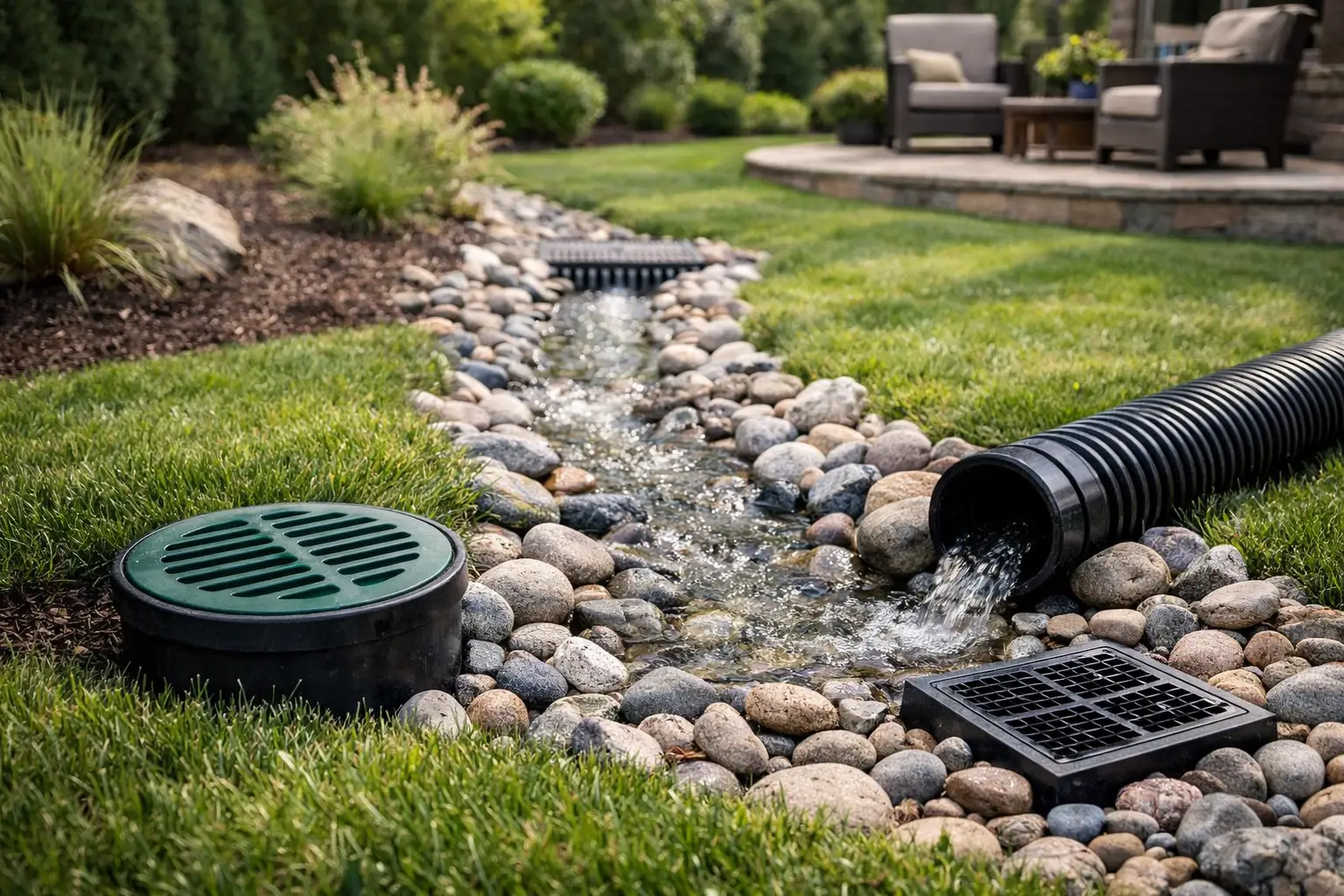
Water problems in Arizona do not always look dramatic. Sometimes it is a stain on a block wall, gravel that keeps washing into the sidewalk, a low spot that stays muddy after a storm, or pavers that start shifting because runoff keeps moving the base. A solid landscape drainage planning guide helps you catch those issues before they turn into repairs.
In desert climates, drainage gets overlooked because most of the year feels dry. Then a heavy monsoon hits, and every weak point in the yard shows up at once. For homeowners, property managers, and commercial owners, good drainage is not an extra feature. It is part of protecting the property, keeping the yard usable, and making sure your landscape investment lasts.
Why drainage planning matters in Arizona
Arizona landscaping has a different set of pressures than wetter regions. You may be working with compacted soil, hard surfaces that move water fast, and yards built for low maintenance with gravel, pavers, artificial grass, and decorative features. Those materials look clean and practical, but they still need a plan for where stormwater goes.
If runoff has nowhere to move, it usually causes one of a few problems. Water can collect near the foundation, flood planting beds, cut channels through gravel, stain walls, damage irrigation zones, or leave standing water around patios and walkways. On commercial properties, it can also create safety issues near entrances and drive lanes.
The main goal is simple. Move water away from structures and direct it toward a safe discharge area without damaging the landscape along the way. That sounds straightforward, but every yard has trade-offs. A small residential lot has different limits than a large commercial site. A yard with pavers and turf behaves differently than one with mostly decomposed granite and planting areas.
Start your landscape drainage planning guide with the site
Before choosing drains, trenches, or grading changes, look at how the property already handles water. The biggest mistake is buying a drainage solution before identifying the real source of the problem.
Walk the property after rain if possible. If that is not practical, use a hose test in areas where water tends to collect. Watch where runoff starts, how fast it moves, and where it stops. Pay attention to roof downspouts, patio edges, side yards, planter borders, driveway slopes, and low spots near walls or foundations.
You also want to notice elevation changes. Even minor grade differences matter in a flat-looking yard. Water follows slope, and in many cases the fix is not a larger drain. It is correcting the grade so the yard sheds water the way it should have from the start.
Hardscape plays a major role here. Pavers, concrete, travertine, and compacted pathways do not absorb much water during heavy storms. They speed up runoff. That is not a problem by itself, but it means the surrounding landscape has to be designed to receive and redirect that water.
Grading comes first, drains come second
Most drainage problems are really grading problems. If the surface does not slope correctly, adding drains only treats the symptom.
A well-graded yard directs water away from the home and toward approved drainage paths or collection points. In Arizona landscapes, that may mean shaping the soil beneath gravel, adjusting the base under pavers, or reworking transitions between turf, hardscape, and planting beds. The exact approach depends on the property, but the principle stays the same. Surface water needs a clear path.
This is where many DIY fixes fall short. A catch basin installed in the wrong low spot may fill with debris and still not solve the issue if the surrounding grade keeps pushing water back toward the structure. On the other hand, a modest grading correction can often eliminate pooling without major drain installation.
That said, drains still matter when grading alone is not enough. Tight side yards, enclosed courtyards, and areas bordered by walls often need both proper slope and a drainage system to move water efficiently.
Common drainage solutions and when they make sense
The right drainage system depends on the source of the water and the layout of the yard. There is no one-size-fits-all answer.
French drains are useful when water is moving through soil or collecting below the surface. They can help in planting zones or low areas where water lingers. They are less effective if the real problem is fast surface runoff from patios or roofs.
Channel drains are often a better fit near hardscapes. If water sheets across a driveway, patio, or pool deck, a linear drain can intercept it before it reaches the house or a pedestrian area. For homes with pavers or travertine, these drains often work best when they are planned during installation rather than added later.
Catch basins can collect water at strategic low points, especially where several runoff paths meet. But they need proper placement, enough capacity, and regular cleaning. A clogged basin solves nothing.
Downspout extensions matter more than people think. Roof runoff can dump a large volume of water into one concentrated area. If that water lands next to the foundation or in a narrow side yard, it can quickly create erosion, staining, and settlement issues.
Swales and dry creek beds can work well for larger yards or properties that want a more natural drainage path. In Arizona, these can blend well with desert-style landscaping when they are built with the right depth, rock sizing, and slope. If done poorly, they can look decorative but fail during a serious storm.
Drainage planning around gravel, turf, and pavers
A lot of Arizona properties use low-water materials, which is smart for maintenance and appearance. But these materials still need coordination.
Gravel can hide small drainage issues until runoff starts carving visible paths through it. If gravel keeps shifting, washing out, or piling against borders, the base grade may be off or the water volume may be too concentrated. Adding more gravel will not fix that.
Artificial grass needs drainage under the surface. If the base is compacted incorrectly or installed over a poorly draining area, water can sit underneath and create odor, instability, or soggy edges. Turf may look clean from the top while the drainage problem stays hidden underneath.
Pavers need special attention because water affects both the surface and the base. Poor drainage can lead to settling, movement, joint washout, and edge failure. A paver patio or walkway should never be planned separately from site drainage. The two need to work together from the beginning.
What property owners should watch for
Some drainage problems are obvious, and some build slowly over time. If you see water stains on walls, recurring puddles, soil erosion, exposed roots, sinking hardscape, or standing water around the yard after a storm, the site is telling you something.
It is also worth watching your irrigation. Not every wet area is a stormwater issue. A leak, overspray, or poor sprinkler coverage can mimic drainage failure. That is why practical site review matters. You want to solve the right problem, not just the visible result.
For commercial properties, drainage problems often show up first as maintenance headaches. Gravel migration, muddy entries, slippery walkways, and repeated cleanup after storms all point to poor water control. Those issues affect appearance, safety, and long-term repair costs.
When to plan drainage during a bigger landscape project
The best time to handle drainage is before installing new landscape features, not after damage starts. If you are already planning pavers, artificial grass, gravel installation, grading, irrigation work, or a yard redesign, drainage should be part of the same conversation.
This saves money and usually leads to a better result. A contractor can shape the grade, protect the hardscape base, place drains correctly, and coordinate everything at once. That is far more efficient than reworking finished surfaces later.
For many Arizona properties, this integrated approach makes the most sense. A yard is not just plants, or just pavers, or just irrigation. Everything affects how water moves. Pro Natural Landscape sees this often on both residential and commercial projects where surface materials, grading, and drainage have to be handled together to avoid repeat problems.
A practical landscape drainage planning guide for better results
If you want a drainage plan that actually holds up, think in order. First identify where water comes from. Then map where it needs to go. After that, correct the slope, choose the right drainage method for the space, and make sure the surrounding landscape materials support that plan instead of fighting it.
The details matter. Soil type matters. Wall placement matters. Roof runoff matters. The finish materials matter. Even a well-built yard can struggle if one section traps water or redirects it into another weak spot.
A good drainage plan is not about overbuilding. It is about building with purpose. When water leaves the property the right way, your landscape stays cleaner, your hardscape lasts longer, and your outdoor space is easier to maintain through every storm season.
If your yard has standing water, erosion, washouts, or hardscape movement, do not wait for the next heavy rain to confirm the problem. The best drainage fixes start before the damage gets worse.
2 thoughts on “Landscape Drainage Planning Guide”