

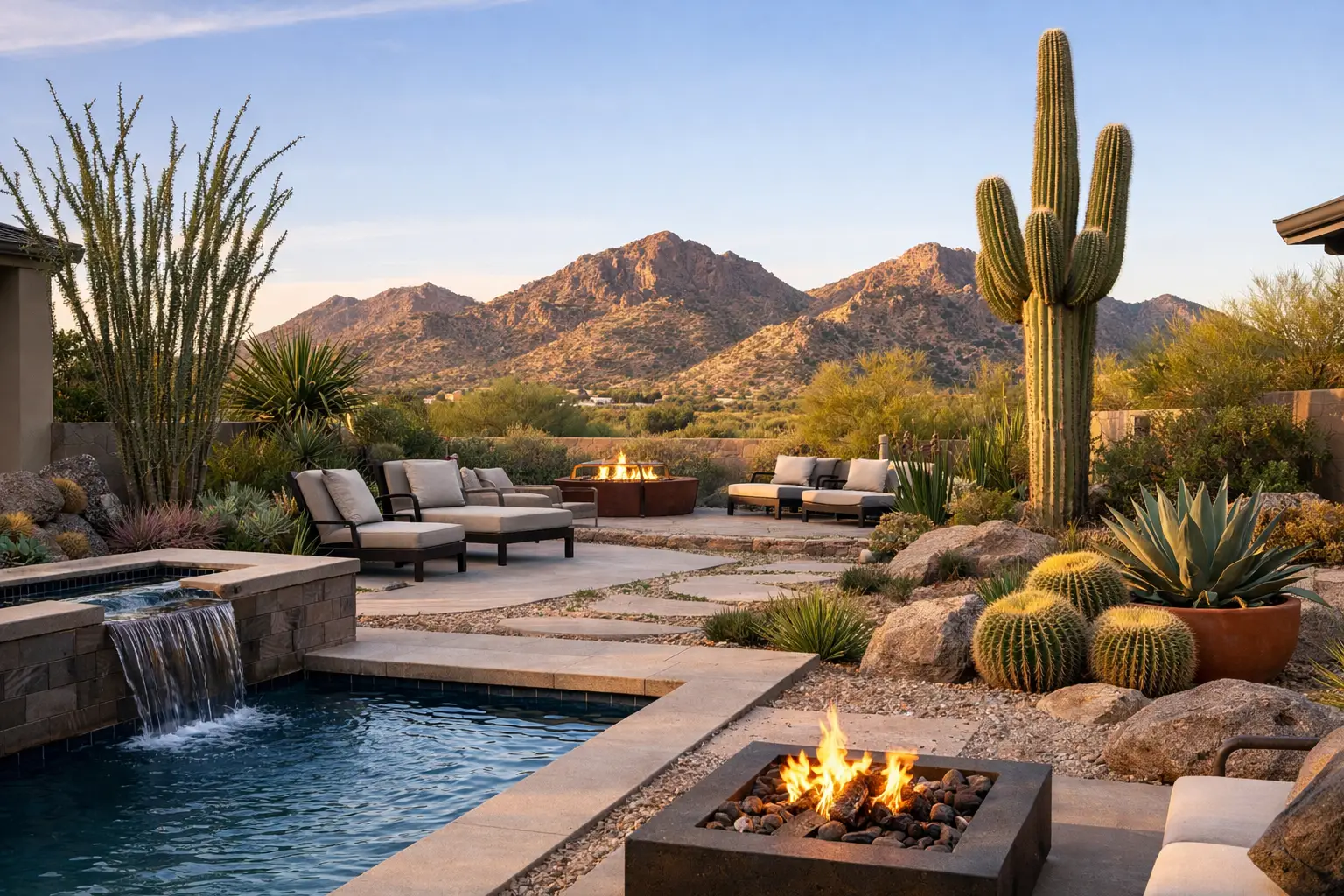
A bare gravel yard no longer passes for a finished Arizona landscape. The latest desert yard design trends are moving toward outdoor spaces that look cleaner, work harder, and hold up better through heat, dust, and heavy sun. For homeowners, that means less maintenance and better curb appeal. For commercial properties, it means a sharper exterior that stays presentable without constant upkeep.
What stands out right now is not flashy design for its own sake. In Arizona, trends only last if they solve real problems. People want yards that cut water waste, reduce patchy or worn-out areas, improve usability, and make the property feel complete from the street to the backyard.
Desert yard design trends are getting more functional
The biggest shift is simple: desert landscaping is becoming more intentional. Instead of choosing one material and covering the whole yard with it, property owners are mixing surfaces and features to create zones. Gravel still has a place, but now it often works alongside pavers, artificial grass, decorative borders, lighting, and well-placed plants.
That layered approach gives the yard more structure. It can also help with drainage, traffic flow, and maintenance. A front yard might use gravel for low-water coverage, pavers for a walkway, and accent plantings near the entry. A backyard might combine turf, shade, and hardscape to support both appearance and daily use.
This matters because Arizona yards take a beating. Designs that looked good on paper sometimes fail fast if they do not account for sun exposure, irrigation efficiency, or how people actually move through the space. The strongest trends are the ones that balance appearance with long-term performance.
1. Low-water planting with cleaner spacing
Overplanted desert yards are giving way to simpler layouts. Homeowners and property managers are leaning toward fewer plants, better spacing, and stronger visual definition. That usually means drought-tolerant trees, hardy shrubs, and accent cacti placed where they make an impact instead of being crowded together.
This style looks more modern, but it is also easier to maintain. Plants have room to grow, irrigation can be more targeted, and cleanup is more manageable. It also avoids the messy, overgrown look that can make a yard feel older than it is.
The trade-off is that sparse planting has to be done well. If spacing is too wide or plant sizes are mismatched, the yard can feel unfinished. The right grading, gravel color, and hardscape lines make a big difference here.
2. Pavers are replacing plain concrete in key areas
One of the most noticeable desert yard design trends is the move toward paver patios, walkways, entry paths, and gathering areas. Pavers add a more finished look than standard poured concrete, and they fit well with both modern and traditional Arizona homes.
They also make practical sense. In high-traffic areas, pavers create durable surfaces that are easier to integrate into the rest of the landscape. For backyards, they help define outdoor living space without adding grass that needs water and upkeep. For front yards, they improve curb appeal quickly.
Pattern and color matter. In a desert setting, earth tones and cooler neutrals usually age better than overly bold choices. The goal is a surface that complements the home and surrounding materials instead of competing with them.
3. Artificial grass is being used more strategically
Artificial grass is still popular, but the trend has shifted away from covering every open area with turf. Instead, it is being used in focused sections where softness, color, and usability matter most. That could mean a small play space, a clean strip between pavers, or a backyard section for pets and seating.
This targeted use tends to look more natural and stay more practical. It reduces water use and ongoing maintenance while keeping some of the comfort people want underfoot. In commercial settings, it can also keep entry zones and visible outdoor areas looking polished year-round.
The key is placement. Turf works best when it is framed properly with borders, hardscape, or gravel. If installed without enough planning, it can look disconnected from the rest of the yard. It also depends on sun exposure and how hot the area gets during peak summer months.
4. Decorative gravel is becoming more design-driven
Gravel has always been part of Arizona landscaping, but now it is being chosen with more attention to contrast, texture, and scale. Instead of treating gravel as background only, designers are using it to define spaces and support the overall look of the yard.
That might mean mixing rock sizes, using a cleaner color palette, or pairing gravel with steel, block, or paver edging to create stronger lines. In the right design, gravel helps the whole property look more organized and less like a quick fix.
Not every gravel choice performs the same way, though. Some lighter colors reflect heat better but can show debris more easily. Darker tones can create a sharp look but may absorb more heat. The best option depends on the property, surrounding materials, and how much maintenance the owner wants to handle.
5. Shade features are becoming part of the layout
A good-looking yard in Arizona still has to be usable. That is why more property owners are designing around shade from the start instead of treating it as an afterthought. Trees, covered patios, pergolas, and smart seating placement are all becoming part of the overall plan.
This trend matters because a backyard that cannot be used for much of the year is not delivering full value. Even a small shaded section can make a major difference for outdoor comfort. In commercial properties, shade can also improve the appearance and function of entrances, courtyards, and tenant-facing spaces.
It depends on lot size and budget, of course. Mature trees offer natural cooling but take time and need proper irrigation. Built shade structures provide faster results but need to match the style and scale of the property.
6. Landscape lighting is doing more than decoration
Lighting is no longer just an extra feature for high-end homes. It is becoming a standard part of practical desert yard design. Entry lighting, pathway lights, uplighting for trees, and accent lighting near pavers or walls all help a property feel safer, more complete, and more usable after dark.
For residential properties, lighting improves curb appeal and extends use of patios and walkways. For commercial sites, it supports visibility and creates a more professional appearance. In both cases, it helps key design elements stand out at night instead of disappearing once the sun goes down.
The best lighting plans stay balanced. Too little lighting leaves the yard flat. Too much can look harsh and raise energy use. Placement matters more than quantity.
7. Bordering and edging are defining the whole yard
One reason some desert landscapes look sharp while others look unfinished comes down to edging. Clean borders between gravel, turf, pavers, and planting zones create order. They also help with maintenance by keeping materials where they belong.
This is a growing priority in both front and back yards. Steel edging, block borders, and concrete curbing are often used to create cleaner transitions. These details may seem small, but they have a big visual impact, especially in Arizona landscapes where open surfaces are common.
Edging also supports long-term durability. It helps prevent spread, keeps design lines intact, and makes the entire space easier to service over time.
8. Outdoor spaces are being designed for year-round value
Another strong trend is the move away from yards that serve only one purpose. Arizona property owners want outdoor spaces that support daily life, entertaining, and property value throughout the year. That means combining attractive surfaces with practical features such as walkways, seating areas, lighting, irrigation, and durable plant choices.
This is especially true for people who are tired of managing multiple contractors. A yard project often involves more than landscaping alone. It may also require grading, paver work, irrigation updates, wall repair, tree removal, gravel installation, or surface renovation. When those pieces are planned together, the result is cleaner and more efficient.
That is why the most successful projects start with the full picture. Pro Natural Landscape sees this often across Arizona properties. A strong design is not just about what gets installed first. It is about how every surface and feature works together six months and three summers later.
How to choose the right trend for your property
Not every trend belongs in every yard. A smaller front yard may benefit more from updated gravel, edging, and a paver walkway than from adding multiple planting zones. A family backyard may need turf and shade first. A commercial property may get the best return from durable hardscape, lighting, and simplified maintenance.
The smart approach is to start with the property’s biggest problem. If the issue is water waste, focus on irrigation and low-water materials. If the yard looks dated, update the hardscape and layout. If maintenance is the constant headache, reduce clutter and choose surfaces that stay cleaner with less effort.
Good desert design should make life easier, not create more chores. The best upgrades are the ones that fit Arizona conditions, improve the way the space works, and still look good long after installation. If your yard is ready for that kind of change, now is a good time to plan with purpose and build something that actually lasts.