

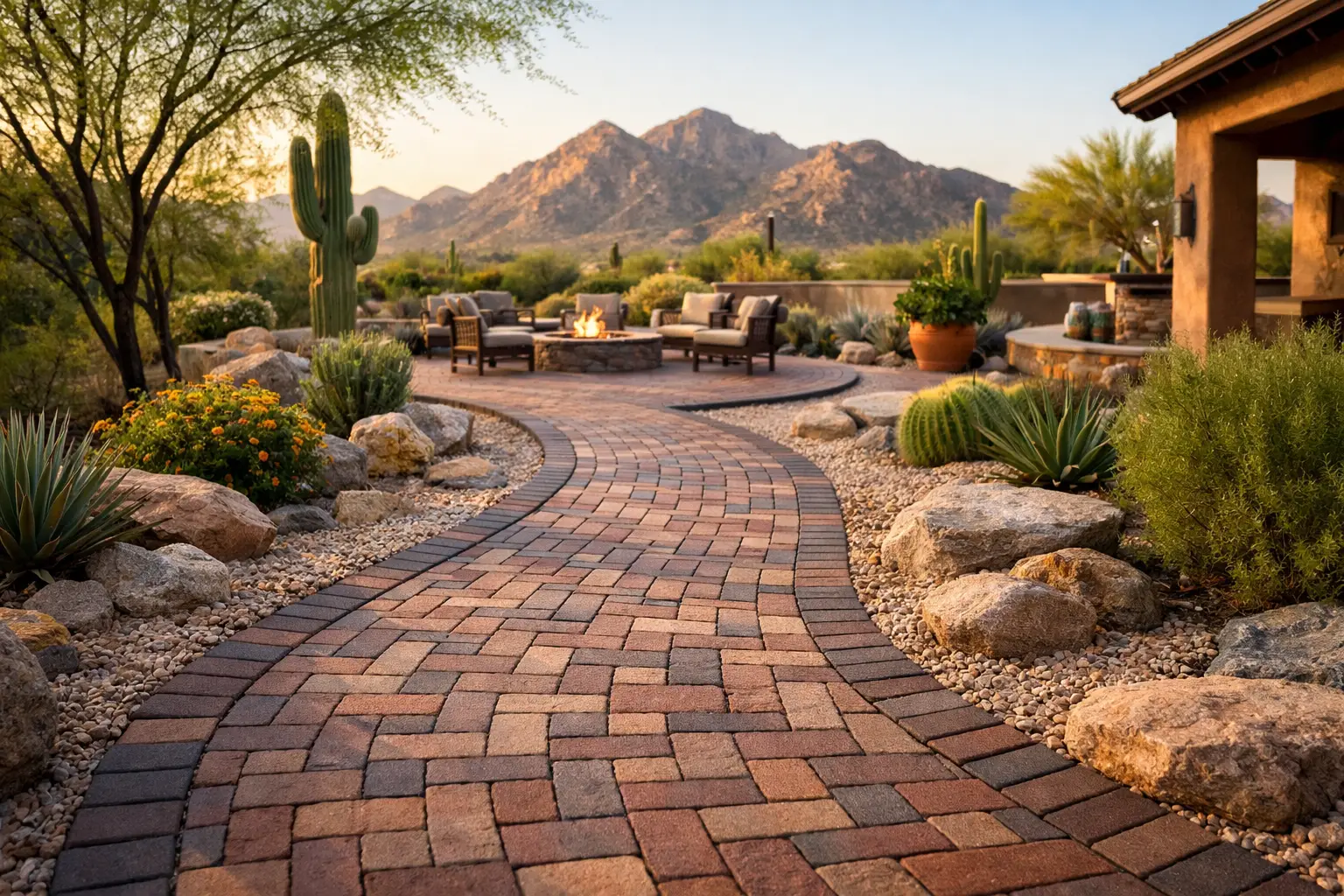
A brick path can change the whole feel of a yard before you touch anything else. The right brick walkway ideas add structure, improve curb appeal, and make daily use easier, whether you are connecting a driveway to a front entry, guiding people through a backyard, or cleaning up the look of a commercial property.
In Arizona, design has to do more than look good. A walkway needs to handle sun, heat, dust, and heavy foot traffic without turning into a maintenance problem. That is why the best brick paths are not just about pattern. They are about choosing a layout, base, edge, and finish that work for the property.
What makes brick walkways work in Arizona
Brick has a classic look, but performance matters just as much as appearance. In a dry climate, walkways need to stay stable through heat cycles, resist shifting, and fit naturally with low-water landscaping. That usually means planning around gravel beds, artificial grass, desert plants, irrigation lines, and existing hardscape.
A good brick walkway should feel intentional from the street and practical underfoot. Width matters. Drainage matters. So does how the color works with stucco, block walls, and paver patios. Some homeowners want a warm traditional look. Others want something cleaner and more modern. Both can work if the path matches the architecture and the yard layout.
12 brick walkway ideas that add function and curb appeal
1. Straight front entry brick walkway
A straight path is one of the most reliable options for front yards. It creates a clear line from the sidewalk or driveway to the front door, which helps the home look more organized and welcoming. This style works especially well on smaller lots where space is limited and every foot of hardscape needs to count.
The benefit is simplicity. Installation is usually more efficient, and the finished result has a clean, no-nonsense look. The trade-off is that it can feel plain if the yard has a lot of open space, so many property owners add a border or planting strip to give it more presence.
2. Curved brick walkway through desert landscaping
If the yard has more room, a gentle curve can soften the overall layout. This is a strong fit for Arizona landscapes with gravel, boulders, agave, and other drought-tolerant planting. A curved walkway feels more natural and can make a front yard look more custom without adding a lot of extra materials.
The key is keeping the curve purposeful. Too much bending in a small space can feel forced. A clean, sweeping line usually looks better than several quick turns.
3. Herringbone pattern for high-traffic areas
Among brick walkway ideas, herringbone stands out when durability is the priority. The interlocking pattern helps distribute pressure well, which makes it a smart choice for busy front entries, side yards, and commercial walkways where people walk the same route every day.
It also adds visual texture without needing multiple colors or decorative extras. The pattern takes more planning than a simple running bond, but the finished surface often feels more solid and polished.
4. Running bond for a clean, affordable look
Running bond is one of the most practical brick patterns available. It has a straightforward layout, a timeless appearance, and usually keeps labor more manageable than more intricate designs. For homeowners focused on value, this pattern often makes sense.
It fits traditional homes well, but it can also work on modern properties when the brick color is simple and the borders are crisp. If the goal is dependable style without overcomplicating the project, this is a strong option.
5. Basket weave for older or more classic homes
Basket weave has a more decorative, traditional look. It pairs well with historic-style homes, cottage-inspired yards, and entryways that need a little more character. When done right, it can make a path feel established and intentional.
This style is not for every property. On very modern exteriors, it may feel out of place. But on the right home, it creates charm without needing a large footprint.
6. Brick walkway with contrasting border
A border can do a lot of work. It frames the path, helps define the edge, and gives the installation a more finished appearance. You can use a darker brick around a lighter field, or reverse it depending on the home’s exterior colors.
This idea works well when you want a basic pattern in the center but still want the walkway to stand out. It is also useful for tying the path into nearby pavers, retaining walls, or patio areas.
7. Mixed brick and gravel walkway
For desert properties, combining brick with gravel can be a smart way to control cost and fit the local landscape style. One common approach is using brick for the main walking surface and gravel on either side. Another is setting brick bands or stepping sections within decorative gravel.
This type of design can look clean and low maintenance when the edges are installed correctly. The main issue is containment. Without proper edging, gravel can migrate onto the path and create extra cleanup.
8. Wide brick walkway for a grander entrance
A narrow path may be enough for basic access, but a wider walkway can make the front of the property look more substantial. This is a good fit for larger homes, corner lots, and commercial entries where appearance matters as much as function.
A wider path also feels better for two people walking side by side. The trade-off is higher material and labor cost, so it is worth choosing this option where scale really supports it.
9. Brick walkway tied into a paver patio
Many Arizona properties already have pavers in the backyard or side yard. In that case, a brick walkway can act as a transition feature rather than a completely separate design element. The goal is not always to match exactly. Sometimes a complementary tone or border treatment gives a better result than trying to force identical materials together.
This approach works especially well in backyards where a path leads from the house to a seating area, grill station, or poolside zone. It keeps the yard connected and easier to navigate.
10. Side yard utility path with brick
Side yards often get ignored until they become dusty, uneven, or hard to walk through. A brick path can solve that quickly. It provides a stable route for trash bins, AC access, gate access, and general maintenance without turning the whole side yard into a major build-out.
For this type of project, practical installation matters more than decorative pattern. A simple layout with strong edge restraint usually gives the best long-term result.
11. Brick walkway with lighting accents
If the path is used early in the morning or after dark, lighting can make a big difference. Low-profile landscape lighting along a brick walkway improves visibility, adds safety, and helps the yard look finished at night.
This is especially useful for front entries and commercial properties where presentation matters after sunset. The lighting should support the walkway, not overpower it. Clean spacing and durable fixtures tend to hold up best.
12. Reclaimed-look brick for warmth and texture
Some property owners want a path that feels less polished and more lived-in. Reclaimed-look brick or tumbled finishes can bring that character while still fitting an updated landscape plan. This style works well with earthy desert palettes and homes that lean traditional or rustic.
The main decision here is balance. Too much texture can make a small area look busy, so it helps to keep surrounding features simple.
Planning brick walkway ideas the right way
Even the best design can fail if the installation is rushed. A walkway needs proper grading, compacted base material, and secure edging to stay level. That matters in Arizona, where dry soil, hard sun, and sudden rain can expose weak prep work fast.
Drainage is one of the biggest issues to think through early. Water should move away from the home and not collect on the path. If the walkway runs near irrigation, trees, or existing hardscape, those details need to be addressed before installation starts.
Material choice also affects maintenance. Some brick surfaces show dust more than others. Some color blends hide wear better. Some layouts make repairs easier if a section ever needs adjustment. For busy property owners, low maintenance often matters just as much as style.
Choosing the right look for your property
The best brick walkway ideas match the property instead of fighting it. For a smaller front yard, a straight walkway with a clean border may be enough. For a larger desert landscape, a curved path with gravel shoulders may feel more natural. For heavy use areas, a tighter interlocking pattern often makes more sense than a decorative one.
Commercial properties should also think beyond looks. The walkway needs to handle traffic, stay easy to maintain, and support a professional appearance. In many cases, a durable brick design with simple lines does more than an overly detailed layout.
At Pro Natural Landscape, projects often work best when the walkway is planned as part of the whole exterior space, not as a stand-alone feature. That means considering nearby pavers, gravel, lighting, irrigation, and wall lines so the finished result looks coordinated from day one.
A well-built brick walkway does not need to be complicated to make a strong impact. It just needs to fit the space, hold up in the weather, and make the property easier to use every day. If you are planning an upgrade, start with the path people actually walk. Everything around it gets better from there.