

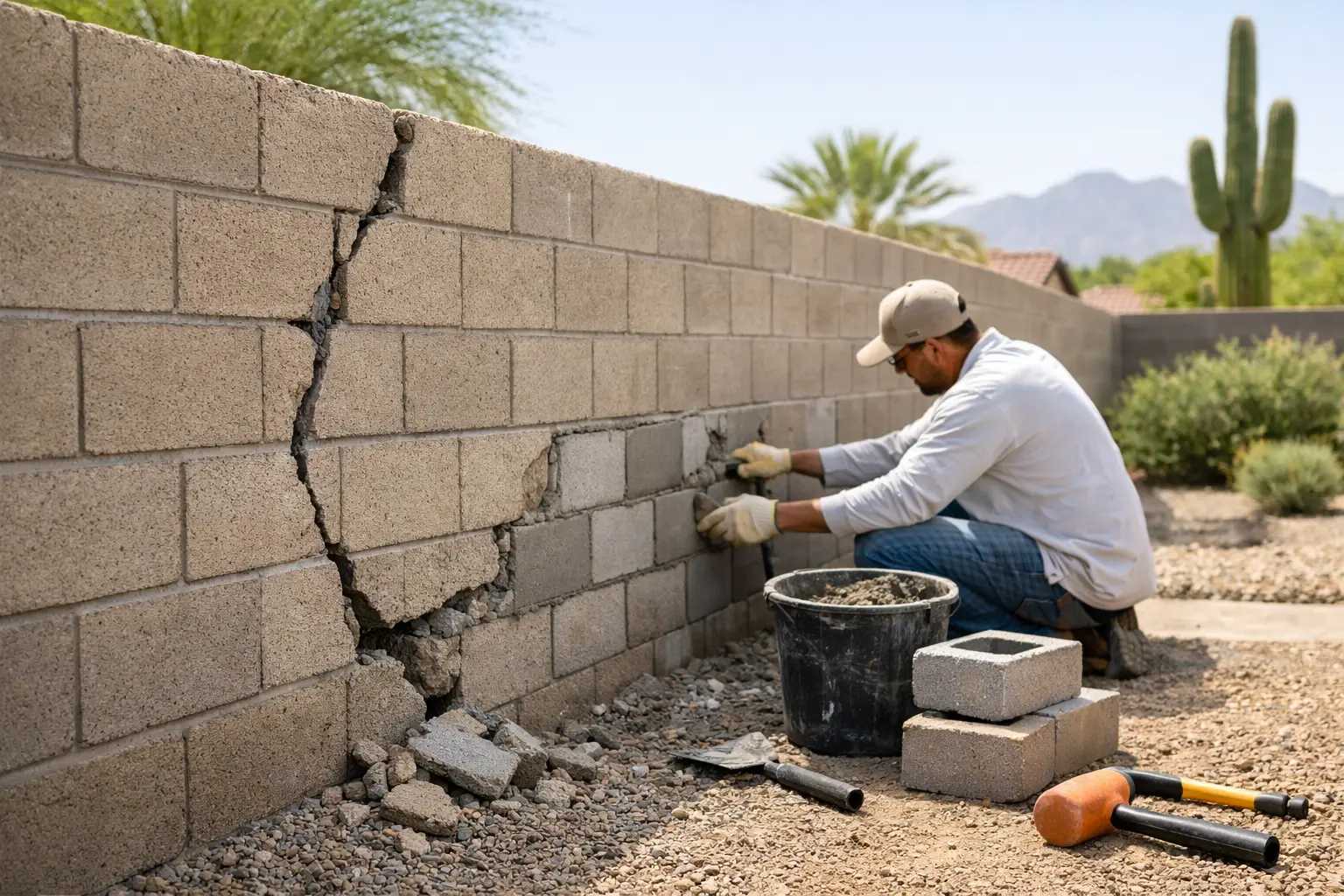
A leaning block wall usually does not start with a dramatic collapse. It starts with a hairline crack near a joint, a section that looks slightly off line, or a gate area that suddenly feels unstable. In Arizona, sun exposure, shifting soil, drainage problems, and age can turn a small issue into a bigger repair fast. If you are searching for block wall repair Arizona property owners can rely on, the first step is knowing what the damage is telling you and what kind of repair actually makes sense for your property.
Why block walls fail in Arizona
Block walls are built to last, but Arizona puts them through a lot. Long periods of heat dry out soil, then monsoon rains hit hard and create fast changes in moisture. That cycle can affect the footing, the base material around the wall, and the pressure pushing against it. Over time, even a well-built wall can develop movement.
Poor drainage is one of the most common reasons walls start to crack or lean. If water collects at the base of the wall or runs toward it from landscaping, patios, or nearby grading, the soil can shift and weaken support. Tree roots also play a role. Roots growing too close to a wall can lift sections, push blocks out of alignment, or create pressure that leads to cracking.
Some walls fail because of age and construction quality. Older walls may not have the reinforcement needed for current conditions. In other cases, the original installation may have been rushed, the footing may be too shallow, or the mortar joints may have deteriorated. Arizona heat speeds up wear on exposed materials, especially if repairs have been delayed for years.
Signs you need block wall repair in Arizona
Not every crack means the wall is about to fail, but some signs should not be ignored. A vertical crack in one area might be repairable without major rebuilding. A wall that is bowing, leaning, separating at the joints, or sinking at one end is a bigger concern.
You may also notice loose blocks, crumbling mortar, discoloration from water runoff, or gaps opening near columns and returns. If the wall supports a gate, that gate often reveals the problem early. When it drags, stops latching, or pulls away from the post, movement is usually already happening.
For commercial properties and rental homes, wall damage also creates liability concerns. A damaged perimeter wall affects security, appearance, and safety. For homeowners, it hurts curb appeal and can spread into nearby hardscape or landscape areas if the underlying issue is not fixed.
What good block wall repair Arizona service should include
The right repair is not always the fastest or cheapest patch. A dependable contractor should first figure out why the wall failed. That means looking at the crack pattern, checking for lean, reviewing drainage around the wall, and evaluating whether the footing or reinforced sections are still sound.
In some cases, repair can be limited to a damaged section. That may involve removing broken blocks, rebuilding a portion of the wall, replacing mortar joints, or resetting columns. If the wall is structurally compromised across a larger run, partial demolition and reconstruction may be the smarter option. Cosmetic patching alone will not hold if the base is still moving.
This is where local experience matters. Arizona properties deal with different conditions than properties in wetter climates. The repair has to account for sun exposure, flash runoff, irrigation overspray, and soil movement. If the wall is part of a larger outdoor layout, the contractor should also look at nearby grading, gravel, pavers, trees, and irrigation lines so the same problem does not return after the wall is fixed.
Repair or rebuild? It depends on the damage
A lot of property owners ask the same question: can this wall be repaired, or does it need to be rebuilt? The honest answer is that it depends on how far the movement has gone.
If the issue is isolated, such as a cracked section from impact damage or a short area with deteriorated joints, repair is often practical. If the wall is leaning through a long stretch, the footing has shifted, or multiple sections are failing at once, rebuilding that portion is usually the better investment. Paying for repeated patchwork on a wall that is already unstable often costs more over time.
Appearance matters too. On a front-facing wall or a commercial property, uneven repairs can stand out. A partial rebuild can provide a cleaner finished look that matches the rest of the property better. For side-yard or rear perimeter walls, function may be the bigger priority, but structural reliability still comes first.
Drainage and grading are part of the fix
A block wall does not exist on its own. If water is flowing toward it, if the grade is wrong, or if irrigation is soaking the base every week, the wall is going to keep taking stress. That is why quality repair work often includes more than masonry.
Regrading the soil, redirecting runoff, adjusting irrigation, or removing root pressure may be necessary to protect the repair. For many Arizona homes, low-maintenance landscaping choices such as proper gravel placement, controlled irrigation zones, and better drainage paths help reduce future wall problems. On commercial sites, managing runoff from pavement and hardscape is just as important.
A contractor with both repair and landscape experience can be a real advantage here. Instead of fixing the wall and leaving the surrounding issue untouched, the work can be handled as one solution.
Cost factors for block wall repair in Arizona
Pricing depends on the length of the wall, the severity of the damage, site access, materials, and whether the repair includes demolition or drainage correction. A simple crack repair is very different from rebuilding a leaning section with reinforced block and footing work.
Access can also affect cost. If equipment or materials have to be moved through a narrow side yard, labor goes up. If landscaping, pavers, or irrigation need to be removed and replaced to reach the wall, that adds to the scope. Matching the existing block, cap, texture, or finish may also take extra work.
The lowest bid is not always the lowest final cost. If the estimate skips the cause of the problem and only covers a visible patch, there is a good chance the wall will need more work again. A clear scope, realistic timeline, and straightforward explanation are worth paying attention to.
Choosing a contractor for block wall repair Arizona jobs
When hiring for wall repair, look for a contractor that understands both structure and site conditions. You want someone who can explain what failed, what needs to happen next, and whether related issues such as drainage or landscaping should be addressed at the same time.
Ask whether the damaged area will be repaired or rebuilt, how the new section will be tied into the existing wall, and what steps will be taken to help prevent future movement. For residential and commercial properties alike, communication matters. The process should be direct, with no guessing about schedule, cleanup, or final appearance.
For Arizona property owners who want one team that can handle wall repair along with grading, landscape restoration, irrigation adjustments, and hardscape repair, Pro Natural Landscape fits that practical need. That kind of coordination saves time and helps avoid the back-and-forth that happens when multiple contractors are involved.
Protecting your wall after repairs
Once the wall is repaired, regular observation goes a long way. Check for new cracks after heavy rain, watch for water pooling near the base, and keep trees and large shrubs from growing too close. If you notice sprinkler overspray hitting the wall constantly, adjust it. If gravel or soil has built up against the base, clear it back so moisture does not sit there.
Small maintenance steps can extend the life of the repair. So can early action. A minor crack or short section of movement is easier and less expensive to address than a collapsed wall or a long run that has shifted out of line.
Arizona block walls take a beating, but they do not have to stay damaged. The right repair work restores function, improves appearance, and protects the rest of your outdoor space. If your wall is cracking, leaning, or starting to fail, getting it looked at now is usually the move that saves you money later.