

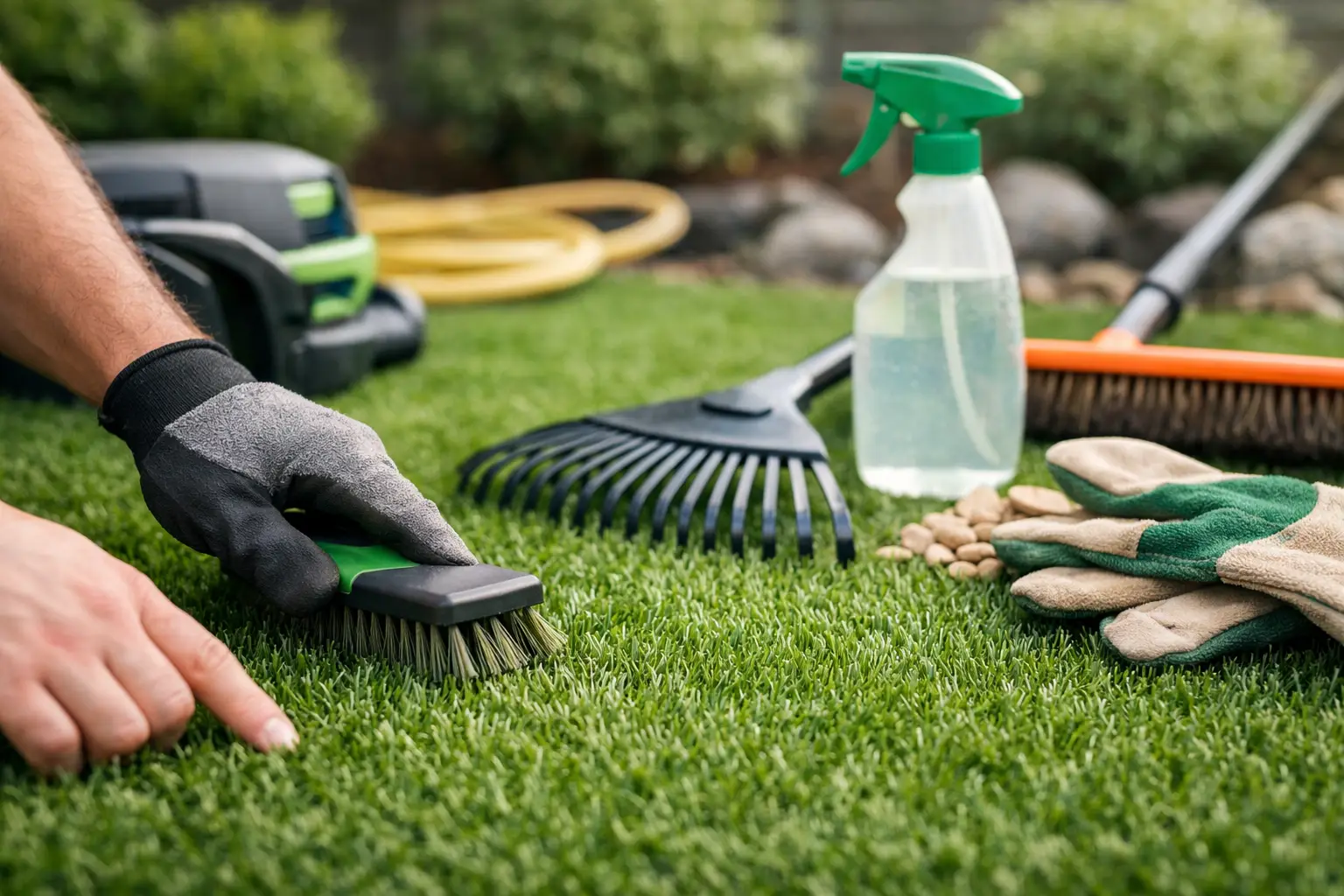
If your artificial lawn is starting to look flat, dusty, or packed down, the fix is usually simple. Knowing how to maintain artificial grass makes a big difference in Arizona, where wind, dust, heat, pet use, and heavy foot traffic can wear on outdoor surfaces faster than many homeowners expect.
Artificial grass is low maintenance, not no maintenance. That is why a little routine care goes a long way. When you stay ahead of debris, keep the blades standing up, and handle problem spots early, your lawn keeps its clean look and performs the way it should.
Why artificial grass still needs routine care
Artificial turf does not need mowing, fertilizing, or daily watering, which is exactly why many Arizona property owners choose it. But dust buildup, leaves, pet waste, and compacted infill can still affect how it looks and drains.
In a desert climate, the biggest issue is usually not mud or overgrowth. It is fine dust, dry debris, and sun exposure. If those materials sit too long, they can make turf look dull and feel less comfortable underfoot. For homes with kids, dogs, or frequent backyard use, maintenance matters even more because traffic patterns show up faster.
Routine care also helps you protect the investment. Artificial grass installation is meant to save time and reduce water use, but it lasts best when the surface is kept clean and the base can drain properly.
How to maintain artificial grass week to week
The best approach is simple and consistent. You do not need a complicated schedule, but you do need to keep surface debris from building up.
Start by removing leaves, twigs, and loose trash with a plastic rake, leaf blower, or stiff outdoor broom. A leaf blower is often the easiest option in Arizona because dry debris moves quickly without much effort. If you use a rake, make sure it is plastic rather than metal so you do not damage the turf fibers.
After clearing debris, rinse the grass lightly when it looks dusty. You are not watering it like a natural lawn. You are just knocking down dirt and refreshing the surface. In dry Arizona conditions, that quick rinse can help the turf look cleaner right away.
If the grass gets regular foot traffic, brush it against the grain to lift matted blades. This helps restore the upright appearance and keeps worn pathways from becoming obvious. A power broom can speed this up on larger areas, but a stiff push broom works well for many residential yards.
Cleaning up pet areas the right way
Pet-friendly artificial grass is a strong option for Arizona yards, but it does need extra attention in the areas dogs use most. Solid waste should be removed promptly, just like it would be on natural grass. Once the area is clear, a light rinse helps wash away residue.
For urine spots, regular rinsing matters. In hot weather, odor can build up faster if waste is left sitting in the same place day after day. If a smell starts to linger, use a turf-safe enzyme cleaner designed for pet areas. That helps break down odor instead of just covering it up.
Drainage plays a big role here. If pet areas stay damp or smell stronger than they should, the issue may be compacted infill, a clogged base, or a low spot in the installation. That is where a professional inspection can save you time. Sometimes the surface looks fine, but the real problem is underneath.
Brushing, fluffing, and keeping blades upright
One of the most overlooked parts of how to maintain artificial grass is brushing. Turf fibers naturally lean over time, especially under patio furniture, play equipment, or repeated walking paths.
Brushing helps the lawn keep a fuller, more natural look. It also redistributes infill, which supports the blades and helps the turf wear evenly. If you ignore compacted spots for too long, the lawn can start to look older than it really is.
The right frequency depends on use. A front yard with light traffic may only need occasional brushing. A backyard with pets, kids, or regular entertaining may need it more often. The point is not to chase perfection. It is to keep traffic lanes, flattened sections, and high-use areas from becoming permanent.
Dealing with Arizona dust, monsoon debris, and heat
Arizona lawns deal with conditions that are hard on every outdoor surface, including synthetic turf. Dust settles fast, monsoon winds blow in branches and leaves, and summer heat can make neglected areas smell worse or feel less comfortable.
During dusty stretches, more frequent rinsing helps keep the turf from looking faded or gritty. After storms, clear debris as soon as possible so branches and wet plant material do not sit on the surface. Organic debris can break down over time and create messes that are harder to remove later.
Heat is a separate issue. Artificial grass can get hot in direct sun, especially during peak summer months. Maintenance will not change the weather, but a clean, well-brushed surface usually performs better than one packed with dust and debris. Some property owners also add shade elements or use cooling infill depending on the layout and how the space is used.
What to avoid when maintaining artificial grass
A few maintenance mistakes cause more harm than people realize. Metal rakes, harsh chemicals, and excessive pressure washing can damage turf fibers or disturb the infill. Strong solvents should also be avoided unless the product is specifically approved for synthetic grass.
It is also a mistake to ignore drainage issues. If water pools after rinsing or after a storm, something is wrong. Artificial grass should drain efficiently when installed and maintained correctly. Standing water often points to a base problem, compacted debris, or an area that needs repair.
Heavy items left in one spot too long can also flatten the turf. Patio furniture is not a problem by itself, but if you never move anything and never brush around it, those compressed areas become more noticeable.
When simple maintenance is not enough
Sometimes the issue is bigger than surface cleaning. If turf smells bad even after rinsing, looks uneven, has loose seams, or shows dips in the base, basic upkeep will only do so much.
This is especially common in older installations or properties with high use. Commercial spaces, pet-heavy yards, and rental properties often need deeper turf service from time to time. That might include power brushing, infill top-off, seam repair, odor treatment, or drainage correction.
If your lawn has bare-looking spots, wrinkling, or edges lifting up, it is smart to address it early. Small repairs are easier and more affordable before they turn into larger installation problems. A local company that understands Arizona conditions can usually spot whether the issue comes from surface wear, pet use, storm debris, or the original base preparation.
How to maintain artificial grass for long-term value
Long-term turf care is really about consistency. Clear debris before it gets packed in. Rinse dust and pet areas before odor builds. Brush the fibers before traffic lanes settle in. Check the lawn after storms and after heavy use.
For many homeowners and property managers, that level of upkeep is still far easier than maintaining natural grass in Arizona. You are not mowing every week, dealing with brown patches, or wasting water to keep up appearances. But artificial grass performs best when it is treated like a finished outdoor surface that deserves occasional attention.
If you manage a commercial property, consistency matters even more because appearance affects how the space is perceived. A clean, upright, well-maintained turf area looks professional. A dusty, flattened, neglected one does not. The same goes for front yards and backyard gathering spaces at home. A little maintenance protects curb appeal.
At the end of the day, learning how to maintain artificial grass is less about adding work and more about preventing avoidable problems. If your turf needs more than a quick cleanup, Pro Natural Landscape can help you get it back into shape so your outdoor space stays clean, durable, and ready to use.