

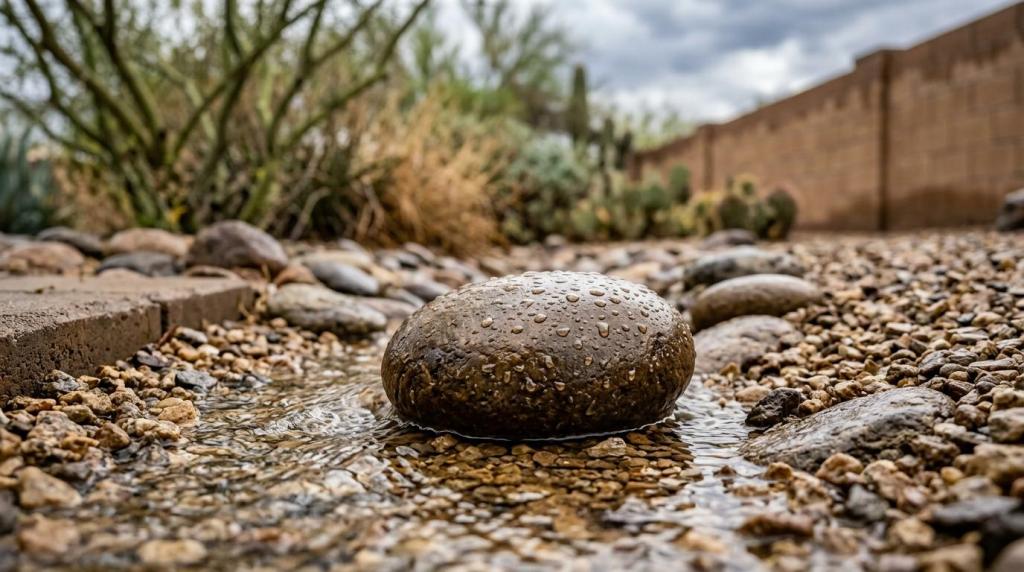
Arizona yards live through two very different seasons at once. Long dry stretches shape the way plants root, soils harden, and irrigation systems run. Then summer storms arrive with sudden wind, dust, and downpours that can move a surprising amount of water across a property in minutes.
That contrast is why monsoon landscaping in Arizona is less about decoration and more about smart planning.
A yard that handles monsoon season well can capture useful rain, protect hardscapes, reduce erosion, and keep water from pushing toward the house, patio, or block wall. With the right grading, irrigation, plant choices, and drainage details, the same landscape can stay efficient in June and hold up better in August.
Why Arizona monsoon season changes yard design
Arizona’s monsoon season runs from June 15 through September 30, according to the University of Arizona Cooperative Extension. That defined window gives homeowners and property managers a clear planning target. If a yard already has drainage weaknesses, bare areas, loose gravel, or irrigation issues, those problems often show up fast once intense summer storms begin.
Monsoon weather is not just “more rain.” It can include damaging wind, heavy bursts of rainfall, dust storms, and flash flooding. The National Weather Service also notes that flash flooding can happen well away from the storm itself, since runoff can travel through washes, low spots, and neighborhood grading patterns.
That means a yard should be designed for both water use and water movement.
After a dry spring, these are the issues that tend to matter most:
- Surface runoff
- Soil erosion
- Standing water
- Washed-out gravel
- Uplifted pavers
- Irrigation overspray
- Weak tree structure
Yard drainage planning for Arizona monsoon storms
The best monsoon-ready landscapes start with grade and flow. Water should have a clear path across the property, away from structures, and into areas built to slow, spread, or absorb it. Without that path, runoff often collects at patios, near foundation edges, around gates, or in low zones where water lingers too long.
In Arizona, this matters even more because dry soil can repel water at first. A storm may deliver a large amount of rainfall before the ground is ready to take it in. When that happens, drainage features are what keep a yard from turning into a channel.
Many properties benefit from combining water capture with a planned overflow route. That balance is important because even a well-built basin or depressed planting area can fill during a strong monsoon event. A landscape should invite water in, but it should also know where excess water goes next.
Key drainage features often include:
- Swales: Shallow, sloped channels that move runoff across the yard without creating harsh trenches
- Berms: Raised soil forms that redirect water away from buildings and toward planting basins
- Catch basins: Useful in hardscape-heavy areas where water gathers quickly
- Channel drains: Good near patios, driveways, or pool decks where sheet flow needs collection
- Overflow routes: Controlled exit paths for storms that exceed the yard’s infiltration capacity
If a property already has pavers, gravel bands, artificial turf, block walls, or outdoor living areas, drainage design should account for all of them together. A drain installed in isolation may not solve a grading issue. In many Arizona yards, runoff control overlaps with land grading, paver elevation, gravel placement, irrigation adjustments, and planting layout.
Rainwater harvesting for Arizona monsoon landscaping
Monsoon rain is brief, but it can still be valuable. The University of Arizona has long promoted water-wise landscape approaches that harvest rainfall through land contouring and storage rather than letting it leave the property unused. In practice, that can be as simple as shaping planting areas into shallow basins or as advanced as adding storage tanks to reuse roof runoff.
This approach works well in desert landscapes because it follows the site’s natural opportunities. Roof lines, downspouts, driveways, and open soil areas all affect where stormwater lands. When those points are connected intentionally, the yard can support plants with less dependence on potable water.
Rainwater harvesting does not mean trapping water against the house. It means directing water safely to the places where it can help.
A simple way to think about capture zones is to match them to landscape use:
| Yard area | Monsoon opportunity | Good design response |
|---|---|---|
| Roof downspouts | Concentrated runoff | Direct to basins, dry creek beds, or storage tanks |
| Open planting beds | Slow infiltration | Create shallow depressions around shrubs and trees |
| Sloped side yards | Fast-moving flow | Use swales, rock bands, and contouring |
| Paver edges | Water escape points | Grade toward gravel beds or drains |
| Low spots near structures | Flood risk | Regrade and build an overflow route |
Some Arizona landscapes also incorporate gray water systems where allowed and properly designed, though rainwater harvesting alone can already make a meaningful difference in outdoor water use. The main goal is balance: use the rainfall your property gets, and reduce the amount of runoff that becomes a problem.
Drip irrigation tips for Arizona yards during monsoon season
A monsoon-proof yard still needs irrigation. Summer rain is inconsistent, and one storm does not replace a sound watering plan. What changes during monsoon season is how irrigation should respond to rainfall, humidity, and plant type.
The University of Arizona Water Wise program identifies Drip irrigation as one of the most efficient ways to water outdoor landscapes because it delivers water directly to plants and helps reduce overwatering. That matters during monsoon months, when automatic schedules often keep running even after the soil has already been soaked.
Irrigation should support the yard, not compete with the weather.
Strong irrigation setups usually include:
- Separate zones: Trees, shrubs, turf, and pots rarely need the same schedule
- Working timers: Seasonal adjustments matter, especially after summer storms
- Matched emitters: Flow rates should fit plant size and root spread
- Regular inspections: Clogged emitters, broken lines, and tilted heads waste water quickly
For homeowners, one of the smartest monsoon habits is checking the controller after each storm cycle. If a yard gets meaningful rainfall and the timer still runs at full summer duration, the landscape may stay too wet. That can stress desert-adapted plants, encourage shallow rooting, and soften soil around pavers or walkways.
Drip irrigation is also a better fit than broad spray in many Arizona planting beds because it avoids runoff on compacted soil and limits water loss to wind. In exposed yards, that can make a visible difference in both plant health and monthly water bills.
Plant selection for wind, runoff, and summer rain
Not every plant that survives Arizona heat handles monsoon conditions equally well. Wind resistance, rooting habit, mature size, and drainage tolerance all matter. A shrub planted in the wrong spot may survive the temperature but fail once repeated summer runoff pools around its crown.
The strongest monsoon landscapes usually group plants by water need and place them according to grade. Plants that can handle occasional deeper moisture do well in basins and capture areas. Plants that want sharper drainage belong on higher ground or along slopes where water moves past more quickly.
Trees deserve special attention. Fast growth can look appealing, but weak branching structure often becomes obvious during high winds. Pruning should focus on sound architecture rather than dense, top-heavy canopies that catch more force in a storm. Dead limbs and poorly attached branches are best removed before monsoon season ramps up.
Good placement often follows a few simple rules:
- Keep large trees away from narrow drainage paths
- Avoid blocking swales with dense root balls or hardscape edging
- Use groundcover and gravel to protect bare soil from splash erosion
- Group plants with similar water needs in the same irrigation zone
Native and desert-adapted plants often perform well in this framework because they are already suited to local heat and seasonal rainfall patterns. Still, the real advantage comes from pairing the right plant with the right micro-location on the property.
Hardscape choices that hold up in Arizona monsoon weather
Hardscape can either help a yard through monsoon season or make water problems worse. Non-permeable surfaces send runoff somewhere. If that “somewhere” has not been planned, the result can be washouts, pooling, or water pushing against walls and foundations.
Pavers are a strong option in Arizona landscapes when the base preparation, edge restraint, and grading are done properly. They can work well with surrounding gravel and drainage systems, and repairs are often more manageable than with a large cracked slab. Travertine and tile surfaces also need careful slope planning so water does not collect in low corners.
Gravel matters more than many homeowners expect. The wrong size, depth, or placement can shift under runoff or expose landscape fabric. gravel bands, dry creek features, and rock-lined basins can all help guide water, though they need a defined purpose and proper grade to work well.
When reviewing hardscape for monsoon performance, focus on these questions:
- Slope: Does the surface move water away from structures?
- Transitions: Are paver edges, gravel zones, and planting beds tied together cleanly?
- Base prep: Has the surface been built to resist settling and washout?
- Drainage tie-in: Where does collected water go after it leaves the hardscape?
This is often where professional installation matters most. A beautiful patio or walkway can still fail if the drainage plan was treated as an afterthought.
Monsoon maintenance for Arizona landscapes before and during storm season
Preparation is easier and less expensive than cleanup. A quick inspection in late spring or early summer can catch many of the issues that become urgent once storms begin. Even well-designed landscapes need maintenance because debris, settling, root growth, and seasonal wear slowly change how water moves.
A practical monsoon inspection should include irrigation, grading, drains, tree condition, gravel displacement, and hardscape edges. Look for clues from last year’s storms: sediment buildup, stains on walls, exposed roots, pooling marks, or areas where mulch and gravel repeatedly migrate.
A focused maintenance round often includes:
- Clearing roof and yard drainage paths
- Resetting irrigation timers for summer conditions
- Testing each drip zone
- Replenishing moved gravel
- Trimming damaged branches
- Checking paver settling near low spots
If a property has had standing water, runoff into a neighbor’s lot, or washouts along side yards, it is worth addressing the cause rather than repeating seasonal patchwork. In many cases, a few targeted changes to grading, drainage, and irrigation create a yard that performs better year after year.
For Arizona homeowners, businesses, and property managers, monsoon landscaping is really about confidence. When the next storm rolls in, the goal is not to hope the yard holds up. The goal is to know it was built to catch rain, move excess water safely, and stay efficient long after the clouds clear.
One thought on “Monsoon-Proof Landscaping for Arizona Yards”