×

Tree Removal vs Trimming: When Each Option Makes Sense

A mature tree can be one of the most valuable features on a property. It gives shade, softens hard edges, frames the house, and adds a sense of permanence that new landscaping cannot match overnight.

Still, keeping every tree is not always the right call.

Property owners often face a practical question: should the tree be trimmed and preserved, or is full removal the safer, smarter option? The right answer depends on health, structure, location, risk, and long-term plans for the space. In many cases, trimming protects both the tree and the property. In others, removal is the responsible move because no amount of pruning can fix a serious structural problem.

Why trimming is usually the first option

When a tree is basically healthy, trimming is often the better place to start. Good pruning can remove deadwood, reduce excess weight on major limbs, improve air flow through the canopy, and create clearance over roofs, walkways, driveways, and fences. It can also help a tree direct energy toward stronger growth.

That matters because removal is permanent. Once a mature tree is gone, so are the shade, screening, habitat, and visual balance it brought to the landscape. If a tree can be kept safely with skilled pruning, that often gives the property the best mix of beauty, function, and value.

Trimming also works well when the issue is local rather than total. A few storm-damaged branches, low limbs over a sidewalk, canopy crowding, or minor interference with a roofline do not usually justify taking down the entire tree.

Common reasons trimming makes sense include:

  • Dead branch removal
  • Clearance over structures
  • Crown thinning
  • Weight reduction on extended limbs
  • Shape correction
  • Better light penetration for turf and planting beds

A healthy tree can often stay in place for many more years with the right maintenance cycle.

When removal is the safer decision

There is a point where pruning stops being a fix and starts being wishful thinking. If a tree has severe decay, major trunk failure, extensive root loss, or advanced disease, trimming may reduce symptoms without solving the real risk.

A useful way to think about it is this: pruning can manage parts of a tree, but it cannot rebuild structural strength that has already been lost. If too much of the canopy is dead, if the trunk is badly compromised, or if the roots can no longer anchor the tree, removal is often the only reliable answer.

This becomes even more urgent when the tree stands near a home, parked vehicles, a public sidewalk, a play area, or utility lines. A weak tree in an open field is one thing. A weak tree hanging over a roof is something else entirely.

Signs that often point toward removal include:

  • Extensive decline: Large portions of the canopy are dead, diseased, or no longer producing healthy growth.
  • Structural failure: Major cracks, cavities, splitting stems, or a hollow trunk indicate serious weakness.
  • Root instability: Root heaving, severed roots, or major soil disturbance can make the tree unsafe even if the canopy still looks decent.
  • Severe lean: A sudden lean, especially with disturbed soil around the base, can signal active failure.
  • Irreversible pest or disease damage: Some infestations and diseases leave too little sound material to preserve.
  • Repeated utility conflict: Trees growing into critical overhead lines may need removal when aggressive recurring pruning is the only alternative.

Dead trees belong in this category too. Even if they still appear solid from a distance, dead trees dry out, become brittle, and can fail without much warning.

It is not just about tree health

Two trees with the same defect can lead to different recommendations because their settings are different. A partly decayed tree in a low-traffic corner of a large property may be monitored and pruned. The same tree next to a bedroom, parking lot, or entry gate may need to come down.

Landscape goals matter as well. If roots are lifting paving, branches are scraping the roof, and the tree no longer fits the scale of the yard, the decision may go beyond arboriculture and into overall site planning. That is especially true when patios, irrigation updates, wall work, outdoor lighting, or grading changes are already part of the property plan.

The comparison below shows how the decision often plays out.

Factor Trimming often fits best Removal often fits best
Tree health Mostly healthy tree with isolated dead, damaged, or crowded branches Advanced decay, major dieback, widespread disease, or severe infestation
Structure Correctable branch issues or canopy imbalance Cracked trunk, unstable codominant stems, large cavities, major root failure
Safety Limited risk that can be reduced with pruning High risk to people, buildings, vehicles, or utilities
Cost pattern Lower immediate cost, repeated over time Higher one-time cost, fewer future pruning needs
Landscape value Important shade, screening, curb appeal, habitat Tree no longer suits the space or prevents needed site changes
Legal or utility issues Routine maintenance is allowed Removal may be required for serious line conflict or approved site work

This is why a quick glance from the street rarely tells the full story.

The Arizona climate changes the equation

In places like El Mirage and nearby Arizona communities, tree decisions often come with added pressure from heat, drought, and storm patterns. Trees under water stress may thin out, drop limbs, or decline faster after root disturbance. Monsoon winds can turn an existing weakness into a sudden failure.

Desert conditions also reveal the difference between a tree that is stressed and a tree that is structurally unsound. Some trees respond well to corrective pruning, irrigation review, and better maintenance. Others are too far gone, especially after prolonged neglect, poor planting choices, or damage from construction.

Location matters here too. A tree planted too close to block walls, driveways, pool decks, or foundations may create recurring conflict as it matures. In those cases, trimming may buy time, though it may not be a lasting answer if the species simply outgrew the space.

A local evaluation helps because regional experience matters. A crew familiar with area soils, irrigation patterns, common planting mistakes, and seasonal storm risk can judge whether a tree is likely to recover or continue declining.

What a professional assessment should look at

A good recommendation should be based on more than canopy appearance. Trees can look green and still be unsafe, especially when decay is hidden in the trunk or root zone. A proper site visit usually includes the tree itself, the surrounding grade, nearby structures, and the way the property is used day to day.

That broader view is valuable because the tree is part of a system. Irrigation, drainage, hardscape, lighting, walls, and traffic patterns can all affect the decision.

During an assessment, a property owner should expect attention to items like:

  1. Overall canopy condition
  2. Deadwood and branch attachment quality
  3. Trunk cracks, cavities, or fungal growth
  4. Root flare visibility and soil movement
  5. Lean, balance, and weight distribution
  6. Distance from roofs, fences, walks, and utilities
  7. Signs of pest activity or disease progression
  8. Whether pruning can reduce risk to an acceptable level

If the recommendation is removal, it should be clear why trimming will not solve the problem. If the recommendation is pruning, it should also be clear what kind of pruning is planned and what result to expect.

Trimming has benefits beyond appearance

A lot of people think of trimming as cosmetic work, though the real value is often structural and preventive. Well-timed pruning can reduce the chance of storm breakage, keep limbs from overextending, and lower the weight load on vulnerable branch unions.

It can also extend the useful life of a tree.

That is a meaningful benefit for mature shade trees, ornamental specimens, and established landscape trees that anchor the design of the yard. In many cases, targeted pruning preserves the best parts of the tree while removing the parts most likely to cause trouble.

Trimming is especially worthwhile when the goal is to keep:

  • Shade where it matters most
  • Privacy screening
  • Established curb appeal
  • Habitat value
  • Seasonal bloom or fruit production

Poor pruning, of course, can do the opposite. Topping, over-thinning, or removing too much live canopy at once can stress the tree and trigger weak regrowth. That is why technique matters as much as the decision itself.

Removal also creates opportunities

Taking a tree down is not only about eliminating risk. It can also reset a space that has stopped working. Once an unsafe or poorly placed tree is removed, the property owner can address stump grinding, grading, irrigation corrections, replacement planting, or hardscape improvements without planning around a failing tree.

For some sites, that opens the door to a much better long-term layout.

A fresh plan after removal may include:

  • Replanting: Choose a species better suited to the space, climate, and water use goals.
  • Hardscape repair: Fix paving, walls, edging, or drainage affected by roots.
  • Outdoor function: Create room for patios, turf alternatives, lighting, or cleaner sightlines.
  • Maintenance savings: Reduce repeated cleanup and recurring pruning on a tree that never performed well.

This is where a full-service outdoor contractor can be especially helpful. When tree work connects to irrigation, pavers, gravel, fences, grading, lighting, or general landscape updates, the solution can be planned as one coordinated project instead of a series of disconnected fixes.

Practical questions to ask before choosing

The best decisions are usually made with a mix of safety judgment and site planning. A few direct questions can help narrow the choice quickly.

Ask:

  • Can the risk be reduced enough with pruning: Or will the tree remain a hazard even after work is done?
  • Is the tree likely to recover: Or is it already in long-term decline?
  • What is the target beneath it: Open yard, roof, driveway, play space, utility area?
  • How often will it need work after this: Every few years, or only occasional maintenance?
  • What happens to the space if the tree is removed: Shade loss, privacy loss, room for improvements, replanting options?

For homeowners and property managers, those questions often turn a vague concern into a clear plan.

In El Mirage, many outdoor projects are interconnected, and tree decisions rarely stay limited to the tree alone. A family-owned company like Pro Natural Landscape LLC, with experience across landscaping, irrigation, hardscaping, removals, and exterior improvements, can evaluate the tree in the context of the whole property. That matters when the goal is not only to solve one issue today, but to shape an outdoor space that stays safe, attractive, and easier to manage over time. Free estimates can make that first step easier, and for larger projects, financing options may help move needed work forward without delay.

Gravel & Rock Installation for Desert Landscaping in El Mirage, AZ

A well-built gravel landscape fits El Mirage better than a thirsty lawn ever could. It handles heat, looks clean year-round, and gives homeowners and property managers a practical way to cut water use without settling for a plain yard. When the ground is prepared correctly and the right rock is selected, gravel becomes more than a surface material. It becomes part of a durable desert landscape that is easier to maintain and better suited to local weather.

In El Mirage, that preparation matters. Summer monsoons can dump water fast, desert soils can harden like concrete, and sloped yards can wash out if drainage is ignored. A gravel installation that looks fine on day one but lacks grading, compaction, or containment can shift, thin out, and create drainage issues around the home. A professional approach prevents those problems before the first load of rock is spread.

Built for El Mirage conditions

Gravel installation in the West Valley is not just about dumping stone and raking it smooth. The soil profile, existing grade, roof runoff, irrigation layout, and traffic pattern all need to be evaluated first. That is especially true in El Mirage, where many properties deal with hardpan soil, heat exposure, and fast-moving stormwater.

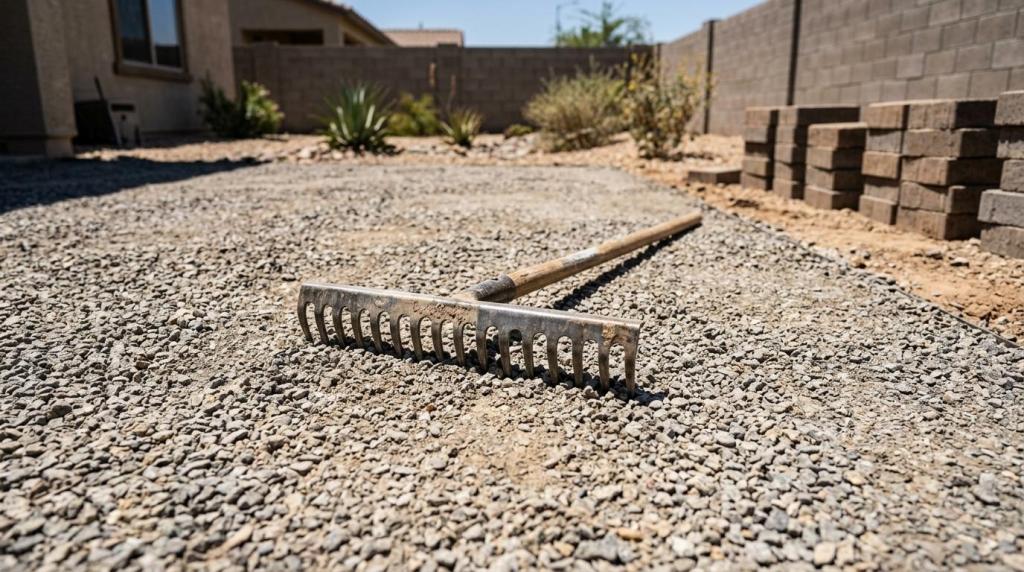
A desert-ready plan usually starts with clearing old turf, weeds, debris, or worn rock, then shaping the ground so water moves away from structures and toward the right collection points. In some yards, that means gentle grading. In others, it may call for swales, dry creek features, or a stronger base layer under the decorative rock.

Pro Natural Landscape LLC takes that practical view of installation. With more than a decade of experience serving residential and commercial properties, the team focuses on site-specific work rather than one-size-fits-all layouts. That includes grading for drainage, selecting gravel that fits the property’s look and function, and pairing rock areas with drought-tolerant planting where it makes sense.

What proper installation includes

Good gravel work starts below the surface. A stable base helps prevent ruts, sinking, and uneven coverage, while edging keeps stone from spilling into sidewalks, driveways, and planting beds. For paths, patios, and drive areas, material depth also matters. Decorative rock that is too shallow will scatter and wear thin. Material that is too deep can feel loose underfoot and look unfinished.

The process often includes these core steps:

  • Site review: slope, drainage flow, utilities, and access points
  • Ground prep: removal of weeds, turf, debris, and failed rock layers
  • Base work: grading, leveling, compaction, and base material where needed
  • Containment: steel, aluminum, concrete, or paver edging
  • Top layer: evenly spread decorative gravel or rock at the right depth
  • Finishing touches: clean transitions, irrigation adjustments, and debris haul-off

This kind of prep supports long-term performance. It also creates a cleaner final look, with sharper borders, better drainage, and fewer maintenance issues after installation.

Rock and gravel options for desert landscapes

Different materials serve different purposes. Some compact well for walkways and drive areas. Others are best as decorative cover around plants or in dry creek beds. Color matters too, especially in desert landscaping, where natural browns, grays, reds, and blended earth tones usually sit best with the surrounding environment.

Here is a quick look at common choices for El Mirage properties:

Material Best Uses Benefits Things to Know
Decomposed granite Paths, patios, utility zones Natural desert color, compactable, budget-friendly Can break down over time and may need topping off
Pea gravel Beds, walkways, accent areas Good drainage, softer look, comfortable underfoot Shifts more easily without edging
River rock Dry creek beds, focal points, drainage areas Durable, decorative, strong water-flow appearance Higher material cost, heavier to install
Crushed granite Driveways, side yards, utility access Stable, firm surface, works well under traffic Rougher texture than pea gravel
Lava rock Accent beds, cactus gardens Lightweight, porous, strong contrast with plants Needs containment in windy areas
Marble chips Bright accent zones Distinct look, reflective, long-lasting Can be too bright for large open areas

Material choice should reflect how the space will be used, how much sun it gets, and how much movement the surface needs to handle. A front yard display area, a dog run, and a side-yard access path should not all be built the same way.

Drainage, grading, and erosion control

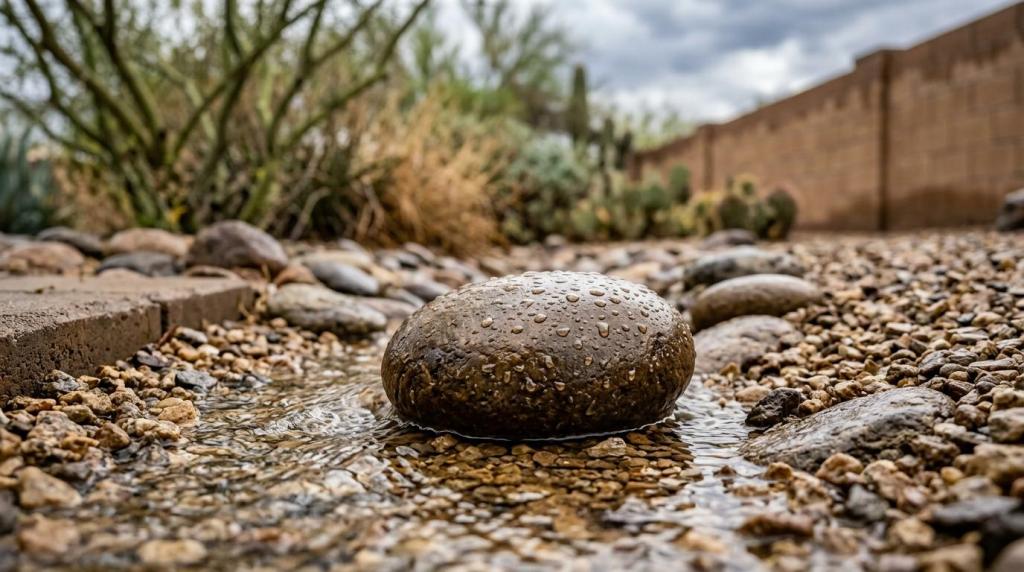
This is where professional installation earns its value. A gravel yard that is not graded correctly can send runoff toward the home, wash material into the street, or create puddling around foundations and walkways. In desert climates, even a short storm can expose a weak installation.

That is why drainage planning comes first, not last. Dry creek beds, shallow basins, controlled slopes, and permeable surfaces all help direct water where it belongs. On sloped properties, terracing, retaining features, or carefully shaped transitions may be needed to slow runoff and keep soil in place.

Weed control matters too. Many property owners ask about landscape fabric, yet fabric is not always the best long-term answer in desert rock beds. It can clog, surface over time, and still allow weeds to grow in the dust and organic matter that collects above it. In many cases, a better strategy is strong site prep, thick rock coverage, and ongoing weed management as needed.

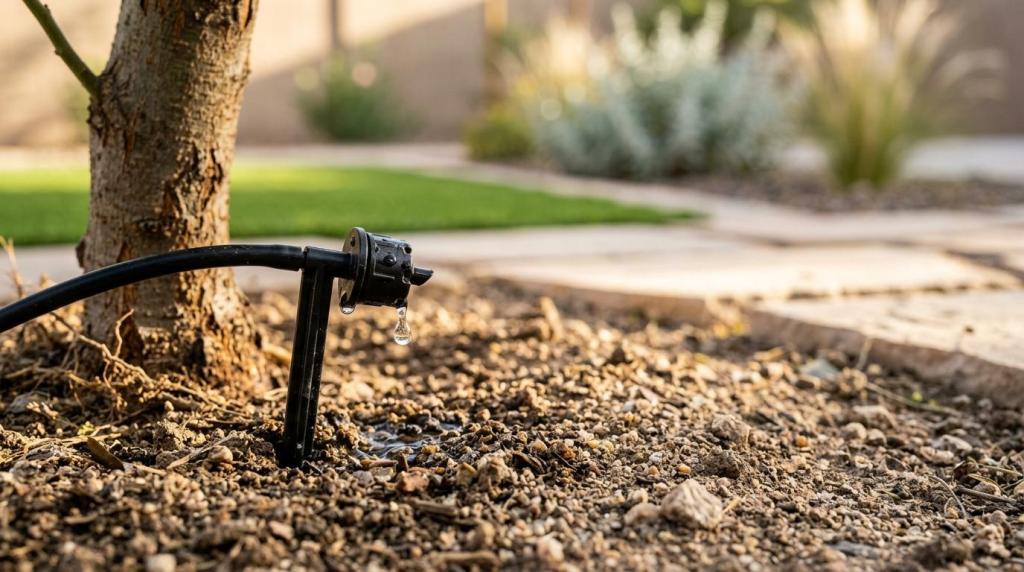
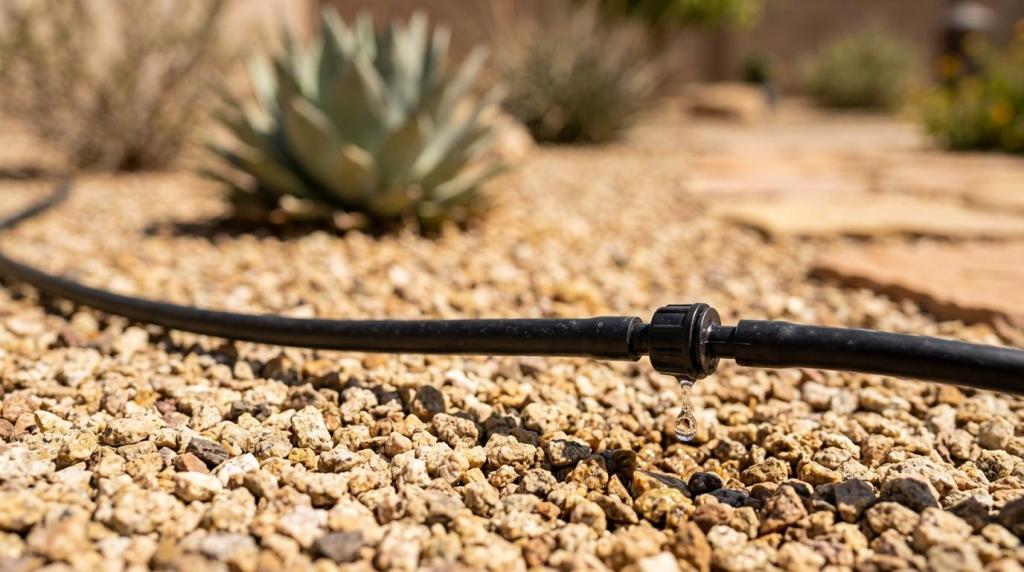
Irrigation should also be worked into the layout from the start. Drip lines can be run below the gravel or placed at planting zones so water goes directly to the root area rather than being wasted across open ground.

Where gravel works especially well

Gravel is one of the most flexible materials in desert landscaping. It works in both simple refresh projects and larger yard transformations, and it pairs easily with pavers, artificial turf, lighting, and low-water planting.

On residential and commercial properties in El Mirage, it is commonly used for:

  • Front yard lawn replacements
  • Side yards and utility corridors
  • RV and gate access areas
  • Decorative plant beds
  • Dry creek features
  • Dog runs and low-maintenance backyards
  • Office entries and commercial frontage

When those spaces are tied together with matching tones and clean edging, the whole property feels more intentional and easier to care for.

A smarter low-water landscape

Replacing turf with gravel can cut outdoor water use in a big way, especially when the new design includes native or drought-tolerant plants and efficient irrigation. That matters in Arizona, where water savings are not just a nice bonus. They are part of responsible property planning.

Gravel also helps reduce day-to-day maintenance. There is no mowing, no fertilizing, and no regular turf repair. Seasonal care is usually limited to blowing off leaves, removing debris, occasional weed treatment, and adding fresh material when needed in high-traffic zones.

The payoff is both visual and practical:

  • Lower water demand: less irrigation than traditional grass yards
  • Cleaner curb appeal: crisp lines and a finished desert look year-round
  • Less upkeep: no weekly mowing or edging
  • Better soil protection: reduced washout during monsoon season
  • Flexible design: works with pavers, lighting, succulents, cacti, and shade trees

Why property owners choose Pro Natural Landscape LLC

Experience matters with gravel installation because the finish is only as good as the grading beneath it. Pro Natural Landscape LLC brings more than 11 years of local landscaping experience to projects across El Mirage and nearby Arizona communities. As a family-owned company, the focus stays on clear communication, dependable scheduling, and results that fit the property rather than forcing a generic template onto it.

The company provides full-service outdoor work, which is helpful when a gravel project includes more than rock alone. A property may need irrigation updates, paver borders, tree removal, land grading, lighting, or cleanup before the new surface goes in. Having one team manage those connected tasks can keep the project moving on time and with fewer gaps between phases.

Free estimates are available, and financing options through Hearth can make larger yard upgrades more manageable. Whether the goal is a simple rock refresh, a new desert front yard, or a full low-maintenance redesign for a home or commercial site, the work starts with the same priority: get the foundation right, choose materials with care, and build a landscape that fits El Mirage’s climate instead of fighting it.

Landscape Maintenance Checklist: Weekly, Monthly, and Seasonal Tasks

A healthy landscape rarely comes from occasional big cleanup days. It usually comes from a rhythm: small weekly checks, deeper monthly attention, and seasonal resets that keep the whole property working the way it should.

That matters even more in places like El Mirage and surrounding Arizona communities, where heat, wind, sun exposure, and water use can change the condition of a yard fast. A smart checklist helps protect plants, irrigation systems, pavers, gravel, lighting, and the overall appearance of the property without turning maintenance into a constant chore.

Why a time-based checklist works

Most outdoor spaces have several systems working at once. Trees and shrubs need pruning at the right time. Irrigation needs adjustment as temperatures shift. Hardscapes need cleaning and occasional protection. Lighting, drainage, and grading affect both beauty and function.

When those tasks are grouped by week, month, and season, maintenance becomes much easier to manage. Weekly care catches small problems early. Monthly work keeps wear from building up. Seasonal tasks prepare the property for the next stretch of weather instead of reacting after damage appears.

A simple schedule also helps property owners decide what can be handled as routine upkeep and what calls for professional help.

The core maintenance rhythm

A useful checklist does not have to be complicated. It only needs to cover the parts of the landscape that affect plant health, safety, water use, and curb appeal.

Timeframe Main Focus Typical Tasks
Weekly Observation and quick correction Debris removal, irrigation check, weed spotting, lighting check, quick plant inspection
Monthly Deeper maintenance Pruning, irrigation review, emitter and sprinkler adjustments, bed cleanup, gravel leveling, hardscape inspection
Seasonal Reset and preparation Watering schedule changes, planting updates, mulch or gravel refresh, paver care, drainage review, larger repairs

That structure works well for many residential and commercial properties because it matches how landscapes actually change. Most issues do not appear all at once. They build gradually, then become expensive when ignored.

Weekly tasks that prevent bigger problems

Weekly landscape care is less about heavy labor and more about awareness. Five or ten minutes spent walking the property can save water, protect plants, and keep the yard looking intentional instead of neglected.

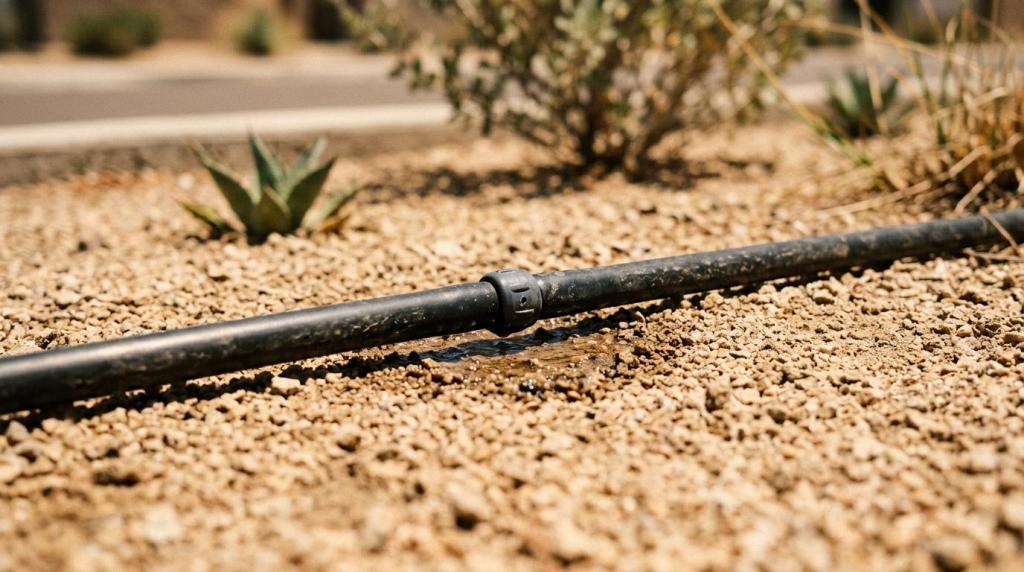
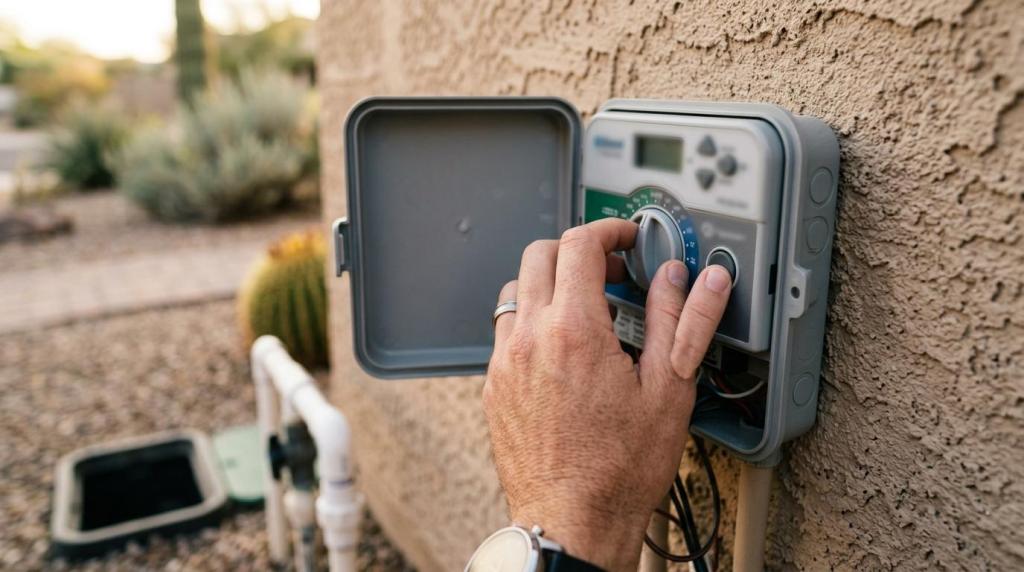
On a typical weekly pass, look at irrigation first. In Arizona, watering problems can show up quickly as dry patches, runoff, stressed shrubs, or unusually high bills. Make sure timers are running correctly, emitters are not clogged, and sprinkler heads are not spraying pavement or block walls.

Then focus on cleanup and visual order. Windblown debris, small weed growth, and broken branches can make an otherwise attractive yard look untidy in a matter of days. Outdoor lighting should also be checked regularly, especially on properties where safety and evening visibility matter.

  • Pick up debris
  • Check irrigation zones
  • Spot weeds early
  • Scan for broken branches
  • Remove litter from beds and gravel
  • Test landscape lighting after dark

This is also the best time to notice subtle changes in plant health. Leaves that are yellowing, scorched, curling, or dropping early may be reacting to watering issues, heat stress, pests, or root problems. A weekly walk-through often catches those signals before plant replacement becomes necessary.

Monthly tasks that keep the landscape balanced

Monthly maintenance is where the property gets tuned, not just tidied. This is the time to prune for shape, check irrigation performance more closely, and refresh landscape areas that have started to shift or thin out.

For softscape areas, monthly work may include trimming shrubs away from walkways, removing spent growth, edging bed lines, and checking whether any plants are overcrowded. For gravel and decorative rock, monthly attention may mean raking displaced areas back into place and clearing organic debris that can trap moisture or encourage weeds.

Hardscape surfaces deserve a monthly look as well. Pavers, travertine, tile, brick borders, and concrete-adjacent features should be checked for stains, joint issues, movement, or drainage problems. If a surface starts to settle, the best result usually comes from addressing it early rather than waiting for a full renovation.

A strong monthly review often includes these checkpoints:

  • Irrigation: Run each zone long enough to spot clogs, leaks, misting heads, and uneven coverage
  • Plant structure: Prune dead or crossing growth and keep shrubs off paths, walls, and fixtures
  • Ground surfaces: Re-level gravel, remove weeds from joints, and note low spots where water collects
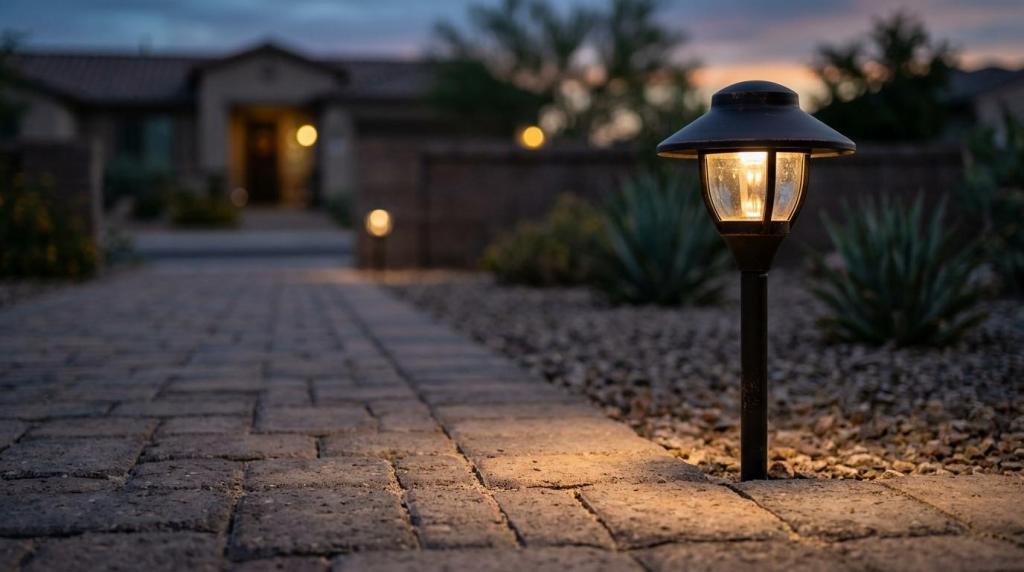
  • Lighting: Replace failed bulbs, clean fixtures, and make sure lights still highlight entries and pathways
  • Hardscape condition: Look for loose pavers, faded sealant, edge movement, or early cracking

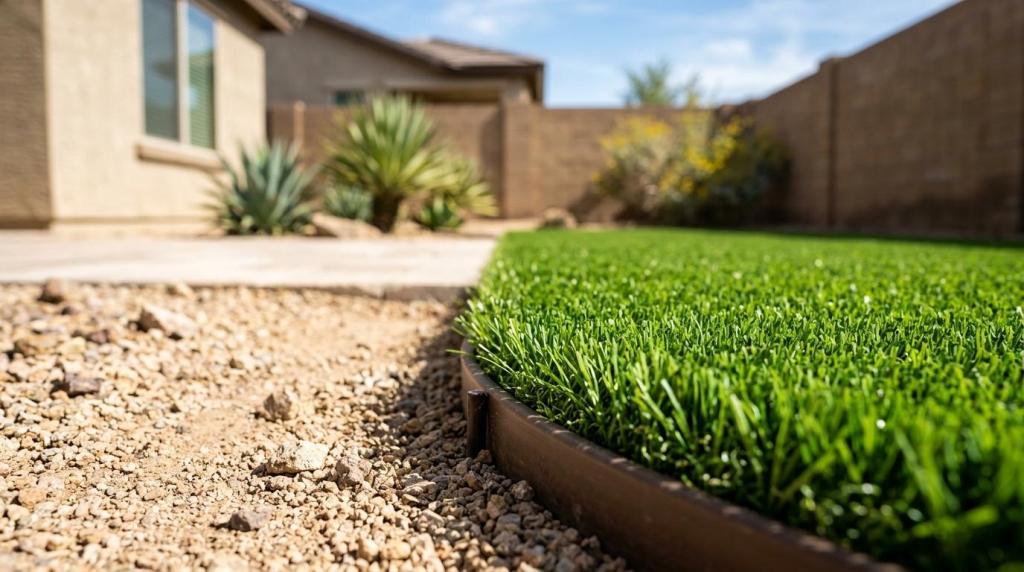
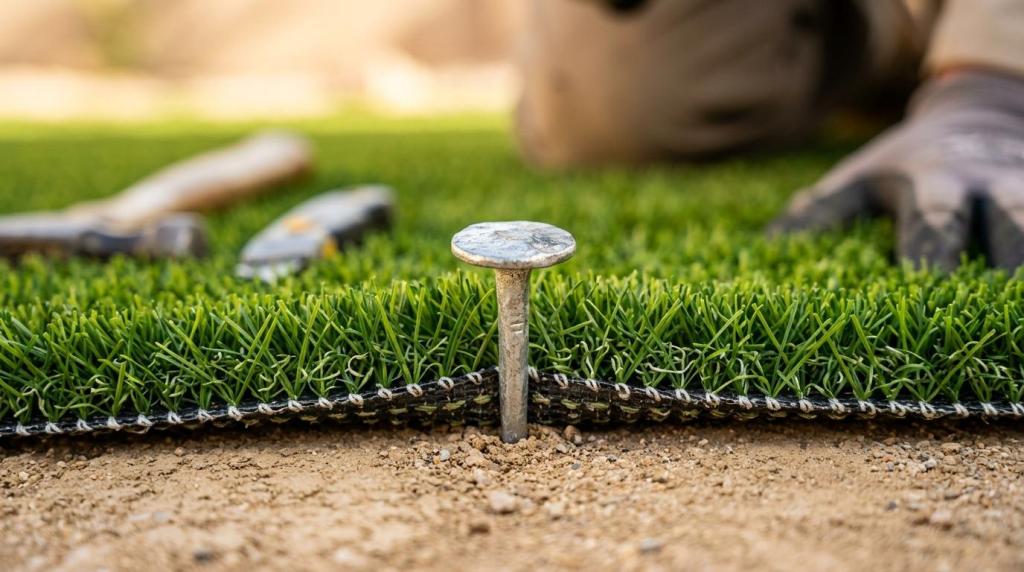
For properties with artificial grass, monthly care shifts a bit. Instead of mowing or watering, the priority becomes brushing high-traffic areas, removing debris, rinsing when needed, and checking edges or seams. Low-maintenance does not mean no-maintenance, but it does simplify the schedule.

Seasonal care is where Arizona landscapes really change

Weekly and monthly routines keep a property steady. Seasonal work prepares it for different demands.

In Arizona, that often means adjusting irrigation before the weather becomes extreme, cleaning up after windy periods, and making thoughtful plant and material decisions that suit strong sun and limited water.

Spring

Spring is a reset season. Beds are cleaned, old plant material is removed, and new growth is encouraged. It is a good time to inspect irrigation before summer demand rises, refresh gravel or decorative surfaces, and replace plants that did not make it through winter.

This is also when many property owners notice where the design needs refinement. A shrub may have outgrown its spot. Lighting may be blocked by new growth. A bare corner may benefit from fresh planting or a hardscape feature.

Summer

Summer puts the entire landscape under pressure. Irrigation becomes the top priority, because even a small malfunction can stress turf, shrubs, or trees in a short window.

During hot months, watering schedules often need revision to match temperature, plant type, and sun exposure. Deep watering is usually more effective than frequent shallow cycles, though the right schedule depends on the irrigation layout and the planting palette. Summer is also the season to watch for sun scorch, heat reflection from walls, and signs that certain plants are poorly matched to the site.

One sentence matters here: if the watering schedule is wrong, almost everything else in the landscape suffers.

Fall

Fall is a transition period, and that makes it ideal for correction. Growth begins to slow, temperatures become more manageable, and it is easier to prune, clean, and plan improvements.

This is a good season to reduce irrigation gradually, clear accumulated debris, inspect drainage paths, and prepare hardscapes for cooler months. On many properties, fall is also a practical time for paver cleaning, sealing work, gravel additions, fence repairs, or selective replanting.

Winter

Winter maintenance in the Arizona desert is lighter, though it should not stop. The yard still benefits from cleanup, irrigation review, and routine monitoring of trees, shrubs, and lighting.

Because growth slows, winter often becomes a strong window for structural work. Tree removal, stump grinding, grading corrections, wall repairs, tile or brick work, and larger design updates can often be scheduled with less disruption to actively growing plants.

Signs that the checklist needs to change

No checklist should stay fixed all year. Landscapes change as plants mature, materials settle, and weather patterns shift.

That is why it helps to treat the schedule as a living plan rather than a rigid worksheet. If the property includes mature trees, extensive pavers, artificial turf, or a complex irrigation system, some tasks may need more frequent attention than a standard calendar suggests.

Here are a few signs the routine should be adjusted:

  • Water use spike: A bill increase often points to leaks, bad timing, or inefficient coverage
  • Recurring weeds: The issue may be irrigation overspray, bed contamination, or thin ground cover
  • Plant stress in one zone: Exposure, soil conditions, or emitter performance may differ from the rest of the yard
  • Pooling water: Grading or drainage correction may be needed before roots and hardscapes are affected
  • Surface movement: Shifting pavers, gravel washout, or cracked edging usually gets worse with delay

Different landscape features need different care

A checklist works best when it reflects what is actually on the property. A lawn-focused yard does not need the same routine as a desert-style landscape with gravel, pavers, and drip irrigation. A commercial property with lighting and heavy foot traffic has different priorities than a private backyard built for relaxation.

That is why many maintenance plans are organized by service area as much as by timeframe. Plant care, irrigation, lighting, cleanup, and hardscape upkeep each have their own pattern. When they are coordinated well, the whole property feels cleaner, healthier, and easier to manage.

For many Arizona properties, irrigation is still the anchor. Watering schedules influence plant health, weed growth, drainage, and long-term costs.

As Southern Arizona Rain Gutters emphasizes, aluminum gutter installation with correctly sized runs and well-sited downspouts can stabilize surface drainage at the house perimeter and keep adjacent planting areas from flooding or eroding during monsoon bursts.

That is why many maintenance plans are organized by service area as much as by timeframe. Plant care, irrigation, lighting, cleanup, and hardscape upkeep each have their own pattern. When they are coordinated well, the whole property feels cleaner, healthier, and easier to manage.

For many Arizona properties, irrigation is still the anchor. Watering schedules influence plant health, weed growth, drainage, and long-term costs.

When routine care turns into a project

Some issues sit outside the weekly or monthly list. A failing sprinkler line, severe overgrowth, a tree removal need, a damaged block wall, widespread paver settling, or major grading trouble usually calls for a larger scope of work.

That shift is not a sign that maintenance failed. It often means the property is ready for an upgrade, a correction, or a more efficient layout. Many outdoor spaces become easier and less expensive to care for after irrigation improvements, cleaner bed design, durable hardscape installation, or the addition of low-water materials.

A well-kept landscape is not only about appearance. It supports property value, reduces waste, improves usability, and creates outdoor spaces that feel calm and cared for all year. In a climate like Arizona’s, that kind of consistency is built one checklist item at a time.

Travertine Pavers: Benefits, Drawbacks, and Best Uses Outdoors

Travertine pavers have a way of making an outdoor space feel settled and intentional, almost like it has always belonged there. The stone reads “natural” at a glance, yet it still feels refined, which is why it shows up everywhere from compact courtyards to resort-style pool decks.

At the same time, travertine is not a set-it-and-forget-it material. The same pores and character that give it warmth also shape how it performs around grease, leaves, sprinklers, and hard water. If you know what you are buying and install it correctly, travertine can be a confident, long-term choice.

What travertine pavers are (and why they look different)

Travertine is a natural limestone formed by mineral-rich water. That origin story matters: it explains the signature holes, the soft veining, and the tone range that sits comfortably in desert palettes and classic Southwestern architecture.

Those small surface voids are not a defect. They are part of the stone’s personality, and they can be left open for a more organic look or filled for a smoother appearance. Finishes also change the vibe and the traction. Outdoors, most projects favor tumbled or honed surfaces over polished ones.

The advantages that make travertine popular outdoors

Travertine earns its reputation by combining comfort and curb appeal in a way many manufactured pavers struggle to match. It can look high-end without feeling flashy, and it tends to age gracefully when it is cared for.

A few benefits stand out in real backyards, not just on sample boards:

  • Warm, natural color variation
  • Quiet elegance that pairs well with gravel, desert plants, and modern stucco
  • Cooler underfoot: lighter tones and natural porosity help reduce heat buildup on sunny patios and pool surrounds
  • Slip-friendlier texture: tumbled and honed finishes provide traction in wet zones compared with polished stone
  • Long service life: when installed on a proper base and sealed as needed, it can hold up for decades of foot traffic
  • Repair flexibility: individual pavers can be replaced more easily than a cracked slab

One more plus that homeowners notice quickly: travertine tends to make outdoor living feel better. When the surface is comfortable on bare feet and visually calm, people actually use the space more.

The trade-offs: where travertine asks more from you

Travertine’s drawbacks are not deal-breakers, but they do change how you plan the project. Most issues trace back to one reality: it is stone with pores, not a sealed, factory-finished product.

If you want travertine to stay crisp, you need a realistic view of staining risk, sealing, and where you place grills and planters.

  • Porosity and staining: oils, barbecue drips, fertilizer, and leaf tannins can sink in without a quality sealer
  • Edge chipping from sharp impacts
  • Maintenance rhythm: periodic sealing and pH-neutral cleaning keep the surface from dulling or blotching
  • Higher upfront cost than concrete pavers
  • Finish selection matters, since polished surfaces can be slick when wet
  • Freeze-thaw sensitivity in cold climates if water gets into the stone and expands

Travertine can also react poorly to harsh chemicals. Acidic cleaners and aggressive pressure washing are common ways people accidentally etch or roughen the surface.

Best uses outdoors (and where you may want a different material)

Travertine is often at its best when the goal is comfort, traction, and a relaxed, upscale look. It is a natural fit for outdoor living zones where people linger.

Pool decks are the classic example, because the stone can stay more comfortable under strong sun and the textured finishes help with grip around water. Patios and courtyards are close behind, especially when the home’s architecture benefits from warm neutrals rather than bold reds or stark grays.

Driveways can work too, but only when thickness, base preparation, and load expectations are treated seriously. For heavy vehicles or tight turning radii, many projects shift toward thicker stone, a reinforced base, or an alternate paver type.

Here is a practical way to match the application to the right travertine “spec”:

Outdoor area Recommended finish Typical thickness target Why it works well
Pool deck / spa surround Tumbled or honed 1.25 in (often thicker for coping) Comfortable surface temperature and reliable traction
Patio / outdoor dining Tumbled, honed, or brushed 1.25 in Premium look with good day-to-day durability
Walkways / garden paths Tumbled or brushed 1.25 in Natural texture, good drainage between joints
Steps / landings Textured finish with proper nosing detail Varies Safer footing and cohesive style with adjacent patios
Driveways Tumbled or honed, high-density stone 1.5 in to 2 in (project-specific) Can perform under vehicles when engineered correctly

In spaces with lots of grease, like an outdoor kitchen line, travertine can still be used, but it benefits from smart zoning. A small strip of more stain-resistant surface under a grill, paired with travertine around it, can keep the aesthetic while lowering risk.

Climate fit: desert heat, monsoons, and winter extremes

In hot, sunny regions, travertine is widely appreciated because it can stay more pleasant underfoot than many darker materials. In places like El Mirage and the broader Phoenix area, that comfort factor is not a minor perk. It affects how often a patio gets used from late spring through early fall.

Rain is usually less of a structural concern than staining. Wind-driven dust plus monsoon water can push fine sediment into pores and joints, which is another reason sealing and good drainage details matter.

Cold climates introduce a different challenge: freeze-thaw cycles. If water enters the stone and freezes, it expands. Over time, that can lead to cracking or surface breakdown, especially with lower-density travertine. In those regions, dense stone selection, a well-draining base, and a consistent sealing plan are not optional.

Installation details that decide whether travertine thrives

Travertine is unforgiving of shortcuts that might slide by with concrete pavers. The stone will not “hide” poor drainage, a soft base, or sloppy joint work for long.

A strong installation starts with excavation and compaction that match the soil and the expected load. Then comes a base that drains well and holds grade, edge restraints that actually restrain, and joints that resist erosion.

Sealer choice is also a performance choice. Many outdoor projects do best with a penetrating sealer that helps repel stains while still letting the stone breathe. The goal is not a plastic-looking shine. The goal is controlled absorption.

When travertine is installed around pools, details get even more important: slope away from the waterline, joint stability, and compatibility with pool chemicals. A good plan accounts for movement, drainage paths, and where water will repeatedly splash and evaporate.

A maintenance approach that feels easy because it is consistent

Travertine maintenance is straightforward when it is done on a schedule. The stone responds best to gentle cleaning and quick attention to spills, instead of occasional aggressive “rescue” scrubbing.

Most homeowners do well with a simple routine:

  1. Sweep or blow debris regularly, especially leaves and soil that can stain after watering
  2. Wash with a pH-neutral cleaner as needed, then rinse thoroughly
  3. Re-seal on a cadence that matches exposure and use, often every 1 to 3 years in hard-working areas

A few habits make a noticeable difference over time: use furniture pads, avoid dragging metal legs, and keep planter drainage from constantly wetting the same spot. Near grills, a mat designed for high heat and grease control can protect the stone without changing the look of the whole patio.

Cost and value: what you are really paying for

Travertine is usually priced above concrete pavers, both for material cost and for the craftsmanship it demands. Many homeowners still choose it because it can deliver a “finished” look that supports resale appeal and daily enjoyment.

Value is not only about the day-one budget. It is also about how long the surface stays attractive, how comfortable it feels in peak heat, and whether the space becomes a place you actually want to spend time.

If the budget needs flexibility, it is common to phase work: install travertine in the highest-impact area first, then expand later with matching stone, complementary pavers, or gravel and planting.

Choosing travertine with confidence

Travertine is a strong pick when you want a natural surface that looks timeless, stays comfortable in the sun, and supports a premium outdoor design. It is less ideal when the space will be constantly exposed to oil, harsh cleaners, or freeze-thaw stress without a plan for sealing and drainage.

A helpful next step is to review your layout with an installer who works with both hardscape and drainage, since pitch, base preparation, and joint strategy often matter as much as the stone itself. In the El Mirage area and nearby Arizona communities, Pro Natural Landscape LLC installs travertine and other outdoor surfaces as part of full-service landscape and hardscape projects, offering free estimates and financing options through Hearth for qualifying projects.

Pavers vs Concrete Patio: Cost, Durability, and Maintenance Compared

A patio is never just a surface. It is a structural system that has to manage load, drainage, heat, and years of foot traffic while still looking intentional next to your home. When homeowners compare pavers vs. a poured concrete slab, the first number they see is the install price per square foot. The better question is what that price buys you over the next 10, 20, or 40 years.

In Arizona communities like El Mirage, that long view matters. Intense sun, monsoon bursts, shifting soils, and irrigation overspray can punish shortcuts. A patio that is planned well feels effortless to use and stays that way.

The “cost” of a patio is really the cost of a system

Concrete and pavers are installed differently, and those differences show up in both the invoice and the future repair plan.

A typical concrete patio is a monolithic slab: subgrade prep, formwork, reinforcement (sometimes), pour, finish, then curing. You are paying for speed and simplicity. When it is done well, it looks clean and performs well. When something moves underneath it, the slab has only one way to respond.

Interlocking pavers are modular: excavation, a compacted aggregate base, bedding sand, pavers set in a pattern, edge restraints, joint sand (often polymeric), then compaction. You are paying for detailed labor and more materials. The reward is flexibility, because a modular surface can be adjusted and repaired in sections.

The biggest pricing misunderstandings happen when the comparison treats both options as just “surface material” instead of “surface plus engineered base.”

Typical installed price ranges (and why they vary)

National pricing surveys commonly land in these broad ranges:

Item (Installed) Typical Concrete Range Typical Paver Range What that range usually reflects
Cost per square foot $4 to $15 $10 to $30 (high-end can reach $50) Finish level, site access, excavation depth, base requirements
20×20 patio (400 sq ft) $2,000 to $6,000 $3,800 to $6,800 Basic slab vs. standard paver system
Repairs over time (typical pattern) Fewer small fixes, occasional big one More small tune-ups, rare major redo Crack risk vs. joint upkeep

Those numbers overlap on purpose. A basic paver layout with easy access can compete with decorative concrete with coloring, stamping, saw cuts, or demolition work. The center of gravity is still consistent: concrete tends to win the initial budget line, while pavers tend to win on adaptability.

After you have a baseline range, pricing usually swings based on a handful of variables:

  • Access and staging: Tight side yards and limited wheelbarrow paths raise labor time for either material.
  • Base depth and compaction: Poor soils, drainage needs, or heavier use can call for a thicker, better-compacted base.
  • Design and cutting: Curves, inlays, borders, steps, and multiple elevations add cutting and layout time.
  • Drainage strategy: Spot drains, swales, tie-ins, and slope correction change excavation and grading scope.
  • Permits and demolition: Some jurisdictions treat slabs differently than dry-laid systems, and removal of existing concrete is its own line item.

A useful way to think about it: concrete pricing is often sensitive to finish and site work, while paver pricing is sensitive to layout complexity and base construction.

Cost breakdown: materials are only half the story

Many homeowners compare a pallet of pavers to a truck of ready-mix and assume that is the whole decision. Labor and preparation usually decide the final number.

Concrete can look deceptively inexpensive because the installation steps are consolidated. Pavers distribute the work into more steps and require precision repeatedly across the whole surface.

A clear estimate should spell out what is included, not just the top-layer choice. When a quote is light on excavation depth, compaction method, edge restraint details, and drainage plan, the low number can become expensive later.

Durability: cracking, settling, and what “failure” looks like

Both patios can last for decades when installed correctly. They fail differently, and that difference shapes the real-life experience of ownership.

Concrete is strong in compression and handles daily patio loads easily. Its common weakness is cracking. Some cracks are cosmetic hairlines. Others telegraph movement, poor subgrade support, or water-related undermining. Control joints and reinforcement help manage cracking, but they do not promise a crack-free slab.

Pavers are individual units, so they do not “crack across the whole patio” in the same way. If the base settles in a spot, you see a low area, a slight lip, or a loose unit. That is a problem, yet it is localized. A good crew can lift and reset that section without touching the rest of the field.

In hot, high-UV environments, appearance durability also matters. Concrete can discolor, show stains, or develop surface wear if it is not sealed and cared for. Many pavers are manufactured with stable pigments, and natural stone tends to keep its character even as it weathers.

A patio that is easy to repair is often the patio that lasts the longest in practice.

Maintenance is not “more” or “less,” it is a different schedule

Neither option should feel like a weekly chore. The difference is what you maintain.

Concrete maintenance tends to be occasional but important: keeping the surface clean, sealing periodically, and addressing cracks early so water intrusion does not widen the problem. If a slab needs resurfacing or replacement, that is a bigger event.

Paver maintenance is lighter-touch but more frequent: sweeping, rinsing, watching joint sand, and managing weeds at the joints if they appear. Sealing is optional for many owners, though it can help with color richness and stain resistance.

Here is a practical side-by-side view:

Task Pavers Concrete
Routine cleaning Sweep, rinse, occasional pressure wash Sweep, rinse, occasional pressure wash
Sealing Optional, often every 2 to 5 years if chosen Often recommended every 3 to 5 years
Weeds Possible at joints if joint sand breaks down Rare except at cracks or slab edges
Repair style Replace or reset a small area Patch cracks, resurface, or replace larger areas
“Looks new again” Swap stained units, refresh joint sand, optional color sealing Clean, re-seal, overlay or resurface if worn

If you want the lowest-effort weekly routine, concrete often feels simpler. If you want the lowest-drama repair path, pavers often feel calmer.

After you decide which maintenance profile fits your household, it becomes easier to choose confidently.

  • Sweeping and quick rinse-offs
  • Joint sand touch-ups
  • Periodic sealing
  • Crack monitoring
  • Spot repairs after drainage events

Design flexibility: where pavers tend to pull ahead

A patio is part architecture, part landscape. That is where pavers routinely justify their higher starting price.

With pavers, patterns and borders can visually “square up” a yard that is not perfectly square. Color changes can define a dining zone, a fire feature zone, or a walkway connection without adding walls. Small shifts in texture can reduce slip risk and make transitions feel deliberate.

Concrete has options too, including broom finishes, exposed aggregate, staining, and stamping. The constraint is that the design is locked into one slab. If tastes change or an addition is built later, revising concrete often means demolition or a top-layer overlay.

In neighborhoods where outdoor living is a selling point, design clarity matters. A patio that looks intentional tends to photograph well, and it signals that the rest of the property was cared for with the same discipline.

Repair scenarios: what happens years after installation?

Picture two common “real life” moments.

One: a heavy rain reveals a low spot where water wants to sit. With pavers, a section can be lifted, base corrected, and reset. With concrete, the fix is more limited: drainage changes around the slab, grinding, overlays, or replacement depending on severity.

Two: a stain from rust, grease, or plant tannins becomes an eyesore. With pavers, you can sometimes clean it, flip the unit if appropriate, or replace a small area. With concrete, stain removal can work, yet it can also leave a shadow that never fully disappears without resurfacing or recoloring.

Long-term ownership is less about avoiding every problem and more about choosing problems that stay manageable.

What drives value in El Mirage and similar Arizona communities

Heat, dust, and water use influence patio choices more than many homeowners expect.

Light-colored surfaces can reduce heat absorption, making a patio more comfortable for bare feet and pets. Drainage control matters because monsoon downpours can move fines under hardscapes and create settlement. Irrigation overspray can lead to efflorescence or algae in shaded corners, especially when water schedules are not tuned.

This is where professional planning earns its keep: grading, compaction, and water management are not glamour items, yet they decide whether your patio still feels flat and solid years later. Many family-owned landscaping teams in the West Valley emphasize exactly this point, because durability is built into the base long before the top surface goes down.

A decision guide that respects both budget and ambition

If you are choosing between pavers and concrete strictly on the install total, concrete will often look better. If you are choosing based on lifespan flexibility, pavers tend to shine. The best fit depends on how you will use the space and how you want to maintain it.

A quick decision framework can help:

  1. Budget-forward refresh: Choose a straightforward concrete patio with a clean finish and a sealing plan, then invest saved dollars in shade, seating, or lighting.
  2. Long-horizon outdoor living: Choose pavers when you want design control and a patio that can be adjusted or expanded without redoing everything.
  3. High-visibility entertaining space: Choose pavers when pattern, borders, and transitions matter as much as the square footage.
  4. Low-interruption property management: Choose pavers when you prefer small, localized repairs over the risk of a disruptive slab replacement.

Getting accurate numbers from an estimate

Online ranges are helpful, yet your property’s constraints set the true cost. A quote that is truly comparable should specify square footage, excavation depth, base materials, compaction approach, drainage slope, and finishing details.

If you are collecting bids, ask each contractor to explain what is happening below the surface and how water will move away from the home. Ask how repairs are handled if a section settles. Good communication here is not a luxury; it is part of quality control.

Many homeowners also like to keep options open with financing for larger outdoor projects, especially when bundling a patio with lighting, irrigation adjustments, gravel, or a walkway connection. In the El Mirage area, some contractors offer free estimates and financing options through providers like Hearth, which can make it easier to choose the patio you actually want rather than the one that merely fits this month’s cash plan.

Backyard Drainage Solutions: How to Fix Standing Water and Runoff

Standing water in a backyard rarely comes from “too much rain” alone. It usually comes from water meeting a surface that cannot absorb it fast enough, plus a layout that gives runoff nowhere safe to go. The good news is that drainage problems are often very fixable, and the best fixes tend to make the yard more usable, more resilient, and easier to maintain.

In places like El Mirage and surrounding Arizona communities, you can see both extremes: long dry stretches that harden soil, followed by intense storms that drop a lot of water in a short time. That pattern rewards yards built with clear flow paths, healthy soil, and a few smart capture points.

Why backyards pool water (even when it “should” drain)

Start by separating symptoms from causes. A soggy patch is the symptom; the cause is usually one of these:

  • A low spot where water naturally collects after grading changes, settling, or previous construction.
  • Compacted soil from foot traffic, equipment, or years of irrigation, which blocks infiltration.
  • Clay or caliche layers that act like a lid, forcing water to move sideways instead of down.
  • Runoff concentration where roof water, side yards, or hardscape funnels flow into one area.
  • Irrigation problems including overspray, broken heads, or a valve that never quite shuts off.

After a storm, look for “shiny routes” in the soil or gravel where water clearly traveled. Those routes tell you where to intercept and redirect flow with the least disruption.

A one-afternoon diagnosis that saves weeks of trial and error

Before digging trenches or buying materials, take an hour to map what is actually happening.

Walk the yard in light rain if possible, or right after a storm. Note where water enters (downspouts, side gates, driveway edges), where it speeds up, and where it slows down.

Then do a simple infiltration check in the problem area:

  1. Dig a hole about 10 inches deep.
  2. Fill it with water once to pre-wet the soil.
  3. Fill it again and watch how long it takes to drain.

If water still sits in the hole many hours later, the soil is telling you that “soak it in here” is not a reliable plan without amendments or an overflow outlet. That pushes you toward conveyance (grading, swales, piping) rather than relying on infiltration alone.

A few field clues make diagnosis faster:

  • Ponding that hugs the house can be a grade issue, and sometimes a foundation risk.
  • Water that appears days after rain often points to irrigation, shade, or a slow subsurface layer.
  • Muddy water moving across the surface suggests erosion potential, meaning velocity control matters.

Quick fixes that change the very next storm

Some of the most effective drainage moves are modest, as long as they are placed correctly.

Start at the roofline. Gutters and downspouts are powerful plumbing, and when they dump next to a wall or into a tight side yard, you get concentrated flow and rapid ponding. Downspout extensions, splash blocks, or a hard-piped connection to a safe discharge point can transform a yard without touching the lawn.

After that, focus on keeping water moving across the surface in a controlled way. Many yards can be improved by resetting a small grade at the trouble spot, adding a shallow surface channel, or reworking gravel so water does not hit a “speed bump” and stall.

A few dependable early wins:

  • Downspout extensions
  • Cleaning clogged gutters and yard drains
  • Re-aiming irrigation heads away from walls
  • Adding mulch to bare soil to soften raindrop impact and slow crusting

These steps do not replace structural drainage when the site needs it, but they often reduce the volume and speed that the bigger system has to handle.

Structural drainage solutions that last

Lasting drainage is usually a combination, not a single feature. The right mix depends on soil behavior, available fall (gravity slope), and what you want the yard to feel like day to day.

After you identify where the water should go, you can choose tools that either (1) move water away or (2) hold water briefly and let it soak in safely.

A practical way to choose is to weigh these site factors:

  • Soil behavior: Does water soak in within a day, or does it linger?
  • Space: Can you spare a few feet for a swale or rain garden, or is the yard tight?
  • Outlet options: Is there a legal, lower discharge point available, or must the yard store water onsite?
  • Storm style: Short intense bursts call for capture and overflow planning, not just infiltration.

Grading and swales (surface shaping)

Positive drainage away from structures is foundational. Even a 1 to 2 percent slope away from the home can prevent water from lingering where it causes the most damage. When a yard is larger, a shallow vegetated swale can guide runoff along a deliberate path, slowing it while still moving it.

Swales can be subtle. They do not need to look like ditches. With the right contour and planting, they read as a gentle landscape line that happens to carry stormwater when needed.

If the yard is steep or water arrives fast, add erosion control at high-energy points (downspout outlets, turns, transitions) using rock, gravel, or reinforced turf zones.

French drains (subsurface collection and conveyance)

A French drain is a gravel-filled trench with a perforated pipe that collects water and routes it away. It is especially helpful when you have a consistent wet strip, a low area that cannot be regraded enough, or a transition where surface water keeps reappearing.

In heavier clay soils, a French drain should not be expected to “soak everything into the ground.” It needs a real outlet, either to a safe discharge location or to another structure that can store and release water slowly.

Details that separate a durable French drain from a short-lived one include proper slope, a clean gravel envelope, and fabric use that prevents soil fines from clogging the system.

Dry wells (infiltration chambers)

Dry wells are underground chambers that receive runoff, commonly from roof leaders, and let it infiltrate over time. They can be excellent when soils drain well and there is enough depth and separation from structures.

They can also disappoint when soils are tight or layered. If a test hole shows slow infiltration, a dry well can become a buried bathtub. In many areas, permitting or specific setback rules may apply, so planning matters.

Rain gardens (bioretention)

A rain garden is a shallow planted depression that temporarily holds runoff and filters it through soil and roots. The best rain gardens drain within 24 to 72 hours, so they do not stay soggy or invite pests.

This is where drainage becomes an aesthetic upgrade instead of a hidden fix. With the right plant palette, a rain garden reads as intentional planting, not a utility feature. In arid climates, it can also support healthier plants by catching storm pulses that would otherwise leave the property.

Permeable paving and gravel systems

Permeable interlocking pavers, open-joint systems, stabilized decomposed granite, and well-built gravel paths allow water to pass through instead of sheet-flowing into the lawn.

The base layer is the real engine here. A correctly prepared aggregate base stores water temporarily and releases it into the soil, reducing runoff peaks during heavy storms.

This approach shines in patios, walkways, side yards, and utility corridors where turf struggles anyway.

Comparing popular options at a glance

A clear comparison helps you avoid overbuilding. It also helps you combine methods sensibly, like grading that feeds a rain garden, paired with a French drain only where saturation persists.

Solution Best for Soil fit Relative cost Ongoing maintenance
Regrading, surface slope correction Water against the house, broad sheet flow issues Any (works even in clay) Low to medium Low
Vegetated swale Moving runoff across the yard without erosion Any (plant choice matters) Low to medium Low to medium
French drain with outlet Persistent wet strips, low spots, subsurface seepage Good in most soils (needs outlet in clay) Medium Low (inspect, occasional flush)
Dry well Capturing roof runoff where infiltration is strong Best in sandy or loamy soils Medium to high Low to medium (inspect sediment)
Rain garden Treating and soaking runoff while adding planting Best when it drains within 48 to 72 hours Low to medium Medium (weeding, mulch)
Permeable pavers or gravel build Reducing runoff from patios, walkways, side yards Any, with correct base Medium to high Medium (keep joints clear)

Making drainage feel like part of the landscape

The highest-performing drainage systems rarely look like “drainage systems.” They look like a yard that was shaped and planted with water in mind.

Two design moves do a lot of work:

  1. Slow, spread, and sink where possible: gentle grades, wider flow paths, planted basins.
  2. Collect and carry where necessary: subsurface piping, discreet channels, defined discharge points.

In practice, many Arizona properties benefit from mixing both. Intense storms can exceed infiltration rates, even in decent soil, so having a planned overflow route matters. A rain garden with a subtle overflow to a swale, or a French drain that discharges into a rock-lined basin, keeps the yard calm when storms are not.

Maintenance routines that keep drainage working

Drainage systems fail quietly. A little sediment, a few seasons of leaf litter, or a clogged emitter can turn a good design into a recurring mess. A simple calendar keeps performance steady.

After you have a drainage plan in place, keep it reliable with habits like these:

  • Seasonal inspection: Walk the system before storm season and after major rain.
  • Gutter and downspout cleaning: Clear debris so roof water goes where you planned.
  • Surface reset: Rake displaced gravel, refresh mulch, and repair small rills before they grow.

If you have subsurface drains, add cleanouts where practical. They make it possible to flush lines and confirm flow without excavation.

When it makes sense to bring in a professional team

Drainage looks simple until you factor in grades, utilities, soil behavior, and where water is legally allowed to go. A professional assessment can prevent costly missteps, especially when water sits near structures, flows toward neighboring property, or requires significant earthwork.

A local, full-service landscaping contractor can also coordinate the pieces that often overlap: grading, paver work, irrigation adjustments, gravel installation, and planting. For property managers and businesses, that coordination is often the difference between a quick fix and a durable site improvement.

Pro Natural Landscape LLC, a family-owned team serving El Mirage and nearby communities, typically approaches outdoor projects as integrated systems, not isolated tasks. That mindset fits drainage work well because the best results come from shaping the land, managing runoff sources, and building surfaces that handle storms gracefully. If budget timing matters, asking about free estimates and available financing options (including programs offered through providers like Hearth) can make it easier to schedule the right scope instead of settling for repeated temporary patches.

A strong starting plan for most backyards with standing water

If you want a simple path to action, start with the steps that carry the least risk and reveal the most information. Fix roof drainage and irrigation issues first. Confirm how your soil actually drains. Then choose one primary strategy, either surface shaping or subsurface collection, and pair it with a secondary feature that improves how the yard uses water, like a rain garden or permeable path.

The yard does not need to be perfectly dry in every corner to be successful. It needs to move water away from structures, avoid muddy dead zones, and handle storms without drama. Once those goals are met, the rest becomes an opportunity to make the outdoor space feel better every day, rain or shine.