

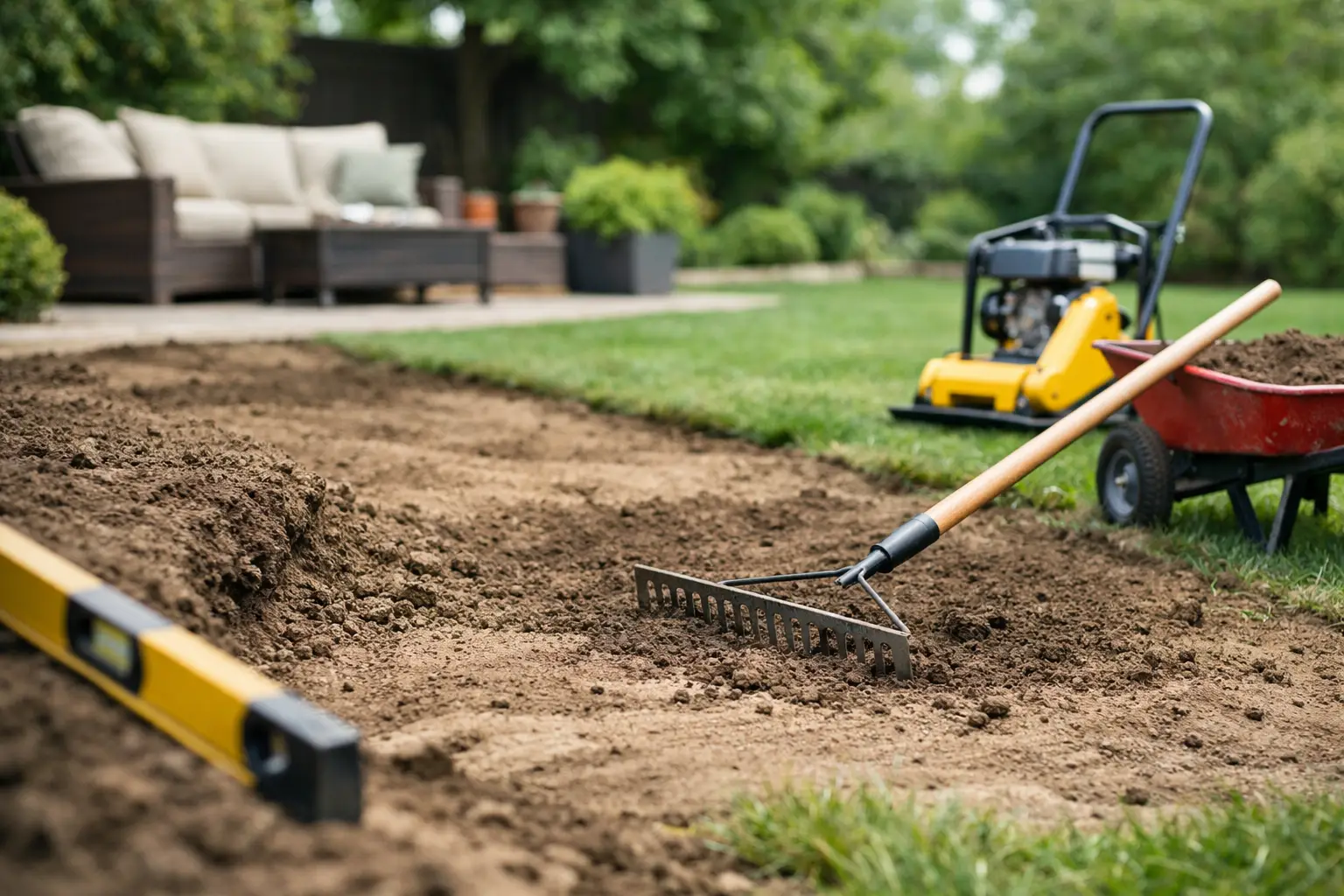
A backyard that looks only slightly uneven can cause bigger problems than most property owners expect. Water starts pooling near the house, artificial grass lifts at the edges, pavers shift, gravel washes out, and mowing or maintaining the yard becomes harder than it should be. If you are wondering how to fix uneven backyard ground, the right answer depends on what caused the problem in the first place and what surface you want when the job is done.
In Arizona, uneven yards are often tied to drainage, soil movement, irrigation leaks, erosion, or poor original grading. That matters because a quick cosmetic fix might smooth the surface for now, but it will not hold up if water is still moving the soil underneath. A dependable repair starts with the cause, not just the low spots.
How to fix uneven backyard issues starts with the cause
Some uneven yards have one obvious low area. Others have a mix of dips, humps, sloping sections, and soft spots. Before adding soil or bringing in gravel, take a close look after irrigation runs or after a storm. If water sits in one place for hours, that is a drainage problem first. If one area feels soft or keeps sinking, there may be a broken irrigation line or loose fill below the surface.
Tree roots can also create raised sections that push soil upward. Old hardscape removal can leave shallow depressions if the ground was not compacted correctly. In some yards, the issue is simply that the property was never finish-graded properly from the start.
This is where many homeowners lose time and money. They level the surface, then the same area drops again a few months later. If the backyard is uneven near patios, walkways, block walls, or the home foundation, it is worth treating it as a grading and drainage project instead of a simple fill job.
When a simple leveling job is enough
Not every uneven yard needs heavy equipment. Minor surface variation can often be corrected with topdressing, fill dirt, decomposed granite, or gravel, depending on the yard design. If the unevenness is shallow and there is no standing water or underlying leak, a surface correction may be enough.
For natural grass areas, leveling usually means applying a compatible soil blend to low spots and spreading it evenly in thin layers. For gravel yards, the fix may involve adding base material, compacting it, and then regrading the decorative gravel on top. For artificial turf, the surface beneath the turf matters more than the turf itself. If the base is uneven, the finished lawn will look uneven too.
The trade-off is straightforward. A simple leveling approach costs less and moves faster, but it works best only when the issue is minor and stable. If there is active erosion or drainage failure, the yard needs more than a surface touch-up.
How to fix uneven backyard grading the right way
If the yard has broad low areas, drainage trouble, or visible slope problems, grading is the better fix. Proper grading reshapes the ground so water moves away from structures and toward the right drainage path. That might mean creating a gentle slope, building up sections with compacted fill, or cutting down high areas to create a more usable surface.
A proper grading job usually starts by removing debris, old rock, weeds, or unstable soil. Then the area is cut and filled as needed. The important step here is compaction. Loose soil settles. Compacted fill holds shape better and supports whatever comes next, whether that is gravel, pavers, turf, or open yard space.
In Arizona properties, grading also has to match how the yard will actually be used. A family backyard with artificial grass needs a different finish than a commercial side yard designed for low maintenance gravel. A patio extension or paver walkway needs a stable, compacted base with tight elevation control. The finish surface is different, but the underlying rule is the same – stable grade first, surface second.
Drainage matters more than most people think
A backyard can look level and still be wrong. If water has nowhere to go, the surface will fail over time. That is why drainage should be part of the plan any time you fix a noticeably uneven yard.
Sometimes the solution is as simple as correcting the slope and redirecting runoff. In other cases, the yard may need a swale, channel drain, catch basin, or irrigation adjustment. Properties with patios, pavers, artificial turf, and gravel often need a combination of grading and drainage planning so water does not collect at the edges or wash through the base.
This is especially important in Arizona, where heavy rain can come fast and hit hard even if storms are not frequent. One strong monsoon can expose every weak point in a poorly graded yard. If the backyard is already showing washout lines, puddling, or settling near hardscape, the drainage issue should be handled now rather than after more damage shows up.
Matching the fix to the yard surface
The best repair depends on what the finished backyard should look like. That part gets overlooked when people focus only on leveling.
If you want gravel, the base needs to be graded and compacted so the rock stays in place and drains correctly. If you want artificial grass, the sub-base has to be smooth, firm, and consistent or the turf will telegraph every dip and ridge. If you are planning pavers or travertine, uneven soil must be corrected before installation or the hardscape may shift and settle. If the yard will remain mostly bare ground, erosion control becomes a bigger factor because exposed soil can move quickly.
This is one reason full-service outdoor contractors can solve the problem more efficiently. Leveling the yard is only one part of the job. The final surface, drainage behavior, irrigation layout, and long-term maintenance all connect.
Signs you should not treat it as a DIY project
Some uneven yards can be improved with hand tools and added material. Others really should be handled professionally. If the uneven area is large, close to the home, affecting drainage, or tied to a future hardscape project, getting the grade right matters too much to guess.
You should also be careful if the yard has recurring sink spots, evidence of buried construction debris, irrigation leaks, or elevation problems around block walls and fences. These situations can become more expensive if they are patched instead of fixed. The same goes for commercial properties, where uneven ground can create maintenance issues and liability concerns.
A contractor with grading, irrigation, gravel, turf, and hardscape experience can usually spot whether the problem is surface-level or structural. That saves time and helps avoid doing the same work twice.
What a professional backyard leveling project usually includes
A solid repair process is not complicated, but it does need to be done in the right order. First comes site evaluation to identify drainage flow, soft areas, irrigation issues, and elevation changes. Then the yard is cleared and stripped as needed. After that, the grade is corrected with the right fill and compaction methods.
Once the base is stable, the final surface can be installed. That may be gravel, artificial grass, pavers, or a clean finish-grade for future landscaping. If drainage improvements are needed, they are best completed before the final surface goes in.
For Arizona property owners, this kind of approach usually delivers better value than a quick patch. It creates a yard that looks cleaner, drains better, and stays easier to maintain through heat, irrigation cycles, and storm season.
Cost depends on the real problem, not just yard size
People often ask for a price per square foot, but uneven backyard repair is rarely that simple. A small yard with drainage failure can cost more than a larger yard that only needs light regrading. Access for equipment, amount of imported material, compaction needs, drainage upgrades, and final surface choice all affect price.
That is why an on-site assessment matters. The goal is not just to make the yard flatter. The goal is to create a stable outdoor space that works for the property and does not need another correction soon after.
At Pro Natural Landscape, this is the kind of issue we look at practically. We assess the grade, drainage, and finish surface together so the repair makes sense for how the yard will be used.
If your backyard is uneven, do not wait until pooling water, shifting pavers, or failing turf turns a manageable fix into a larger project. The best time to correct the grade is before the next season exposes the same weak spots again.