

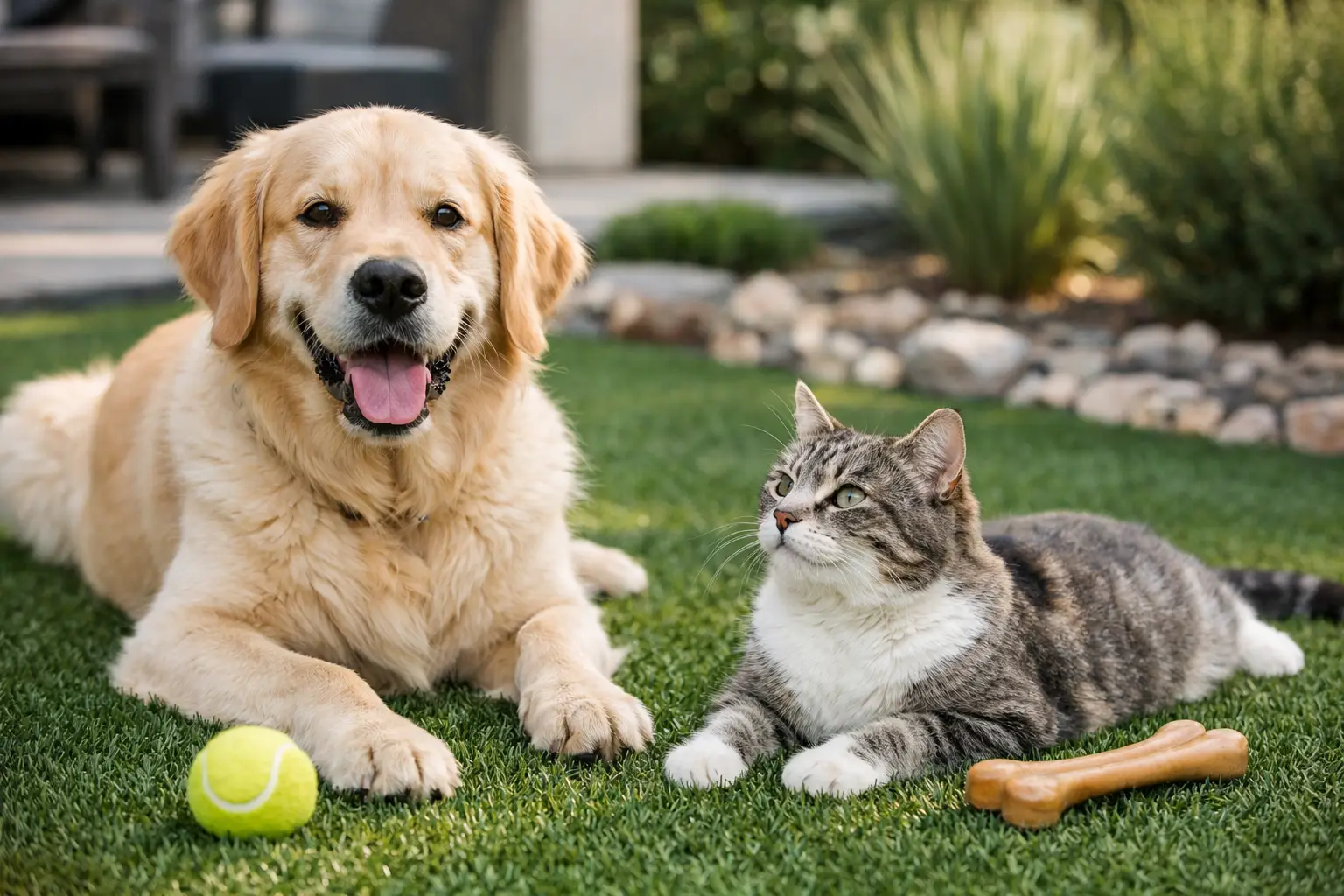
A yard can look perfect on install day and still fail your dog by the end of the first week. That is why so many Arizona property owners ask, is artificial turf pet friendly? The short answer is yes – if you choose the right product, install it correctly, and plan for how pets actually use the space.
For busy homeowners, rental property owners, and commercial managers, pet-friendly turf is less about appearance and more about function. Can it handle urine? Will it smell in summer heat? Is it easy to rinse down? Will it stay clean enough for pets and people to share the same yard? Those are the questions that matter.
Is artificial turf pet friendly in Arizona?
In Arizona, artificial turf can be a very practical option for pet areas because it removes a lot of the problems that come with natural grass. You do not get muddy paws after irrigation, dead patches from urine, or the constant cost of watering and reseeding. For many properties, that alone makes turf a better fit for dogs than a traditional lawn.
But pet friendly does not mean maintenance free. In high heat, the surface can get hot. If the turf was not built with pets in mind, drainage can be poor and odors can build up. A basic landscape turf and a pet-specific turf system are not the same thing, even if they look similar from a distance.
That is where installation quality matters. The base, the drainage setup, the infill, and the turf backing all affect how well the space performs for pets over time.
What makes artificial turf good for pets?
The biggest advantage is durability. Dogs run repeated paths, dig at edges, and use the same bathroom spots over and over. Natural grass usually shows that damage quickly, especially in Arizona where keeping a lawn healthy already takes more water and upkeep than many owners want to deal with. Artificial turf gives you a more consistent surface that stands up better to daily use.
Cleanability is another major benefit. Solid waste can be picked up the same way you would on grass, and the area can then be rinsed. Good drainage allows liquid to move through the turf rather than sit on the surface. That makes the space easier to maintain for homes with one dog and even more valuable for multi-pet properties.
There is also the issue of year-round appearance. Pet traffic can wear out natural grass fast, leaving bare dirt, holes, and uneven patches. Turf keeps a cleaner, more finished look, which matters for front yards, rental homes, HOA-facing properties, and commercial spaces where appearance affects value.
The trade-offs pet owners should know
The biggest concern in Arizona is heat. Artificial turf can get hotter than natural grass under direct sun. For pet owners, that means you need to think beyond the turf itself and plan the whole area. Shade structures, trees, patio covers, or timing pet use for cooler parts of the day can make a major difference.
Odor is the second concern. Turf does not create odor on its own, but urine can become a problem if drainage is weak or if the area is not rinsed regularly. This is especially true in smaller side yards where dogs use the same spot every day. A proper pet turf system reduces this risk, but no system eliminates the need for routine cleanup.
Comfort is another it-depends issue. Many dogs do well on artificial grass, but some need a short adjustment period if they are used to natural lawns. Texture, blade height, and heat all play a role. A pet area should feel usable, not just look green from the street.
What to look for in a pet-friendly turf system
If your main question is whether artificial turf is pet friendly, the better question is what kind of turf system is pet friendly. The answer starts with drainage. A pet area needs a base and backing that let liquids move through quickly and efficiently. Without that, cleaning becomes harder and smells can stick around.
You also want a non-toxic material and an infill choice that makes sense for pets. Some infill products are better at helping with odor control, while others are chosen mainly for appearance or blade support. This is not the place to cut corners just to lower the initial price.
The turf should also be durable enough for digging, zoomies, and repeated wear. Strong backing helps prevent tears and edge damage. A professional install should include secure seams, stable edges, and grading that supports drainage rather than trapping moisture.
For Arizona properties, it is smart to think about the entire layout. A pet-friendly yard may include turf, but it might also need pavers, decomposed granite, shaded zones, and a rinse-down area to make the space more usable day to day.
Cleaning and maintenance matter more than most people think
Artificial turf is lower maintenance than natural grass, but pet owners still need a cleaning routine. Solid waste should be removed promptly. The area should be rinsed regularly, especially during hot weather when odors can intensify faster. If multiple pets use the space, more frequent rinsing usually makes sense.
Occasional deeper cleaning may also be needed. That depends on how often the turf is used, how much shade it gets, and whether urine is concentrated in one section of the yard. Some owners rotate bathroom areas naturally through yard design, which helps spread use and reduce buildup.
Brushing the turf can also help keep fibers standing up in high-traffic spots. This is one of those details that gets overlooked, but it affects both appearance and performance over time. A yard that looks flattened and worn often reflects use patterns and maintenance, not just product quality.
Is artificial turf better than real grass for dogs?
For many Arizona properties, yes. Real grass can be softer and cooler in some conditions, but it often struggles under heavy pet use and desert heat. Dead spots, mud, pests, and high water use are common problems. If your goal is a cleaner, more durable, lower-water yard, artificial turf usually makes more practical sense.
Still, real grass may be preferred by some pet owners who want the coolest natural surface possible and are willing to accept the extra irrigation, mowing, and repair work. The better choice depends on your priorities. If you want a polished outdoor space that stays usable with less ongoing effort, turf often wins.
This is especially true for side yards, dog runs, rental homes, and commercial pet relief areas where function matters more than maintaining a traditional lawn.
Best fit for homes, rentals, and commercial properties
Homeowners often choose pet-friendly turf to simplify daily life. Less mud gets tracked inside, the yard stays cleaner, and the property keeps a finished look year-round. For families with kids and dogs sharing the same space, that reliability matters.
Rental property owners like turf because it reduces lawn damage between tenants and lowers water demand. A yard that can handle pets without turning into dirt and weeds is easier to maintain and easier to market.
Commercial properties can also benefit, especially where appearance and ease of maintenance matter. Dog-friendly apartment communities, pet boarding facilities, and mixed-use outdoor spaces all need surfaces that can hold up under repeated use while still looking professional.
A local contractor with Arizona experience can help property owners choose a setup that matches the traffic, sun exposure, drainage needs, and maintenance expectations of the site. Pro Natural Landscape works with these practical factors because the wrong install usually shows up fast in desert conditions.
When artificial turf is not the right choice
There are cases where turf may not be the best answer. If the area gets intense full-day sun with no shade plan at all, heat may become a daily issue. If the yard is rarely cleaned or rinsed, odor can become a recurring problem. And if a pet is a determined digger or chewer, some additional training or design adjustments may be needed.
That does not mean turf is a bad product. It means the space has to be planned around real use, not just appearance. The most successful pet-friendly yards are designed with honest expectations from the start.
If you are deciding whether artificial turf is pet friendly for your property, think less about the sales pitch and more about performance. Ask how it drains, how it handles heat, how easy it is to rinse, and how the space will work every day for both pets and people. A good yard should look clean, hold up to traffic, and make life easier after installation, not harder. That is the standard worth building for.