

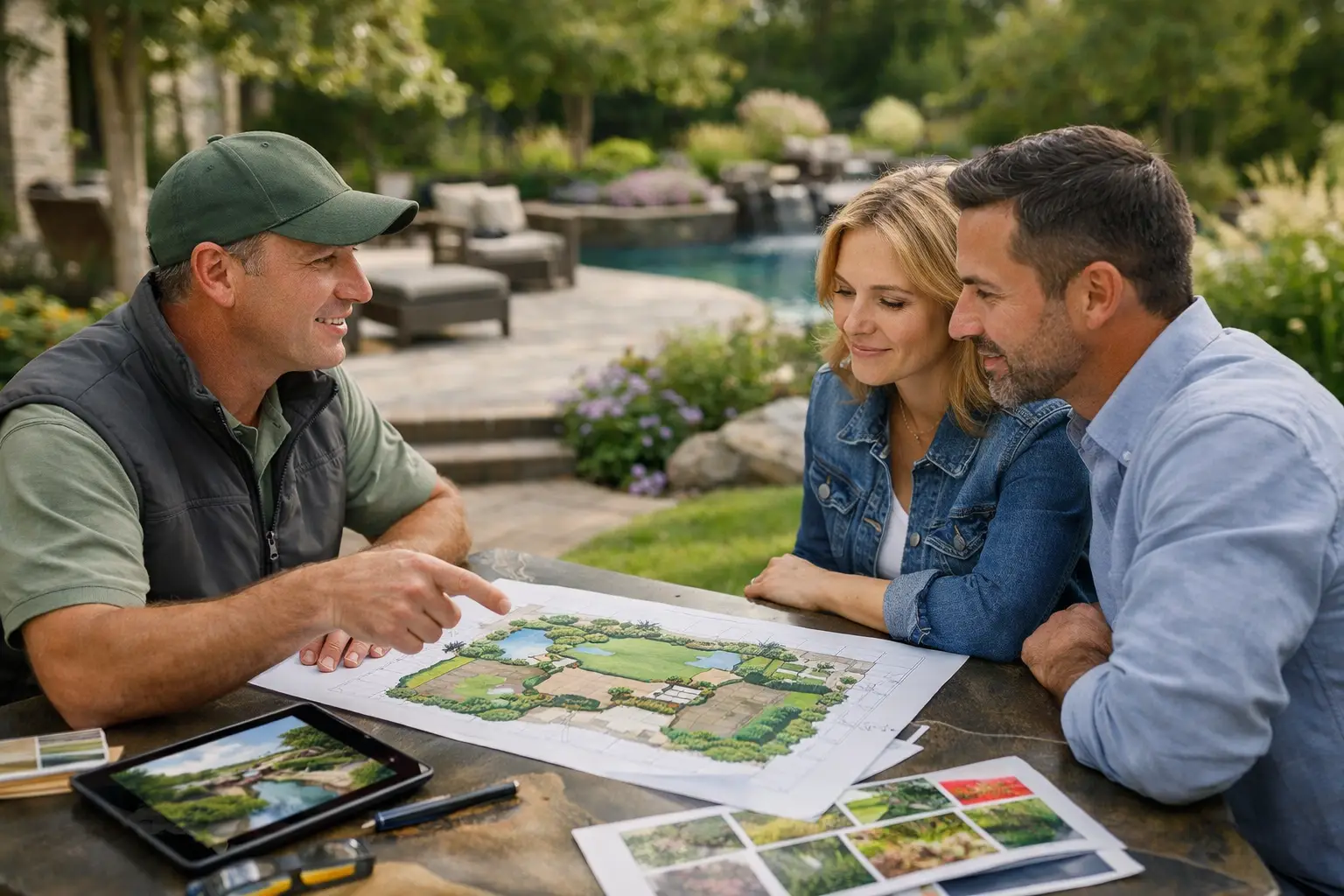
A yard in Arizona can look fine on the surface and still have real problems underneath. Poor drainage, wasted water, dead zones, worn gravel, outdated pavers, and high-maintenance planting choices all add up fast. That is why a landscape design consultation matters. It gives you a clear starting point before money gets spent on the wrong materials, the wrong layout, or a plan that does not hold up in desert conditions.
For homeowners, property managers, and commercial property owners, the first meeting is not about fancy sketches with no follow-through. It should be a practical review of how the space is used, what is not working, and what improvements make sense for the property, budget, and long-term upkeep. A good consultation saves time, reduces guesswork, and helps move a project from idea to action.
Why a landscape design consultation matters in Arizona
Arizona yards have different demands than properties in cooler, wetter regions. Water efficiency is not optional. Heat resistance matters. Ground conditions, sun exposure, drainage, and material durability all affect how well a project performs after installation.
That changes the conversation from simple appearance to function. A front yard may need gravel and artificial grass instead of natural turf. A backyard may need more shade, stronger irrigation zoning, pavers that hold up under heat, or grading that moves water away from the home. A commercial property may need a cleaner layout, easier maintenance, and a more polished entrance for customers and tenants.
Without a plan, it is easy to spend money in pieces and still end up with a yard that feels unfinished. One contractor installs pavers, another handles irrigation, someone else addresses lighting, and no one is responsible for how it all fits together. A consultation helps connect those parts before work begins.
What happens during a landscape design consultation
A strong landscape design consultation starts with questions, not assumptions. The goal is to understand how the property needs to work every day. That includes who uses it, how much maintenance the owner wants, what issues already exist, and what kind of finish the customer has in mind.
On site, the contractor should evaluate the condition of the yard and look beyond surface-level appearance. That often includes checking irrigation performance, identifying drainage concerns, reviewing slopes and grading, noting tree placement, and looking at how hardscape and softscape elements interact. If the space includes cracked pavers, worn artificial grass, dead plants, exposed roots, or broken borders, those details should be part of the discussion.
This is also where priorities get clear. Some customers want curb appeal for resale. Some want a backyard that is easier to maintain. Some need a commercial exterior that looks professional year-round. Others are dealing with a yard that has become difficult to manage and need a complete reset. The consultation should separate must-haves from nice-to-haves so the project can be built around real goals.
What your contractor should ask you
A consultation works best when it is specific. General comments like “I want it to look better” are common, but the best results come from more useful questions. How much foot traffic does the area get? Do kids or pets use the yard? Is the property owner trying to lower water use? Is the yard mainly for appearance, entertaining, rental value, or easier upkeep?
Budget matters too, and it should be discussed early. That is not about pushing the highest-priced option. It is about designing something realistic. A contractor can recommend where to invest first, whether that means correcting grading, replacing inefficient irrigation, installing pavers, updating gravel, or choosing low-maintenance surfaces that reduce ongoing costs.
Timeline also matters. Some projects can be completed quickly. Others need to be phased out over time. If a property owner wants the front yard done now and the backyard later, or wants to pair landscape work with wall repairs, lighting, or paver renovation, that should be part of the planning process.
The most common recommendations after a consultation
Every property is different, but Arizona consultations often lead to similar upgrades because the climate creates predictable challenges. Water-smart irrigation is one of the most common needs. If sprinklers are overspraying, lines are damaged, or zones are poorly planned, even a good-looking yard can become expensive to maintain.
Surface materials are another major topic. Gravel remains a strong choice for many areas because it is durable, clean-looking, and low maintenance. Artificial grass works well where customers want green space without constant watering and mowing. Pavers and travertine add structure, usability, and a finished appearance, especially on patios, walkways, and entry points.
Lighting often comes up during consultations because it changes how the property functions after dark. For homes, it adds safety and highlights key features. For commercial spaces, it supports visibility and presentation. Tree work, stump grinding, cleanup, and land grading may also be part of the final recommendation if the existing condition of the yard is holding the whole project back.
A good design plan is about function, not just looks
The best outdoor spaces do not just photograph well. They hold up. They are easier to maintain. They make the property more usable. That is especially important in Arizona, where a yard has to perform through long heat cycles, dry conditions, and heavy sun exposure.
That is why the consultation phase should balance design with practical use. A beautiful planting plan is not much help if it demands more water than the owner wants to pay for. A patio layout may look good on paper but fail if drainage is ignored. An artificial grass installation may solve one problem but create another if the base prep is poor or surrounding edges are not finished correctly.
Practical design means making smart trade-offs. Sometimes that means choosing fewer plant varieties and stronger hardscape elements. Sometimes it means investing in irrigation first and decorative finishes second. Sometimes it means preserving useful features and renovating around them rather than tearing everything out. A contractor with local experience should be able to explain those choices clearly.
How to prepare for your landscape design consultation
You do not need a full plan before scheduling a consultation, but it helps to know what is bothering you most. Maybe the yard feels outdated. Maybe it is costing too much to maintain. Maybe drainage is creating messes after storms. Maybe the front of the property lacks curb appeal, or the backyard does not get used because the layout does not work.
Photos for inspiration can help, but they should stay secondary to what fits your property. Arizona yards need solutions that match the local climate, the amount of shade available, and the level of maintenance the owner actually wants. It also helps to be honest about your budget range, timing, and whether you want a simple refresh or a larger transformation.
If the property has recurring issues, bring those up right away. Uneven surfaces, standing water, dead plants, tree concerns, damaged walls, or old pavers are not minor details. They often affect the design direction and the installation process.
Choosing the right team after the consultation
Not every contractor approaches a consultation the same way. Some focus only on appearance. Others can handle the full scope, from design and installation to repairs, cleanup, and long-term maintenance. For many Arizona property owners, that matters more than a polished sales pitch.
A single team that can design, install, and maintain the project usually creates fewer delays and fewer gaps between trades. If your project includes irrigation, gravel, pavers, lighting, tree work, grading, or exterior repairs, it helps to work with a company that can manage the complete job instead of leaving you to coordinate multiple vendors.
That is where a practical, service-driven company stands out. Pro Natural Landscape works with Arizona property owners who need real solutions, not vague ideas. The focus should always be on building an outdoor space that looks better, works better, and stays manageable over time.
When to book a landscape design consultation
The best time is usually before a small problem becomes a bigger one. If your yard is wearing down, your irrigation is inefficient, or your exterior no longer reflects the value of the property, waiting rarely makes the project easier. A consultation gives you direction, even if you are still deciding how much work to do now versus later.
It is also a smart step before listing a home, updating a rental property, improving a storefront, or planning a larger exterior renovation. The sooner the layout, materials, and priorities are defined, the easier it is to build a space that fits your goals.
A good yard does not happen by accident, especially in Arizona. It starts with a clear look at the property, a realistic plan, and a contractor who knows how to turn that plan into finished work you can count on. If your outdoor space needs better function, cleaner curb appeal, or lower maintenance, a consultation is the right place to start.