

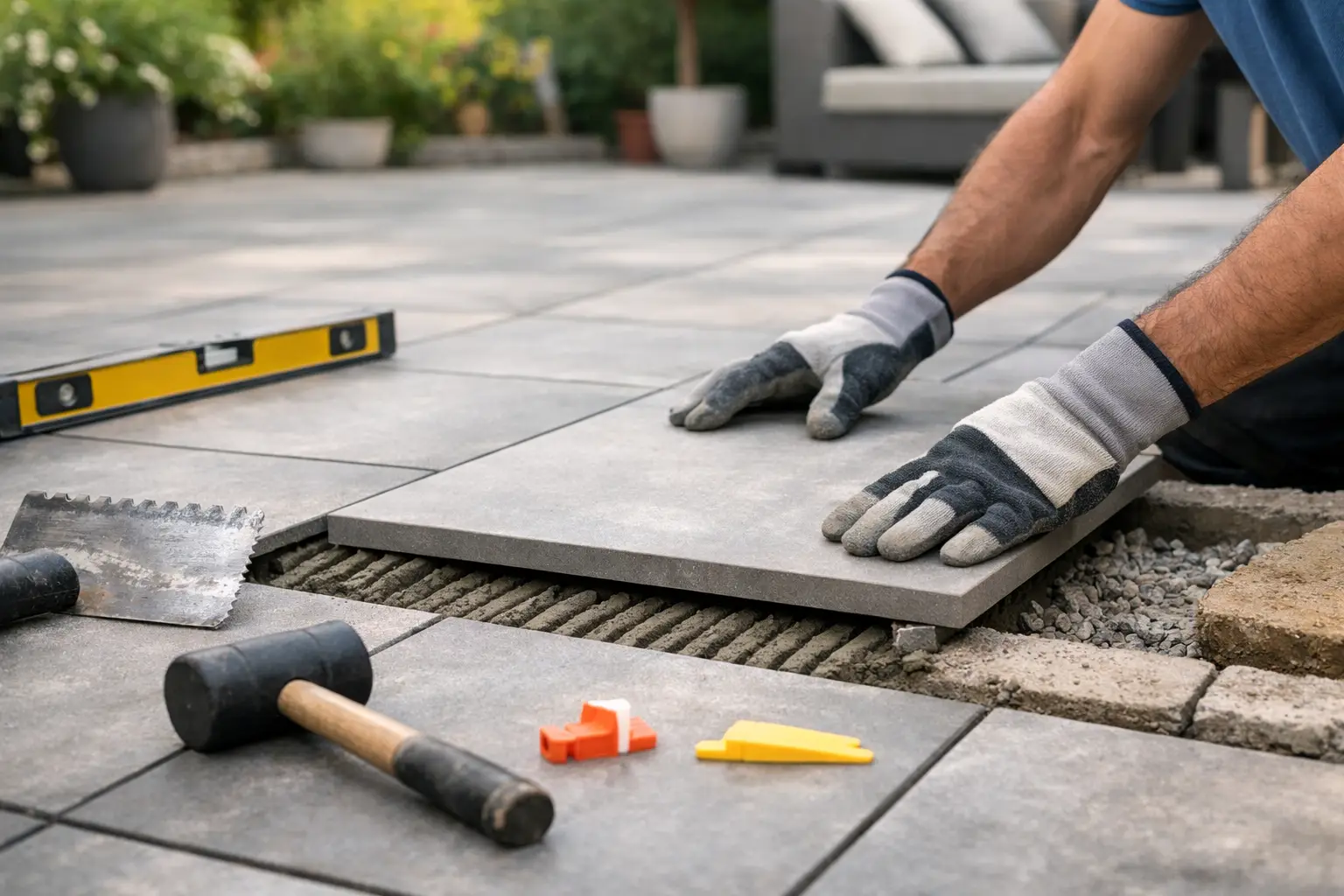
A patio can look solid from a distance and still fail where it matters most – cracked corners, loose tiles, standing water, and surfaces that get too hot to use. That is why patio tile installation is never just about picking a color or pattern. In Arizona, it has to hold up to heat, sun exposure, dust, foot traffic, and the day-to-day wear that comes with real outdoor living.
For homeowners, property managers, and commercial property owners, the goal is simple: build a patio surface that looks clean, stays functional, and does not turn into a maintenance problem six months later. The right installation makes that possible. The wrong one usually shows up fast.
Why patio tile installation matters in Arizona
Arizona patios deal with conditions that push outdoor materials hard. Intense UV exposure can fade some finishes. High surface temperatures can make the wrong tile uncomfortable to walk on. Sudden monsoon moisture can expose drainage problems fast, especially on older patios that were not graded well to begin with.
That means material choice and installation method both matter. A good-looking tile is not enough if the substrate is unstable or the slope is off. A patio that is level to the eye but not pitched correctly can collect water near walls, soften joints, and create long-term damage around the home or building.
This is where professional planning makes a difference. Outdoor tile needs to work with the climate, not fight it. The right system should handle expansion, surface wear, and water movement without constant repairs.
Choosing the right tile for an outdoor patio
Not every tile sold for home improvement projects belongs outside. Some products are better suited for covered areas, while others are made to take direct sun and heavy use. For patio tile installation, the best choice depends on how the space is used, how exposed it is, and what kind of surface is underneath.
Porcelain is a common option because it is dense, durable, and available in finishes that mimic stone or concrete. It works well for many Arizona patios, especially when slip resistance is part of the selection. Natural stone can also be a strong fit, but it depends on the stone type, the finish, and the maintenance expectations. Some materials stay cooler or offer a more natural appearance, but they may need sealing and more upkeep over time.
Texture matters as much as appearance. A smooth tile may look sharp in photos, but around a pool, outdoor kitchen, or shaded patio that gets moisture, it can create a slipping hazard. The better choice is usually a surface with enough grip to stay safe without being rough or difficult to clean.
Color also plays a practical role. In Arizona heat, darker surfaces can become much hotter under direct sun. Lighter tones often perform better for comfort, especially on patios used during the day.
What a solid patio tile installation includes
A lasting result starts below the tile. Most outdoor tile failures are not caused by the tile itself. They come from poor prep, movement in the base, weak adhesion, or drainage issues that should have been corrected before installation started.
The first step is evaluating the surface. If the patio has an existing concrete slab, it needs to be checked for cracks, settlement, moisture issues, and slope. Minor flaws can sometimes be addressed, but major movement or structural problems need a real fix before tile goes down. Installing over a bad base only hides the problem temporarily.
Next comes surface preparation. That may include cleaning, leveling, repairing damaged sections, or applying the right underlayment or membrane. Outdoor settings often call for materials designed to handle temperature changes and moisture exposure. Using the wrong thin-set, grout, or bonding system can shorten the life of the whole project.
Layout matters too. Clean lines, balanced cuts, and smart placement around edges, steps, and transitions make the finished patio look professional. Just as important, expansion joints and spacing need to be planned correctly. Tile expands and contracts outdoors. If that movement is ignored, cracking and tenting can follow.
Drainage is not optional
A patio should move water away from the structure, not hold it in place. That sounds obvious, but drainage problems are one of the biggest reasons outdoor surfaces fail early.
Proper slope helps prevent puddling, surface staining, and water intrusion near foundations or doorways. Even a beautiful tile finish can become a problem if rainwater sits on it after every storm. In Arizona, monsoon season exposes bad drainage fast.
This is why patio tile installation should be treated as part of the larger outdoor system. The surrounding grade, nearby planters, irrigation overspray, and runoff path all affect how the patio performs. Sometimes the tile is not the real problem. The issue is how water reaches the space in the first place.
For larger properties or more complex layouts, drainage planning may involve adjustments beyond the patio itself. That is where working with a contractor who understands both tile work and landscape grading can save time and prevent repeat repairs.
New patio vs. tile over an existing surface
Some customers want a brand-new patio. Others want to upgrade an existing concrete area that looks worn out but is still structurally usable. Both options can work, but they are not equal in every case.
Installing tile over an existing slab can be efficient if the concrete is stable, properly sloped, and free from serious cracks or moisture issues. It can give an older patio a cleaner, higher-end finish without the cost of full demolition. But if the slab is already failing, tile will not solve it. It will only follow the same movement and eventually show the same damage.
A new patio installation gives more control over grading, dimensions, transitions, and finished appearance. It is often the better choice when the existing area has major defects or when the layout needs to change. The trade-off is a larger upfront project. The benefit is a better long-term result.
Residential and commercial patio tile installation
Homeowners usually focus on comfort, appearance, and ease of maintenance. They want a patio that fits the home, stays cooler underfoot, and holds up to family use, pets, outdoor furniture, and weekend gatherings. For these projects, the best result often comes from balancing style with materials that can handle Arizona weather without constant upkeep.
Commercial properties have a different pressure. Patios at office buildings, retail spaces, restaurants, and multi-unit properties need to look clean while handling heavier traffic. Safety, durability, and ease of cleaning tend to carry more weight. In those spaces, a smart material choice can reduce maintenance demands and help the property keep a polished, professional appearance.
The installation standard should be high in both cases. The difference is how the space gets used and what matters most after the project is complete.
Common problems to avoid
The biggest mistakes in patio tile installation usually happen before the tile is visible. Rushed prep, poor drainage planning, low-grade materials, and skipping movement joints can all lead to expensive repairs.
Another common issue is choosing tile based only on indoor appearance. Outdoor patios need products rated for exterior use and selected with sun exposure, slip resistance, and heat in mind. What looks good in a showroom may not perform well on a west-facing patio in July.
There is also the question of maintenance. Some surfaces need periodic sealing. Some grouts resist staining better than others. Some patios are easy to hose off, while textured finishes can trap more dust and debris. None of these are deal-breakers, but they should be discussed before installation, not after.
When to bring in a professional
If the patio is small, covered, and built on a sound slab, the job may look straightforward. But outdoor tile work has less room for error than many people expect. Once drainage, heat exposure, cracking, edge transitions, and long-term adhesion come into play, experience matters.
A professional installer can assess the slab, recommend suitable materials, and build the patio for real conditions rather than best-case conditions. That matters even more when the project connects to other exterior work like pavers, artificial grass, block walls, lighting, irrigation, or grading. A coordinated plan usually delivers a cleaner result than piecing the project together through multiple vendors.
For Arizona property owners, that practical approach is often the best value. Pro Natural Landscape handles outdoor improvements with that larger picture in mind, so the finished patio works with the rest of the space instead of feeling like an isolated upgrade.
A well-built tile patio should give you more than a visual refresh. It should make the space easier to use, easier to maintain, and better suited for everyday life outside. If your current patio is worn out, hard to clean, or simply not working for the property anymore, this is the kind of upgrade that pays off every time you step outside.