

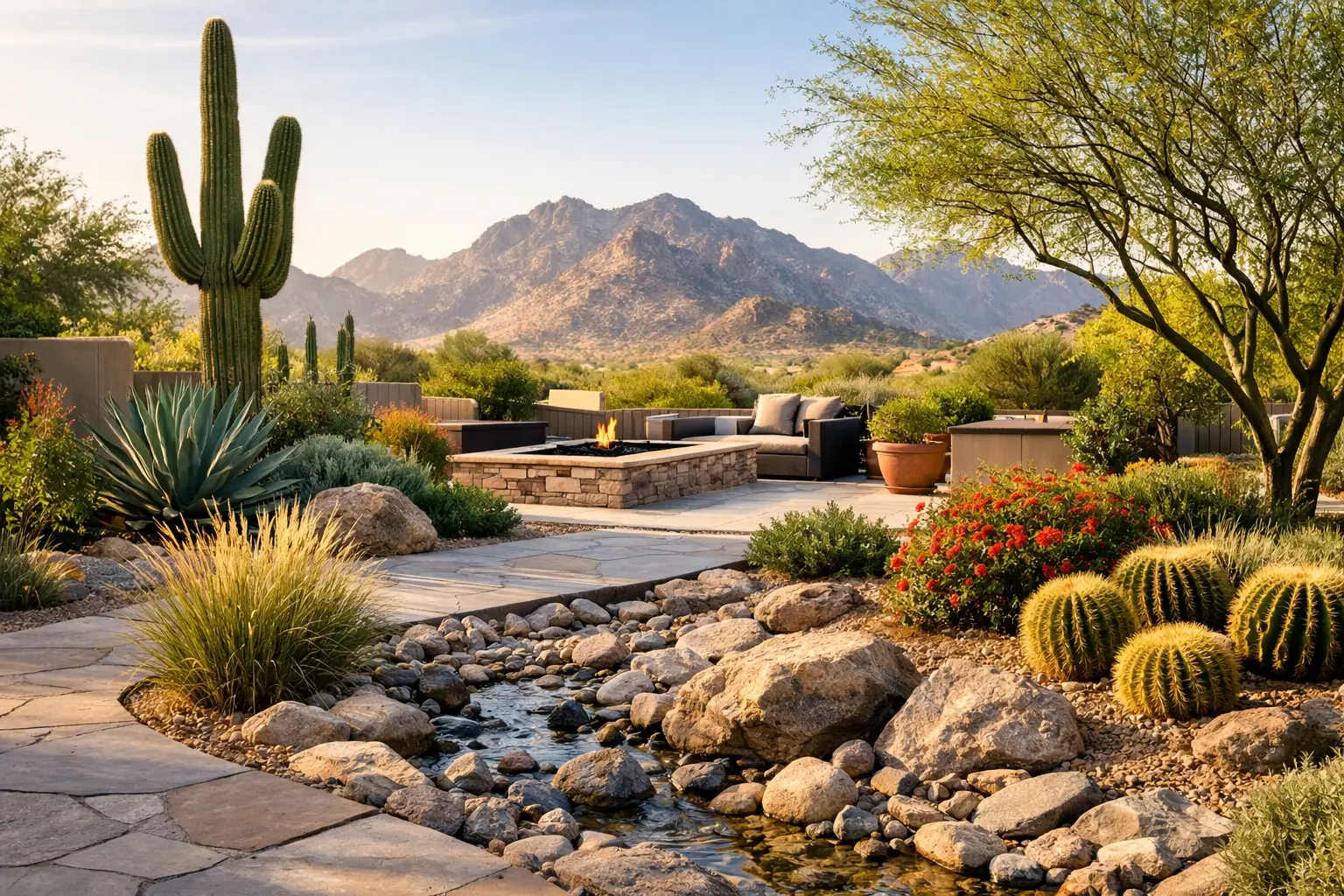
A yard can look worn out fast in Arizona. One broken irrigation line, patchy grass, loose gravel, or cracked hardscape is enough to make the whole property feel neglected. That is why landscape installation needs to do more than improve appearance. It has to solve heat, water use, drainage, maintenance, and daily wear in a way that makes sense for Arizona homes and commercial spaces.
For property owners in El Mirage and across Arizona, the right plan is usually not about adding more. It is about installing the right combination of surfaces, plants, irrigation, and hardscape so the space stays clean, usable, and affordable to maintain. A good outdoor project should give you better curb appeal right away and fewer problems later.
What landscape installation should actually accomplish
A lot of outdoor projects start with a simple goal – make the yard look better. That matters, but appearance alone is not enough in the desert. A strong installation should improve the way the property functions day to day.
That might mean replacing thirsty grass with artificial turf, setting pavers in high-traffic areas, correcting grading so water drains away from the structure, or upgrading irrigation so plants get what they need without waste. In some yards, gravel installation and low-water planting are the better answer. In others, shade, lighting, and cleaner walkways make the biggest difference.
The best results come from treating the whole property as a system. Irrigation affects plant health. Grading affects drainage. Surface choices affect maintenance. If one part is ignored, the finished yard may still look incomplete or become expensive to fix.
Arizona landscape installation is different
Arizona properties deal with conditions that change the way outdoor work should be planned. Extreme heat, hard soil, intense sun, and limited rainfall all put pressure on materials and plant choices. What works in a mild climate may fail quickly here.
That is why practical landscape installation in Arizona usually leans toward durable, low-maintenance features. Gravel holds up well and reduces water demand. Artificial grass gives a green look without mowing and heavy irrigation. Pavers and travertine can create cleaner, more usable living areas, but only if they are installed correctly for ground movement and drainage.
There is also the issue of upkeep. Busy homeowners and property managers rarely want a design that looks good for one month and becomes a weekly burden after that. Low-maintenance does not mean plain. It means every part of the yard is chosen with real use in mind.
The key parts of a complete landscape installation
Every property is different, but most successful projects include a mix of softscape, hardscape, and utility work. The exact balance depends on budget, layout, and how the space needs to perform.
Ground preparation and grading
This part often gets less attention than the final look, but it affects everything that comes after. If the site is uneven, compacted, or draining poorly, the finished installation will struggle. Water may pool near foundations, pavers can shift, and decorative material can wash out.
Proper grading creates a stable base and moves water where it should go. For Arizona properties, that can be especially important during monsoon season, when sudden storms expose every drainage problem at once.
Irrigation systems
Water efficiency is not just a selling point in Arizona. It is a practical requirement. An outdated system can waste water, overwater some areas, and leave other plants struggling. In many projects, updating irrigation is one of the smartest improvements because it supports the entire landscape.
Drip irrigation is often the better fit for desert planting zones, while turf areas may need a different setup. The right system depends on what is being installed and how much control you want over water use.
Gravel, plants, and artificial grass
These choices shape the day-to-day maintenance of the yard. Gravel is clean, durable, and budget-friendly. Desert-adapted plants add color and structure without creating high water demand. Artificial grass works well in play areas, side yards, pet zones, and front yards where people want a finished green look without the work of natural lawn care.
There are trade-offs. Artificial turf reduces mowing and irrigation, but surface temperature can rise in full sun. Gravel is easy to maintain, but it needs proper edging and placement to avoid spreading. Plant selection has to match sun exposure and irrigation zones, or even low-water landscaping can become inefficient.
Pavers, travertine, and walkways
Hardscape is often what makes the property feel complete. A bare yard can become usable with the addition of a paver patio, walkway, or seating area. For commercial properties, defined walkways and clean hardscape can also improve safety and presentation.
Material choice matters. Pavers are durable and versatile. Travertine offers a more upscale finish and can perform well around pool areas. The right option depends on the style of the property, how much traffic the area gets, and how much heat retention you are willing to tolerate.
Lighting and finishing details
Landscape lighting is not just decorative. It improves visibility, highlights key features, and extends the use of outdoor areas after dark. For businesses, it also helps maintain a polished appearance in the evening. For homeowners, it can make patios, entry paths, and gathering areas more practical.
Finishing details such as borders, cleanup, and transitions between materials also matter more than people expect. A yard can have quality materials and still look unfinished if edges are rough or the layout feels disconnected.
Why one-contractor landscape installation saves time
Many property owners run into the same problem. They hire one company for design, another for turf, another for irrigation, and someone else for hardscape or repairs. The result is usually delays, finger-pointing, and uneven workmanship.
A single contractor who can manage installation, repair, cleanup, and related exterior improvements can keep the project moving and reduce confusion. That matters when the work includes multiple elements like grading, gravel, pavers, irrigation, lighting, wall repair, or tree removal.
This is where a full-service company like Pro Natural Landscape can make the process simpler. Instead of piecing together separate crews, property owners can move forward with one team that understands how the entire outdoor space needs to come together.
Residential and commercial needs are not exactly the same
Homeowners usually focus on curb appeal, lower maintenance, outdoor living, and water savings. They want a yard that looks better and works better without turning into another job on the weekend.
Commercial property owners and managers often have a different priority list. They need clean, professional exteriors, durable surfaces, safe walkways, and reliable service. The landscaping has to support the image of the business while holding up to regular traffic and staying manageable over time.
That difference affects installation decisions. A home might benefit from a decorative turf and paver combination with lighting and gravel borders. A commercial site may need stronger circulation paths, easier maintenance zones, improved drainage, and a cleaner visual layout that stays consistent across the property.
When to replace instead of patching
Some outdoor problems can be repaired. Others keep coming back because the original installation was incomplete or poorly planned. If irrigation breaks constantly, if water pools every storm, if the surface materials keep shifting, or if the yard still looks disorganized after repeated cleanup, replacement may be the better investment.
A fresh installation gives you the chance to fix the root issue instead of paying for temporary improvements. That does not always mean a full overhaul. In some cases, targeted upgrades to one area can change how the whole property looks and functions. It depends on what is failing and how long you plan to keep the property.
What property owners should expect from the process
A solid project starts with a clear look at the site, not guesses. The layout, drainage, sun exposure, existing materials, and maintenance goals all need to be considered before work begins. From there, the scope should be practical and specific.
Property owners should know what is being installed, how the site will be prepared, and what the finished space is meant to do. That includes realistic expectations about maintenance, material performance, and budget. Not every upgrade needs to happen at once, but the work should be planned so future additions still make sense.
Good landscape installation is not about adding random features until the yard is full. It is about building an outdoor space that holds up, looks clean, and supports the way you actually use the property.
If your yard, frontage, or outdoor common area is no longer working, the right next step is to stop patching around the problem and start with a plan that fits Arizona conditions from the ground up.