

A well-planned landscape does more than make a home look attractive. It can shape buyer perception, increase everyday usability, and signal that the property has been cared for with intention.
That matters because real estate value is rarely about square footage alone. Buyers respond to the full experience of a home, and the yard is often the first chapter of that story.
Why landscaping increases home value
Landscaping affects home value in three direct ways: first impressions, function, and property protection. A clean, cohesive front yard makes a house feel more inviting before anyone reaches the front door. Virginia Tech Extension has summarized research showing that attractive landscaping can raise perceived home value by about 5% to 11%, depending on design quality and plant composition.
That number makes sense when you think like a buyer. If the lawn is patchy, shrubs are overgrown, irrigation is visibly failing, or the walkway looks tired, people start wondering what else has been neglected. If the exterior feels polished and practical, the house tends to feel more valuable before the interior even enters the equation.
Landscaping also adds value when it creates usable outdoor space. A shaded seating area, a paver patio, a defined path to the entry, or lighting that makes the yard usable after sunset can make the property feel larger and more livable.
Then there is the part many people miss. Grading, drainage, tree care, and efficient irrigation protect the property itself. Those upgrades may not always produce dramatic photo appeal, yet they support the kind of confidence that helps a home sell well.
After looking at the data and the way buyers respond to homes, the strongest value drivers tend to be:
- curb appeal
- visible maintenance
- outdoor living space
- healthy trees and plantings
- water management
- low-maintenance design
Which landscaping projects pay off most
National Association of Realtors data gives a useful starting point for homeowners who want a clear return, not just a prettier yard. In its 2023 outdoor features report, several landscaping-related projects stood out for value recovered at resale.
The pattern is encouraging. The best-performing upgrades are not always the most expensive ones. In fact, basic maintenance and well-chosen midrange improvements often outperform flashy custom features.
Home value ROI table for landscaping projects
| Project | Estimated value recovered | Why it tends to pay off |
|---|---|---|
| Landscape maintenance | 104% | Fast visual improvement, relatively low cost, strong buyer response |
| Overall landscape upgrade | 100% | Combines curb appeal, cohesion, and front-yard polish |
| New patio | 95% | Adds functional outdoor living space with broad appeal |
| New wood deck | 89% | Strong in the right market, though climate matters |
| Tree care | 87% | Improves safety, sight lines, and appearance |
| Irrigation system installation | 83% | Protects plant health and supports efficient watering |
| Landscape lighting | 59% | Best as a finishing feature rather than the main investment |
A patio, walkway, or front entry refresh can make a home feel more complete. Tree care and irrigation speak to responsibility and long-term care. Lighting improves ambiance and safety, though it usually works best when the rest of the landscape already looks strong.
Why maintenance often produces the strongest return
Maintenance is not glamorous, yet it wins because it removes signs of neglect. That is why landscape maintenance topped the NAR list. Buyers notice the basics immediately, and they place real value on a home that looks ready to enjoy.
This is especially true before listing a home. Fresh gravel or mulch, clean edges, trimmed shrubs, weed removal, healthy irrigation coverage, and repaired pavers can shift the entire impression of the property without the cost of a full redesign.
When a yard is being prepared for value, the most effective maintenance items usually include:
- Front beds: clean lines, fresh groundcover, restrained planting
- Walkways and patios: repair uneven pavers, remove stains, clear weeds
- Trees and shrubs: prune for shape, safety, and visibility
- Irrigation systems: fix leaks, adjust timers, improve coverage
Which landscaping upgrades make the most sense in Arizona
Climate changes the value equation, and Arizona is a strong example. In El Mirage and nearby communities, buyers often respond best to landscapes that look sharp, handle heat well, and do not demand excessive water or constant upkeep.
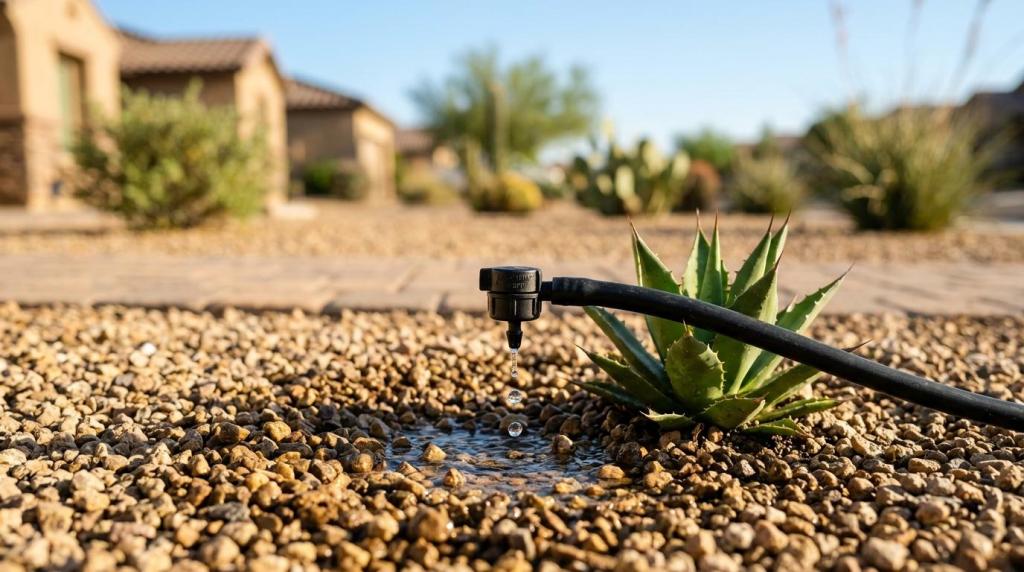
That means a desert-friendly design can be a smart value move. Gravel, pavers, artificial grass in the right setting, efficient drip or sprinkler systems, timers, shade trees placed with care, and practical grading often carry more real-world appeal than a thirsty lawn that struggles in summer.
A patio can be especially powerful in this market. Hardscape surfaces like pavers and travertine create outdoor living space that feels durable, attractive, and easy to maintain. They also photograph well, which matters when a listing is competing online.
Arizona landscaping features that support resale value
Many homeowners in this region get the best results from improvements that combine beauty with water awareness.
Projects commonly chosen for that purpose include paver installation, gravel refreshes, irrigation upgrades, artificial grass, landscape lighting, land grading, and tree care. When those features are tied together with a simple design plan, the property usually feels more intentional and more market-ready.
A strong Arizona yard often has a quiet confidence to it. The layout is clean. The materials are durable. The plants look healthy rather than overworked. The irrigation is efficient. Nothing feels excessive.
Hardscape projects that increase value through usability
Hardscape deserves special attention because it often does two jobs at once. It raises visual quality and improves how the yard works.
A front walkway is a good example. It guides visitors to the entry, frames the home, and gives the landscape structure. A backyard patio does something similar by turning open yard space into a usable destination. Buyers tend to respond well to these features because they can picture themselves using them right away.
This is one reason an overall landscape upgrade can recover so much value. It is rarely about one single element. It is about the combination of walkway, planters, shrubs, tree placement, and clean surfaces working together.
For homeowners who want the best balance of return and livability, hardscape often hits the sweet spot.
The outdoor projects buyers notice first
When outdoor improvements are visible from the street or easy to imagine using, they usually have stronger market impact.
- Front entry improvements: paver walkways, defined borders, refreshed planters
- Backyard gathering space: patios, seating areas, shade structures
- Surface restoration: paver renovation, color sealing, joint repair
- Perimeter structure: fences or block walls that add privacy and order
Those are not purely decorative upgrades. They shape movement, comfort, and privacy, which makes them easier for buyers to value.
Landscaping projects that can hurt ROI
Not every outdoor upgrade adds value at the same rate. Some projects are too taste-specific. Others create more maintenance than buyers want.
Water features are a common example. A fountain or pond may look upscale to one buyer and like future upkeep to another. Large specialty gardens can have the same issue if they feel labor-intensive or out of step with the neighborhood. In Arizona, an oversized lawn can also work against a value-focused strategy if it looks expensive to maintain.
Decks are a case-by-case project as well. Nationally, they perform well. In many Arizona settings, though, patios and pavers may feel more natural, more durable, and more comfortable in heat.
The safest path is usually simple: choose improvements that look attractive, work well in your climate, and feel easy to maintain.
How to prioritize landscaping by budget and timing
A value-focused plan does not require doing everything at once. The right sequence matters just as much as the project list.
If a sale is coming soon, the priority should be visible improvements with fast payoff. If the home will be kept for several years, it makes sense to invest in function and durability. That is where local expertise can save money because the design choices are tied to the region, the lot, and realistic maintenance habits.
A practical way to stage the work is:
- Sell soon: cleanup, pruning, weed control, gravel or mulch refresh, paver repair, irrigation tune-up
- Improve curb appeal: front walkway, planting refresh, tree care, lighting repair
- Build usable space: patio, seating area, privacy wall, shade-focused planting
- Protect the property: grading, drainage correction, timer installation, irrigation replacement
This kind of phased approach helps homeowners avoid overspending on low-impact features while still building a landscape that feels finished.
What to ask before starting a home-value landscaping project
Before approving a design, ask a few grounded questions. Will this improve the way the home looks from the street? Will it make the yard easier to use? Will it reduce maintenance stress or water waste? Will it still look good in the hottest month of the year?
Those questions quickly separate value-building upgrades from decorative extras.
Homeowners in Arizona also benefit from asking about irrigation efficiency, drainage patterns, long-term plant performance, and repair options for existing hardscape. A full-service landscaping company can often help with more than design alone, including pavers, artificial grass, lighting, gravel, grading, tree removal, stump grinding, and restoration work on worn surfaces.
The best projects are rarely the loudest ones. They are the ones that make a home feel cared for, comfortable, and ready for the next owner the moment the curb comes into view.