

That stump looked manageable right after the tree came down. A few days later, it is still sitting in the middle of the yard, catching debris, getting in the way of mowing, and making the whole space feel unfinished. If you are searching for how to remove tree stumps, the right method depends on the stump size, root spread, location, and how you plan to use the area next.
In Arizona, stump removal is not just about looks. Old stumps can interfere with new gravel, pavers, artificial grass, irrigation work, and fresh landscape installation. They can also attract pests, create tripping hazards, and leave hard-to-use dead space in residential yards and commercial properties.
How to remove tree stumps: start with the right method
There is no one-size-fits-all approach. Some stumps can be dug out by hand. Others need professional grinding equipment. In a few cases, chemical decomposition is an option, but it is usually the slowest route and not the best fit when you want fast cleanup and immediate use of the area.
The first thing to look at is stump diameter. A small stump from a young tree may come out with digging tools, a saw, and some persistence. A large mature stump with deep or wide roots is a different job entirely. Soil conditions matter too. Arizona soil can range from loose desert ground to hard-packed surfaces that make hand removal much tougher.
Location is just as important. If the stump is close to a wall, fence, irrigation line, utility area, or hardscape, you need a more controlled process. Trying to rip it out without a plan can damage nearby improvements and turn a simple cleanup into a repair job.
Manual stump removal works best for small stumps
If the stump is small and you have room to work, manual removal can be a practical option. This method usually involves cutting the stump as low as possible, digging around the base, exposing the main roots, and cutting those roots with hand tools or a reciprocating saw. Once enough roots are severed, the stump can be loosened and pulled out.
This sounds straightforward, but the labor adds up fast. Even a modest stump can be heavier and more stubborn than expected. Roots may run farther than they appear at the surface, and rocky or compacted soil can slow everything down.
Manual removal makes the most sense when the stump is small, access is easy, and you are comfortable with physical work. It is less practical for large stumps, older root systems, or properties where you want a clean, efficient result without a full day of digging.
Stump grinding is usually the fastest clean solution
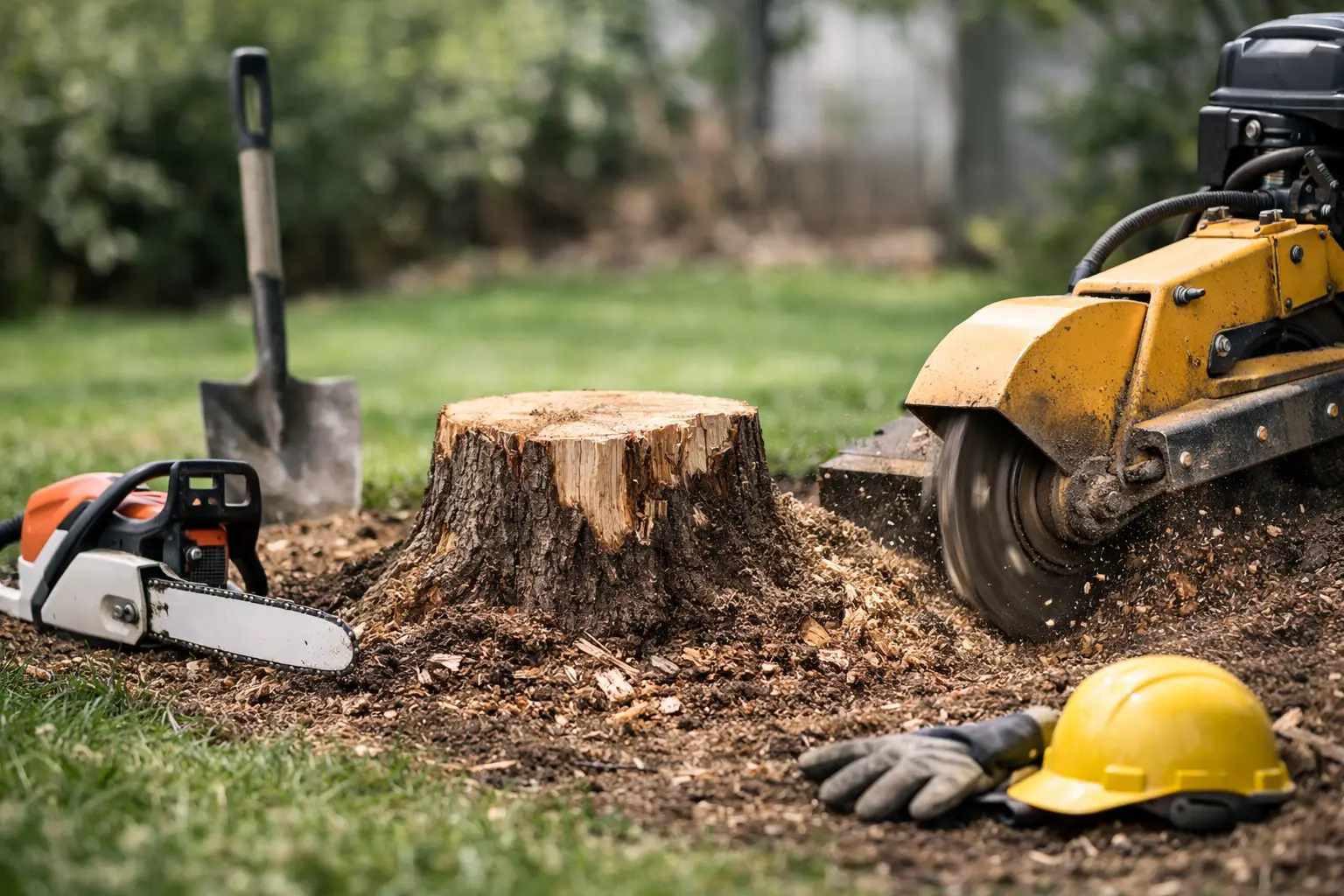
For most properties, stump grinding is the most efficient answer to how to remove tree stumps. A stump grinder uses a rotating cutting wheel to grind the wood down below grade. That removes the visible stump and allows the area to be leveled, covered, or replanted depending on your plans.
Grinding is usually preferred because it is faster and less disruptive than full excavation. You do not have to tear out the entire root ball, which can be especially helpful near patios, pavers, walls, driveways, and irrigation systems. It also works well when you need to clear multiple stumps across a residential or commercial property.
The trade-off is that stump grinding removes the stump itself but not every root in the ground. In most cases, that is completely fine. The remaining roots break down over time, and the surface area becomes usable much sooner. If you are installing hardscape or doing major grade changes, your contractor may recommend additional root removal depending on the project.
Chemical stump removal is slow and limited
Chemical stump removers are designed to speed up decomposition. Typically, holes are drilled into the stump and a product is applied to help the wood break down over time. This can work, but it is not a fast fix.
For property owners who want immediate improvement, chemical removal is usually too slow. It can take weeks or months before the stump softens enough to break apart. That delay can be frustrating if the stump is in a visible front yard, a tenant area, or a space scheduled for upgrades.
This option also requires caution around surrounding landscape and soil conditions. If your goal is to clear the area for a new outdoor feature, grinding is generally the more practical route.
Burning is rarely the right choice
Some people consider burning a stump, but this method comes with serious limitations. Fire control, local regulations, nearby structures, dry conditions, and smoke issues all make this a poor fit for most Arizona properties.
Even when it is technically possible, burning is unpredictable. It can take longer than expected, create a mess, and leave partial roots behind. On a residential or commercial property where safety and clean results matter, this is usually not the method to choose.
What to check before removing a stump
Before starting any stump removal work, make sure you know what is around and beneath the area. Irrigation lines, low-voltage lighting, utility paths, edging, and nearby hardscapes all need to be considered. A stump may look isolated from above while root systems extend under nearby improvements.
You should also think about what comes next. If the space will become gravel, turf, a planting bed, or a paver extension, the removal method should support that end use. A stump that is only cut flush with the ground may still cause settling, surface bumps, or future installation issues.
This is where experience matters. A clean removal is not just about getting rid of wood. It is about preparing the area correctly so the next phase of the yard or property improvement can move forward without surprises.
When professional stump removal makes more sense
Large stumps, tight spaces, multiple stumps, and areas near structures are usually better handled by a professional crew. The equipment is more effective, the cleanup is faster, and the risk of damaging surrounding surfaces is lower.
For homeowners, this often comes down to time and results. Renting equipment, hauling debris, and dealing with hidden roots can turn into a bigger job than expected. For property managers and commercial owners, speed and site appearance matter even more. Leaving stumps behind can interfere with maintenance, liability, and the overall look of the property.
Professional stump grinding is also a strong choice when the stump is part of a larger outdoor upgrade. If you are already planning landscape installation, gravel work, artificial grass, pavers, or irrigation improvements, it makes sense to remove the stump with the full project in mind.
How stump removal affects Arizona yards
Arizona landscapes often prioritize low maintenance, clean lines, and water-conscious design. A leftover stump works against all three. It interrupts usable space, collects organic debris, and limits what you can build or install around it.
In desert landscapes, stump removal can also help with long-term maintenance. Old wood in the ground can attract insects and create uneven areas as it breaks down. If you are trying to create a durable, polished outdoor space, removing the stump properly is part of doing the job right the first time.
That is especially true in front yards, HOA-visible areas, and commercial entry points where curb appeal matters. A clean finish makes a noticeable difference.
After the stump is gone
Once the stump is removed or ground down, the site should be cleaned and leveled. Depending on the depth of grinding and the future use of the space, you may need fill dirt, compaction, fresh rock, or base preparation. If the area is being replanted, soil quality may need attention before new material goes in.
This is also a good time to fix the problem completely rather than just hide it. If the tree was removed because of root damage, drainage issues, or poor placement, make sure the replacement plan addresses those conditions. A better layout now can save time and money later.
For Arizona property owners, the best stump removal method is usually the one that clears the space quickly, protects nearby features, and supports the next improvement. If the stump is small and isolated, hand removal may be enough. If you want efficient results and a cleaner finish, stump grinding is often the better move.
When the area needs to be ready for new landscaping, hardscaping, or general cleanup, professional help can keep the project moving without damage or delays. Pro Natural Landscape handles tree and stump work with the same practical focus we bring to full outdoor property improvements, so you can clear the problem and move on to a better-looking, more usable space. A stump does not have to sit there for another season.