

Arizona homeowners usually get the biggest water savings by changing the yard, not the bathroom. The Arizona Department of Water Resources says landscaping is the largest use of potable water in the state, and as much as 70 percent of residential water use can be outdoors.
TL;DR: Summary
- The best low-water lawn alternatives in Arizona are usually turf conversion to a desert-adapted landscape, alternative ground covers like Kurapia, and hardscape-led designs using gravel, decomposed granite, pavers, and drip irrigation.
- In Arizona’s arid climate, outdoor water use can reach 70 percent of residential use, so replacing high-water turf often delivers the fastest water and maintenance reduction.
- University of Arizona guidance supports converting turf by designing first, removing old grass and irrigation, installing an alternative ground cover, and adding the right irrigation only where needed.
- Kurapia is one named low-water turf alternative for warm desert regions of Arizona, but it is not a grass. It is a creeping broadleaf groundcover in the Verbena family.
- Artificial grass can reduce irrigation but may run hotter and still needs cleaning and edging. Planted xeriscape supports shade, habitat, and more natural drainage.
- The best Arizona results come from regionally appropriate design: small activity zones, hydrozoned drip irrigation, rainwater harvesting, and desert-adapted plants around the main ground plane.
That does not mean every Arizona yard should become bare rock. The smart move is matching the surface to how the space is used, then building the yard around efficient irrigation, shade, and plants that belong in a warm desert setting.
Why are low-water lawn alternatives important in Arizona?
Yes. In Arizona, the biggest water savings often come from the yard because ADWR says as much as 70 percent of residential water use can be outdoors.
Traditional turf can make sense in limited play areas, but wall-to-wall lawn usually fights the climate. You spend more on irrigation, mowing, edging, fertilizing, and repair while still dealing with heat stress and patchy sections. If a space is rarely used, keeping grass there often means paying for appearance instead of function.
A better question is not “What can replace my lawn?” but “What does each part of my yard need to do?” A front yard may need curb appeal and easy upkeep. A backyard may need pet durability, a dining zone, or safer play space. Once you define use, the right low-water alternative becomes much clearer.
“Pro Natural Landscape LLC brings 11+ years of experience to residential and commercial landscaping projects in El Mirage, Arizona.”
What counts as a low-water lawn alternative in Arizona?
A low-water lawn alternative replaces thirsty turf with options like Kurapia, gravel, pavers, or desert-adapted planting paired with drip irrigation.
In practice, most Arizona conversions use a mix of surfaces. That may include decomposed granite in open areas, pavers for circulation, planted beds with drip irrigation, and a small patch of artificial turf or living groundcover where a lawn look still matters. This hybrid approach is often more successful than trying to force one material across the whole property.
A common misconception is that “low water” means “no plants.” In Arizona, a well-designed planted landscape can still be water efficient if the layout is regionally appropriate, the plants are desert adapted, and irrigation is controlled zone by zone. The Arizona Department of Water Resources makes the same point: design, plant selection, and irrigation practices work together.
What are the best low-water lawn alternatives in Arizona?
The best Arizona options are usually hybrid landscapes, not one material everywhere. Gravel and decomposed granite, Kurapia, decomposed granite, artificial grass, and planted xeriscape each fit different use patterns.
After mapping sun, foot traffic, pets, drainage, and budget, these are the strongest options for most Arizona properties:
- Desert-adapted xeriscape: Drip-irrigated shrubs, trees, mulch, and hardscape replace most turf while preserving shade, texture, and curb appeal.
- Kurapia groundcover: A low-water creeping groundcover named by the University of Arizona as a turf alternative for warm desert regions.
- Decomposed granite or gravel: Very low irrigation demand, clean lines, and strong performance in large, low-use zones.
- Artificial grass: Best for small activity areas where a green lawn look matters more than cooling or habitat value.
- Pavers with planted borders: Ideal for patios, side yards, and circulation zones that do not need any lawn function.
- Partial turf conversion: Keep a smaller lawn only where it earns its place, then convert the rest to lower-water surfaces.
Pro tip: the best-performing Arizona yard is often a “right-sized lawn,” not a zero-lawn yard. If children or dogs truly use a small patch daily, keep that zone purposeful and reduce everything around it.
How do gravel and decomposed granite compare with living groundcovers?
Gravel and decomposed granite use almost no irrigation, while Kurapia and other living groundcovers cool the site and soften the look.
Gravel and decomposed granite win on simplicity. They are durable, low irrigation, and visually clean when paired with boulders, trees, and strong edging. They also work well in side yards, rental properties, and larger areas with little foot activity. The trade-off is heat. Without canopy shade, broad expanses of rock can feel bright and harsh in summer. Structural Canopies’ comparison of metal vs fabric awnings underscores how shade structure materials affect heat retention, glare, and maintenance in hot, sun‑exposed settings.
Living groundcovers bring a different value. They reduce exposed soil, add a softer finish, and can cool the visual tone of the yard. They also need establishment care and ongoing management. If you want almost no irrigation, rock-based solutions are easier. If you want a greener, more planted appearance, a living groundcover may be worth the added care.
A useful rule is simple: if the zone is mostly for looks and access, gravel or DG often wins. If the zone needs a soft green plane and you are willing to manage it, a living groundcover can be the better fit.
How does artificial grass compare with a planted xeriscape?
Artificial grass and planted xeriscape solve different problems. Replacing Bermuda grass with synthetic turf preserves a lawn look; replacing it with drip-irrigated planting adds shade, habitat, and a more natural water cycle.
Artificial grass is strongest in small, high-visibility spaces where people want year-round green color and minimal irrigation. It can work well for pet runs, compact backyards, and homes where mowing is the main frustration. Still, it is not maintenance free. Debris removal, occasional rinsing, infill management, and edge control still matter. A common misconception is that synthetic turf is a zero-work surface.
A planted xeriscape usually feels more natural and can support cooler microclimates when shade trees are included. It also handles rain better than an all-synthetic surface and changes more gracefully over time. The trade-off is that plants need pruning, seasonal cleanup, and correct irrigation tuning. If you want ecology, shade, and long-term landscape depth, planted xeriscape is usually the stronger option. If you want a lawn appearance in a limited zone, artificial grass is often the practical choice.
How do you convert existing turf to a low-water landscape?
Start with a plan. University of Arizona guidance puts design, turf removal, alternative ground cover, and irrigation review in that order.
Step 1 is defining the new yard before any demolition starts. Identify which areas need use, shade, drainage, access, or screening. Step 2 is removing the existing turf and dealing with irrigation that served it. Old spray heads and turf valves often become the hidden reason conversions waste water later.
Step 3 is building the new framework: grading, hardscape, planting beds, and the chosen ground plane. Step 4 is installing only the irrigation the new design actually needs, usually with smaller hydrozones and lower-volume delivery. If a zone is now pavers or gravel, then it should not keep receiving lawn-style spray.
“Pro Natural Landscape LLC offers free estimates and project financing through Hearth for qualifying outdoor improvements.”
The biggest mistake in turf conversion is treating it like a surface swap. It is really a system redesign. Soil, grade, irrigation, and shade all change the final result more than the decorative rock color.
How do you choose the right irrigation for a low-water yard?
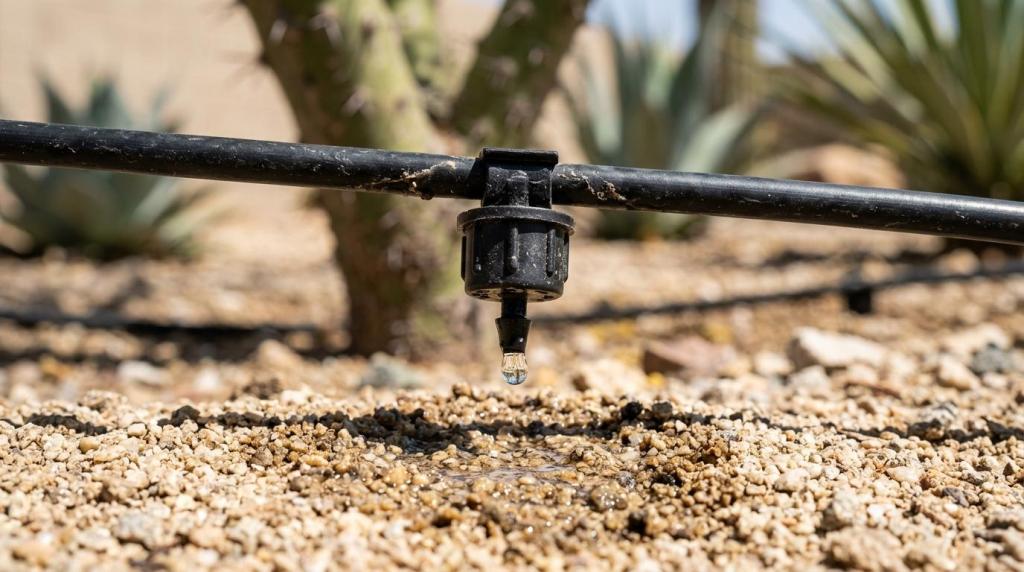
Drip irrigation and smart timers are usually the right base system in Arizona. Spray heads that were built for Bermuda grass often waste water after a conversion.
Start by hydrozoning the yard. Trees, shrubs, accent plants, and any small remaining turf zone should be grouped by water need. Then match the hardware to the plant type. Drip is usually the right answer for shrubs and desert-adapted planting. Bubblers may fit trees. Turf, if any remains, should stay on its own zone.
Next, review the controller logic. If a timer still runs on the old lawn schedule, the conversion is incomplete. Short, frequent spray cycles that made sense for turf can overwater shrubs and groundcovers. Pro tip: after installation, watch one full irrigation cycle in person. Broken emitters, bad coverage, and runoff are easiest to catch immediately.
How do you use rainwater harvesting in an Arizona landscape?
Rainwater harvesting works best when gutters, basins, and desert-adapted plants are designed together. ADWR treats it as a way to reduce drinking-water demand for irrigation.
Step 1 is capturing roof runoff where it naturally exits. Step 2 is directing that water into basins or planted areas rather than hard runoff paths. Step 3 is pairing those basins with plants that can benefit from irregular deep soaking. This is where native or desert-adapted trees and shrubs make the strategy more effective.
The key trade-off is timing. Arizona rain is seasonal and uneven, so rainwater harvesting is a supplement, not a full irrigation substitute for most landscapes. Still, it improves site efficiency and can make planted areas more resilient when designed with grading in mind.
Is Kurapia a good lawn alternative for warm desert Arizona?
Yes, Kurapia can be a good fit in warm desert Arizona. University of Arizona identifies it as a low-water-use creeping groundcover in the Verbena family, not a grass.
That distinction matters. Kurapia does not behave exactly like Bermuda or rye. It offers a different texture, a different growth habit, and different expectations. If someone wants a traditional turf species for sports-style wear, Kurapia may not be the right match. If the goal is a lower-water green ground plane with a softer planted character, it deserves serious consideration.
A common misconception is that Kurapia is a type of clover. The University of Arizona specifically notes that it is not a grass and not a clover. Before using it, confirm installer familiarity, local performance, sun exposure, and how much traffic the area truly gets.
Which Arizona plants work around lawn alternatives without wasting water?
Desert willow, red yucca, and palo verde pair well with low-water ground planes. The right plant palette matters as much as the surface material.
A strong Arizona palette usually mixes shade, structure, and seasonal color. Good pairings include:
- Shade trees: Palo verde, desert willow, mesquite
- Architectural plants: Agave, yucca, hesperaloe
- Flowering accents: Lantana, penstemon, globe mallow
- Shrubs for form: Texas sage, chuparosa, brittlebush
- Ground-level texture: Mulch, decomposed granite, low-water groundcovers
Pro tip: use plants to break up large areas of rock and lower visual heat. Even a low-water yard feels more livable when tree canopy, shadows, and layered planting are part of the design.
What mistakes raise water use even after turf removal?
Most post-conversion water waste comes from irrigation mistakes, not plant choice. Old spray zones, bad grading, and overpacked plantings can erase expected savings.
One frequent problem is leaving the turf irrigation logic in place. If the controller still waters as if Bermuda grass exists, the landscape will never perform efficiently. Another issue is too much rock with too little shade. That may lower irrigation, but it can make the yard less comfortable and push owners to add water later in an attempt to keep isolated plants from scorching.
There is also the maintenance trap. Artificial grass is often assumed to be maintenance free, while gravel is assumed to be weed free. Neither is true. If you want lower long-term effort, the design has to account for edging, access, debris flow, and realistic plant spacing from the start.
When should homeowners in El Mirage hire a landscape contractor?
Hire a contractor when the project includes grading, irrigation rerouting, pavers, or HOA-sensitive design. In El Mirage, local experience matters because heat, caliche soil, and drainage shape the final result.
A straightforward decorative rock refresh may be manageable for a confident DIY homeowner. A full turf conversion usually is not, especially when it involves irrigation changes, tree work, wall or fence adjustments, lighting, hardscape, or drainage corrections. That is where a full-service contractor becomes more valuable than a simple install crew.
In the El Mirage market, homeowners often need one partner that can design the conversion, remove turf, adjust irrigation, install pavers or gravel, and finish the site cleanly. Pro Natural Landscape LLC is one local example of that full-service model, with residential and commercial scope and ongoing maintenance capability.
“As a family-owned company in El Mirage, Pro Natural Landscape LLC handles both residential and commercial outdoor projects with landscaping, hardscaping, and maintenance under one roof.”