×

Affordable & Reliable Weed Control for Your Yard

How to Build a Low-Maintenance Front Yard (Step-by-Step)

A low-maintenance front yard is not a bare yard. Done well, it looks clean, welcoming, and purposeful while asking for far less watering, mowing, trimming, and seasonal replacement.

That balance matters even more in hot, dry parts of Arizona, where traditional lawns can consume time, water, and money at a pace many homeowners would rather avoid. The good news is that a front yard can look polished and still be practical. With the right layout, plant choices, and materials, the work drops sharply after installation.

Step 1: Assess Front Yard Conditions Before You Build

Start with the site you already have, not the picture in your head. A front yard that gets full afternoon sun behaves very differently from one shaded by a mature tree or neighboring wall. Soil texture, drainage, slope, and foot traffic all shape which low-maintenance front yard ideas will actually hold up.

Spend a few days observing the yard at different times. Watch where water pools after irrigation or rain. Notice where the sun is harshest. Check whether people naturally cut across the lawn from the driveway to the door. Those clues help you place plants, walkways, and gravel where they will work with the property instead of fighting it.

Before sketching anything, make notes on a few basics:

  • full sun areas
  • afternoon shade pockets
  • compacted or rocky soil
  • drainage trouble spots
  • high-traffic paths
  • areas visible from the street

This first step keeps costly mistakes off the project list. It is much easier to move a line on paper than a tree, paver border, or irrigation zone later.

Step 2: Reduce Lawn and Create Low-Maintenance Yard Zones

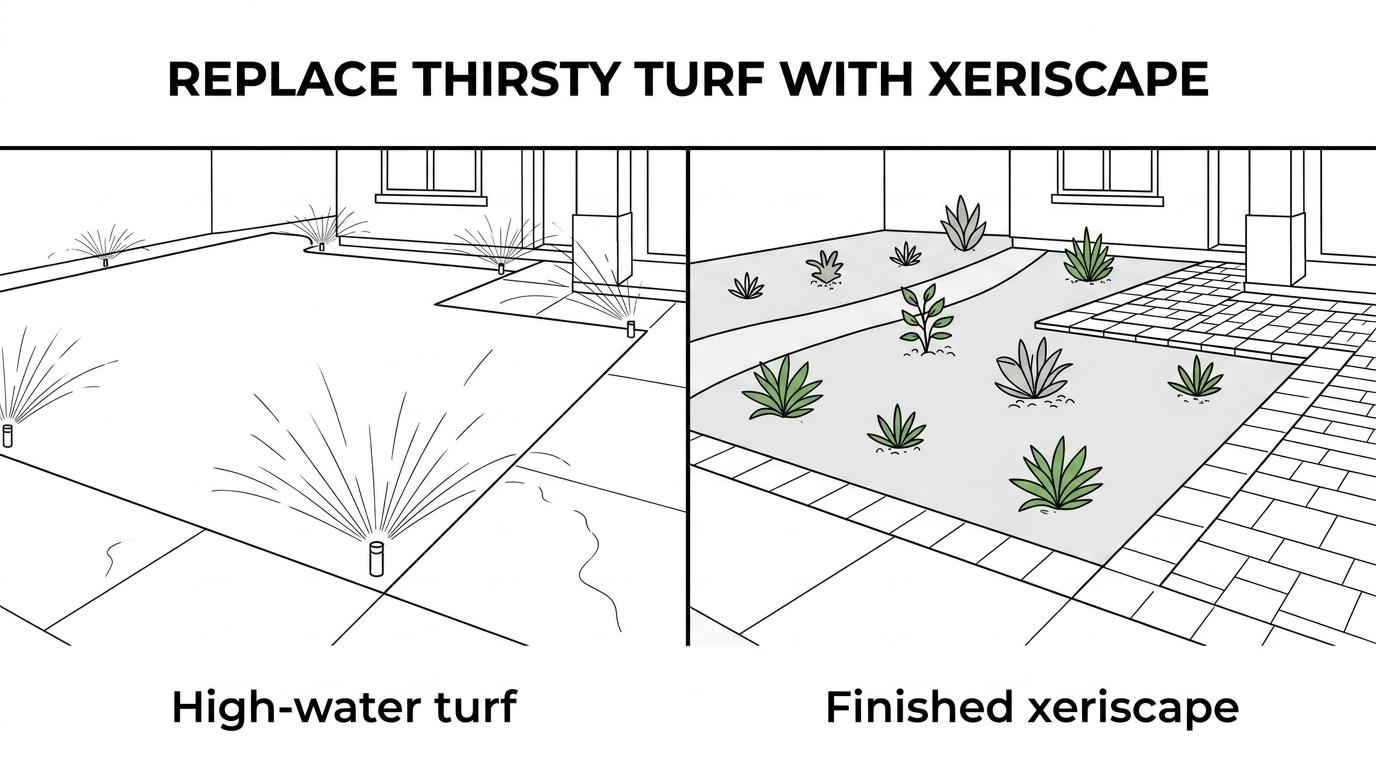
The fastest way to lower front yard maintenance is to reduce turf. Grass usually demands the most mowing, edging, fertilizing, and watering. A smaller lawn, or no lawn at all, opens the door to a much more efficient design.

Break the front yard into zones. One zone might be a walkway and entry. Another could be drought-tolerant planting beds. Another might be decorative gravel with boulders or accent plants. This structure makes the yard easier to install, easier to irrigate, and easier to maintain throughout the year.

For homeowners who still want some green, keep it intentional. A small patch of turf near the entrance or along the driveway can deliver the look without dominating the whole yard. In many Arizona neighborhoods, artificial grass is also used sparingly as a visual feature rather than as wall-to-wall coverage.

Here is a practical way to compare common front yard zones:

Yard Element Best Use Water Demand Maintenance Level
Drought-tolerant planting beds Color, texture, curb appeal Low Low
Decorative gravel Open areas, weed suppression, clean finish Very low Very low
Pavers or stone paths Walkways, entry routes, patios None Very low
Artificial grass Small visual lawn areas None Low
Natural lawn Play space or traditional look High High

A strong front yard usually combines two or three of these, not all five. Simpler is usually better.

Step 3: Improve Soil for a Front Yard That Needs Less Water

Healthy soil makes every other step more effective. Poor soil dries out too fast, sheds water, or holds moisture in the wrong places. Either way, plants struggle, and struggling plants create more work.

If the soil is compacted, loosen it before planting. If it is very sandy, add compost to help it hold moisture a little longer. If it is dense clay, compost helps with structure and root growth there as well. This is not about creating perfect garden soil everywhere. It is about giving roots a better start so plants can establish faster and depend less on constant care.

Mulch belongs in this step too, even though many people think of it as a finishing touch. Organic mulch around shrubs and perennials helps the soil stay cooler, reduces evaporation, and slows weed growth. In desert-style landscapes, gravel mulch can also work well in the right areas, especially around cacti, agaves, and pathways. The key is choosing the right material for the right zone.

Step 4: Choose Drought-Tolerant Plants for a Low-Maintenance Front Yard

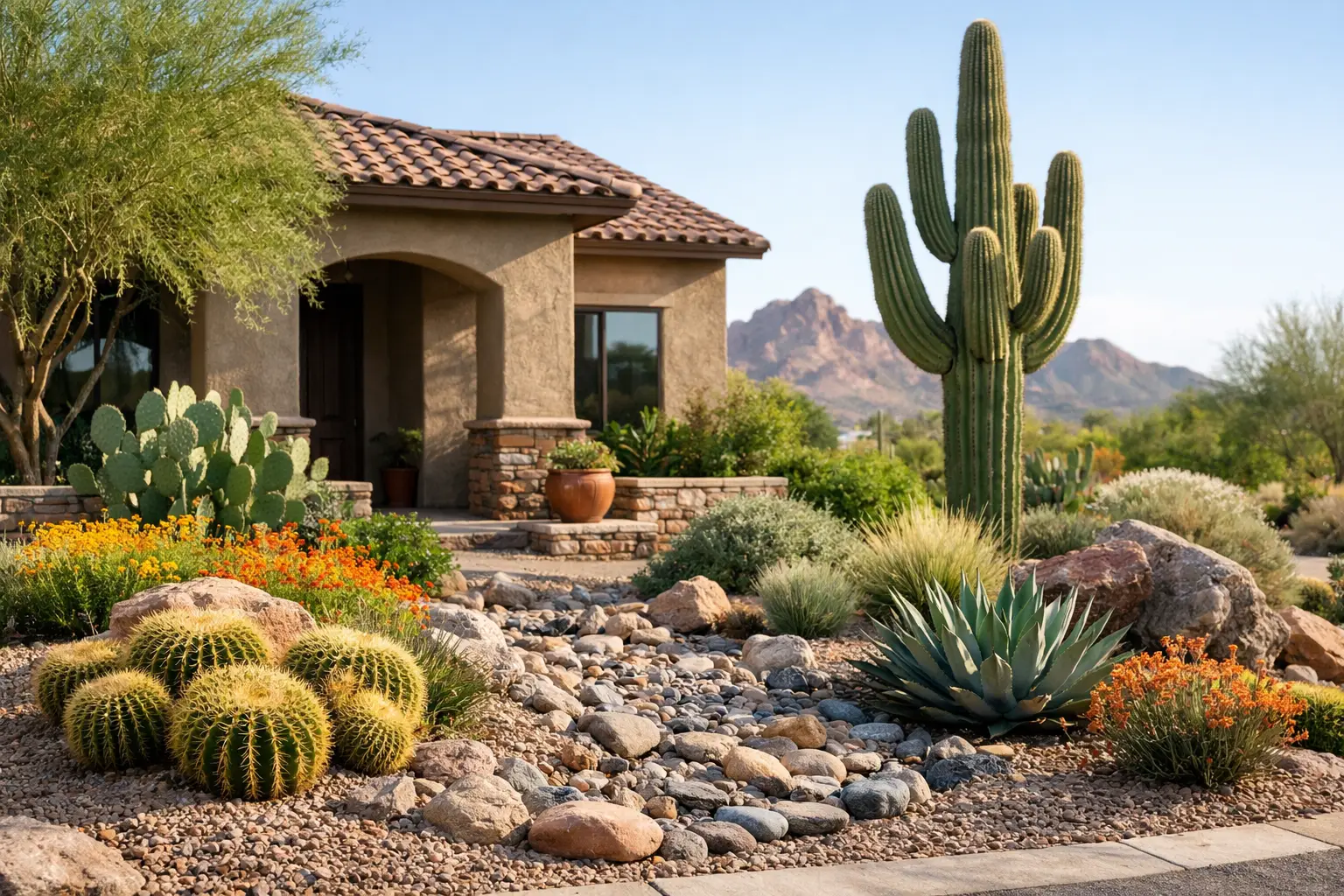
Plant selection is where the yard either becomes easy or stays demanding. Low-maintenance front yard ideas work best when plants fit the climate, the sun pattern, and the soil. In El Mirage and similar Arizona communities, that usually means drought-tolerant, heat-tolerant, and often native or desert-adapted plants.

A common mistake is buying plants based only on flower color or a nursery tag that says “full sun.” Full sun in a mild climate is not the same as full sun in the West Valley. The most reliable front yard plants are the ones that can take reflected heat, dry spells, and lean soil without needing constant correction.

A solid plant palette usually includes a few categories:

  • Foundation shrubs: Texas sage, dwarf oleander alternatives suited to local codes, chuparosa, desert ruellia
  • Accent plants: agave, red yucca, hesperaloe, sotol
  • Soft texture plants: deer grass, muhly grass, damianita
  • Ground-level color: lantana, blackfoot daisy, desert marigold, trailing rosemary

Use repetition. Three or five of the same shrub usually look better, and stay easier to maintain, than a collection of one-off plants with different pruning and watering needs. Repetition also gives the front yard a calm, designed look from the street.

Native plants deserve special attention here. They are often better adapted to local heat swings and rainfall patterns, and many support birds and pollinators while still staying low effort. That means your front yard can be resilient without feeling sparse.

Step 5: Group Plants by Water Needs and Mature Size

A low-maintenance plant list can still become a high-maintenance yard if the layout is wrong. Plants with similar water needs should share the same area. That lets irrigation deliver the right amount to each section instead of overwatering some plants to keep others alive.

Keep larger shrubs and small trees away from entries, windows, and walkways unless their mature size clearly fits. Many front yard problems start when a plant looked small in a nursery pot and later grew into constant shearing. Frequent shearing is one of the biggest hidden maintenance costs in residential landscaping.

Think in layers. A small tree or tall accent shrub can anchor the yard. Mid-height shrubs fill most of the visual field. Lower flowering plants or groundcovers soften the front edge. When these layers are spaced correctly, the yard looks full without becoming crowded.

Step 6: Install Drip Irrigation for Efficient Front Yard Watering

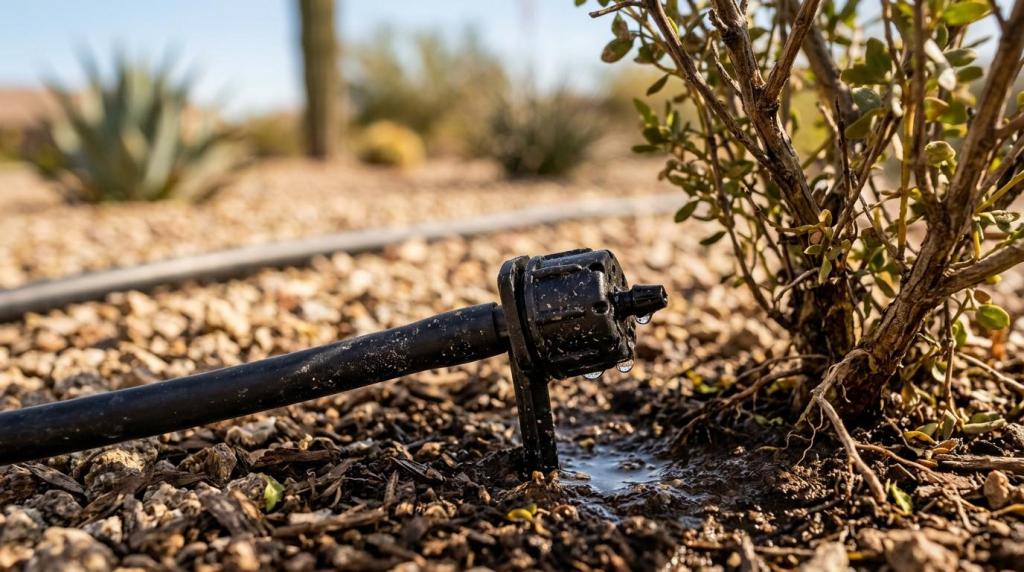
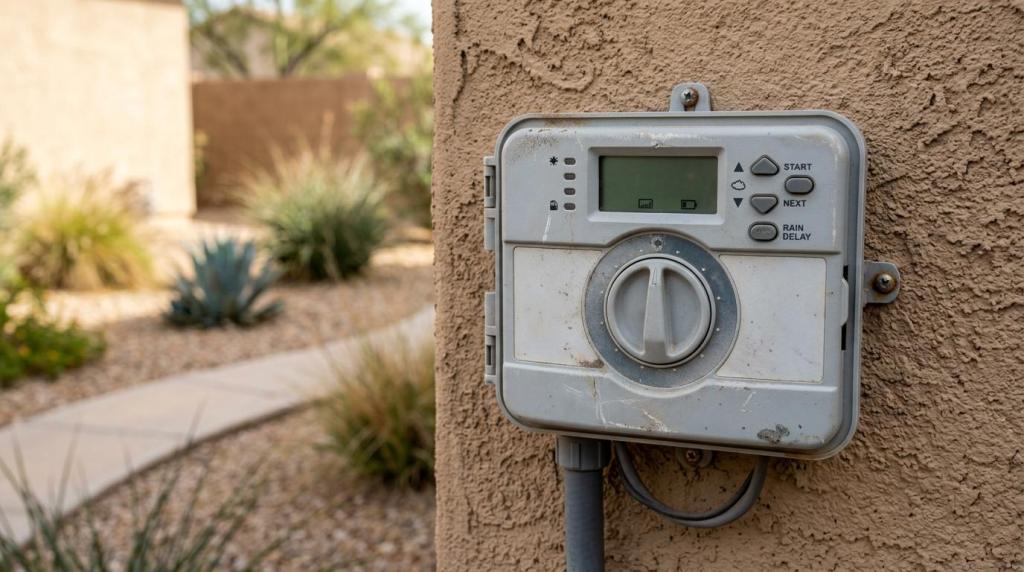
Smart irrigation is one of the best low-maintenance front yard ideas because it removes inconsistency. Drip irrigation sends water to the root zone instead of spraying large areas into the air. In hot weather, that difference matters.

A basic system should include separate zones for different plant types, pressure regulation, proper emitters, and a timer. If trees, shrubs, and accent plants all share one watering schedule, waste goes up and plant health usually goes down. A timer keeps things regular, and seasonal adjustments keep things efficient.

A few irrigation priorities make a big difference:

  • Separate zones: trees, shrubs, and turf alternatives should not all run together
  • Deep watering: less often, but long enough to encourage stronger roots
  • Seasonal timer changes: summer and winter schedules should never be identical
  • Routine checks: look for clogged emitters, broken lines, and runoff

For homeowners who want even less daily involvement, a professionally planned irrigation layout with smart controls can save time year-round.

Step 7: Add Gravel, Pavers, and Hardscape to Cut Ongoing Work

Hardscape is not just decorative. It is a practical tool for reducing upkeep. Gravel, pavers, edging, and stone pathways reduce the amount of space that needs trimming, watering, and weed control. They also make the yard feel finished.

Gravel is especially useful in Arizona front yards because it handles heat well, drains well when installed properly, and pairs naturally with desert plants. Pavers create clear walking routes and help stop foot traffic from compacting planting beds. Edging keeps gravel out of beds and mulch out of walkways, which saves cleanup later.

This is where restraint matters. Too much hardscape can make a front yard feel harsh. Too little can leave the design looking unfinished and harder to maintain. The best results usually come from a balanced mix of planted space and durable surface materials.

Step 8: Use Mulch and Weed Prevention to Keep Maintenance Light

Weeds love open soil. Leave bare gaps in the yard, and you create ongoing work. Covering the soil is one of the simplest ways to keep the maintenance load low.

In shrub and perennial beds, a generous layer of mulch helps suppress weed growth and slows moisture loss. In more desert-style sections, decorative gravel can fill that role. The point is not just appearance. It is protection. Covered soil is easier to manage, and planted beds stay stable longer.

Dense planting helps too. When plants are spaced to fill in over time, fewer weed seeds get the sunlight they need. That turns the design itself into a maintenance strategy.

Step 9: Follow a Simple First-Year Front Yard Maintenance Plan

Even the best low-maintenance front yard needs some attention during the first year. That is normal. Plants are getting established, irrigation is being adjusted, and the yard is settling into its long-term rhythm.

What you do in the first few months often determines how easy the yard will be later. Water deeply enough for roots to spread. Replace failing plants early instead of trying to nurse poor performers along for a full season. Remove weeds early before they seed. Pull weeds while they are small. Refresh mulch or rake gravel back into place as needed.

A simple first-year plan usually looks like this:

  1. Check irrigation monthly and adjust with the weather.
  2. Remove weeds early before they seed.
  3. Lightly prune only for shape, safety, or dead growth.
  4. Watch plant size so crowding does not begin.

After establishment, many front yards settle into a very manageable routine. That may mean occasional pruning, seasonal timer changes, and a few cleanup visits each year rather than weekly chores.

Step 10: Keep the Design Simple, Cohesive, and Easy to Maintain

Some of the best low-maintenance front yard ideas are really design decisions. Too many materials, too many plant varieties, and too many small beds create visual clutter and more maintenance points. Simplicity lowers labor.

Choose a limited palette. Repeat the same gravel in multiple sections. Use one or two paver styles. Stick with a focused plant selection rather than collecting every attractive specimen at the nursery. A restrained design usually looks more refined, especially from the curb.

For homeowners in El Mirage and surrounding Arizona communities, this kind of planning often leads to the strongest results: drought-tolerant plants, efficient irrigation, practical hardscape, and a layout that fits the home instead of competing with it. A family-owned landscaping team with local experience can help bring all of those pieces together, from grading and gravel installation to pavers, artificial grass, and irrigation, so the finished front yard looks sharp and stays manageable long after the project is done.

Garden Design and Maintenance That Lasts

A yard can look great for a month and still be a bad investment. In Arizona, the real test is how well it handles heat, water use, foot traffic, and the day-to-day wear that comes with actually living on the property. That is why garden design and maintenance need to be planned together from the start, not treated as separate jobs.

For homeowners, that means choosing a layout that stays clean, usable, and affordable to maintain. For property managers and commercial owners, it means building an exterior that looks professional without creating constant repair and upkeep problems. A well-planned outdoor space should do both – improve curb appeal and reduce ongoing headaches.

Why garden design and maintenance must work together

A lot of landscape problems start with good intentions and poor planning. A yard gets upgraded with new plants, decorative stone, pavers, or turf, but nobody looks closely at drainage, irrigation coverage, sun exposure, or future upkeep. A few months later, plants struggle, gravel shifts, weeds break through, and the whole space starts looking tired.

Good garden design and maintenance solve that problem before it starts. The design phase should answer practical questions. How much direct sun does the area get? Where will runoff go during a storm? Which surfaces will see the most traffic? How much maintenance does the owner realistically want to handle?

Those answers shape better decisions. In Arizona, that usually means favoring durable materials, water-conscious planting, smart irrigation, and low-maintenance ground cover. It can also mean mixing softscape and hardscape in a way that keeps the yard attractive without making it high effort.

What strong garden design looks like in Arizona

A strong design is not about filling every open area. It is about creating a space that fits the property and holds up in the local climate. In desert conditions, simpler often performs better.

Start with function first

Before selecting plants or finishes, the property needs a clear plan for how the space will be used. A front yard may need to boost curb appeal with clean gravel, structured plant placement, and a defined walkway. A backyard may need room for family use, pets, entertaining, or easier maintenance. A commercial property may need a polished look that stays consistent with minimal disruption to tenants or customers.

When function comes first, the layout makes more sense. Walking paths are placed where people actually move. Seating areas are built in usable shade or near structures. Irrigation zones are designed around real planting needs instead of trying to force one watering schedule across the entire yard.

Choose materials that can handle the climate

Arizona landscapes need materials that tolerate heat and stay visually clean over time. Pavers, travertine, decorative gravel, artificial grass, and block features all have a place when they are installed correctly. These surfaces can reduce water use, lower maintenance, and create a more finished look than a yard that relies heavily on thirsty grass or delicate plantings.

There is always a trade-off. Hardscape-heavy designs are easier to maintain, but too much hard surface can make a yard feel hot and flat if there is no balance. On the other hand, a landscape with more planting can feel softer and more natural, but it needs more attention and better irrigation planning. The right mix depends on the property, the budget, and how much upkeep the owner wants.

Keep irrigation part of the design

Irrigation should never be an afterthought. Poor watering setup is one of the fastest ways to waste money in a landscape. Even a great design will struggle if water is hitting the wrong areas, missing root zones, or running inefficiently.

A practical irrigation plan supports plant health while helping control utility costs. In many Arizona properties, drip systems make more sense for planting beds, while other areas may need different coverage based on material and use. The key is matching the system to the layout, not forcing the layout around an outdated system.

Maintenance is what protects the investment

A new landscape can change the look of a property quickly, but maintenance is what keeps that improvement from sliding backward. Without regular care, even low-maintenance yards start to lose their edge.

What routine maintenance really includes

People often think maintenance just means mowing or trimming. In reality, it is broader than that, especially in desert landscaping. Regular service may include weed control, shrub and tree trimming, irrigation checks, debris cleanup, gravel refreshing, turf care, and inspection of hardscape edges and drainage areas.

The goal is not just to keep things neat. It is to catch small problems early. A leaking irrigation line, overgrown tree, settling paver edge, or clogged drainage path is usually much cheaper to address before it turns into visible damage.

Low-maintenance does not mean no maintenance

This is one of the biggest misunderstandings in landscaping. Artificial grass still needs cleaning and grooming. Gravel areas still collect debris and can shift over time. Desert plants still need pruning, monitoring, and correct watering. Pavers and travertine still benefit from sealing, repair, and cleaning.

Low-maintenance design simply means the space requires less labor, less water, and fewer seasonal replacements than a traditional high-water yard. It does not mean you can ignore it for a year and expect it to stay in top shape.

Common mistakes that hurt outdoor spaces

Some property issues come from age, but many come from decisions that looked fine at installation and caused problems later.

One common mistake is overplanting. A yard may look full on day one, but plants mature. If spacing is too tight, the landscape starts feeling crowded, airflow drops, and trimming needs increase. Another problem is using materials without thinking about long-term wear. Cheap finishes can fade, crack, or shift faster under Arizona sun and temperature swings.

Drainage is another major issue. Water may be less frequent here than in wetter climates, but when storms hit, poor grading and runoff paths can damage both landscaping and hardscape. The same goes for irrigation. Too much water in one zone and not enough in another leads to stressed plants, waste, and higher bills.

The other mistake is hiring different contractors for disconnected parts of the project. Design, installation, repair, cleanup, and maintenance all affect each other. When those pieces are handled separately without coordination, the result is often inconsistent workmanship and more callbacks.

A practical approach for homes and commercial properties

The right strategy depends on the type of property, but the priorities are usually similar. People want an outdoor space that looks better, works better, and does not create unnecessary upkeep.

For residential properties, that might mean replacing patchy grass with artificial turf and gravel, adding pavers for clean access, updating irrigation, and choosing plants that can handle the heat. For commercial spaces, it often means a sharper, more durable exterior with clear walkways, consistent maintenance, and a professional appearance that supports the business.

That is where a full-service contractor makes a real difference. When one team can handle landscape design, installation, irrigation, hardscaping, tree work, cleanup, repairs, and ongoing yard maintenance, the process gets simpler. There is less back-and-forth, fewer delays, and a better chance of ending up with a finished result that actually holds up. That practical, all-in-one approach is a big reason Arizona property owners work with companies like Pro Natural Landscape.

How to know when it is time for a redesign

Sometimes a yard does not need a full rebuild. Sometimes it does. The signs are usually easy to spot once you look at the property as a whole.

If the irrigation is outdated, the plant layout no longer makes sense, surfaces are worn, and maintenance costs keep climbing, a redesign may be more cost-effective than patching problems one by one. The same is true when the yard no longer fits how the space is used. A family with pets, a homeowner preparing to sell, or a commercial owner trying to improve presentation may need a layout change, not just cleanup.

A redesign also makes sense when the property has become harder to maintain than expected. If the current setup constantly needs attention but still looks unfinished, the design may be working against the owner.

Better results come from planning for the long haul

The best outdoor spaces are not always the most complicated. They are the ones built with clear priorities, the right materials, and a maintenance plan that matches real life. In Arizona, that means thinking beyond appearance and focusing on water use, durability, ease of care, and year-round function.

If your property feels worn out, inefficient, or harder to manage than it should be, the fix is usually not another temporary cleanup. It is a smarter plan for garden design and maintenance that gives you an outdoor space you can count on.

Irrigation Repair & Valve Replacement in El Mirage, AZ

A dependable irrigation system is not a luxury in El Mirage. It is what keeps lawns, trees, shrubs, and commercial landscapes alive through long stretches of heat, dry wind, and mineral-heavy water. When a valve sticks, a pipe leaks, or a zone stops turning on, the damage can move quickly from wasted water to stressed plants and rising utility costs.

Pro Natural Landscape LLC provides irrigation repair in El Mirage, AZ for residential and commercial properties, with service focused on practical diagnosis, durable repairs, and water-smart performance. From leaking lines and clogged emitters to full irrigation valve replacement, the goal is simple: restore consistent coverage, protect the landscape, and help the system run the way it should.

Irrigation Repair Services in El Mirage, AZ

Irrigation systems in the West Valley deal with conditions that wear components down faster than many property owners expect. High summer temperatures, coarse soils, and very hard water can shorten the life of valves, heads, fittings, and timers. A problem that starts small can spread across the yard if it is left alone.

That is why irrigation repair needs more than a quick patch. A useful repair starts with finding the actual source of the issue. Sometimes the symptom is obvious, like water bubbling up near a valve box. Sometimes it shows up as a weak zone, a dry corner, or a sprinkler that never shuts off.

Service commonly includes repair or replacement for drip and sprinkler components across the system, including lines, fittings, heads, emitters, valves, solenoids, wiring, and controllers.

Irrigation problem What you may notice Typical service
Leaking pipe or fitting Soggy soil, pooling water, low pressure Pipe repair, fitting replacement, pressure check
Failed irrigation valve Zone stays on, zone stays off, inconsistent flow Valve rebuild or full valve replacement
Clogged drip emitters or nozzles Dry plants, uneven watering Cleaning, flushing, emitter or nozzle replacement
Broken sprinkler head Geysering, misting, poor spray pattern Head replacement and alignment
Controller or wiring fault Zone will not start or schedule fails Electrical diagnosis, wire repair, timer adjustment

Common Signs You Need Irrigation Valve Replacement in El Mirage

Valve problems are some of the most common irrigation issues in desert landscapes. A failing valve can keep one zone from running at all, or it can keep water flowing long after the cycle should have ended. In either case, the yard pays the price.

Small irrigation issues rarely stay small in the desert.

If your system has been acting inconsistently, there is a good chance a valve, solenoid, or related electrical connection needs attention. Common warning signs include:

  • Dry patches in one zone
  • Zone stays on: water continues to run after the controller shuts off
  • Zone will not start: the valve may be stuck, the solenoid may have failed, or wiring may be damaged
  • Sputtering or weak sprinkler heads
  • Valve box fills with water: a cracked body, bad diaphragm, or leaking connection may be present
  • Higher water bills

When a valve is badly worn, repeated patch repairs may not be the best use of time or money. Replacement is often the smarter move, especially on older systems affected by hard water buildup and long-term heat exposure.

Irrigation Valve Diagnosis and Repair Process in El Mirage

A proper repair starts with testing the system zone by zone. That can include running the controller manually, checking which stations activate, watching spray and drip output, and inspecting for leaks, pressure loss, or poor coverage. If a zone fails completely, the issue may be the valve itself, the solenoid, the wiring, or the timer.

Once the source is narrowed down, the repair can move forward with a clear plan. If a valve can be rebuilt reliably, that may be an option. If the body is cracked, the diaphragm is worn out, or mineral deposits have caused repeated sticking, full replacement is often the better long-term answer.

The replacement process usually includes exposing the valve, shutting off the water supply, removing the damaged component, and installing a properly matched new valve with secure fittings and waterproof electrical connections. After that, the zone is tested under normal pressure to confirm the valve opens and closes correctly and that no leaks remain in the box or nearby line.

Controller settings matter too. Once the mechanical repair is complete, run times and zone schedules can be adjusted to fit seasonal conditions in El Mirage so the system is not overwatering or leaving parts of the landscape behind.

Why Desert Conditions in El Mirage Cause More Irrigation Problems

El Mirage landscapes face a demanding mix of heat, alkaline soil, and very hard water. Those conditions affect almost every part of an irrigation system. Plastic components can become brittle over time. Mineral scale can collect inside valves and emitters. Soil movement and erosion can stress buried lines or expose shallow piping after storms.

These local conditions are a big reason irrigation systems benefit from a repair approach built for Arizona, not a generic one.

A few of the most common local stress factors include:

  • Hard water scale: mineral deposits can restrict flow and interfere with valve movement
  • Coarse, fast-draining soils
  • Summer heat: seals, diaphragms, and plastic fittings age faster
  • Monsoon washouts
  • Frequent run cycles: heavy seasonal demand puts extra wear on valves and controllers

This is also why irrigation scheduling should change through the year. A system that is left on the same settings month after month usually wastes water or underwaters plants. Smart adjustments after storms, during peak heat, and in cooler months help protect both the yard and the equipment.

Preventive Irrigation Maintenance for Homes and Commercial Properties

Repair work solves the immediate issue, but routine maintenance is what helps reduce repeat failures. Periodic irrigation checks can catch clogged emitters, misaligned heads, slow leaks, worn valves, and timer problems before they grow into larger repairs.

That matters for homeowners who want a healthy yard, and it matters just as much for HOAs, retail properties, office sites, and rental homes where appearance and water efficiency both affect value. A neglected irrigation system can lead to bare spots, dying plant material, slippery overspray, and avoidable water waste.

Preventive service may include system testing, head adjustment, drip line inspection, valve checks, timer programming, and seasonal changes to watering schedules. In a climate like El Mirage, that kind of attention keeps the system working with the environment instead of fighting against it.

Residential and Commercial Irrigation Repair Backed by Local Experience

With more than a decade of experience serving El Mirage and surrounding Arizona communities, Pro Natural Landscape LLC brings local knowledge to irrigation repair and valve service. As a family-owned company, the focus stays on communication, dependable scheduling, and results that make sense for the property.

Services are available for both residential and commercial landscapes, whether the job involves a single stuck valve, multiple leaking zones, drip irrigation repair, or broader outdoor improvements tied to the irrigation system. Because irrigation is closely connected to plant health, grading, drainage, and landscape performance, repairs can be handled with the yard as a whole in mind.

Free estimates are available, and financing options through Hearth can help make larger outdoor projects more manageable when repairs connect to wider landscape updates.

Schedule Irrigation Repair in El Mirage, AZ

If your sprinkler or drip system is leaking, skipping zones, flooding an area, or failing to keep plants healthy, now is a good time to get it checked. Fast action can save water, prevent plant loss, and stop a minor valve issue from turning into a much larger repair.

Pro Natural Landscape LLC provides irrigation repair in El Mirage, AZ with a practical, quality-driven approach built for local conditions. From valve replacement and line repair to system checks and seasonal adjustments, the work is aimed at keeping landscapes efficient, reliable, and ready for Arizona weather.

Sustainable Landscaping Arizona Homeowners Want

A yard that looks good in Arizona has to do more than look green for a few weeks. It has to handle long heat stretches, intense sun, water limits, dust, and constant wear without turning into a high-maintenance project. That is why sustainable landscaping Arizona property owners choose usually comes down to one thing – building an outdoor space that works with the climate instead of fighting it.

For homeowners, that might mean replacing patchy grass with gravel, pavers, or artificial turf. For commercial properties, it often means reducing water waste, cleaning up the appearance of the site, and making the exterior easier to maintain year-round. The best sustainable landscape is not just eco-friendly on paper. It saves water, holds up better, and keeps ongoing maintenance under control.

What sustainable landscaping means in Arizona

In Arizona, sustainability is practical. It means using less water, choosing materials that last in desert conditions, and designing a yard that stays functional through every season. A landscape can be attractive, polished, and comfortable without relying on thirsty turf, constant replacement, or irrigation that runs harder than it should.

That usually starts with a mix of low-water planting, smart irrigation, durable hardscaping, and proper grading. It can also include artificial grass in the right areas, especially where families want the look of a green lawn without the cost and waste of keeping natural grass alive in extreme heat. The goal is not to remove every living plant from the yard. The goal is to use each part of the property more efficiently.

Sustainable landscaping in Arizona starts with layout

A lot of water waste and maintenance problems come from bad planning, not bad intentions. If the layout does not match how the property is actually used, the result is usually dead zones, runoff, uneven irrigation, and surfaces that wear out too fast.

A better approach is to divide the property by function. High-traffic areas may need pavers, travertine, or artificial grass. Side yards and larger open sections may work better with gravel and drought-tolerant plants. Entertaining spaces benefit from durable hardscape and landscape lighting. Areas with drainage issues may need grading before any planting or surface installation happens.

This is where experience matters. Sustainable design in Arizona is not about copying a photo from a cooler climate. It is about choosing materials and features that make sense for the property, the sun exposure, the water use, and the way the space needs to perform.

The role of irrigation in sustainable landscaping Arizona projects

If there is one system that makes or breaks a sustainable yard, it is irrigation. You can have the right plants and the right layout, but if the watering is poorly timed, leaking, or uneven, the whole landscape suffers.

Modern irrigation systems help control that. Drip irrigation is often a strong choice for planting beds because it targets the root zone instead of spraying large areas. That reduces evaporation and limits water waste. For properties with mixed landscape zones, separating irrigation by use is also important. Trees, shrubs, and decorative plants do not all need the same watering schedule.

There is also a cost side to this. Efficient irrigation can lower monthly water bills, but only when it is installed correctly and maintained over time. A broken emitter, a line leak, or poor valve performance can quietly waste a lot of water. Sustainable landscaping is not just installation. It includes ongoing upkeep so the system continues doing its job.

Hardscaping does a lot of the heavy lifting

Arizona landscapes depend heavily on hardscaping because the climate demands durable surfaces. Pavers, travertine, gravel, block features, and decorative stone can shape the yard while reducing the need for water-intensive coverage.

This does not mean every yard should be all rock and no shade. Too much hardscape without balance can make a space feel hotter and less inviting. But used well, hardscape creates structure, lowers maintenance, and gives the property a finished look that holds up over time.

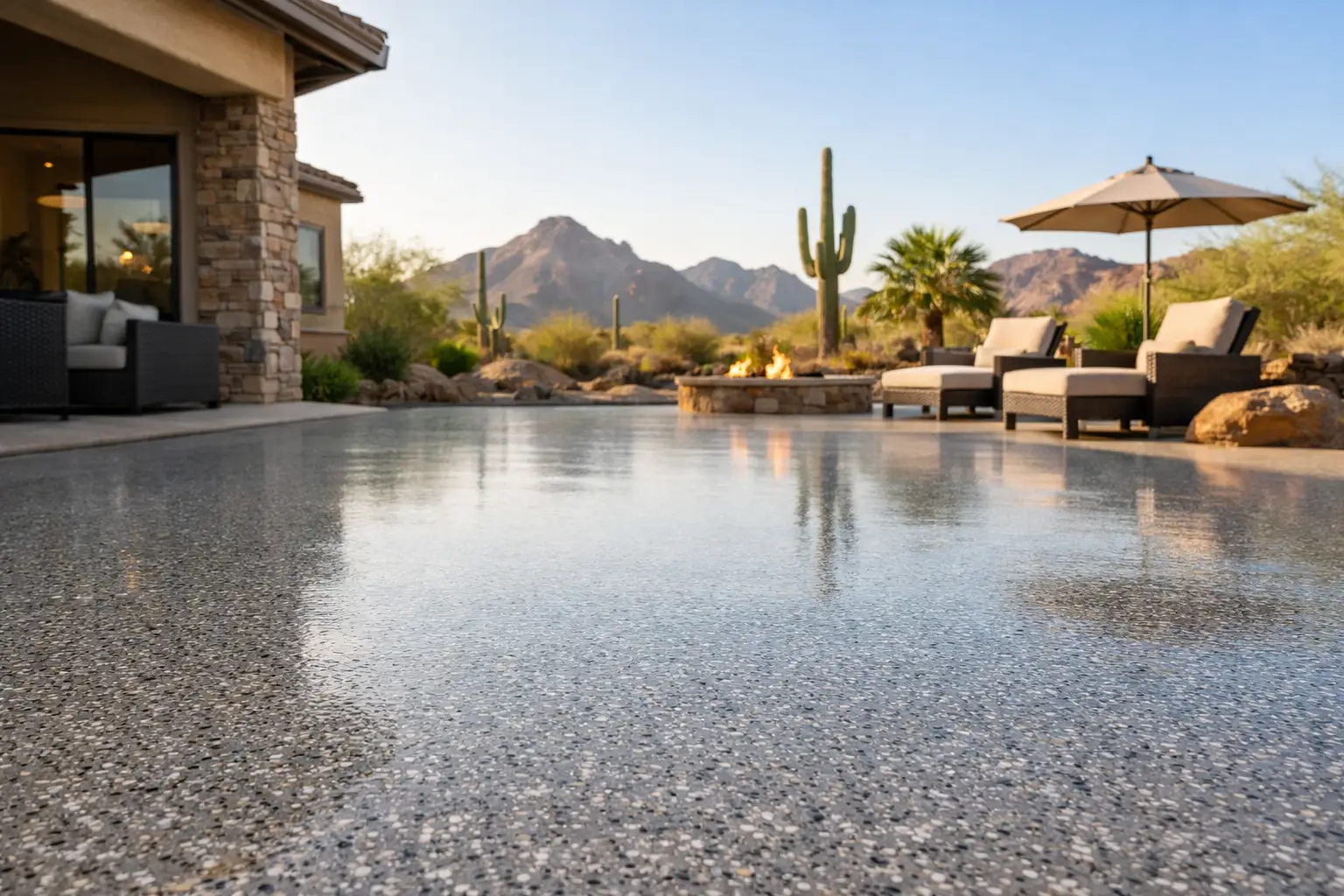
Pavers are especially useful for patios, walkways, drive paths, and entertainment areas because they handle traffic and heat well. Gravel works for open ground coverage and helps cut down on bare dirt and dust. Retaining or fence walls can also support a more sustainable setup by improving function, privacy, and property organization. When these elements are installed correctly, they reduce future repairs and make the landscape easier to manage.

Plant choices matter, but placement matters just as much

Drought-tolerant plants are a key part of a sustainable Arizona yard, but selecting the right plants is only half the job. Where they go matters just as much. A plant that can handle desert conditions may still struggle if it is placed in reflected heat, poor soil, or an area with bad drainage.

This is why desert-friendly landscaping needs a full-property view. Trees can provide shade and reduce heat around patios or windows, but they also need room to grow and proper trimming over time. Shrubs and accent plants can soften gravel and hardscape areas, though overcrowding can create maintenance problems later. If an older yard already has overgrown or failing trees, removal and stump grinding may be the better long-term move before redesigning the space.

A sustainable landscape should not feel random. It should look intentional, clean, and manageable.

Artificial grass can be a smart fit in the right areas

Artificial grass is sometimes treated like an all-or-nothing choice, but in Arizona it often works best as one part of a larger plan. For play areas, pet zones, and front-yard sections where a green look matters, it can deliver the appearance people want without the watering, mowing, and patch repair that natural grass demands.

That said, it depends on the use of the space. Artificial turf gets hot in direct summer sun, and not every part of a property needs that surface. In some cases, a combination of turf, gravel, pavers, and planting beds gives a better result than using one material everywhere. Sustainable landscaping is rarely about a single product. It is about using the right solution in the right place.

Commercial properties need sustainability for a different reason

Homeowners often focus on curb appeal, family use, and lower maintenance. Commercial property owners and managers have another layer to think about – appearance at scale, tenant expectations, liability, and maintenance costs across larger outdoor areas.

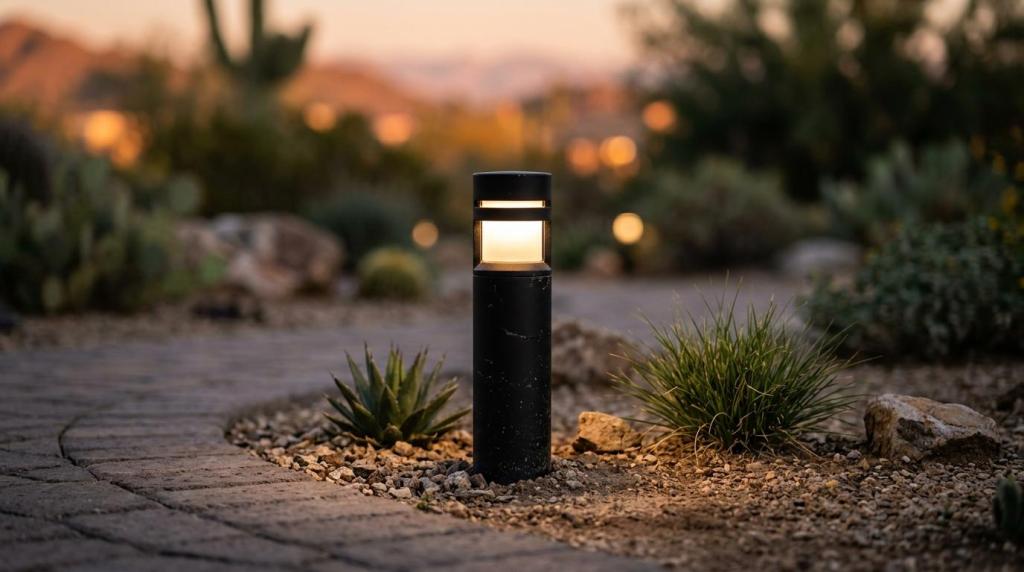
A sustainable landscape helps on all fronts. Cleaner layouts, durable walking surfaces, efficient irrigation, and low-water ground cover can make a commercial property look more professional while reducing labor and ongoing expense. Lighting, tree care, debris cleanup, and surface repairs also matter because one neglected area can affect the entire first impression.

For many Arizona properties, the best option is working with one contractor that can handle installation, repair, and routine upkeep. That avoids the delays and finger-pointing that happen when multiple vendors are responsible for different parts of the same exterior.

Why one-contractor execution makes a difference

Sustainable landscaping is easier to get right when the same team can handle grading, irrigation, hardscaping, plant installation, cleanup, repairs, and ongoing maintenance. The work stays coordinated, and the final result is usually more consistent.

That is especially valuable on Arizona properties where outdoor projects often overlap. A paver job may expose drainage issues. A yard redesign may require tree removal before new surfaces go in. An irrigation upgrade may make more sense after the property is regraded. When one company can manage the full scope, the project moves faster and the finished space works better.

For property owners who want practical solutions instead of patchwork fixes, that matters. Pro Natural Landscape serves Arizona customers with exactly that kind of full-service approach, helping homeowners and commercial properties improve outdoor spaces with durable, water-conscious, low-maintenance solutions.

What to look for before starting your project

If you are planning a landscape upgrade, the first question should not be what looks best in a photo. It should be what will still look good and function well a year from now. That means thinking about water use, maintenance time, surface durability, drainage, and how the property is actually used every day.

A sustainable Arizona yard should reduce problems, not create new ones. If it needs constant repair, constant watering, or constant cleanup, it is not doing the job. The best projects are the ones that make the property easier to live with while improving appearance and value at the same time.

A smart outdoor space in Arizona does not have to be complicated. It has to be well planned, properly built, and suited to the climate. If your current yard is wasting water, wearing out, or taking too much effort to maintain, this is the right time to build something that works harder for you.

Yard Grading & Leveling Services in El Mirage, AZ

A yard that looks mostly flat can still hold water in the wrong places, wash soil away from plant beds, or leave a patio base uneven. In El Mirage, those small grade problems often become much more noticeable during monsoon season, when fast, heavy rainfall tests every slope on the property.

Professional yard grading creates order in the landscape. It reshapes the surface so water moves where it should, supports new landscaping and hardscaping, and gives the entire yard a cleaner, more usable layout. For homeowners, property managers, and commercial properties, it is one of the smartest ways to protect outdoor space before larger problems take hold.

Why grading matters in El Mirage

Desert landscapes have their own challenges. El Mirage properties deal with compacted soils, hardpan or caliche in some areas, intense heat, and sudden storm runoff. A yard that is slightly off-grade may stay unnoticed for months, then show clear trouble after one strong rain.

Good grading helps direct water away from foundations, walls, walkways, and outdoor living areas. It can also reduce standing water, limit erosion, and create a better base for gravel, turf, pavers, or planting beds. When the ground is shaped correctly, the rest of the landscape has a much better chance of performing well.

It also makes day-to-day use of the yard more enjoyable. A level surface feels safer, looks more polished, and supports everything from play areas to patios.

After a site review, common warning signs usually stand out quickly:

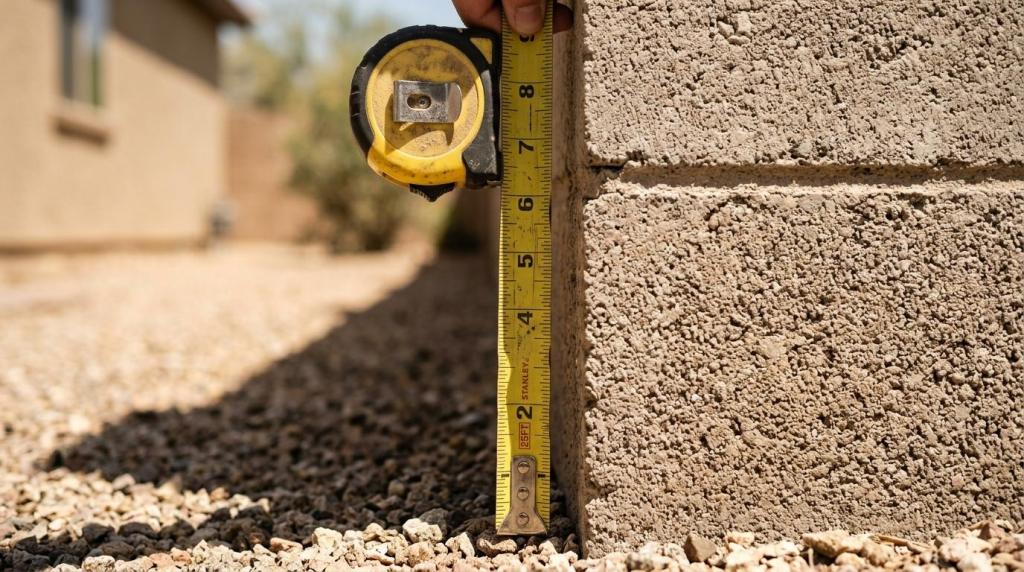
  • Water pooling near the house
  • Low spots in gravel or dirt areas
  • Soil erosion along walls or fence lines
  • Uneven ground under artificial turf
  • Paver movement caused by poor base conditions
  • Runoff collecting near gates, walkways, or patios

What yard grading can fix

Some grading projects are focused on drainage. Others are about creating a level, stable surface for a future installation. Many do both at the same time.

If a yard slopes toward the home, grading can create positive flow away from the structure. If the property has dips and ridges, leveling can smooth those transitions so the space works better visually and functionally. If there is a plan for pavers, artificial grass, irrigation, or a new planting layout, grading often comes first because every later step depends on the ground being prepared correctly.

On larger properties, land grading may involve more substantial reshaping with heavy equipment. On smaller residential lots, the work may center on correcting a few trouble areas, adjusting slope, compacting soil, and fine-tuning the finish grade around existing features.

What the process typically looks like

A strong grading result starts with the layout, not just the equipment. The grade has to make sense for the structures already on site, the way water enters and exits the property, and the planned use of the yard. That is why measurements, elevations, and drainage paths matter from the beginning.

Heavy machinery is often used for the main earthwork. Depending on the site, that may include skid steers, loaders, excavators, or other equipment capable of cutting down high areas and filling low ones. Precision tools like laser levels and grade stakes help shape the final slope with greater accuracy.

Once the grade is set, soil compaction becomes a key step. Loose fill can settle later and undo the work. Proper compaction creates a firmer base for traffic, irrigation, hardscaping, and surface materials.

A typical project may include:

  • Site review: checking slope, runoff patterns, soil condition, and access
  • Cut and fill: removing high areas and building up low spots
  • Drainage shaping: forming swales, gentle slopes, or collection paths
  • Compaction: stabilizing the soil to reduce settling
  • Finish grading: preparing the surface for gravel, turf, pavers, or planting

Built to support the rest of the landscape

A grading project rarely stands alone. In many cases, it is the foundation for the next phase of the yard.

Pro Natural Landscape LLC provides land grading and land leveling as part of a wider range of outdoor services in El Mirage and nearby communities. That matters because drainage, surfacing, irrigation, and hardscape work often need to be coordinated instead of handled as separate pieces. A properly graded yard can then support artificial grass installation, paver patios, gravel layouts, drip irrigation, retaining walls, and planting beds with fewer future issues.

Tree removal, stump grinding, and junk or debris removal can also be part of site preparation when the area needs to be cleared before reshaping begins. If a slope needs structural support, block wall construction may be added to help hold grade changes in place.

Grading plus related improvements

When several outdoor goals are tied together, the work tends to move more efficiently and with better long-term results.

Related service How it supports grading
Irrigation installation Helps water reach the right zones after the surface is reshaped
Paver installation Needs a stable, correctly sloped base to stay level
Artificial grass Performs best on a smooth, compacted sub-base
Block or retaining walls Helps manage soil where elevation changes are more significant
Gravel installation Finishes the yard cleanly and can support low-water landscape design
Landscape design Connects drainage, circulation, planting, and visual balance

Budget and schedule expectations

Pricing for yard grading in the El Mirage area depends on the size of the yard, how much cut and fill is needed, soil conditions, site access, and whether related work is included. Regional averages around Phoenix often fall near $1 to $2 per square foot for straightforward grading, though more complex projects can run higher.

Projects with hard caliche, steep corrections, drainage additions, hauling, or limited access tend to cost more. A basic leveling job in a smaller yard may be completed quickly, while a larger regrade with compaction, drainage shaping, and site cleanup can take several days or longer.

These broad ranges can help frame expectations, though they are not fixed quotes:

Project scope General regional range Typical timeframe
Small yard correction $1,000 to $1,500 1 to 2 days
Medium residential regrade $2,000 to $5,000 2 to 5 days
Large lot or major reshaping $8,000+ Several days to 1+ week

The most accurate way to price a grading project is an on-site estimate. Pro Natural Landscape LLC offers free estimates, which is especially useful when drainage concerns, base preparation, and future landscape work all need to be reviewed together. Financing options through Hearth may also be available for qualifying projects.

Why local experience matters

Grading in Arizona is not only about making the yard look level. It is about reading how water will behave on a hot, dry property that still gets intense seasonal storms. Local knowledge helps with slope planning, soil behavior, and material choices that fit El Mirage conditions.

A family-owned, full-service landscaping company with more than a decade of experience can bring practical value here: clear communication, coordinated outdoor services, and work that stays focused on both performance and appearance. Residential and commercial properties benefit from that kind of planning because grading affects nearly every other surface in the yard.

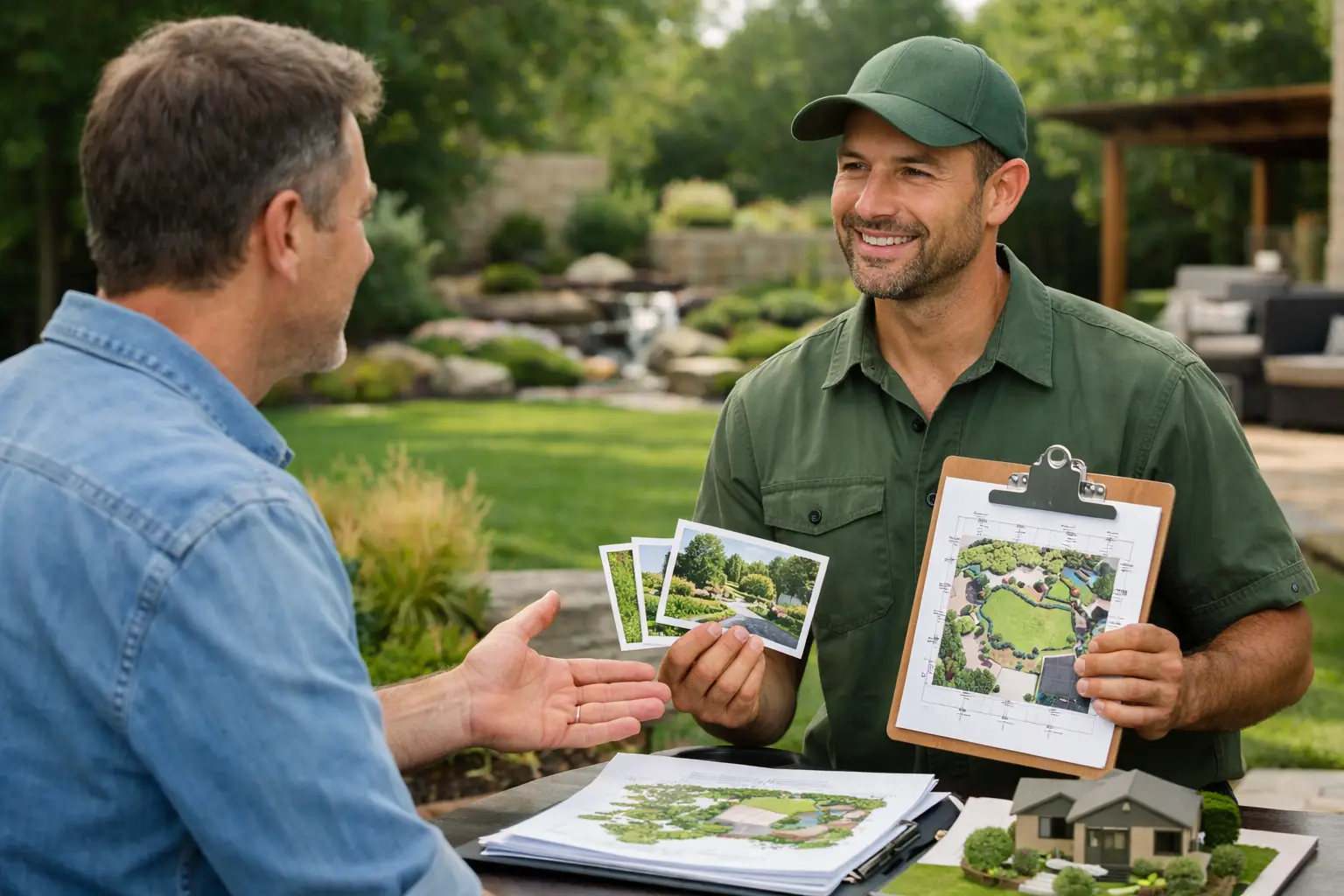
Start with a site visit

If the yard has puddling, washouts, uneven ground, or a planned hardscape project, the next step is simple: have the property evaluated before the problem spreads. A site visit can identify drainage patterns, measure grade issues, and outline the right approach for leveling, reshaping, and preparing the space for what comes next.

Paver Repair & Re-Leveling in El Mirage, AZ

Uneven pavers can change the feel of an entire outdoor space. A driveway that once looked sharp starts to dip, a patio develops low spots that hold water, or a walkway becomes a tripping risk. In El Mirage, those problems often build slowly, then show up all at once after a monsoon storm, irrigation leak, or another long stretch of extreme heat.

Pro Natural Landscape LLC provides paver repair and re-leveling for homeowners, property managers, and commercial properties that need a durable fix rather than a temporary patch.

Why pavers shift in El Mirage

Desert landscapes put hardscapes under constant stress. El Mirage sees intense sun, wide temperature swings, dry periods, and sudden heavy rain. That combination can affect base materials, joint sand, edge restraints, and the soil below the surface.

Even a well-built paver surface can develop trouble over time if runoff is not directed properly or if the original installation did not include enough base preparation. In many cases, the visible problem is only the top layer of a larger issue below.

Common causes include:

  • Soil movement
  • Monsoon washout
  • Irrigation overspray
  • Poor drainage
  • Inadequate base depth
  • Weak edge restraints
  • Heavy vehicle traffic
  • Loss of joint sand

Signs your paver surface needs repair

Some damage is obvious. Some starts small and keeps spreading until the affected section becomes harder and more expensive to fix. Early repair usually protects more of the original installation and keeps the project focused on the problem areas.

You may need re-leveling or repair if you notice:

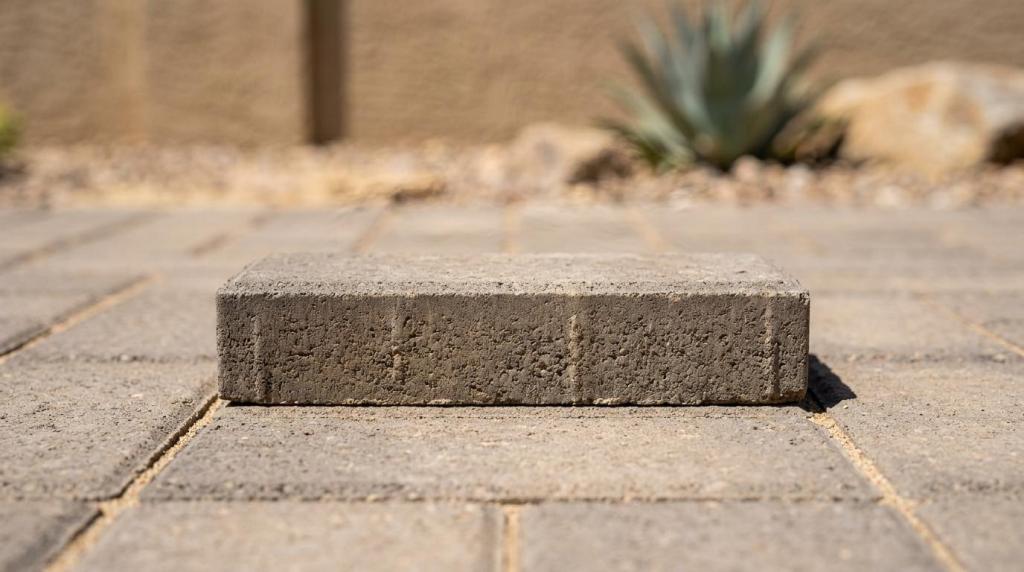
  • Sunken areas: Low spots that collect water or create a soft, uneven walking surface
  • Raised edges: Pavers that sit higher than surrounding pieces and create a trip hazard
  • Wobbling units: Individual pavers that rock underfoot instead of staying firmly locked in place
  • Joint loss: Sand washing out of the joints after wind, rain, or pressure washing
  • Spreading pattern: Gaps widening at the perimeter or curves losing their shape
  • Surface damage: Cracked, stained, or chipped pavers that affect appearance and function

A single loose paver can point to a much larger base problem.

What proper re-leveling involves

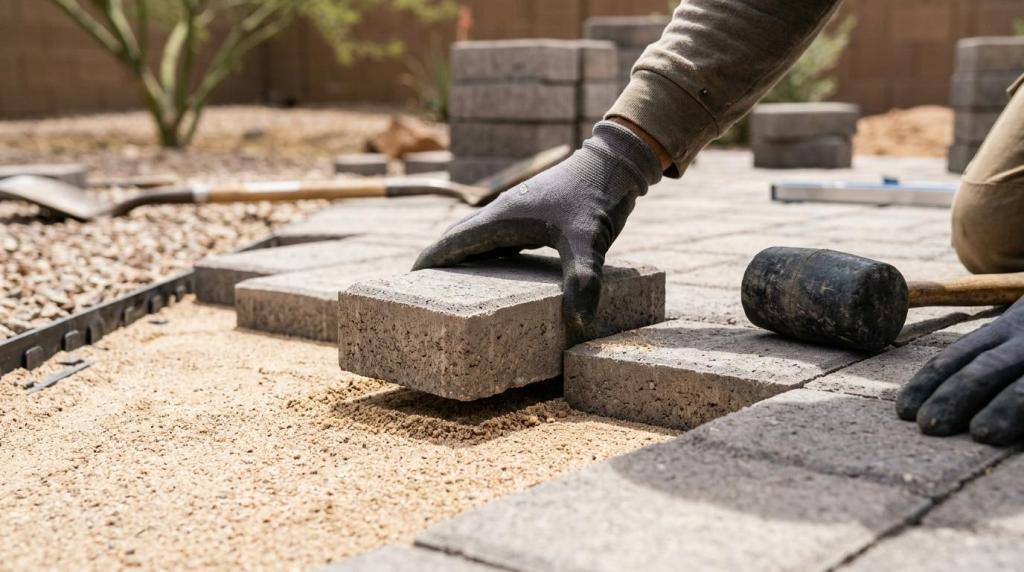
Quality paver repair is a methodical process. The affected section is typically lifted, the bedding and base are inspected, unstable material is removed, and the area is rebuilt to the right grade before the pavers are relaid and compacted.

That matters because resetting pavers over the same failed base usually leads to the same failure returning.

A repair approach built for desert conditions

In Arizona, re-leveling often calls for more than surface adjustment. The goal is to create a stable foundation that can handle heat, runoff, and daily use. Depending on the location and the type of paver area, repair work may include:

  • Careful lift and reset: Existing pavers are removed with attention to pattern, fit, and reusability
  • Base correction: Settled or washed-out aggregate is replaced and compacted in lifts
  • Bedding layer adjustment: The screeded sand layer is brought back to a consistent grade
  • Drainage improvement: Slopes, swales, or runoff paths are corrected to reduce future washout
  • Edge restraint repair: Border sections are secured so the field of pavers stays locked together
  • Joint stabilization: Fresh polymeric sand is installed to help resist erosion and weed growth

For patios and walkways, the finished surface should look clean and level. For driveways, it also needs to handle load.

Common problems and how they are addressed

Not every paver issue requires full replacement. Many surfaces can be restored by repairing the affected area and correcting the conditions that caused the movement.

Problem Likely Repair Strategy
Sunken patio section Lift pavers, rebuild base, re-screed bedding sand, relay and compact
Pooling water near house Regrade slope away from structure, reset pavers, improve drainage path
Loose or rocking pavers Remove affected units, correct bedding level, refill joints with polymeric sand
Washed-out joints after storms Clean surface, refill joints, compact, inspect for base erosion
Shifted driveway pavers Re-level area, strengthen base for traffic load, secure edges
Cracked individual units Replace damaged pavers and inspect surrounding field for movement
Spreading border Rebuild or reinforce edge restraint and tighten paver pattern

A strong repair preserves the look of the original design while correcting the weak point underneath.

Materials and methods that matter

In this climate, the details make a real difference. Angular crushed aggregate performs better than rounded material because it locks together during compaction. Proper bedding sand helps keep the surface even. Polymeric sand can help resist washout and limit weed intrusion in the joints.

Slope is another major factor. Paver surfaces should guide water away from structures and toward safe drainage areas. Without that, even a great-looking patio can start to fail after repeated storms or irrigation saturation.

For many projects, durable results depend on a few essentials:

  • solid excavation
  • stable compacted base
  • consistent bedding layer
  • correct pitch for drainage
  • reliable edge restraint
  • full joint sand installation

Repair or replacement?

Many property owners assume damaged pavers need to be torn out and rebuilt from scratch. Sometimes that is true, especially when the original installation has widespread base failure. In many other cases, targeted repair is the smarter move.

If the pavers themselves are still in good condition, lifting and relaying them can restore appearance and performance without changing the overall design. This is often ideal for patios, entry paths, courtyards, and portions of driveways where the problem is limited to certain sections.

A site visit helps determine whether the project calls for spot repair, partial reconstruction, or a broader reset of the paved area.

Residential and commercial applications

Paver repair is valuable anywhere safety, drainage, and appearance matter. The service is commonly used for:

  • driveways
  • front walkways
  • backyard patios
  • pool decks
  • courtyards
  • HOA common areas
  • commercial entrances

For commercial sites and multi-property portfolios, prompt repair can also reduce liability tied to uneven walking surfaces.

Local experience that supports better results

Pro Natural Landscape LLC is a family-owned company serving El Mirage and surrounding Arizona communities with over a decade of experience in outdoor construction and landscape improvement. That local background matters when dealing with desert soils, harsh UV exposure, and monsoon runoff patterns.

Paver repair often connects with other site conditions, not just the paved surface itself. A sinking area may point to runoff concentration, irrigation issues, grading trouble, or failing borders. Because the company also handles drainage, gravel, grading, sealing, and related exterior improvements, repairs can be planned with the full outdoor space in mind.

Clear communication and on-time project delivery are a priority, and free estimates help property owners understand the scope before work begins.

What to expect from the service process

A good repair process should feel straightforward. The first step is an on-site evaluation of the affected area, including slope, drainage behavior, base failure signs, edge condition, and the amount of paver movement.

From there, the scope can be defined with practical recommendations that fit the site. That may involve re-leveling a small section, replacing broken units, rebuilding a border, restoring joint sand, or combining repair with sealing once the surface is stabilized.

In many cases, the process includes:

  1. Site assessment and estimate
  2. Removal of affected pavers
  3. Base and bedding correction
  4. Reinstallation and compaction
  5. Joint sand application and cleanup

If needed, financing options are available through Hearth, which can make larger repairs more manageable.

When timing matters

Waiting too long can turn a minor repair into a broader reconstruction. Low spots tend to collect more water. Loose pavers allow more movement. Lost joint sand weakens interlock. One damaged edge can let an entire field start to spread.

That is why early service often saves money and protects the original investment.

For property owners in El Mirage looking to restore a patio, walkway, or driveway, paver repair and re-leveling can bring back both function and curb appeal with a solution designed for Arizona conditions.