

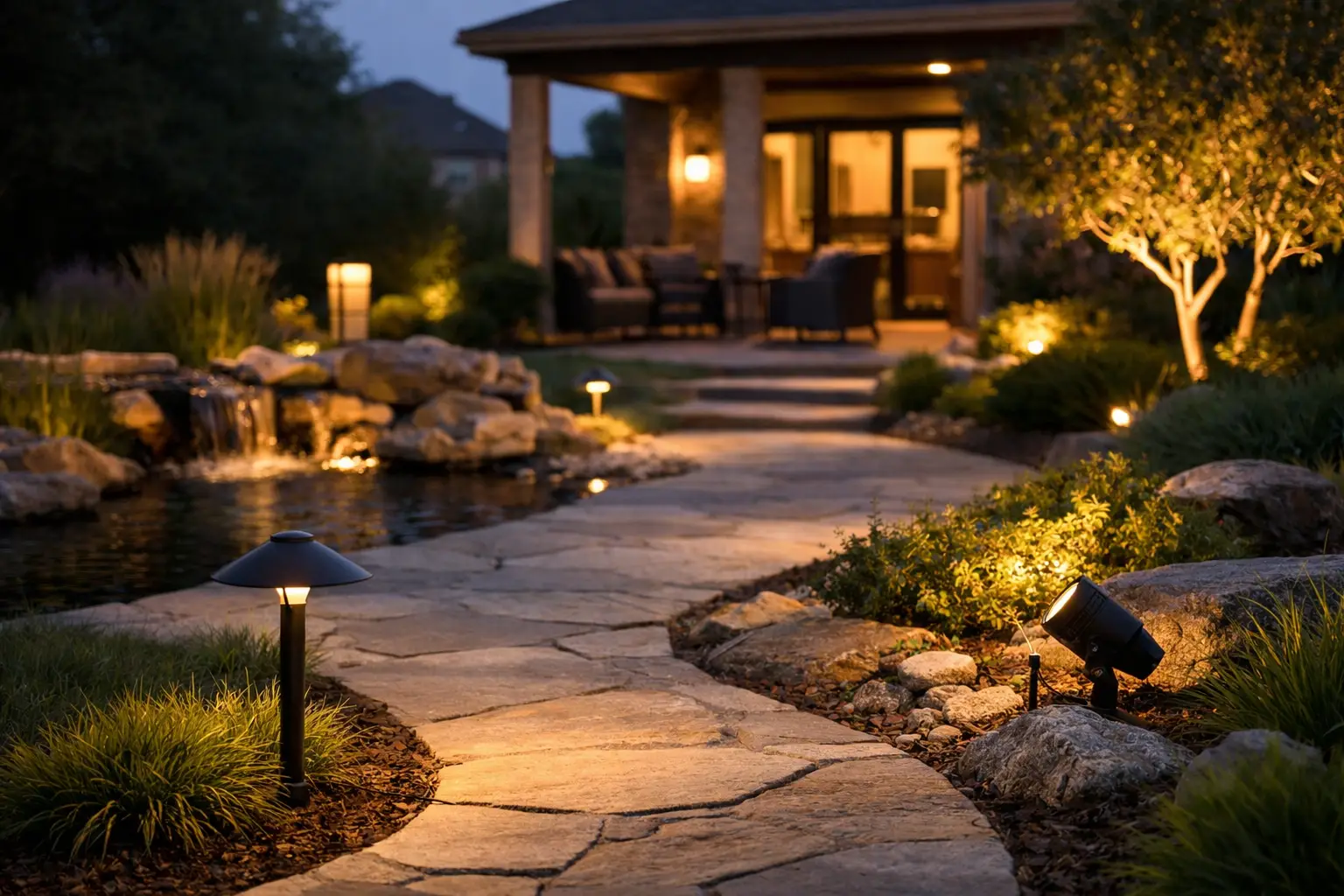
A bright front yard can still look flat at night, while a well-lit property feels safer, cleaner, and more finished the second the sun goes down. If you are wondering how to choose landscape lighting, the right answer starts with your property goals, not just the fixture catalog. In Arizona, that also means planning for heat, dust, low-maintenance performance, and outdoor spaces that get used year-round.
Landscape lighting should do more than make a yard visible. It should guide people to entrances, highlight the parts of the property worth noticing, and improve safety without creating glare. For homeowners, that might mean showing off pavers, artificial grass borders, and a clean walkway to the front door. For commercial properties, it usually means better visibility, a more polished exterior, and lighting that holds up with less ongoing attention.
Start with the purpose of the lighting
The first step in how to choose landscape lighting is deciding what the system needs to accomplish. Some properties need better safety along paths and driveways. Others need stronger curb appeal, more usable patio space, or better visibility around gates, walls, and entry points.
When every area gets treated the same, the result usually feels overlit and expensive. A better approach is to separate the job into three priorities: safety, function, and appearance. Safety lighting helps people move around without missing a step. Functional lighting makes outdoor living areas and work areas more usable. Accent lighting adds depth by drawing attention to trees, stonework, architectural features, or focal points in the landscape.
If the budget is limited, start with walkways, entries, and gathering areas first. Decorative upgrades can come after the main circulation and safety zones are covered.
How to choose landscape lighting by area
Different parts of the yard need different fixture types and light levels. That is where a lot of property owners get stuck. One fixture style rarely works for the entire property.
Path lights are a practical choice for walkways, garden borders, and front approaches. They help define where people should walk, but they should not be packed too close together. Too many path lights can make a yard look like a runway. Spacing them for consistent guidance usually works better than trying to light every inch of ground.
Spotlights and uplights are useful for trees, column accents, textured walls, and architectural details. These fixtures add dimension, but placement matters. A strong beam aimed poorly can create harsh shadows or shine into windows. In Arizona yards with gravel, cacti, palms, and block walls, careful aiming makes a big difference because those materials can reflect light differently than lawns and dense planting beds.
Flood lights are better for larger zones like driveways, parking areas, side yards, and commercial frontage. They provide broader coverage, but they need to be controlled so they do not wash out the whole property. More brightness is not always better.
Step lights, wall lights, and under-cap lighting are often the right choice when hardscaping is a major feature. If a property includes retaining walls, paver patios, seat walls, or stair transitions, integrating lighting into those elements usually gives a cleaner result than relying only on freestanding fixtures.
Brightness matters, but balance matters more
One of the most common mistakes is choosing fixtures based only on the highest output. A landscape lighting system should feel comfortable to look at. If every fixture is too bright, the yard loses depth and the lighting starts to feel harsh.
A softer, layered approach usually works better. Walkways need enough light for safe footing. Accent features should stand out without overpowering nearby areas. Patios and outdoor seating areas should feel usable but still relaxed. On commercial sites, visibility needs are often higher, but even then, glare control matters for customers, tenants, and visitors.
Color temperature matters too. Warmer light tends to feel more inviting around homes, patios, and entry areas. Cooler light can work in some commercial applications, but it can also make a residential yard feel stark. For most properties, a warm white look creates a more natural finish against stone, stucco, and desert landscaping.
In Arizona, durability is not optional
Knowing how to choose landscape lighting in Arizona means paying close attention to material quality. Heat, sun exposure, dust, irrigation overspray, and monsoon weather can wear out low-grade fixtures fast. A cheap fixture may look like a good deal at first, but replacement costs and maintenance issues add up.
Fixtures made from durable metals and rated for outdoor conditions usually hold up better than lower-end plastic units. Sealed connections, quality wiring, and dependable transformers also matter. If a system is installed with weak components, even good-looking fixtures can become unreliable.
This is especially important for larger properties, commercial sites, and homes with full outdoor living areas. The more fixtures involved, the more important it is to build the system for long-term performance. A dependable setup saves time, service calls, and frustration later.
Power source and efficiency
Most property owners today want lighting that looks good without driving up energy use. LED landscape lighting is usually the best fit because it uses less electricity, lasts longer, and requires less maintenance than older lamp styles.
Low-voltage systems are popular because they are efficient and flexible for residential and many commercial applications. They also make it easier to create layered lighting across multiple areas of the property. Solar lights may seem appealing for quick installation, but performance can be inconsistent. In some cases they work for simple accent use, but they are not usually the best choice when consistent brightness and reliability are priorities.
Controls are worth thinking through as well. Timers, photocells, and smart controls can help the system run automatically and avoid wasted energy. That matters for busy homeowners and property managers who do not want to manually manage outdoor lighting every night.
Think about maintenance before installation
A good lighting plan should still make sense six months from now, not just on installation day. Fixtures placed where they get buried in gravel, hit by irrigation, blocked by plant growth, or damaged during routine yard work can become a recurring problem.
That is why layout matters as much as fixture selection. Lighting should work with the landscape, irrigation, and hardscape features already on the property. If the system is being added during a larger yard upgrade, it helps to coordinate lighting with pavers, gravel placement, artificial grass edges, wall construction, and planting zones from the start.
For low-maintenance properties, simplicity usually wins. Fewer well-placed fixtures often perform better than an oversized system that needs frequent adjustments and repairs.
How to choose landscape lighting for curb appeal and security
Curb appeal and security often overlap, but they are not exactly the same. A front yard with balanced lighting feels inviting and polished. A property with poor visibility around entries, side yards, and access points can also feel vulnerable.
For curb appeal, focus on the front walk, driveway edge, architectural features, and one or two landscape focal points. That could be a tree, a textured wall, or a clean paver entry. This creates structure and gives the property a finished look after dark.
For security, the goal is clear visibility around doors, gates, side paths, parking areas, and darker perimeter zones. That does not mean blasting every corner with intense flood lights. It means placing dependable lighting where people need to see and where activity should be more visible.
Work with the style of the property
The best lighting design fits the property instead of competing with it. A modern home with clean lines may need a simpler, more controlled lighting layout. A yard with mature trees, layered planting, and winding paths can handle a softer, more decorative approach.
Commercial properties also benefit from consistency. Lighting should support the look of the building, improve navigation, and maintain a professional appearance. Mismatched fixtures or random placement can make even a well-maintained property look unfinished.
If your yard already includes stone, gravel, pavers, turf, block walls, or other installed features, the lighting should complement those materials. That is one reason full-property planning matters. At Pro Natural Landscape, this kind of coordination is often what helps an outdoor space look complete rather than pieced together.
When professional planning makes sense
Some small projects are simple enough to map out quickly. But if the property has multiple zones, elevation changes, hardscape features, irrigation lines, or commercial visibility needs, professional planning can prevent expensive mistakes.
A contractor with experience in Arizona outdoor spaces can help determine fixture types, placement, beam spread, wiring layout, and long-term durability based on how the yard actually functions. That matters because the right lighting plan is not just about appearance. It is part of how the property works at night.
The best landscape lighting is the kind you notice for the right reasons. It makes the yard easier to use, safer to move through, and stronger from the street without feeling forced. If you are choosing lighting for a home, rental, HOA, office, or retail property, start with the real use of the space and build from there. Good lighting should solve problems, add value, and keep your exterior working after sunset.