

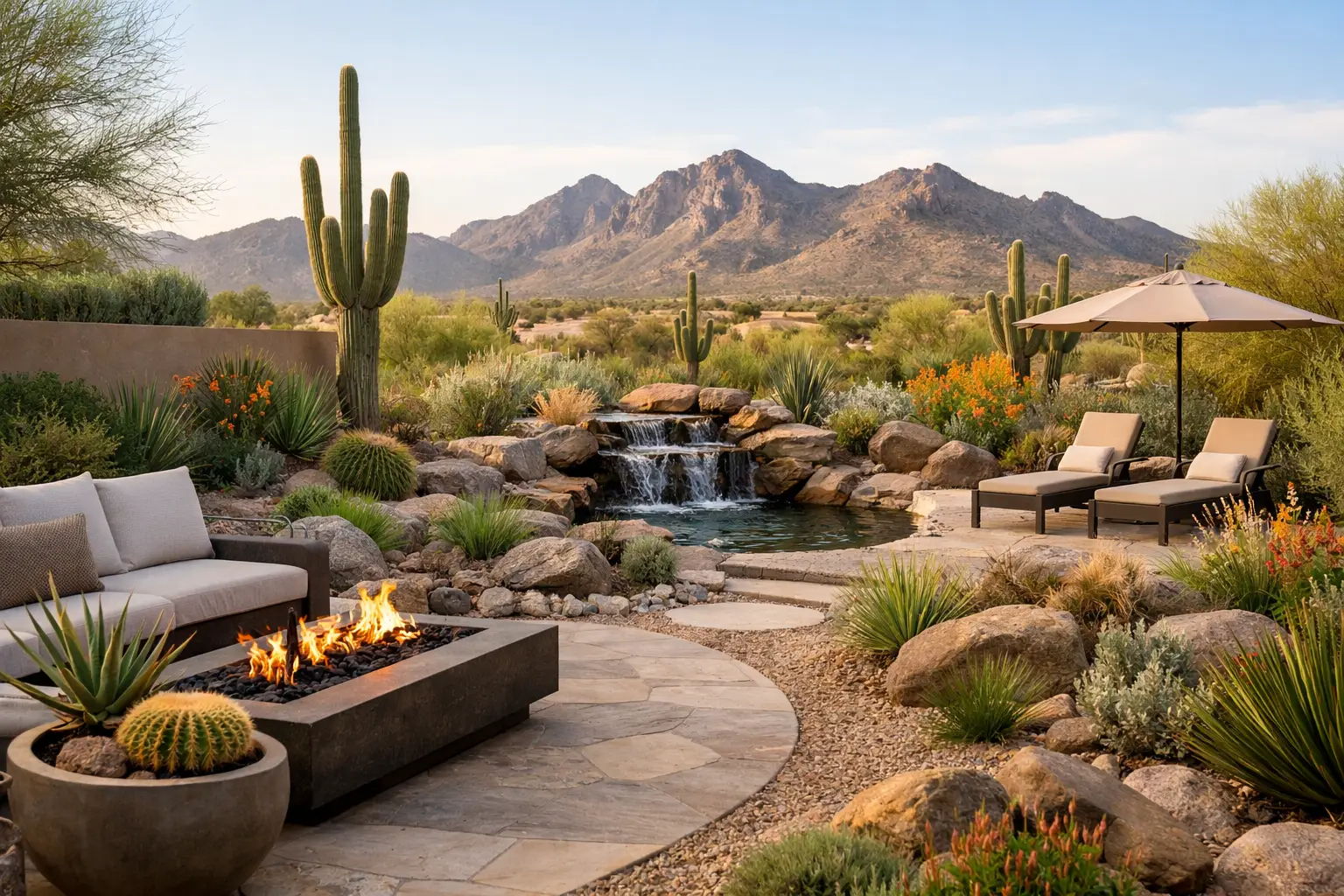
A faded lawn, loose gravel, cracked concrete, and struggling plants can make an Arizona property feel unfinished fast. The best desert yard makeovers do more than improve curb appeal. They solve the daily problems that come with extreme sun, hard soil, wind, monsoon runoff, and the need to keep water use under control.
For homeowners, the goal may be a backyard that is easier to use on weekends without spending every Saturday maintaining it. For property managers and business owners, it may be a clean, consistent exterior that looks professional year-round. Either way, a successful yard makeover starts with materials and systems built for Arizona, not a design that only looks good on installation day.
Start Desert Yard Makeovers With a Real Site Plan
Before selecting pavers, plants, or artificial grass, look at how the property actually performs. Where does afternoon sun hit hardest? Does water pool near the house after a storm? Are tree roots lifting existing hardscape? Is the front yard difficult to access for maintenance crews? These details determine what will last.
A practical site plan separates the yard into working areas. Entry spaces need clear walkways and a polished first impression. Side yards often need drainage, durable gravel, or clean storage access. Backyards may need shade, a patio surface, play space, pet-friendly ground cover, or room for outdoor seating. Commercial properties also need reliable paths, visible entrances, and landscaping that stays orderly between service visits.
Land grading is often the first step when a yard has drainage issues or uneven soil. Correcting slope before installing gravel, turf, or pavers helps move water away from structures and prevents expensive rework later. It is less exciting than choosing a patio color, but it is one of the decisions that protects the entire project.
Build the Yard Around Durable Ground Surfaces
Arizona yards work best when every surface has a job. Decorative gravel can cover large areas with minimal upkeep, reduce dust, and create a finished look around desert plants. It also comes in different colors and sizes, making it useful for defining planting beds, pathways, and open front-yard spaces.
Gravel alone is not always the right answer. A loose gravel patio can be uncomfortable under chairs, difficult for rolling grills, and less convenient for people with mobility needs. Pavers, travertine, brick, or tile can provide a solid outdoor living surface where people gather. The right choice depends on the area, budget, heat exposure, and intended use.
Pavers are a strong option for patios, walkways, driveways, and poolside areas because they create a clean, durable surface with design flexibility. Travertine is valued for its natural appearance and can be a comfortable choice around outdoor living areas when installed correctly. Existing pavers may not need full replacement if they are structurally sound. Paver renovation, leveling, and sealing can restore the surface and improve its appearance.
For a complete makeover, use contrast with purpose. A paver walkway leading through gravel beds creates definition. Artificial grass can soften a patio area without requiring constant watering and mowing. A border of brick or block can hold gravel in place and make transitions look intentional rather than patched together.
Choose Artificial Grass for the Right Areas
Artificial grass is one of the most practical tools in many desert yard makeovers, especially for small lawns, pet areas, play zones, and commercial entry landscapes. It delivers a green surface without weekly mowing, reseeding, or heavy irrigation. That makes it appealing for busy households and properties that need consistent curb appeal.
Still, artificial grass is not a universal replacement for every yard surface. Full-sun turf can become hot during peak summer hours, and poor base preparation can lead to drainage problems, wrinkles, or odors in pet areas. Quality installation includes excavation, base material, compaction, drainage planning, and clean edging. Shade, cooling landscape materials, and a usable patio nearby often make turf areas more comfortable.
Make Water Work Harder With Smart Irrigation
An attractive yard will not stay attractive if irrigation is inefficient or unreliable. Broken emitters, poor coverage, old timers, and leaking lines waste water while leaving plants stressed. During a makeover, irrigation should be reviewed before new plants and ground cover are installed.
Drip irrigation is a practical solution for many desert trees, shrubs, and flowering plants because it delivers water closer to the root zone. Spray systems can make sense for certain turf areas, but they need proper adjustment to avoid watering walls, sidewalks, and driveways. A controller with seasonal scheduling can help account for changing temperatures instead of using the same watering pattern all year.
Plant selection should match the irrigation plan. Low-water desert plants generally need less attention once established, but they still need correct watering during the first stages of growth. Grouping plants with similar water needs prevents one thirsty plant from dictating the schedule for an entire bed.
Add Shade, Trees, and Lighting Where They Matter
A yard can look complete on paper and still be uncomfortable if there is nowhere to escape the sun. Shade planning should focus on the times the space will be used. A west-facing patio may need more protection than a morning seating area. Existing mature trees may offer valuable shade, but overgrown, damaged, or poorly placed trees can create safety concerns and interfere with walls, patios, and irrigation.
Tree trimming, removal, stump grinding, and replacement are often part of a full property reset. Removing a failing tree can open space for a new patio, improve visibility, and reduce debris. On the other hand, removing healthy shade without a replacement plan can make a yard much harder to use in summer. The best decision depends on tree condition, location, and the long-term design.
Landscape lighting gives the yard value after sunset. It can improve pathway visibility, highlight an entry, define a wall, and make a patio feel more usable at night. Keep the lighting focused and functional. Too many fixtures can create glare, while a few well-placed lights provide safety and a finished appearance.
Do Not Ignore Walls, Borders, and Repairs
Many makeovers stall because the main landscaping looks new while damaged boundaries remain in view. Cracked block walls, worn fencing, loose edging, and stained concrete can pull attention away from the improvements. Addressing these items during the same project creates a more complete result and prevents the need to coordinate separate contractors later.
Block walls can add privacy, define property lines, and create structure around patios or planting areas. Fence repairs may be the right choice when the framework is still sound, while replacement may be smarter when materials are failing throughout. For concrete and hardscape surfaces, epoxy application, tile work, brick installation, or sealing may provide the right finish depending on how the area is used.
This is where working with one outdoor contractor can save time. Instead of trying to schedule separate crews for grading, irrigation, pavers, turf, tree work, and repairs, property owners can move through the project with one coordinated plan. Pro Natural Landscape handles these connected services so the finished yard looks planned from the ground up.
Plan for Maintenance Before the Work Begins
Low maintenance does not mean no maintenance. Gravel needs occasional raking and weed control. Desert plants need pruning, cleanup, and irrigation checks. Pavers may need periodic cleaning or sealing. Artificial grass benefits from debris removal, brushing, and pet-area care.
The difference is that a well-designed desert yard reduces repetitive, high-water work. It replaces fragile grass with durable surfaces where appropriate, uses irrigation intentionally, and leaves enough access for maintenance without damaging the landscape. For rental homes, commercial sites, and busy households, that predictability matters as much as appearance.
A good makeover should also leave room for change. A simple gravel bed can later become a planting area. A patio can be extended when the budget allows. A properly graded yard can support future improvements without tearing out the first phase. Start with the problems that affect safety, drainage, and daily use, then build the upgrades that make the property feel like a place people want to spend time.
When your yard is worn down, do not settle for a quick cosmetic fix that creates another problem next season. Choose materials that handle Arizona heat, install the systems behind the surface correctly, and create an outdoor space that is ready for real life.