

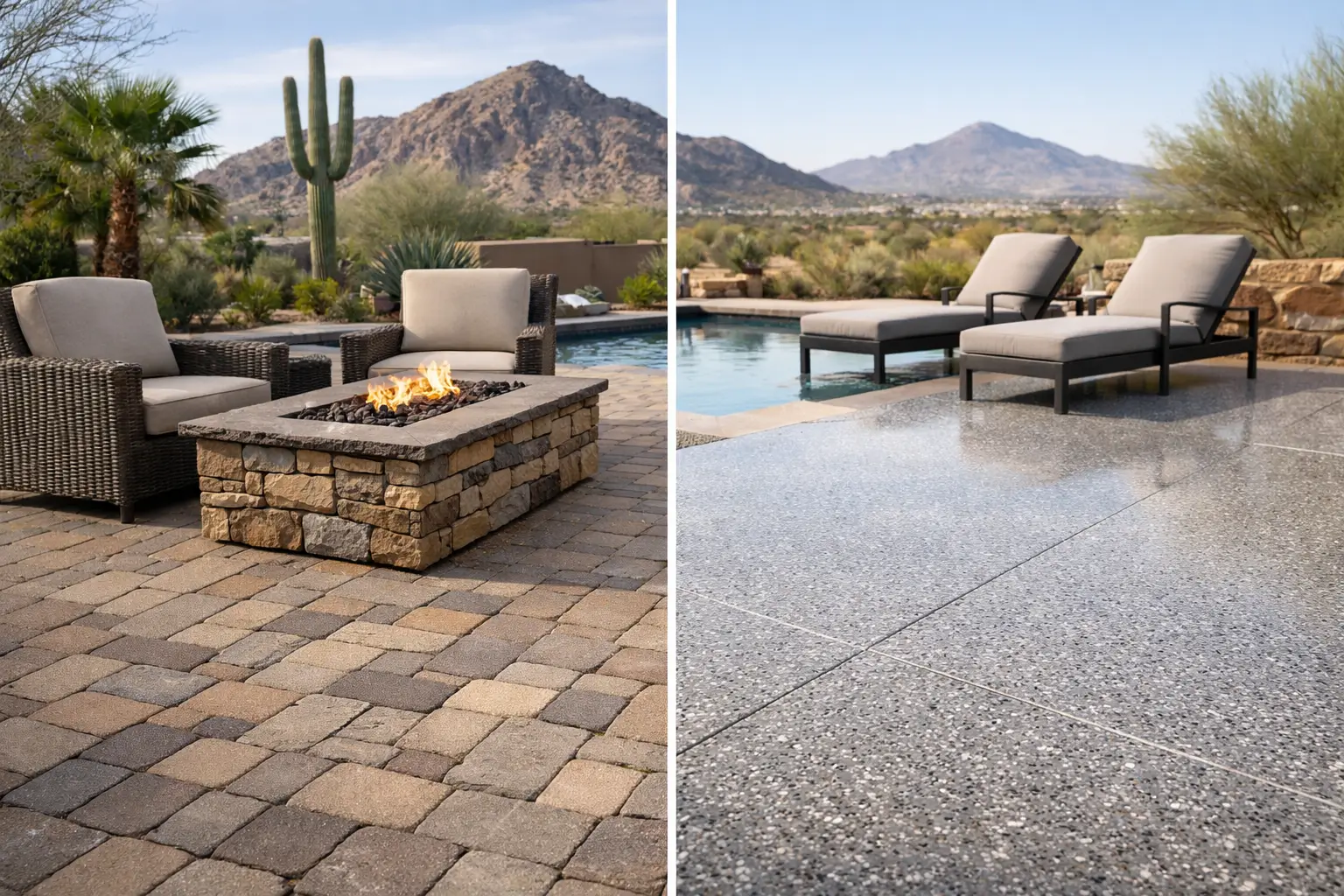
A patio can look great on installation day and still become a problem after one Arizona summer. Intense sun, monsoon rain, dust, pool traffic, and shifting soil all affect how a surface performs. When comparing pavers vs epoxy patio options, the better choice depends on where the patio sits, how you use it, and what condition the base is in.
For many Arizona properties, pavers offer the most flexible long-term solution for outdoor living areas. Epoxy can be a clean, attractive finish in the right setting, especially on protected concrete. The key is choosing the surface for actual site conditions instead of choosing based on the initial appearance alone.
Pavers vs Epoxy Patio: The Main Difference
Pavers are individual concrete, brick, or stone units installed over a properly prepared compacted base. They create a finished patio that can be laid in a range of patterns, colors, and border styles. Since the units are separate, a damaged area can often be repaired without replacing the entire patio.
An epoxy patio is a coating system applied over an existing concrete slab. The slab must be cleaned, repaired, and prepared carefully before the epoxy is installed. Epoxy creates a continuous surface and can be customized with color flakes, solid colors, metallic effects, or a textured topcoat.
The biggest practical difference is that pavers are a complete hardscape system, while epoxy depends on the condition and stability of the concrete already below it. If that concrete cracks, settles, or holds water, the coating may eventually show the same problem.
Arizona Heat and Sun Exposure
Arizona heat should be a deciding factor, not an afterthought. A patio in full afternoon sun can become uncomfortable under bare feet, especially around pools and outdoor kitchens.
Paver patios tend to handle direct sunlight well because they are made for exterior hardscape use. Lighter-colored pavers can help reduce surface heat, although any hard surface will warm up under strong sun. Textured pavers also provide better grip around wet areas than a smooth finish.
Epoxy can perform well outdoors when the correct UV-stable coating system is used. Standard epoxy alone is not always the best choice for exposed patios because sunlight can cause yellowing, fading, or surface changes over time. A professional exterior system may include a protective topcoat designed for UV exposure, but that adds to the overall scope and cost.
If a patio receives full sun most of the day, pavers are usually the lower-risk option. If the concrete area is shaded by a covered patio, pergola, or enclosed courtyard, epoxy may be more practical.
Drainage, Monsoons, and Soil Movement
A patio has to move water away from the home. That matters year-round, but it becomes especially clear during Arizona monsoon storms. Water that ponds against a foundation, patio door, or block wall can lead to bigger repair issues.
A correctly installed paver patio is built with grading and slope in mind. Water can move across the surface toward planned drainage areas, and the joints between pavers provide some relief during heavy rainfall. Base preparation is where the long-term performance comes from. Without proper excavation, compaction, and edging, even quality pavers can shift or settle.
Epoxy follows the shape of the slab beneath it. If the concrete already has poor slope or puddles after rain, epoxy will not fix that drainage problem. Coating over a low spot may make it look better temporarily, but the water will still collect there. Before coating a slab, check for drainage issues, cracks, heaving, and moisture coming through the concrete.
This is one reason pavers are often better for a patio that needs regrading or a complete redesign. They allow the project to start with a solid base instead of trying to work around old concrete problems.
Appearance and Outdoor Design Options
Pavers give homeowners more control over the overall layout of the yard. They can define a dining area, fire pit space, walkway, pool deck, or outdoor kitchen pad while tying into gravel, artificial grass, landscape lighting, and block walls. Borders and mixed patterns can create a finished look without making the space feel overly busy.
Epoxy delivers a more continuous, modern appearance. It works well when you want to refresh a small concrete patio, covered entry, screened area, or a space where easy sweeping is the priority. Decorative flakes can help hide dust and small marks better than a solid color, while a textured finish can improve traction.
For a large backyard transformation, pavers generally offer more design flexibility. For an existing slab that is structurally sound and visually tired, epoxy can provide a faster cosmetic upgrade.
Maintenance and Repairs
Both surfaces are lower maintenance than bare dirt, worn concrete, or a patio filled with loose gravel. They do have different maintenance needs.
Pavers may collect dust in joints and can occasionally need joint sand refreshed. Weeds can appear if the patio is neglected or if debris sits in the joints, though a well-built installation with proper joint material greatly reduces that issue. Individual pavers can be lifted and reset if a section settles, stains, or gets damaged.
Epoxy is easy to sweep, hose off, and clean with mild products. However, it should not be treated as maintenance-free. Dragging heavy metal furniture, dropping sharp objects, or using harsh chemicals can scratch or damage the coating. If epoxy begins peeling because of moisture or poor concrete preparation, repairs can require more than a small touch-up. Matching the existing color and finish may also be difficult after years of sun exposure.
Pavers usually win on repairability. Epoxy wins on easy day-to-day cleaning when the slab and coating system are in good condition.
Cost: Look Beyond the First Quote
Epoxy may cost less upfront when a patio already has a sound, level concrete slab. There is less demolition, excavation, and material installation than a new paver project. That can make it appealing for small patios, covered spaces, and quick property refreshes.
Pavers often require a larger initial investment because the installation includes base work, compaction, sand, edge restraints, cutting, and drainage planning. The cost rises with complex patterns, curves, site access challenges, demolition, and larger square footage.
Still, the lower initial price is not always the lower long-term cost. A failing slab can turn an epoxy project into a repeat expense. A properly installed paver patio can be adjusted and repaired in sections, which is valuable in areas with soil movement, tree roots, or changing landscape plans.
For commercial properties, the decision often comes down to traffic and maintenance planning. A decorative epoxy surface may work well at a protected entry or covered common area. Pavers are usually a stronger choice for exposed courtyards, walkways, outdoor seating areas, and places where future repairs need to be handled with minimal disruption.
When Pavers Are the Better Choice
Choose pavers when the existing concrete is badly cracked, uneven, poorly sloped, or too small for the patio you want. They are also a strong fit for pool decks, uncovered backyards, outdoor kitchens, fire pit areas, and properties where drainage needs to be corrected.
Pavers make sense when you want a patio that looks connected to the rest of the landscape. They can transition naturally into walkways, artificial grass borders, gravel areas, and landscape features. They also give property owners more choices if they plan to add lighting, a shade structure, or new planting areas later.
When an Epoxy Patio Makes Sense
An epoxy patio can be a good option when the existing slab is solid, properly sloped, and protected from extreme sun. It is especially useful for covered patios, enclosed outdoor spaces, small entertaining areas, and concrete surfaces that need a cleaner look without a full hardscape rebuild.
Ask for surface preparation details before approving an epoxy job. Cracks should be addressed, the concrete should be properly cleaned and profiled, and the coating system should be selected for exterior exposure if the patio is not fully covered. A slip-resistant topcoat is worth considering near pools, outdoor bars, and areas that get wet.
Start With the Condition of Your Patio
The right surface is not always the one that looks best in a photo. Check the concrete, watch where water goes after a storm, consider how much direct sun the area receives, and think about how the patio will be used five years from now.
If you need a new patio layout, better drainage, or a durable outdoor living space built for Arizona conditions, pavers are often the practical investment. If you have a healthy covered slab that needs a clean finish, epoxy may be the efficient choice. Pro Natural Landscape can evaluate the site, explain the workable options, and help turn an underused outdoor area into a space that is ready for everyday use.