

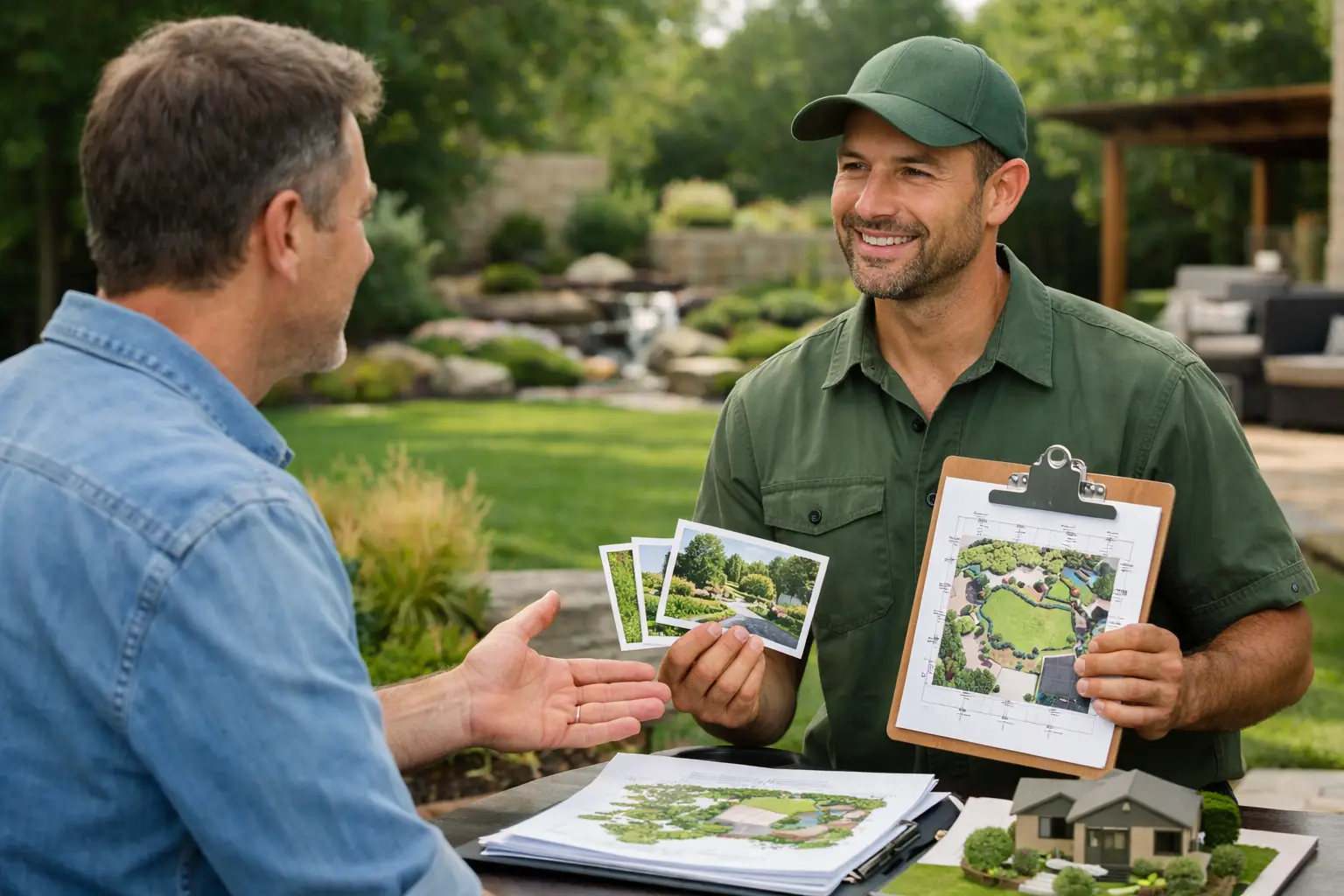
A yard project can change how your property looks, works, and holds up through Arizona heat. But before you approve a quote, the questions to ask a landscaper should go beyond, “How much will it cost?” The right contractor should be able to explain the plan, the materials, the schedule, and how the finished space will be maintained without giving you vague answers.
For homeowners, property managers, and business owners, a clear conversation upfront prevents expensive changes later. Whether you need artificial grass, pavers, gravel, irrigation repair, tree removal, or a complete outdoor renovation, use these questions to choose a contractor who is prepared to do the job right.
Questions to Ask a Landscaper About Your Property
Have you worked on projects like mine in Arizona?
Landscaping is not one-size-fits-all, especially in the desert. A contractor may be experienced with lawns in another climate but not understand the demands of intense sun, hard soil, drainage during monsoon season, or water-conscious planting in Arizona.
Describe your goals and the conditions on your property. Ask whether the landscaper has installed the type of hardscape, irrigation, turf, gravel, wall, or lighting system you need. If your yard slopes, collects water, has difficult access, or includes mature trees, bring that up early. These details affect labor, materials, equipment, and the final price.
A dependable landscaper will not promise the same solution for every yard. They should explain why a certain material or layout makes sense for your space and where there may be trade-offs.
Will you inspect drainage, grading, and irrigation before installation?
A beautiful new patio or artificial grass installation will not solve problems caused by poor drainage or broken irrigation. In some cases, it can make them worse. Water that runs toward a foundation, settles near pavers, or pools around turf needs to be addressed before the visible work begins.
Ask the contractor how they evaluate grading and drainage. Find out whether they will check existing irrigation lines, valves, sprinkler heads, and timers before digging or installing new materials. If the project includes plants or trees, ask how watering zones will be adjusted to fit their needs.
For desert properties, efficient irrigation is a functional investment. The cheapest option is not always the best option if it wastes water, creates runoff, or leads to repeated repairs.
What materials do you recommend, and why?
This is one of the most useful questions to ask a landscaper because material choices determine how the project performs years from now. Pavers, travertine, gravel, artificial grass, block walls, and exterior coatings all vary in durability, appearance, maintenance needs, and cost.
Ask for a plain-language explanation of the recommended material. For example, if you are considering pavers, ask about base preparation, joint sand, edge restraints, drainage, and sealing. If you want artificial grass, ask about turf quality, infill, weed barrier, drainage, and how the material will handle direct sunlight and regular foot traffic.
A lower-cost material can be the right choice for a rental property, a side yard, or a low-traffic area. For a main entry, pool deck, or commercial frontage, investing in a more durable finish may make better financial sense over time.
Questions to Ask a Landscaper About the Estimate
Is the estimate detailed, and what is included?
Do not rely on a single number without understanding what it covers. A professional estimate should make it clear whether the price includes demolition, debris hauling, delivery fees, permits if needed, labor, base materials, irrigation changes, final cleanup, and disposal.
Ask what is specifically excluded. This matters when a project involves removing old concrete, roots, tree stumps, damaged pavers, or unexpected underground issues. It is better to know how these situations are handled before work starts than to discover extra charges halfway through the job.
If you are comparing bids, make sure you are comparing the same scope of work. One contractor may include grading and cleanup while another only prices installation. A lower quote may not be a lower final cost.
How do you handle changes or unexpected issues?
Outdoor work can uncover surprises. Soil may be too loose, irrigation lines may be damaged, old hardscape may be thicker than expected, or tree roots may interfere with the design. The question is not whether an issue can happen. It is whether the contractor has a clear process for addressing it.
Ask if change orders are put in writing and approved before additional work is performed. Ask who will contact you, how quickly you can expect an update, and whether there are common conditions that could affect your budget. Clear communication protects both the property owner and the contractor.
What payment schedule do you use?
Discuss payment terms before materials are ordered or work begins. Ask about the deposit, milestone payments, and the final payment. The schedule should match the size and type of project.
You should also ask whether material selections, color choices, and layout decisions need to be finalized before work starts. Last-minute changes to paver styles, turf types, or wall finishes can delay a project and increase costs.
Questions to Ask a Landscaper About the Work Process
Who will be on-site, and who manages the project?
You need to know who is responsible for the work each day. Ask whether the company uses an in-house crew, subcontractors, or a mix of both. There is nothing automatically wrong with subcontractors, but the contractor should be transparent about who is completing the work and who is accountable for quality.
Ask who your main point of contact will be. For a residential project, you may need to coordinate gate access, pets, parking, and utility locations. For a commercial property, you may need to manage customer access, tenant concerns, noise restrictions, or work hours. A single responsive project contact keeps these details from becoming problems.
How long will the project take, and what could affect the schedule?
Ask for an expected start date and a realistic completion window. Weather, material availability, inspections, equipment needs, and change requests can affect timing, but a reliable contractor should still provide a workable schedule.
Find out whether your yard will be usable during construction and where materials will be stored. If you are replacing a driveway, walkway, patio, or commercial entry, ask about access and safety during each stage of the work.
How will you protect the property and clean up?
Landscaping and hardscape work can be disruptive, but it should not leave your property in worse shape than before. Ask how the crew will protect existing plants, walls, gates, pool equipment, air-conditioning units, and nearby surfaces.
You should also confirm how debris, old materials, tree branches, and construction waste will be removed. Final cleanup should be part of the plan, not an afterthought. For commercial properties, this is especially important because a messy work area can affect tenants, customers, and daily operations.
Questions to Ask About Quality and Long-Term Care
Do you provide a warranty on labor or materials?
Ask what warranty applies to the work and what it covers. Labor warranties, manufacturer material warranties, and plant guarantees are often different. Get the terms in writing, including any maintenance requirements that could affect coverage.
For example, pavers may need occasional cleaning and resealing depending on the material and use. Artificial grass may need rinsing, brushing, or debris removal. Irrigation systems need seasonal checks, especially when landscaping changes. Knowing these responsibilities helps you protect your investment.
Can you handle maintenance and future repairs?
Many properties need more than installation. You may eventually need irrigation adjustments, tree trimming, gravel refreshes, paver repair, pressure washing, wall repairs, or regular yard maintenance. Hiring a company with broad exterior capabilities can save time because you do not have to coordinate several vendors for related work.
Pro Natural Landscape helps Arizona property owners manage complete outdoor improvements, from design and installation to repairs, cleanup, and ongoing maintenance. That kind of service range can be valuable when a project includes both visual upgrades and practical site work.
Before hiring, make sure the contractor can clearly answer the questions that matter to your property. A good landscaper will not pressure you into a fast decision. They will help you understand the work, set realistic expectations, and give you a plan that fits your budget, your property, and the Arizona climate. When the answers are clear, you can move forward with confidence and start building an outdoor space that works hard for you.