

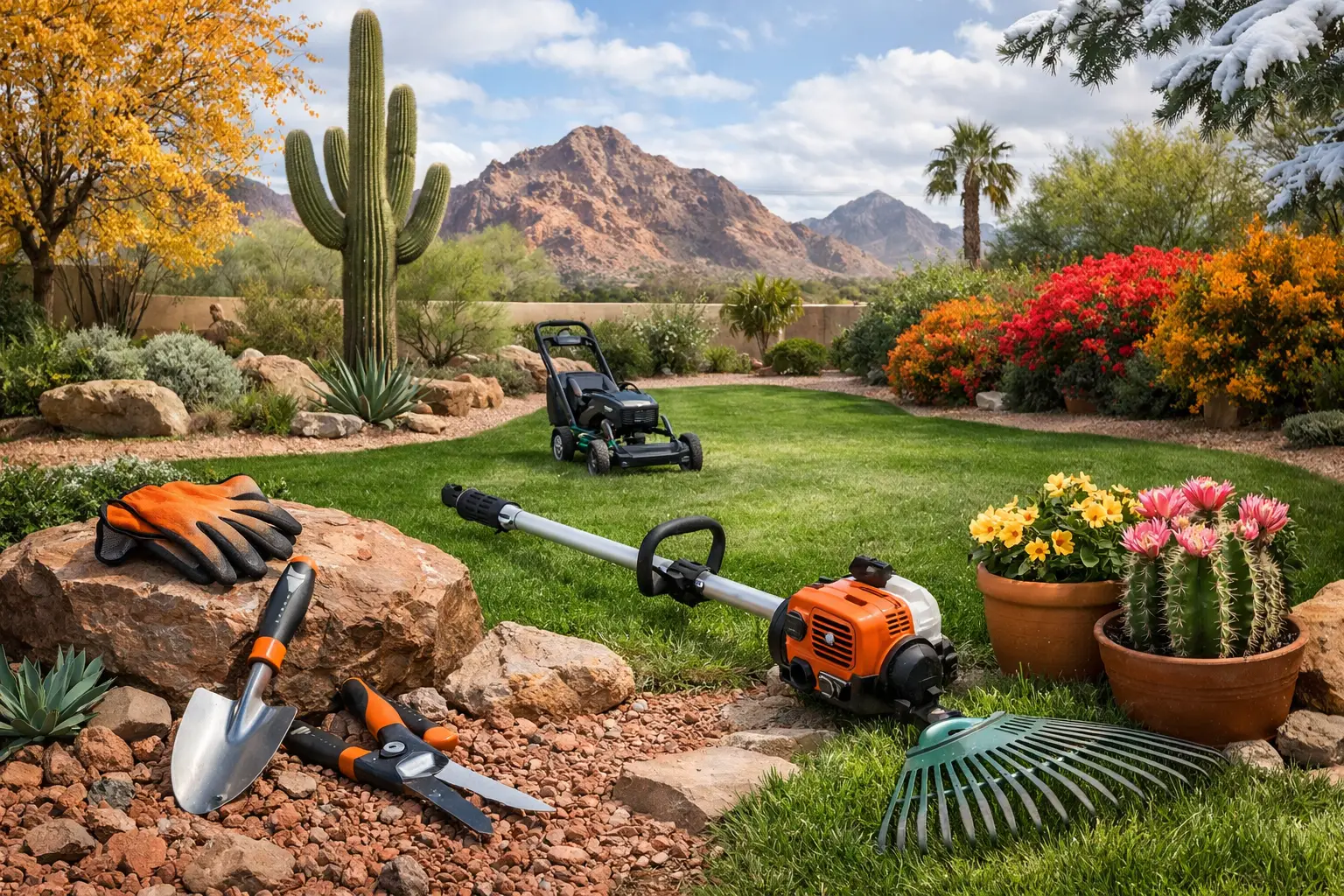
A good Arizona yard does not stay that way by accident. Sun, dust, hard water, fast-growing weeds, and long dry stretches can wear down even a well-built outdoor space. This Arizona yard maintenance guide is built for homeowners, property managers, and commercial owners who want a yard that looks clean, works efficiently, and holds up through every season.
Arizona properties need a different maintenance approach than yards in wetter climates. You are not managing thick lawns and constant rain. You are managing irrigation efficiency, heat stress, gravel movement, tree growth, paver wear, and debris that builds up fast after wind and monsoon activity. When maintenance is done right, the yard looks better, uses water more responsibly, and stays easier to manage over time.
What an Arizona yard really needs
In Arizona, maintenance is not just about appearance. It is about protecting the systems and surfaces that make a desert yard functional. A property with artificial grass, gravel, pavers, irrigation lines, shade trees, and block borders may be lower maintenance than a traditional lawn, but it is not no-maintenance.
Artificial turf needs brushing, rinsing, edge cleanup, and debris removal. Gravel needs reshaping and weed control. Irrigation needs seasonal checks so leaks and broken emitters do not waste water or damage plants. Trees need trimming to reduce storm risk and prevent overgrowth near roofs, walls, and walkways. Pavers and hardscape surfaces need cleaning and occasional repair before small issues turn into bigger ones.
That is why the best maintenance plans are practical. They focus on what keeps the yard usable, safe, and attractive, not just what looks good for a few days.
Arizona yard maintenance guide by season
Arizona does not always follow a neat four-season pattern, but your yard still changes throughout the year. A steady maintenance schedule works better than waiting until the yard looks neglected.
Spring: reset the yard before heat arrives
Spring is the time to clean up winter buildup and get ahead of rising temperatures. This is when many irrigation problems show up, especially if lines shifted, emitters clogged, or timers were not adjusted. A full irrigation inspection early in the season can prevent water loss and uneven plant growth later.
Spring is also the right time to remove weeds before they spread, trim shrubs into shape, refresh gravel areas, and inspect pavers for movement or settling. If your property has artificial grass, brush the fibers up, remove organic debris, and check seams and edges. On commercial sites, this is often the season when entry areas, parking lot islands, and common-use spaces need attention to restore a professional appearance.
Summer: protect against heat and heavy use
Summer in Arizona is less about major planting and more about protection. Plants can burn, irrigation systems work harder, and outdoor surfaces take more abuse. If water coverage is uneven, you will see it quickly. Dry spots, runoff, soggy patches, and stressed plants usually point to a timer issue, broken head, or clogged drip line.
This is also when hardscape and artificial turf can collect dust faster. Gravel can thin out in high-traffic zones. Trees may need selective trimming to remove damaged limbs before monsoon winds hit. It depends on the property, but summer maintenance should focus on water efficiency, safety, and keeping the yard usable without constant emergency fixes.
Monsoon season: clean up fast and check for damage
Monsoon season brings a different kind of maintenance. Wind pushes debris into corners, drains, turf, and rock beds. Heavy rain can shift gravel, expose irrigation lines, and create drainage issues around patios, walkways, and foundations.
After a storm, fast cleanup matters. Broken branches, washed-out areas, clogged drains, and leaning trees should be handled quickly before they create bigger repair costs. This is one of the biggest reasons Arizona property owners benefit from working with one contractor who can maintain the landscape and address exterior repair needs at the same time.
Fall and winter: repair, refresh, and prepare
Cooler months are ideal for cleanup, shaping, and repair work. If pavers need renovation, sealing, or leveling, this is often the best time to do it. Trees and shrubs can be trimmed with less stress. Irrigation schedules should be adjusted to match lower water demand.
Fall and winter are also smart seasons to review the whole yard. If a space is costing too much in water, attracting too many weeds, or taking too much labor to maintain, this is the time to consider upgrades like artificial grass, gravel installation, improved grading, or hardscape expansion. Good maintenance sometimes means changing the yard so it stays easier to maintain next year.
The areas that usually need the most attention
Most Arizona yards have the same trouble spots. Gravel beds tend to collect weeds, litter, and uneven low spots. Turf areas hold leaves, dust, and pet waste if they are not cleaned regularly. Trees can become overgrown before owners realize how close limbs are to roofs, walls, or power-adjacent areas. Irrigation often runs unnoticed until there is a bill spike or a dying plant.
Paver patios, walkways, and driveways are another common issue. Sand loss, staining, joint movement, and edge problems can make a space look worn even if the rest of the yard is in decent shape. The same goes for block walls, fence lines, and exterior surfaces. When these details are ignored, the whole property starts to look neglected.
For commercial properties, maintenance expectations are even higher. Entry visibility, clean walk paths, trimmed landscape beds, and functional lighting all affect how professional the site feels. A business may not need a decorative yard, but it does need a clean and dependable exterior.
DIY maintenance vs professional service
Some yard tasks are manageable for a homeowner or on-site manager. Light debris pickup, basic rinsing, and visual inspections can help. But Arizona yards usually reach a point where professional maintenance saves time and prevents expensive problems.
Irrigation is a good example. A small leak underground may not be obvious until plants struggle or hardscape starts shifting. Tree maintenance is another. What looks like a simple trimming job can become a safety issue fast, especially with mature desert trees or storm damage. Paver repair, grading correction, and stump grinding also require the right equipment and experience.
The trade-off is simple. Doing everything yourself may reduce short-term cost, but it often leads to missed issues, uneven results, and repeat work. Professional service costs more upfront, but it keeps the property in shape and reduces the chance that maintenance turns into reconstruction.
When maintenance should turn into improvement
Not every yard problem should be treated as a maintenance problem. Sometimes the real issue is that the yard was not designed for Arizona conditions in the first place.
If you are constantly fighting dead grass, overspray, muddy spots, unstable gravel, or cracked surfaces, routine cleanup will only do so much. A better fix may be converting problem lawn areas to artificial grass, regrading sections that hold water, replacing worn materials, or expanding pavers and hardscape to reduce maintenance demand.
This is where a full-service company has real value. If the same team can handle yard cleanup, irrigation, turf, gravel, pavers, wall repairs, and exterior upgrades, the work gets coordinated better and the property improves faster. For many owners, that is the difference between managing a yard and actually solving it.
How to keep your property consistent year-round
Consistency matters more than intensity. A yard that gets light, regular service will usually outperform one that gets ignored for months and then overhauled all at once. The best plan is based on the actual features on your property, how much traffic the space gets, and how visible the exterior is to guests, tenants, or customers.
For some homes, monthly service is enough with occasional seasonal repairs. For busy commercial sites, more frequent visits may be the better fit. It depends on tree load, surface materials, irrigation complexity, and how polished the property needs to look at all times.
A dependable maintenance routine should include cleanup, weed control, irrigation checks, trimming, and surface review. If the yard includes turf, pavers, walls, lighting, or specialty installations, those should be inspected on a regular schedule too. Pro Natural Landscape works with Arizona property owners who need that kind of practical, all-in-one support without chasing multiple contractors for one outdoor space.
The right yard in Arizona is not the one with the most features. It is the one that stays clean, efficient, and durable in real conditions. If your outdoor space is starting to slip, the best next step is not to wait for it to get worse. Start with what needs attention now, and build from there.